
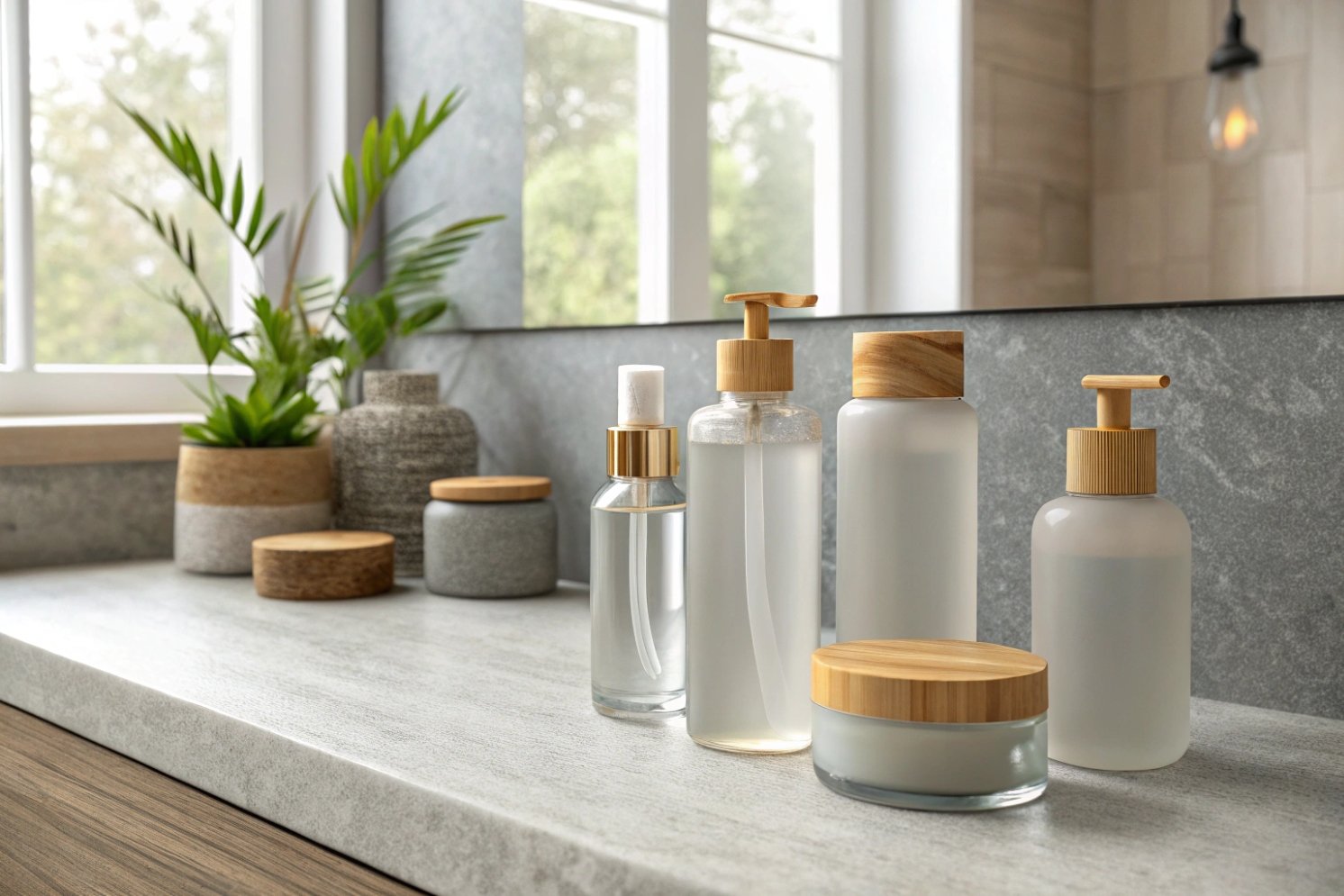
Bamboo caps and collars are everywhere in beauty now. They look “green”, but not every bamboo story is honest, and not every formula suits bamboo parts.
Bamboo is ideal for cosmetic packaging when brands use real, certified bamboo, pair it with glass or safe liners, and design for strength, humidity, and end-of-life, instead of only using it as a decoration.
In this guide, I walk through how bamboo really performs: renewability, carbon profile, pairing with glass, durability in bathrooms, and which certifications to ask for when you buy bamboo components for your line.
Does bamboo’s fast renewability and low-carbon profile beat conventional materials?
Bamboo grows fast, but “fast-growing” alone does not guarantee a better footprint than glass or plastic. The full system still matters.
Bamboo has a strong sustainability story because it is rapidly renewable and often low-carbon, but its real advantage appears when sourcing is traceable, and when brands avoid unnecessary plastic cores and coatings.
What makes bamboo “eco” in a real supply chain?
Bamboo is a grass, not a tree. It regrows from its root system, so farmers do not need to replant after each harvest. If you want a sourcing-first view of where bamboo fits in circular systems, the INBAR report on bamboo in the circular economy 1 is a useful reference.
This means:
- Short growth cycles compared with many woods
- Less soil disturbance
- Potentially fewer inputs if farms are managed well
When a bamboo lid replaces a thick injection-molded plastic shell, you move some of the material footprint away from fossil sources. But there is still transport, machining, inserts, and coatings. So it is more honest to say “bamboo can lower impact when it replaces high-plastic, high-energy parts” than to call it a magic solution.
To compare bamboo parts against alternatives fairly, many teams use life cycle assessment (LCA) principles in ISO 14040 2 so they do not cherry-pick one stage (like raw material) and ignore the rest.
Comparing bamboo with common materials
| Material | Main strength | Main concern | Best use case |
|---|---|---|---|
| Bamboo | Fast renewability, warm natural look | Needs inserts, limited recycling streams | Caps, collars, shells, boxes |
| Glass | Inert, fully recyclable, long life | Heavy, energy-intensive melt | Bottles, jars, refillable outer shells |
| Plastic | Light, cheap, many shapes | Fossil-based, microplastics, lower perception | Pumps, liners, where function needs flexibility |
Bamboo’s carbon profile is usually lower than virgin plastic per kilogram, but numbers change with:
- Farm practices
- Distance to factory and port
- How much bamboo is actually in the part vs hidden plastic
For example, a “bamboo” cap that is 70% plastic with a thin bamboo veneer will not give a big carbon win, even if it looks natural on shelf.
How to build an honest bamboo story
To use bamboo as a real sustainability lever:
- Ask for composition: pure bamboo vs bamboo + plastic blends
- Ask for origin: which country, which region
- Compare weight: a lighter bamboo shell can replace a heavy plastic cover
- Keep the design simple: fewer metal pins, fewer glued decorations
Also align your marketing language with recognized guidance like the FTC Green Guides for environmental claims 3 so your “eco” story stays precise, provable, and consistent across markets.
In practice, bamboo works best as one tool in a full system: glass bottle + bamboo shell + mono-material inner parts where possible. This keeps material use clear and easier to explain to your customers.
Most people fall in love with bamboo when they see it on glass. The combination of cold glass and warm wood-like texture sends a strong “natural luxury” signal.
Bamboo lids and collars pair very well with glass bottles because they soften the technical look of glass, add warmth and texture, and visually communicate sustainability without hiding the clarity of the perfume or skincare formula.
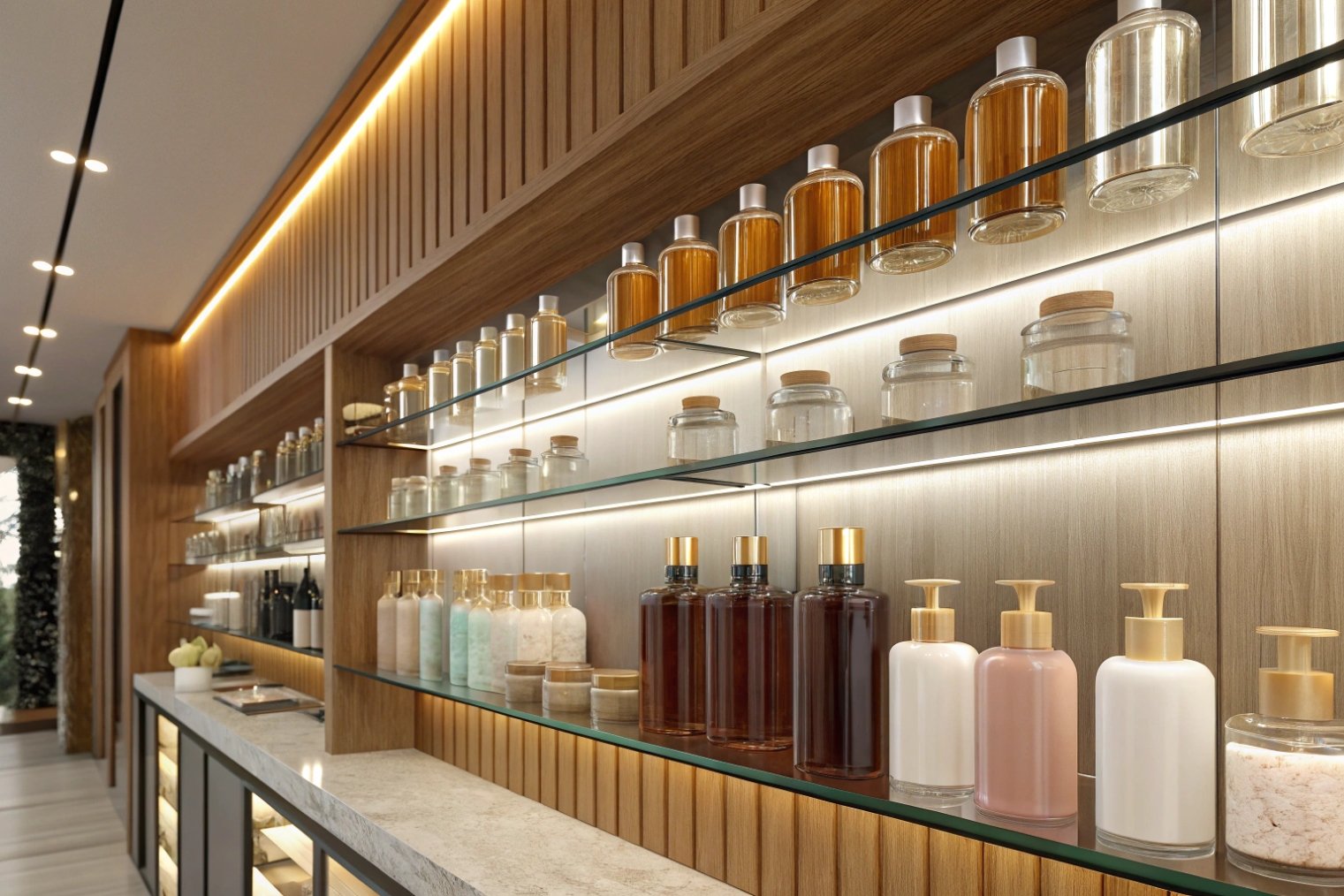
Turning glass + bamboo into a clear brand message
Glass already carries strong cues: purity, quality, stability, and recyclability. If you need simple language to support that recyclability message, Glass Recycling 101 4 is a handy explainer for teams building consumer-facing sustainability pages.
When a bamboo cap sits on top, the story changes slightly. Now the pack says:
- Safe, clean formula inside (glass)
- Natural, eco-aware mindset outside (bamboo)
This mix works especially well for:
- Essential oils and aromatherapy
- Natural or organic skincare
- Refillable perfumes and mists
You can tune the mood with color and finish.
Design options that work well on shelf
| Element | Option | Brand message |
|---|---|---|
| Glass color | Clear high-flint | Clinical, “nothing to hide” |
| Amber / smoked | Protects actives, apothecary, herbal | |
| Soft tint + frosting | Gentle, spa-like, minimalist | |
| Bamboo finish | Raw, visible grain | Hand-crafted, small-batch |
| Stained dark | Premium, masculine, niche fragrance | |
| Decoration | Simple screen print | Quiet luxury |
| Hot-stamped logo on bamboo | Modern eco-luxury, strong brand recall |
On the technical side, bamboo is rarely in direct contact with the formula. Most lids and collars use:
- A plastic inner thread or snap fit
- A bamboo outer shell or sleeve
For pumps or droppers, the collar can be bamboo-wrapped metal or plastic, while the functional parts remain conventional. This keeps performance stable while the customer sees a natural surface.
Practical tips for pairing bamboo and glass
When planning a bamboo + glass pack:
- Keep shapes simple and slightly rounded; sharp edges in bamboo chip more easily
- Make sure the diameter of the bamboo cap feels balanced with the bottle shoulder
- Test torque: caps should open smoothly without the bamboo shell twisting off the insert
Bamboo can also reduce the need for heavy printing or complex labels. In many projects, a clear glass bottle with one-color print and a bamboo cap already looks “designed” enough for the shelf.
Is bamboo durable against bathroom humidity and daily handling?
Bathrooms mean steam, temperature swings, and wet hands. Any “eco” material must survive this reality, not just a studio photo shoot.
Bamboo components are durable for cosmetic use when they are well sealed, properly engineered around an inner insert, and tested in real bathroom conditions for swelling, cracking, and mold risk.
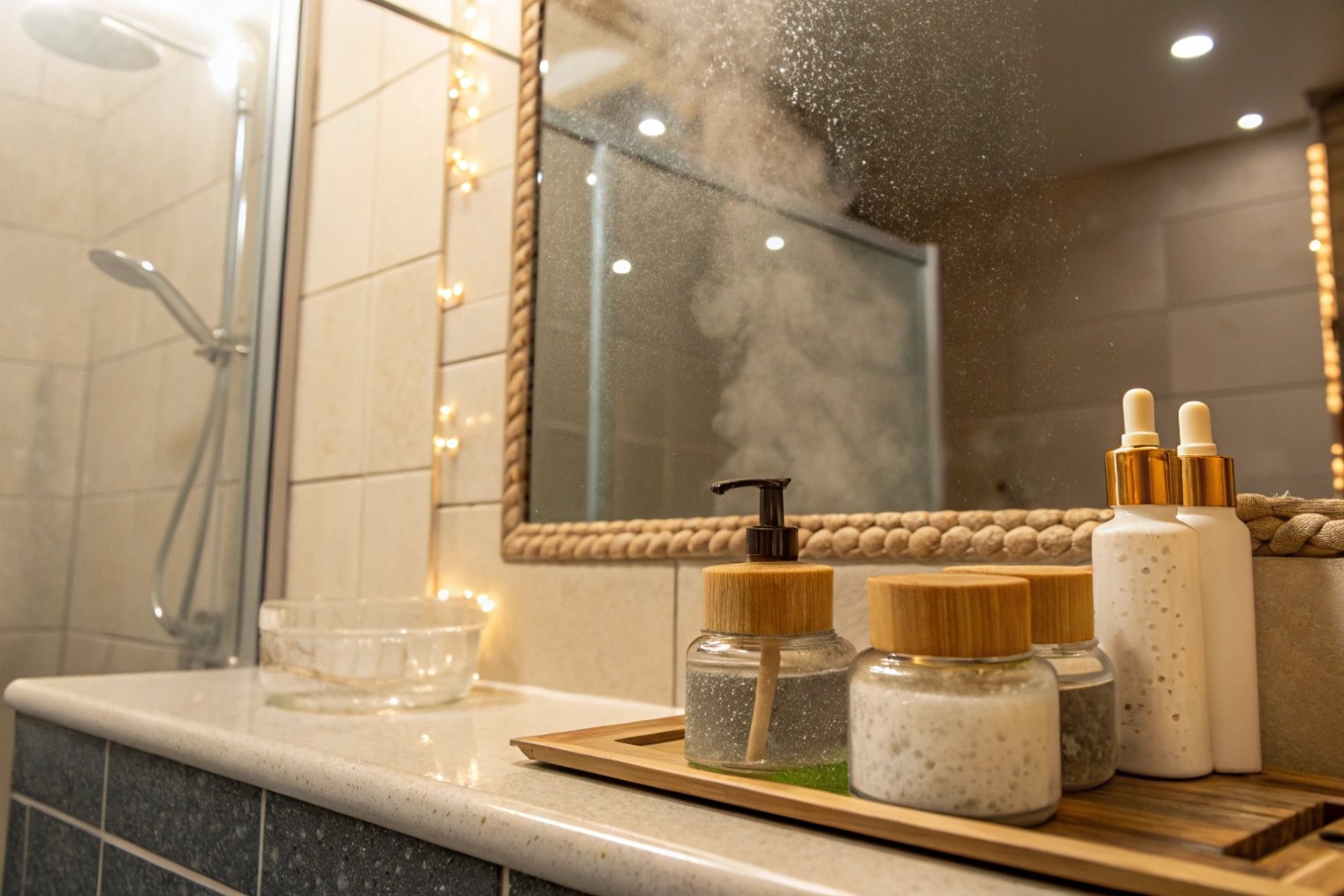
What actually happens to bamboo in humid use
Raw bamboo is a natural, porous material. In constant humidity it can:
- Absorb some moisture
- Slightly swell or shrink with climate
- Develop stains if water sits on the surface for long periods
Most cosmetic bamboo parts are finished with:
- Clear coatings or oils
- Stains and sealers
- Sometimes a thin lacquer layer
These finishes reduce water uptake and keep surfaces smooth. At the same time, you want to avoid heavy coatings that make the part feel “plastic” again.
Durability points to check with your supplier
| Risk in bathroom use | What to ask for or test |
|---|---|
| Swelling or cracking | Climate cycling tests (temperature and humidity) |
| Mold spots on grain | Coating type, storage advice for end user |
| Chipping at edges | Rounded profiles, sanding quality, drop tests |
| Loose fit over time | Stable inner insert, torque tests after cycles |
If your supplier claims “bathroom safe,” ask what that means in test terms. A common reference point for harsh humidity exposure is ASTM D2247 (100% RH humidity exposure for coatings) 5, which can help you sanity-check whether their coating and finish choices were validated.
For daily handling, bamboo performs quite well. It has a strong strength-to-weight ratio, and a small lid or collar sees much less stress than a full bottle. Many brands run:
- Drop tests on filled packs
- Cap opening / closing cycle tests
- Shelf-life simulations under warm, humid conditions
When results look good, the bamboo part will usually last as long as the product itself.
Design choices that help bamboo last longer
To improve durability:
- Avoid sharp, thin corners and very deep engravings
- Keep artwork away from fragile edges
- Choose a slightly thicker wall on the bamboo shell to resist impacts
- Make sure metal pins or screws, if used, are corrosion-resistant
It is also helpful to communicate simple care tips to your customer, such as “Wipe dry if water pools on the cap” or “Do not store directly under a constant shower of steam”. Small messages like these reduce complaints and returns.
What certifications (FSC, food-contact) should bamboo components meet?
Many bamboo stories sound good in marketing, but buyers now ask for proof. Good documentation supports both safety and sustainability claims.
For bamboo packaging, look for responsibly sourced bamboo (such as FSC), valid food-contact or cosmetic-contact tests for all layers, and honest composition reports so your eco claims stay safe and credible.
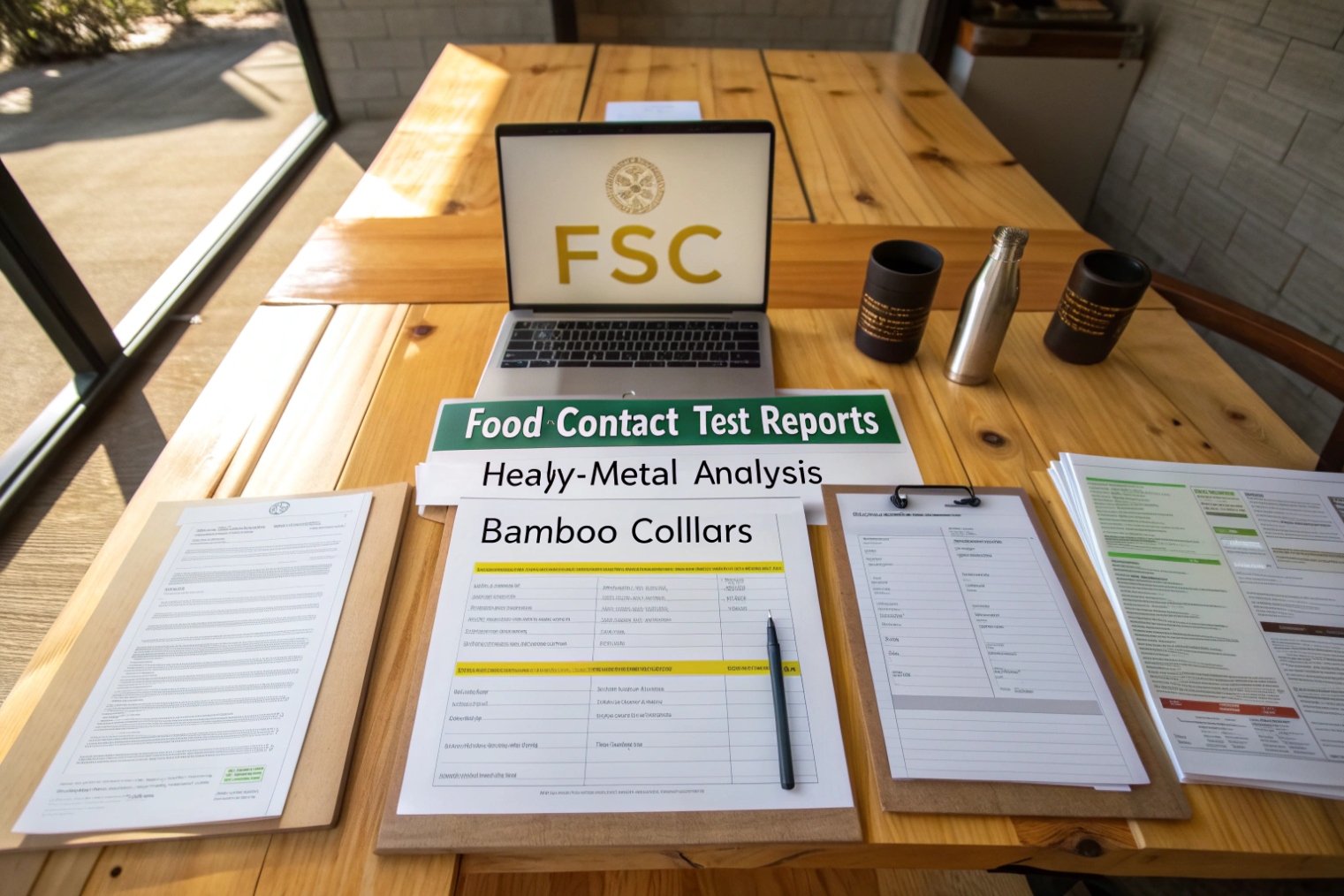
Which certifications matter most for bamboo packaging?
Think about three pillars: source, safety, and truth in labeling.
1. Source: forest and farm management
For traceability, ask whether your supplier (or their upstream processor) holds FSC Chain-of-Custody certification 6 so your bamboo claim is supported by an auditable chain, not just a purchase invoice.
But not all bamboo on the market is FSC-certified, and not all non-FSC bamboo is bad. The key is to avoid vague “eco” language and stay as precise as possible.
2. Safety: contact with creams, serums, oils
Bamboo lids and collars usually do not touch the formula directly, but regulators and retailers still care about the whole packaging system: bamboo substrate, coatings, inks, adhesives, and any plastic insert.
For migration-style safety documentation, many suppliers benchmark against frameworks like EU Regulation (EC) No 1935/2004 for contact materials 7—especially useful when you have liners, inserts, or coated surfaces that could plausibly contact product during use.
You can ask for:
| Area | Typical documents you should request |
|---|---|
| Bamboo substrate | Composition, heavy-metal tests |
| Coatings / stains | Migration-style reports for the coating system |
| Plastic inserts | Compliance statements for the polymer grade |
If your product will sit in hot or humid environments (bathrooms, warehouses), it is wise to confirm that coatings do not release unwanted compounds under those conditions.
3. Truth in labeling and green claims
To avoid “greenwashing” risk:
- Ask for clear material breakdown (for example: “Outer shell bamboo, inner insert PP”)
- Avoid vague phrases like “bamboo plastic” unless you define the ratio
- Align your marketing language with the real technical spec
It is better to say “bamboo-covered cap with recyclable insert” than to call the full component “100% natural”.
How to build a clean documentation pack
For smooth audits and retailer checks, it helps to collect:
- Supplier declarations and certificates (FSC, test reports)
- Drawings that show which part is bamboo, which part is plastic or metal
- A simple bill of materials per SKU
This documentation also supports your own sustainability reports and any on-pack icons or QR-code “digital passport” you may want to add later.
Conclusion
Bamboo becomes an ideal cosmetic packaging material when it is honestly sourced, carefully engineered with glass and safe inserts, and supported by real tests and certifications, not just a “green” look.
Footnotes
-
Deeper context on bamboo’s renewability and circular-economy role for sourcing decisions. ↩︎ ↩
-
Standard framework for doing fair, apples-to-apples environmental footprint comparisons. ↩︎ ↩
-
Helps keep environmental claims specific, substantiated, and less likely to be considered misleading. ↩︎ ↩
-
Simple recyclability explanations you can adapt for consumer pages and sustainability FAQs. ↩︎ ↩
-
Useful reference test for humidity exposure when validating coatings used on bamboo components. ↩︎ ↩
-
Verifies traceability through the supply chain for credible “certified” sourcing claims. ↩︎ ↩
-
Common benchmark framework for contact-material safety documentation and migration-style compliance expectations. ↩︎ ↩






