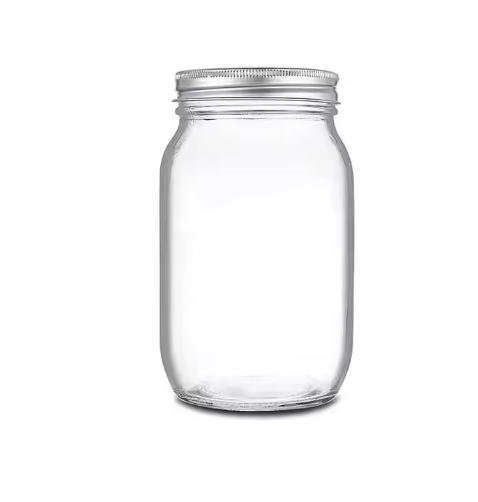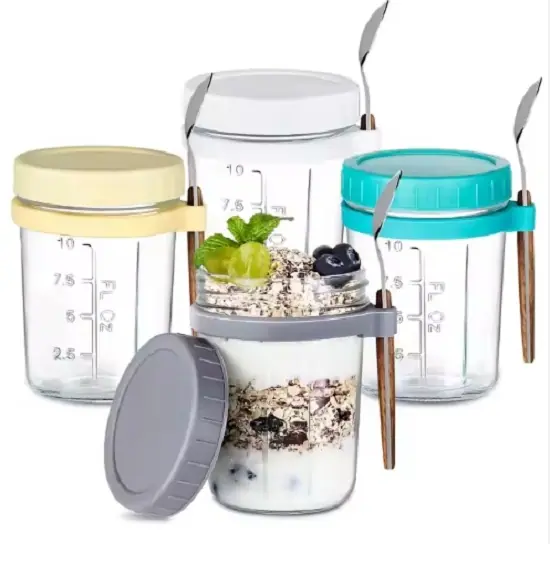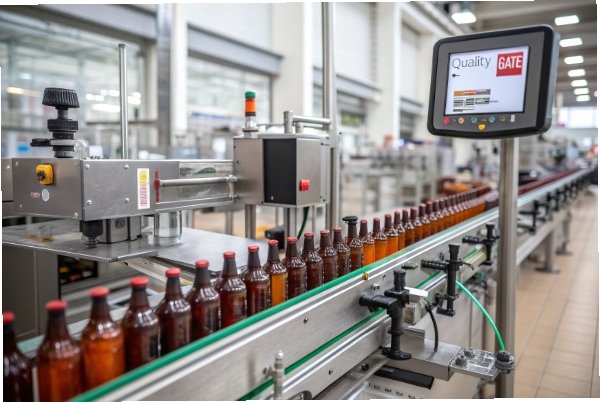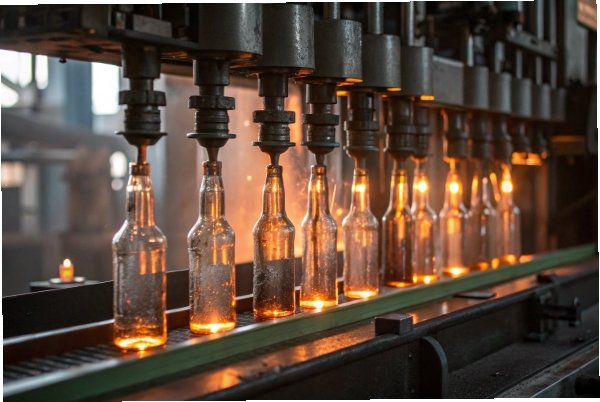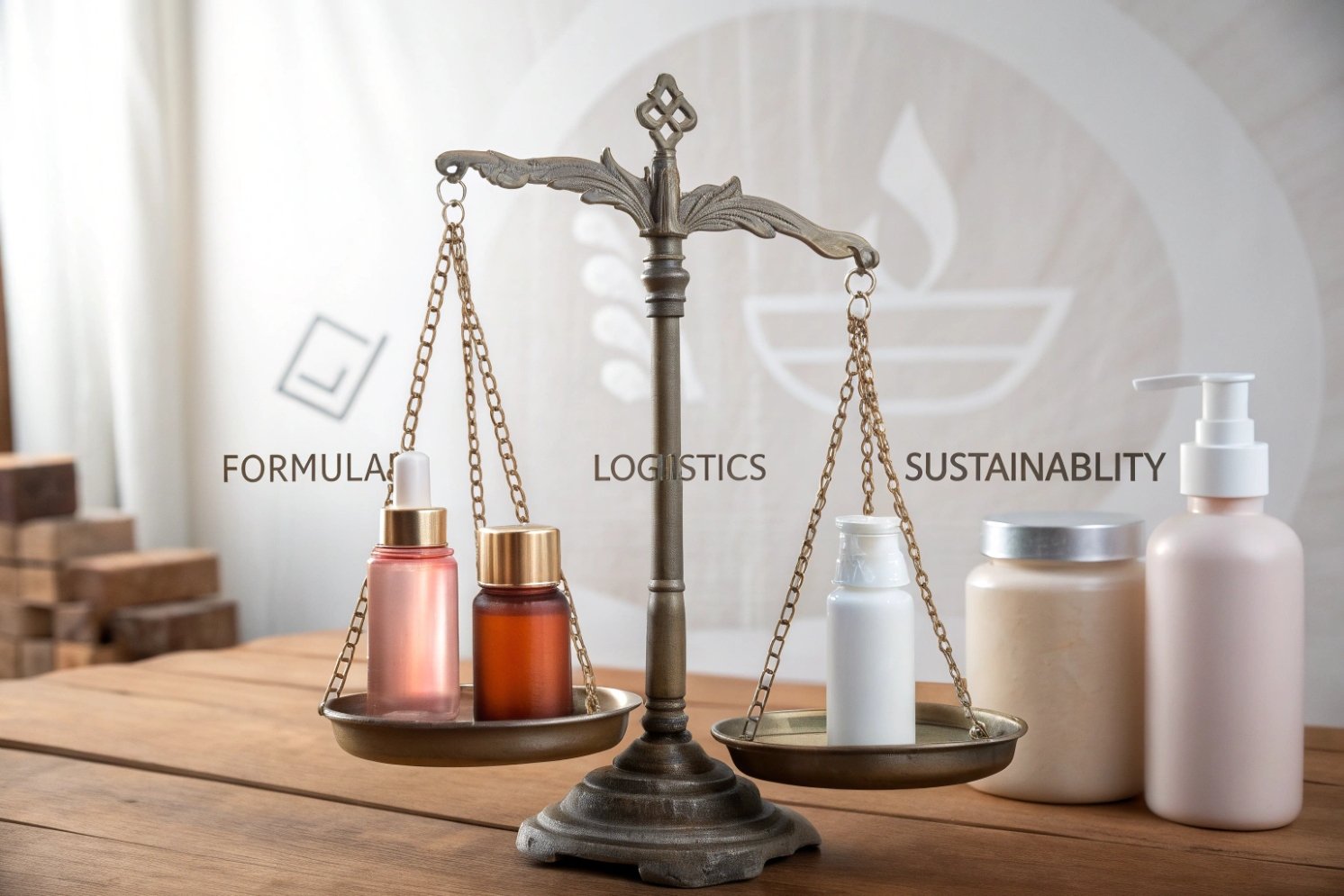
Glass feels premium and “clean”. Plastic feels light, safe, and practical. Many brands get stuck between these two stories and worry about picking the “wrong” material.
Glass is better when formulas are sensitive, premium, and long-life. Plastic is better when products are used in motion, squeezed, dropped, and shipped far. Most strong brands mix both, and even combine them in hybrid packs.
In this article, we walk through formula compatibility, recyclability, carbon footprint, logistics, and hybrid options, so you can build a clear packaging roadmap for your own line.
For which formulas is glass clearly superior on chemical inertness and odor control?
Many “clean beauty” brands start with a simple rule: if in doubt, put it in glass. There is a good reason behind this instinct.
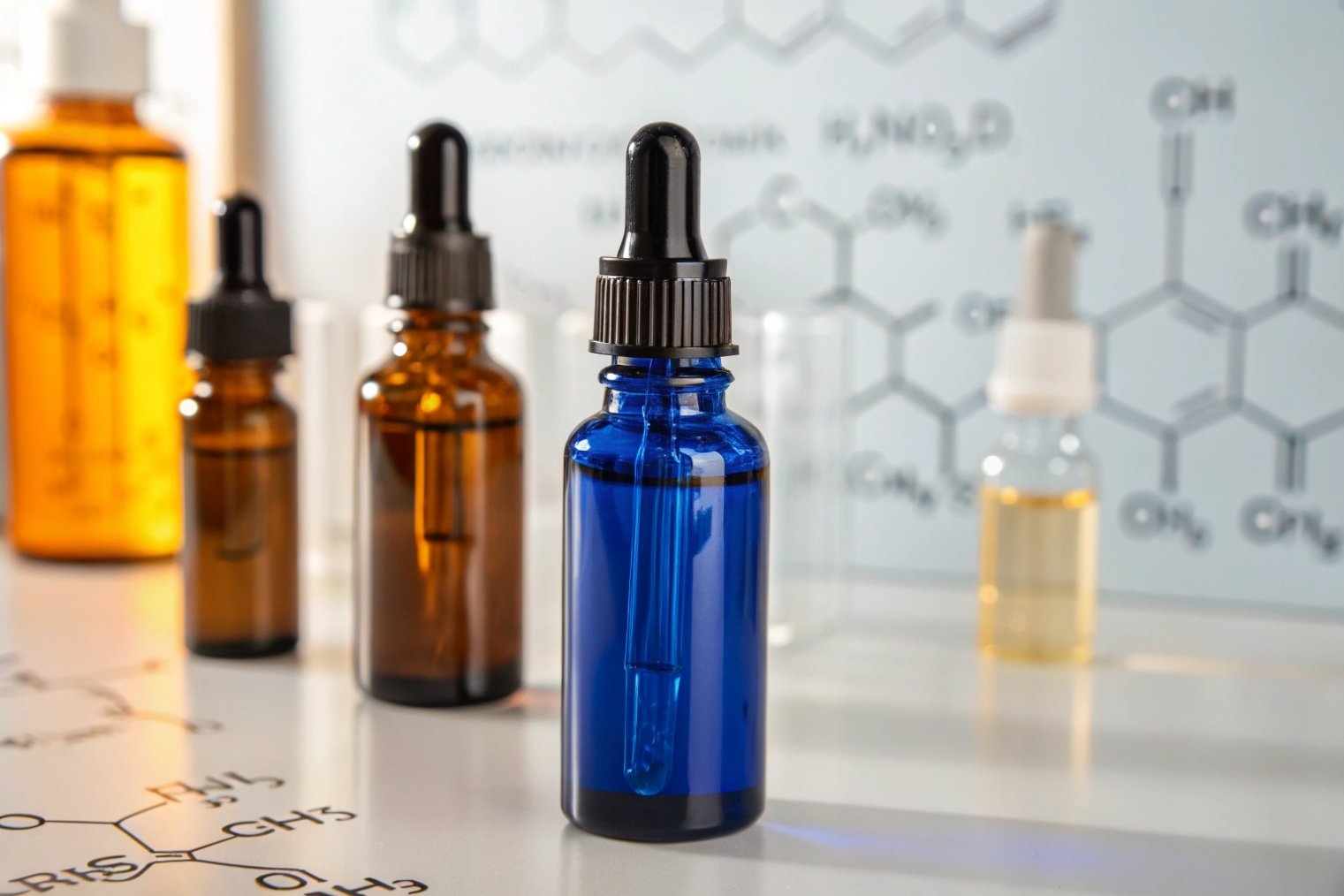
Glass is clearly superior for formulas rich in oils, solvents, or strong fragrance because it is inert, nonporous, and does not hold or give off any odor of its own.
When glass wins without debate
Glass is sand-based and nonreactive. It does not soften, swell, or pick up smell from what you put inside. This is very different from most plastics, which always come with additives and some level of permeability.
Formulas that almost always belong in glass:
- High essential-oil content (pure essential oils, strong blends)
- Solvent-heavy perfumes and anhydrous serums
- Actives that are both light-sensitive and oxidation-sensitive (vitamin C, retinoids, peroxides)
- Products with delicate top notes where even a small odor change is not acceptable
Plastics like PET, PP, and HDPE can be compatible with many formulas, but they need chemical compatibility testing 1. Some fragrance compounds and essential oils can slowly extract plasticizers or stress the resin. That can shift smell, color, or even cause paneling and softening over time. Glass skips this problem.
In regulated thinking, it also helps to treat packaging as a container–closure system 2 instead of “a bottle plus a cap”.
Simple decision map by formula type
| Formula type | Main risk in plastic | Better default pack |
|---|---|---|
| Pure essential oils | Odor scalping, resin stress | Amber / cobalt glass bottle |
| High-fragrance perfume oil / EDP | Aroma loss, leaching over time | Glass perfume bottle |
| Water-based cleanser or toner | Low, if resin is well chosen | PET / glass, both workable |
| Light lotion, body cream | Mostly oxygen exposure and pumps | Airless plastic or glass jar |
| Strong acids, peroxides, retinoids | Resin stress, yellowing | Dark glass, tight closure |
For formulas that sit on the skin for a long time (serums, night oils), many brands also prefer glass for perception. The customer connects “inert glass” with safety and purity, even before they understand the technical reasons.
Plastic still has a role here, especially in airless systems. A well-designed airless PET or PP bottle can beat a simple open glass jar on oxidation. So the real choice is not just “glass vs plastic”, but “which total system locks in my formula best”.
How do recyclability, PCR availability, and carbon footprint compare by region?
Most teams now ask not only “Is this recyclable?” but “Will it actually be recycled where we sell?” The honest answer is: it depends on the region and the material.
Glass is endlessly recyclable and carries strong sustainability perception, but plastic (especially PET with PCR) often has lower transport emissions and better real-world recycling rates in some markets.
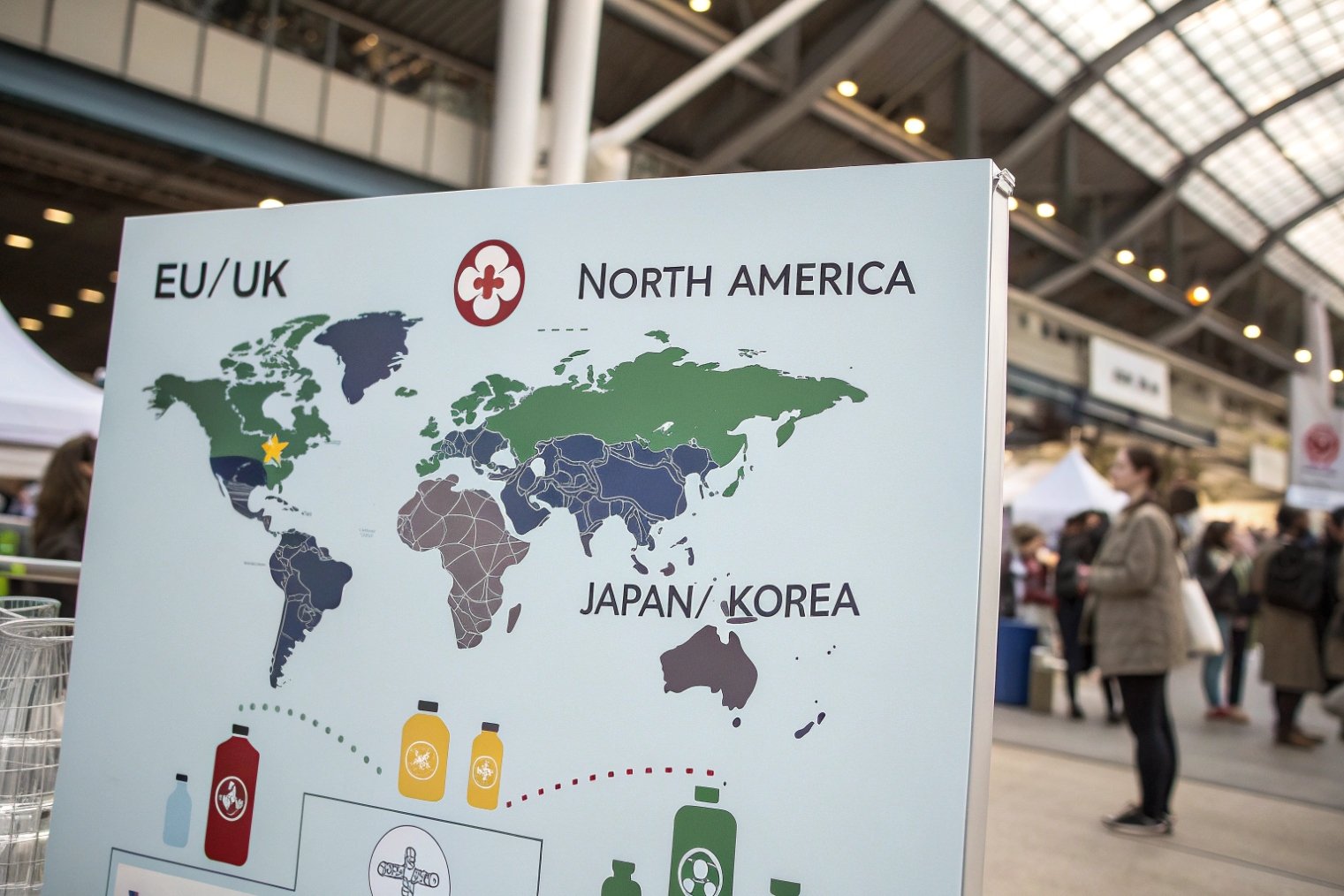
Glass vs plastic: what actually happens after the bin?
In theory, both glass and common cosmetics plastics (PET, HDPE, PP) are recyclable. In practice, capture rates, sorting technology, and market demand for recycled material vary by country.
- In many parts of Europe and Japan, glass collection is strong, and PCR glass streams are mature.
- In North America and parts of Asia, PET bottles often have higher real recycling rates than mixed glass.
- Dark or coated glass can be harder to sort. Small-format plastics can fall through sorting equipment.
PCR (post-consumer content 3) is now common in PET and sometimes in HDPE. PCR glass is also available, often more visible in amber and green bottles. These streams help cut virgin material use and support climate goals.
Typical regional patterns (high level)
| Region / market | Glass infrastructure | Plastic/PCR status | Practical takeaway |
|---|---|---|---|
| EU / UK | Strong glass and PET loops | PCR PET widely available | Either material can support green claims |
| North America | Mixed glass performance | PET and HDPE PCR growth | PET/PCR often more circular in practice |
| Japan, Korea | Very structured systems | High collection for both glass and plastic | Focus on mono-material, clear marking |
| Emerging markets | Patchy formal recycling | Informal PET collection common | Light, refillable, re-usable packs help |
Life-cycle studies often show PET bottles with a lower total carbon footprint than glass of the same volume because of lower weight and lower transport energy, but results depend on assumptions. Using an ISO 14040 life cycle assessment framework 4 helps keep comparisons consistent.
How to design for better end-of-life
Useful rules when you pick between glass and plastic:
- Use mono-material wherever possible (for example, all-PET bottle + cap, or glass bottle with removable pump).
- Avoid heavy decorations that block recycling (thick foils, glued metal shells).
- If you use PCR, state realistic percentages and tolerances.
In many projects, the best move is not to pick one material as “good” and one as “bad”, but to match pack types to regions. For example, glass for EU retail hero products, and high-PCR PET for markets with weaker glass collection but stronger PET recovery.
When do weight, drop resistance, and freight costs make plastic the smarter choice?
Packaging does not only live on a shelf. It moves through factories, warehouses, e-commerce hubs, bathrooms, and handbags. In these environments, weight and impact resistance matter a lot.
Plastic becomes the smarter choice when your product must survive drops, long shipping routes, and frequent travel, or when price points and margins cannot carry heavy glass.
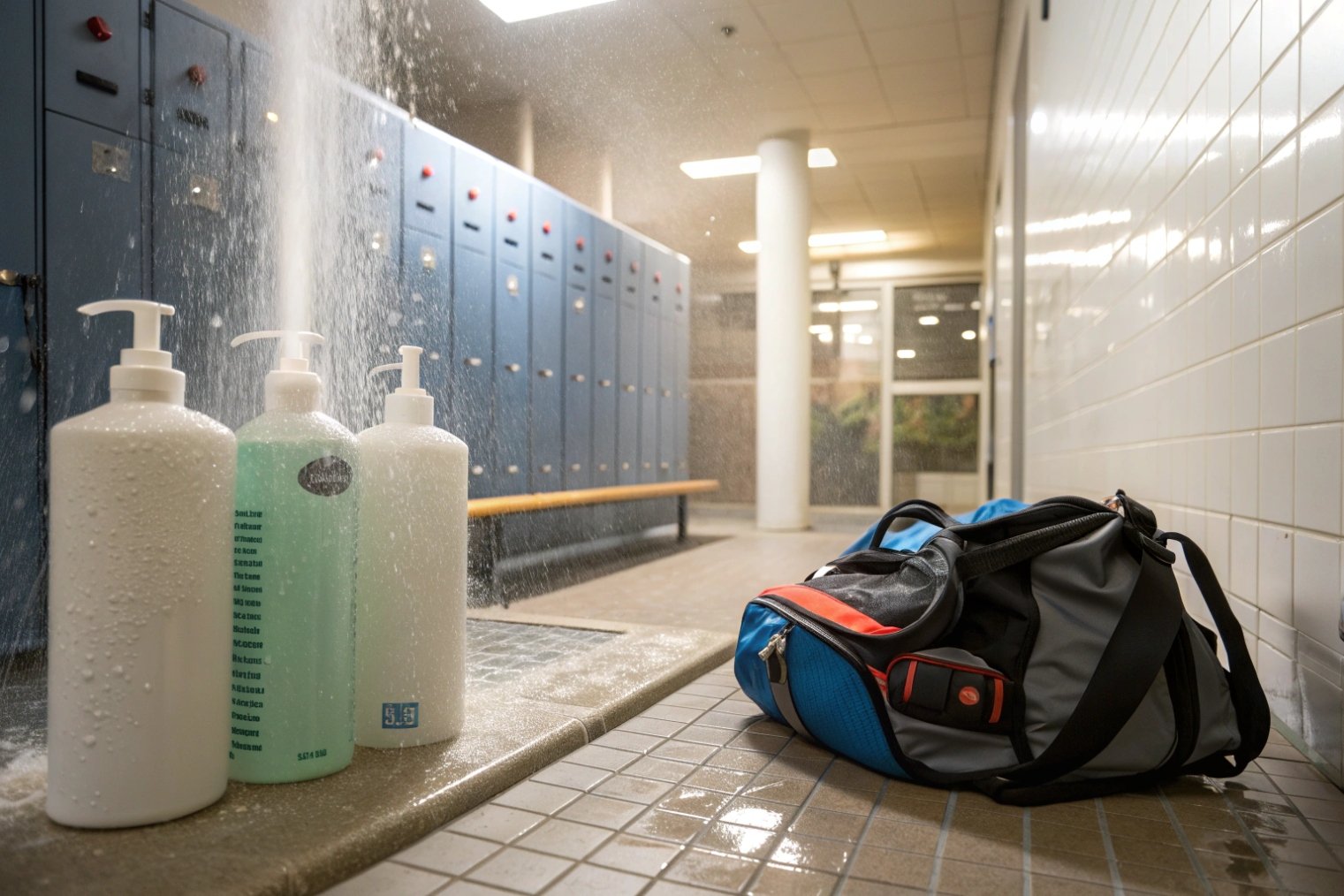
Where plastic simply works better
Glass is rigid and beautiful, but it is heavy and can shatter. Plastic is lighter, takes impacts, and packs tighter in shipping cartons. This changes the math for:
- Large-volume products (shampoos, body wash, lotions in 250–500 ml and up)
- Shower use, where breakage is a real safety risk
- Travel and gym products that live in bags and lockers
- E-commerce brands that ship direct to consumer across long distances
Lower weight means:
- Lower freight cost per unit
- Lower transport-related carbon emissions
- Less protective secondary packaging needed
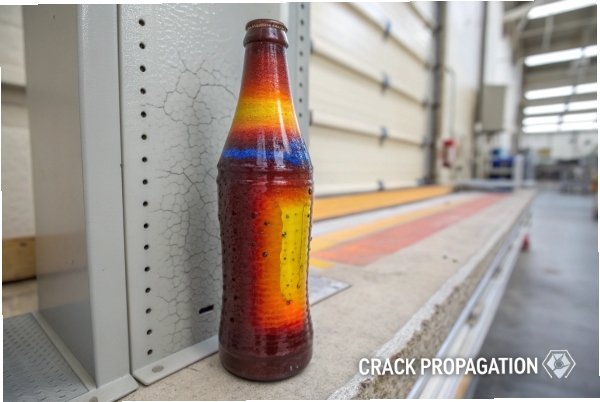
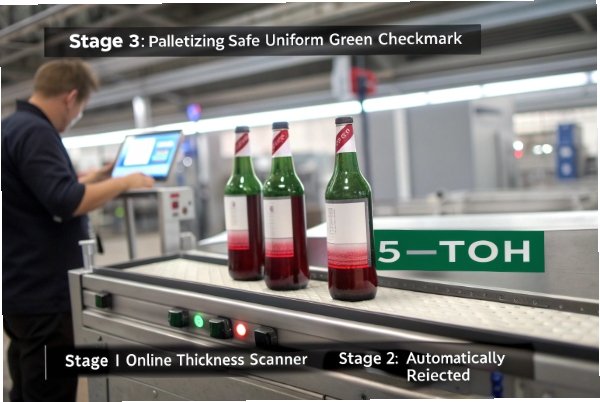
For drops and impacts, plastic also has a big advantage. A cracked glass bottle can leak or break into sharp pieces. A dented plastic bottle usually still works. If DTC shipping is a major channel, validating packs against ISTA Procedure 3A 5 early can prevent expensive breakage surprises later.
Simple channel-based guide
| Channel / use case | Main risk | Smarter default pack |
|---|---|---|
| Premium spa retail | Shelf impact, luxury cues | Glass, well packed |
| Mass e-commerce (DTC) | Drops, long shipping | PET / HDPE bottles, tubes |
| Shower and bath | Slip and break on tiles | Plastic or protected glass |
| Travel sets and minis | Weight, cabin rules, drops | Plastic, small glass only for perfume |
| Salon back-bar (large size) | Heavy use, frequent handling | Plastic or hybrid systems |
This does not mean glass is impossible in these channels. Some brands use protective sleeves, silicone covers, or heavy cartons around glass. But each of those layers adds cost and materials.
Plastic also supports squeeze behavior. Cleanser in a soft tube or flip-top bottle is easier to use in the shower than a heavy glass bottle with a pump. So the choice is not just cost; it is also about how the customer actually uses the product with wet hands and limited time.
Can hybrid packs—glass bodies with plastic or bamboo closures—balance performance and sustainability?
Many of the most successful “green” packs today are not pure glass or pure plastic. They are hybrids that try to take the best of each.
Hybrid packs with a glass body and plastic or bamboo closures can give you a premium, inert container while keeping pumps, droppers, and caps functional, decorative, and easier to engineer.
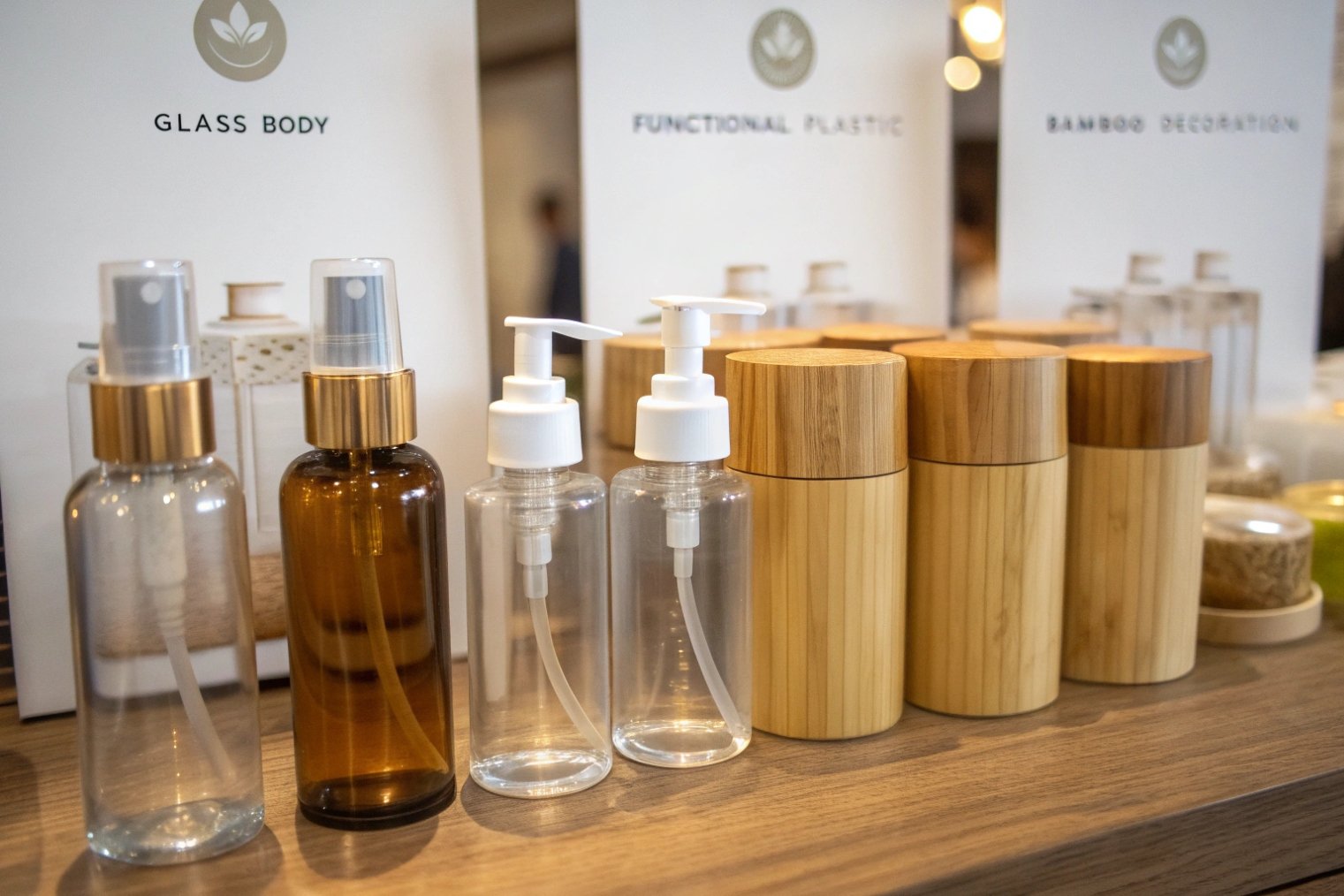
How hybrids solve real packaging problems
A typical hybrid setup looks like this:
- Glass bottle or jar (clear, amber, or frosted)
- Plastic pump, dropper, or mist sprayer for dosing
- Bamboo, wood, or metal shell as a decorative collar or cap
This structure can do several things at once:
- Keep the main product in an inert, oxygen-resistant container
- Provide precise dosing and protection from air through a modern pump
- Express brand values through natural or luxury materials on the outside
For sustainability, many brands now design these hybrids to be easy to take apart. If a pump can be unscrewed and the glass can go straight into the glass recycling stream 6, that is already a big step up from fully fused, non-separable components.
For plastic components in hybrids, using references like the APR Design Guide overview 7 helps teams avoid closures, labels, and adhesives that block real recyclability.
Examples of hybrid strategies
| Hybrid type | Benefit | Design watch-outs |
|---|---|---|
| Glass bottle + plastic pump | Great spray or lotion dosing, inert body | Mark clearly how to remove pump |
| Glass jar + bamboo lid (with liner) | Strong eco look, good odor control | Use stable liner, seal bamboo against steam |
| Glass outer + plastic refill cartridge | Refillable system, lower long-term material use | Make refills easy to swap and recycle |
| Glass bottle + PCR plastic cap/pump | Mix premium feel with recycled content | Keep pump as mono-material when possible |
Hybrid systems also help with price. Full custom glass + full custom metal components can push unit cost very high. A standard glass bottle paired with a custom bamboo over-shell or a special color pump can hit a “luxury” look with lower tooling spend.
The key is to keep the separation logic clean. If customers can understand in three seconds how to twist off a pump, recycle the bottle, and discard or return the rest, the hybrid pack feels modern and responsible rather than complicated.
Conclusion
Glass and plastic are not enemies. The best cosmetic packaging picks the right material, or smart hybrids, for each formula, channel, and sustainability goal.
Footnotes
-
Learn tests that prevent leaching, discoloration, stress cracking, and odor drift between formula and pack. ↩︎ ↩
-
FDA overview for evaluating packaging as a system, useful for thinking about material interactions and safety. ↩︎ ↩
-
Clarifies what post-consumer content (PCR) means and how recycled-content claims are commonly described. ↩︎ ↩
-
ISO framework for life cycle assessment to compare glass vs plastic impacts consistently. ↩︎ ↩
-
ISTA 3A overview for parcel shipping hazards: drops, vibration, and handling stress in real delivery networks. ↩︎ ↩
-
Practical guidance on how to recycle glass correctly, useful for customer FAQs and disposal instructions. ↩︎ ↩
-
APR guidance to design plastic components that sort and recycle better in North American recycling systems. ↩︎ ↩