
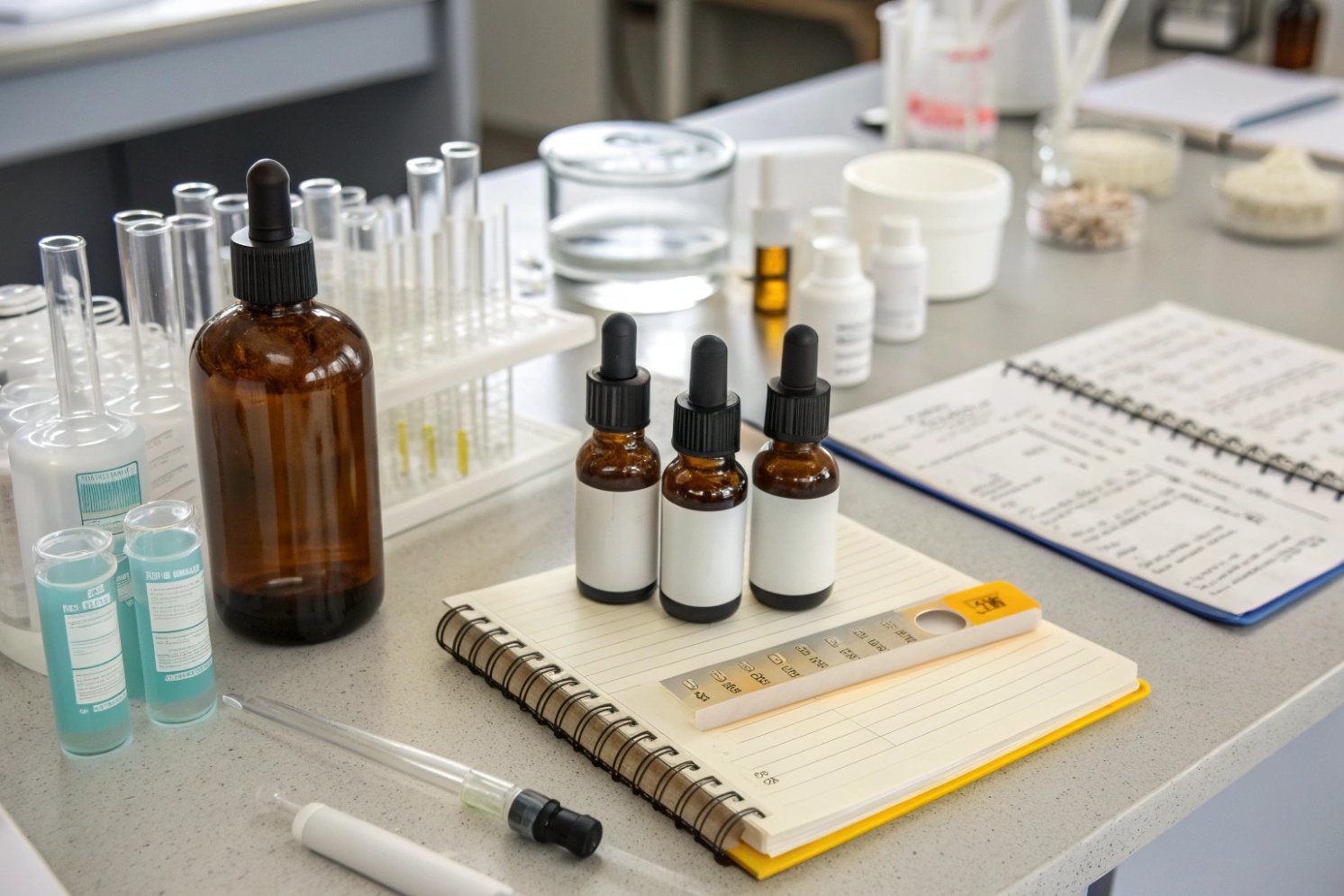
Many brands spend years on a formula, then lose performance because the wrong bottle slowly changes it. Packaging is not a shell. It is part of the chemistry.
Most cosmetics use glass because it is more inert than plastic, looks more premium on shelf, supports recyclability claims, and gives better dosing precision for high-value, sensitive formulas.
When a line moves from plastic to glass, the change is visible. But the real value sits in what you cannot see: how stable the actives stay, how tight the closure seals, and how often the pack can live a second life.
Is glass more inert and formula-safe than plastic?
Active skincare is full of acids, oils, and solvents. If the pack reacts even a little, it can change color, smell, or texture before the product reaches the consumer.
Yes. Cosmetic-grade glass is more inert, less permeable, and less likely to leach or absorb actives than most plastics, so it keeps sensitive formulas closer to their lab performance.
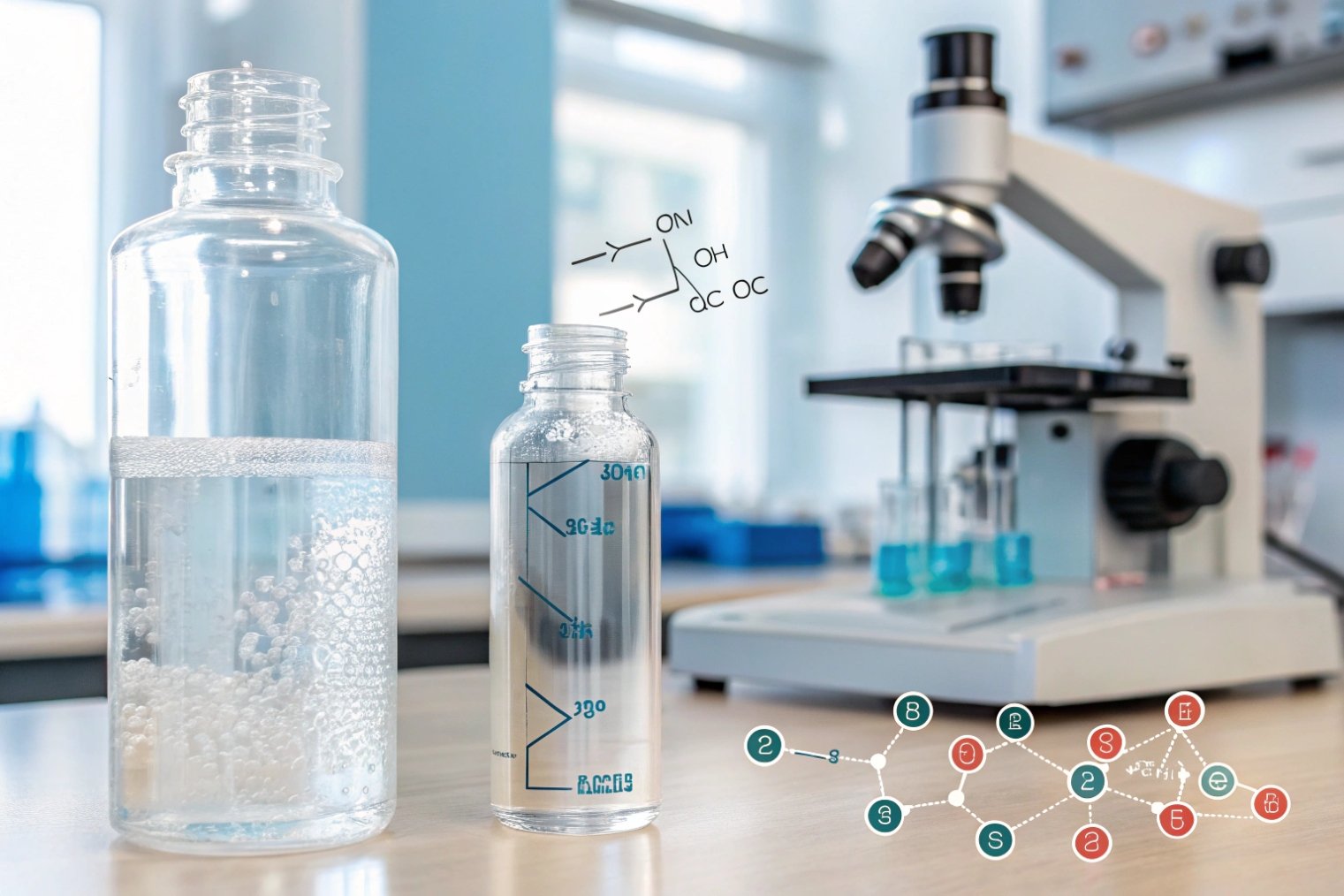
How glass behaves with modern cosmetic formulas
Glass is a rigid, non-porous network—effectively a chemically inert and impermeable barrier 1 at cosmetic temperatures. It does not dissolve, swell, or absorb oils and solvents in any measurable way. This brings several direct benefits:
- The bottle does not steal fragrance or essential oils from the formula.
- It does not release softeners, monomers, or odors into the cream or serum.
- The inner surface stays stable across long shelf lives.
Plastics behave differently. Many plastics can absorb volatile fragrance compounds into their matrix and then slowly release them over time. This “scent scalping” phenomenon 2 is well documented in packaging research and helps explain why top notes can feel flatter in the wrong pack.
Oxygen and vapor permeability also matter. Most plastics let a slow trickle of gas through the wall, and the differences can be measured in barrier studies like the moisture and oxygen barrier properties of glass, PET, and HDPE 3. Over many months this can change pH, oxidize oils, or thin out fragrance. Glass practically stops this flow. Oxygen can still enter through the closure, but the wall itself is a strong barrier.
Risks that come with some plastic containers
Plastic is not always “bad”, but it is more complex:
- Some plastics absorb oil-soluble fragrance and essential oils.
- Certain resins can stress-crack in contact with solvents or high-dose actives.
- Lower grade plastics may carry residual odor that is hard to remove.
For simple shampoos, basic lotions, and rinse-off products, these issues are often small. For an active serum that claims precise percentage of actives and long stability, a small drift can be a real problem.
A quick comparison:
| Property | Glass bottle | Typical plastic bottle (PET / PP) |
|---|---|---|
| Chemical reactivity | Very low | Low–medium, depends on formula |
| Absorption of oils / scents | Negligible | Possible for some systems |
| Gas permeability (O₂, CO₂) | Very low | Higher, rises with time and heat |
| Dimensional stability | High, rigid | Can warp with heat or stress |
When extra protection on glass is needed
Glass does not solve every issue alone. Light-sensitive formulas still need:
- Dark or opaque glass (amber, black, or sprayed).
- Cartons or sleeves that keep bottles out of direct light.
- Closures that seal tight and do not react with essential oils or solvents.
So the rule is simple. For high-value, sensitive formulas, glass gives a safer base. The closure and secondary packaging then finish the job.
On a busy shelf, the consumer cannot test your formula. They judge with their eyes and hands in a few seconds.
Glass brings weight, clarity, and refined finishes that signal quality and care, so even simple shapes immediately feel more premium than the same volume in thin plastic.
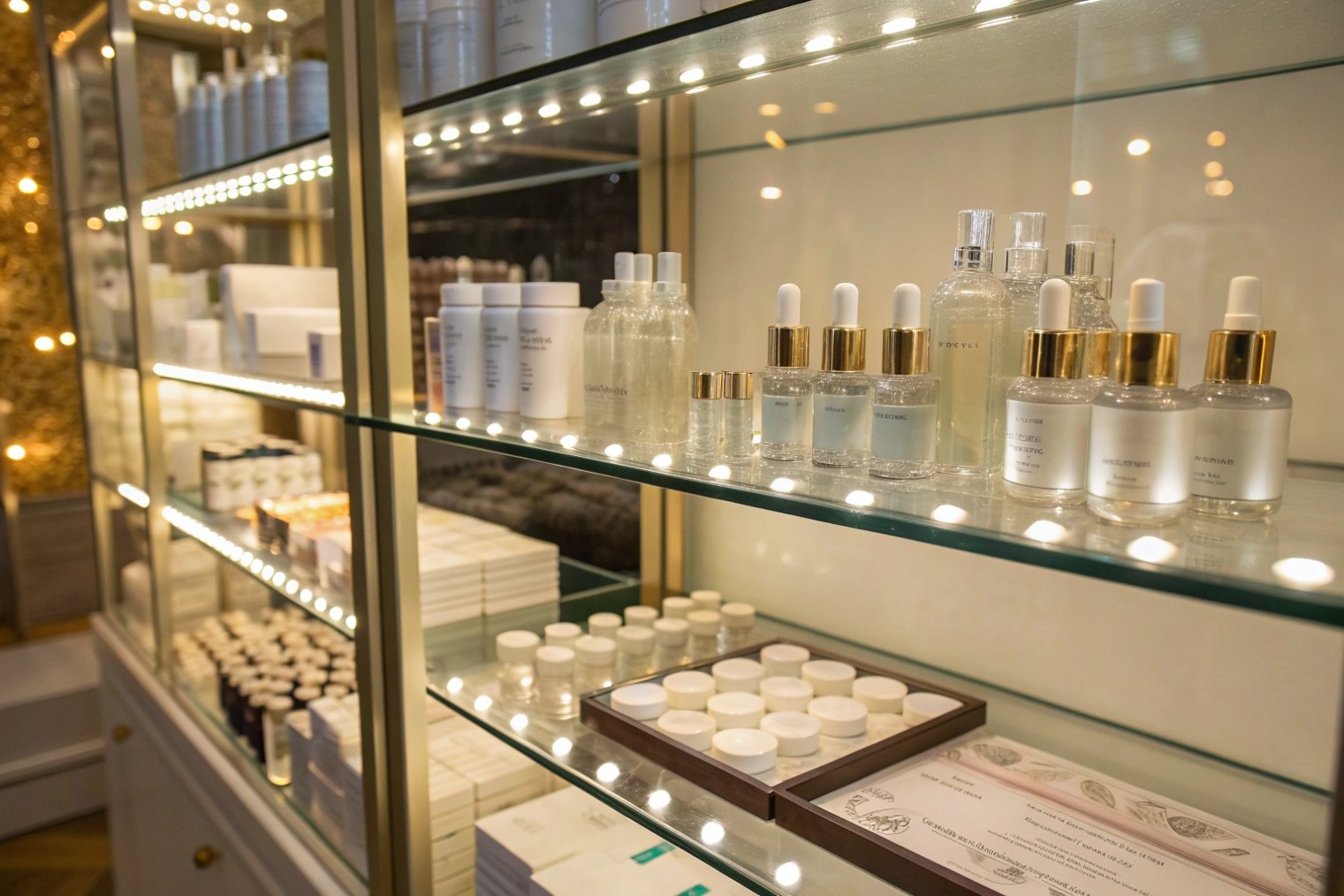
Why glass feels more “expensive” in the hand
Weight is the first signal. A thick glass base and solid walls feel stable. When a customer lifts a glass serum bottle, the heft tells them this is not a disposable item. This supports higher price points and “treatment” positioning.
Rigid walls also keep the shape sharp and clean. Edges do not soften over time. Labels stay flat. Screen-printed graphics do not flex or wrinkle when the bottle is squeezed. Closures sit straight because the neck does not deform.
For droppers and precise pumps, this dimensional control is important. A good seal needs stable neck geometry. That reduces leaks and “pumping air” when the bottle is handled many times.
Visual effects that glass can create
Glass works like a small light tool on the shelf:
- Clear high-flint glass gives a “floating” look to the product inside.
- Frosted glass hides fingerprints, softens reflections, and feels like skin.
- Tinted glass supports color stories for ranges (for example green for calming, blue for hydration).
- Thick bases and facets catch light and create strong brand silhouettes.
These effects are hard to match with standard plastics without heavy coatings or metallization. Even then, touch and sound often reveal plastic at first contact.
A simple view:
| Design choice | Effect on perception |
|---|---|
| Thick, heavy base | Serious, luxurious, “keepsake” |
| Frosted surface | Soft, caring, skincare-like |
| High clarity, sharp edges | Clean, clinical, high-tech |
| Deep color tint | Bold, characterful, line-coding |
How glass supports coherent branding
Glass also helps build a clear family look:
- One serum, one oil, and one essence can share the same glass shape with different closures.
- Ranges can shift mood through surface treatment, not new molds.
- Embossed logos and unique shoulders become long-term brand markers.
This is why many brands start with glass for the “hero” products in a line. Even when the rest of the range uses tubes or jars, the glass bottle often becomes the visual anchor of the brand.
Does glass improve recyclability and sustainability credentials?
Consumers now read more than fragrance notes. They read packaging claims. Many brands want both performance and a convincing sustainability story.
Yes. Glass is endlessly recyclable, easy to clean and reuse, and free from long-term odor carryover, so it supports strong circularity claims when packs are designed for disassembly and refill.
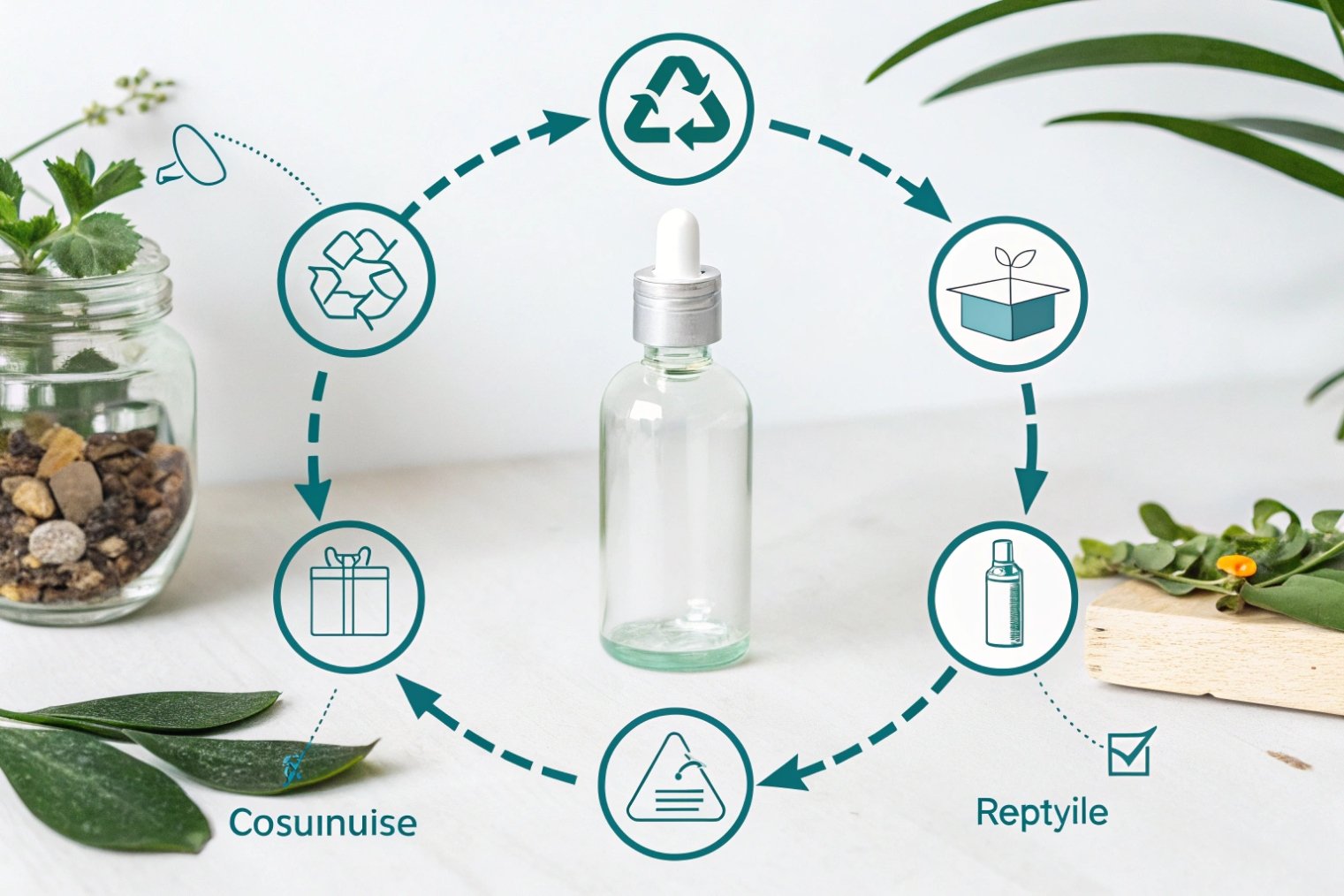
Why glass is strong in recycling systems
Glass has a simple recycled life:
- Use.
- Collect and sort by color.
- Crush into cullet.
- Melt and form into new containers.
If you want a quick, practical reference, glass recycling facts and benefits 4 explain why cullet quality and clean streams matter.
Plastic is more complex. It often needs:
- Sorting by resin type.
- Cleaning heavy residues.
- Down-cycling into lower grade uses.
Some mixed or colored plastics are hard to recycle at all, especially when they combine barriers, foils, and dark pigments.
How glass supports reuse and refill
Glass also fits refill and return models:
- Strong, thick-walled bottles can be designed for many refill cycles.
- Pumps and droppers can be removed while the glass body is washed and reused.
- Consumers accept glass as a “keep” object on the vanity, not just a disposable shell.
In Europe, even industry collaborations now target the unique issues of bathroom-consumed packs, like Cosmetics Europe partnering with Close the Glass Loop 5 to improve collection and recycling of cosmetic glass packaging.
A brief comparison:
| Aspect | Glass bottle | Plastic bottle |
|---|---|---|
| Technical recyclability | Very high (single material) | Varies, often lower |
| Odor carryover | Very low after washing | Often medium to high |
| Consumer perception | Natural, durable, “eco” | Light, convenient, sometimes “cheap” |
| Reuse / refill potential | High, if designed for it | Possible but less accepted |
Limits and honest communication
Glass is not perfect. It is heavier to ship and can break. A real sustainability plan must look at:
- Transport distance and mode.
- Refill rate versus one-way use.
- Energy mix in the glass plant.
But when a brand uses glass for long-lived, refillable packs and designs closures for easy removal, it can combine performance and credible environmental messaging in a way that is hard to reach with complex plastic systems.
When do weight and breakage make plastic a better choice?
If glass were always best, every product would use it. But bathrooms, travel bags, and children’s rooms are not gentle places.
Glass is not ideal for very large, heavy, drop-prone or travel-heavy products; in those cases, well-chosen plastics or hybrids can cut breakage, weight, and cost while still protecting the formula.

Situations where plastic makes more sense
There are clear cases where plastic wins:
- Shower and bath: large bottles for body wash or shampoo are handled with wet, soapy hands. Drops are common. Glass shattering in a shower is a real safety risk.
- Travel and handbag use: weight and breakage risk in luggage or purses matter more than ultimate barrier performance.
- Very large volumes: 500 ml or 1 L containers for salon back-bar or family-size products become heavy in glass and increase freight emissions.
Here, PET, HDPE, or PP containers can deliver:
- Lower weight per unit.
- Better drop resistance.
- Lower product loss if slip and fall happens.
How to choose “better” plastic when glass is not practical
If a project must use plastic, there are still ways to keep performance and reduce impact:
- Select resins with good chemical resistance for the formula (for example, PET or PP compatible with surfactants and oils).
- Use mono-material designs where bottle, closure, and label share the same family when possible. This simplifies recycling.
- Avoid heavy metallization, dark carbon-black pigments, and complex multi-layer bodies that make recycling harder.
- Keep walls as thin as safety allows to reduce plastic use.
For higher-end products, hybrid solutions are possible:
- A plastic inner bottle inside a decorative, reusable outer glass shell.
- Refillable systems where a light plastic pod locks into a durable glass or metal case.
To protect sensitive actives even further, some brands shift to airless formats; for example, airless cosmetic packaging that limits oxygen ingress 6 can reduce oxidation pressure on active-rich formulas.
Balancing formula needs, use case, and brand story
In practice, the choice is not “glass or plastic everywhere”. It is usually a mix, and it often follows the same logic described in reusable packaging business models 7 where durable packs are kept in circulation:
- Hero serums, facial oils, and treatment essences in glass.
- Shower gels, hair products, and big family sizes in plastic.
- Travel sizes in light plastic or aluminum, sometimes with glass reserved for more careful users.
When the pack type follows the real use conditions, the product feels honest. Customers understand why a delicate face serum lives in a heavy glass bottle, and why a child’s shampoo comes in a safe, squeezable plastic bottle.
Conclusion
Glass bottles suit high-value, sensitive cosmetics because they protect the formula, raise shelf impact, and support reuse and recycling, while plastic still has a clear role where weight, impact, and safety come first.
Footnotes
-
Explains why glass is inert and impermeable—key to protecting sensitive cosmetic formulas. ↩ ↩
-
Review of “scalping” where plastics absorb aroma compounds, reducing fragrance intensity over time. ↩ ↩
-
Data comparing moisture/oxygen barrier performance of glass versus common plastics like PET and HDPE. ↩ ↩
-
Practical facts on cullet remelt, energy savings, and how to recycle glass effectively. ↩ ↩
-
Industry initiative describing how to improve collection and recycling of cosmetic glass packaging in Europe. ↩ ↩
-
How airless dispensing limits oxygen ingress, helping actives stay stable from first to last dose. ↩ ↩
-
Clear overview of refill/return models to keep durable packaging in circulation longer. ↩ ↩






