
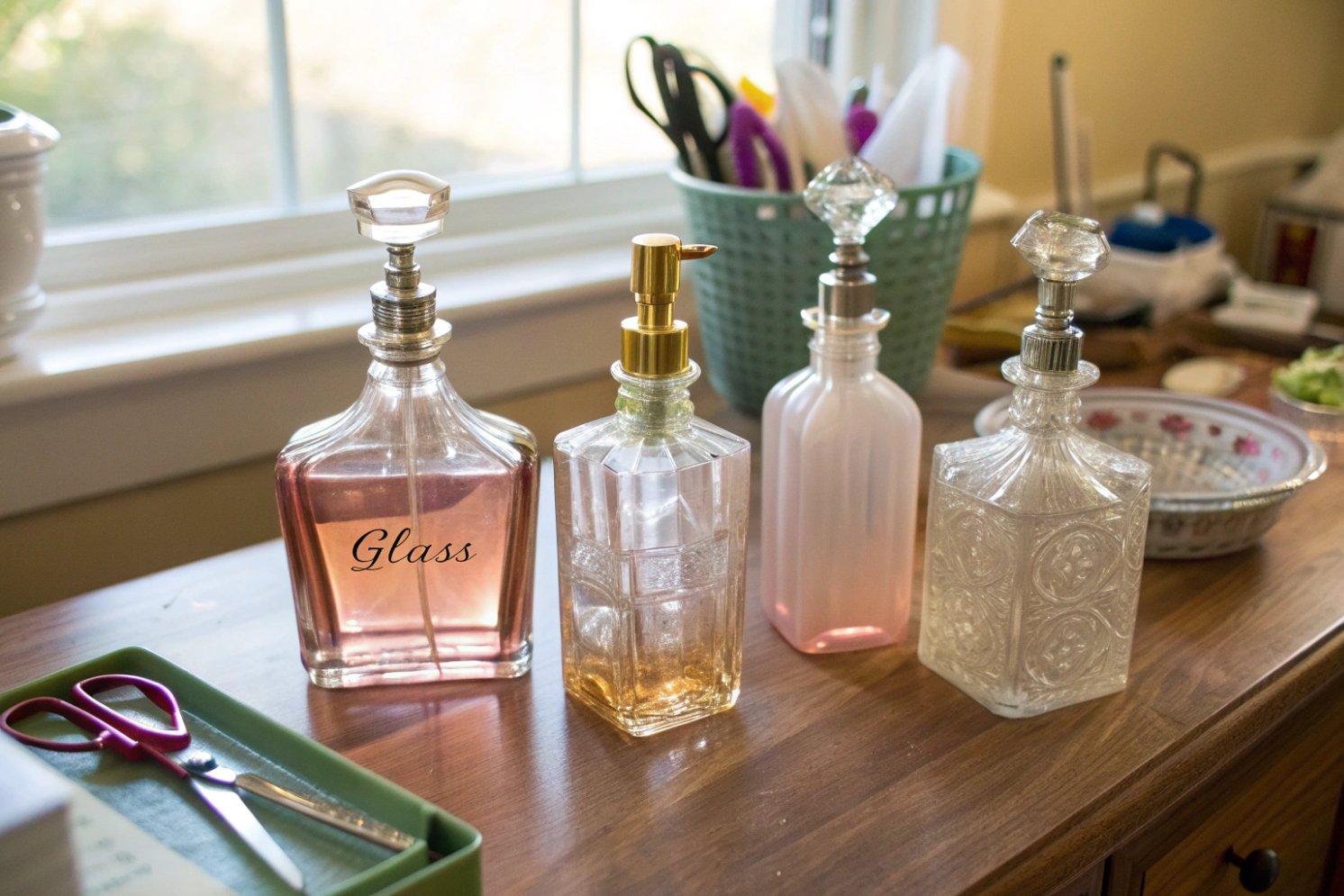
Empty glass perfume bottles feel too beautiful for trash, yet recycling rules seem confusing and packaging is full of pumps, collars, and heavy coatings.
Yes, most glass perfume bottles can be recycled if you remove pumps and mixed-material collars, empty and rinse out perfume, and follow local rules; where curbside fails, reuse, take-back, or refill work.
From a glass supplier view, perfume bottles sit in a grey zone. The glass itself is usually recyclable, but the mixed materials around it cause trouble. Good preparation and smart program design—especially guidance around coatings and metallization in design for recycling in cosmetic glass packaging 1—turn a “maybe” into a clear “yes” for both recyclers and brands.
How should pumps and metal collars be separated before recycling?
An intact perfume bottle looks like one object, but recyclers see a cluster of different materials that must be split up.
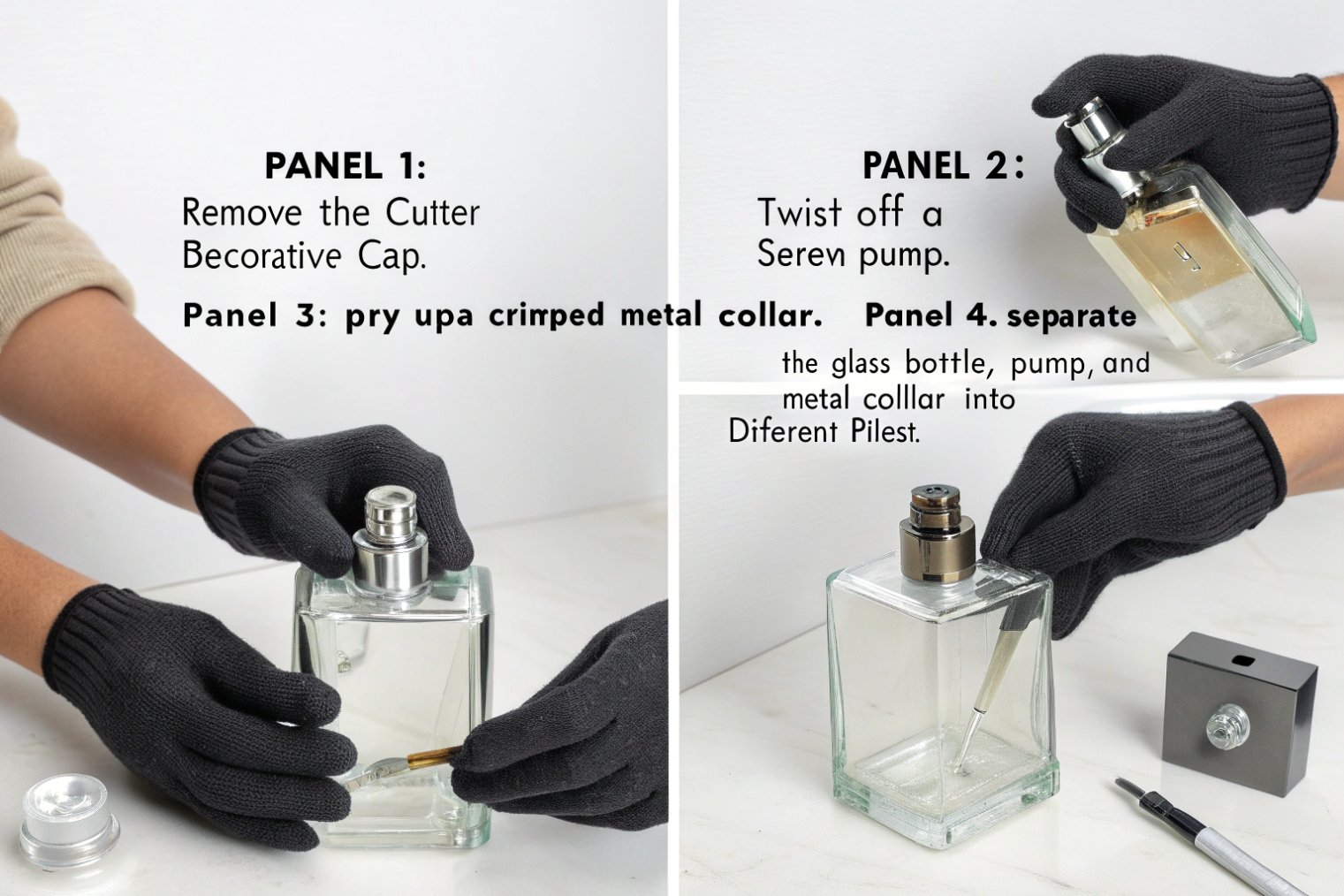
Twist-off pumps and loose collars should be removed by hand; crimped pumps often need careful prying with pliers so the glass neck stays intact and only clean glass enters recycling.
1. Separate the bottle into simple material streams
Recycling plants like simple, single-material parts. Before glass can go in the bin, it should stand alone—because the value of clean cullet depends on a reliable glass recycling system 2.
Basic steps that work for most bottles:
-
Take off the outer cap
- Plastic or metal dust-cap comes off first.
- Check if it has a recycling code; if not, treat it as general waste unless your program says otherwise.
-
Remove the spray pump
- For screw pumps: twist counter-clockwise and lift off. Many brands now design them this way to help recycling.
- For crimped pumps: a metal ring hugs the glass neck. This ring holds plastic, spring, and dip tube in one unit.
-
Deal with the metal collar
- If the collar is loose, slide it off and keep it with scrap metal.
- If it is crimped, use flat pliers to bend and lift carefully. Do not chip the glass neck.
-
Pull out the dip tube and inner pump parts
- These are usually mixed plastic and small metal. Most curbside programs do not recycle these mixed units, so they go to trash unless your local scheme says otherwise.
A simple part-by-part view:
| Part | Typical material mix | Where it usually goes |
|---|---|---|
| Glass bottle body | Soda-lime glass | Glass recycling (if accepted locally) |
| Outer decorative cap | Plastic / metal | Metals or plastics, or trash if unclear |
| Spray pump + dip tube | Plastic + metal + rubber | Trash (or specialist collection if offered) |
| Loose metal collar | Aluminum / steel | Metal recycling, if local system accepts |
| Paperboard carton | Paper | Paper/cardboard recycling |
2. Keep safety and effort in balance
Crimped pumps are the hardest part. If removal feels unsafe, reuse might be better than forcing the collar off. Some local programs do not accept perfume bottles at all because of these mixed parts, so always check local rules first.
Where brands can help, they should:
- Use screw-neck designs instead of heavy crimps, so users twist off pumps easily.
- Limit heavy glued ornaments that cannot be removed without tools.
- Follow practical recommendations in the Design for Recovery Guidelines: Glass Packaging 3 when choosing closures and decorations.
When bottles are designed for easy disassembly, more glass reaches the furnace instead of landfill.
Are lacquered or electroplated bottles accepted by most MRFs?
Decorations make bottles beautiful, but every coating is a question mark for a sorting line.
Most MRFs accept frosted or painted perfume glass, but thick mirror, ceramic, or heavy metal plating may be rejected; opaque coatings help light protection yet can complicate sorting, so always check local rules.
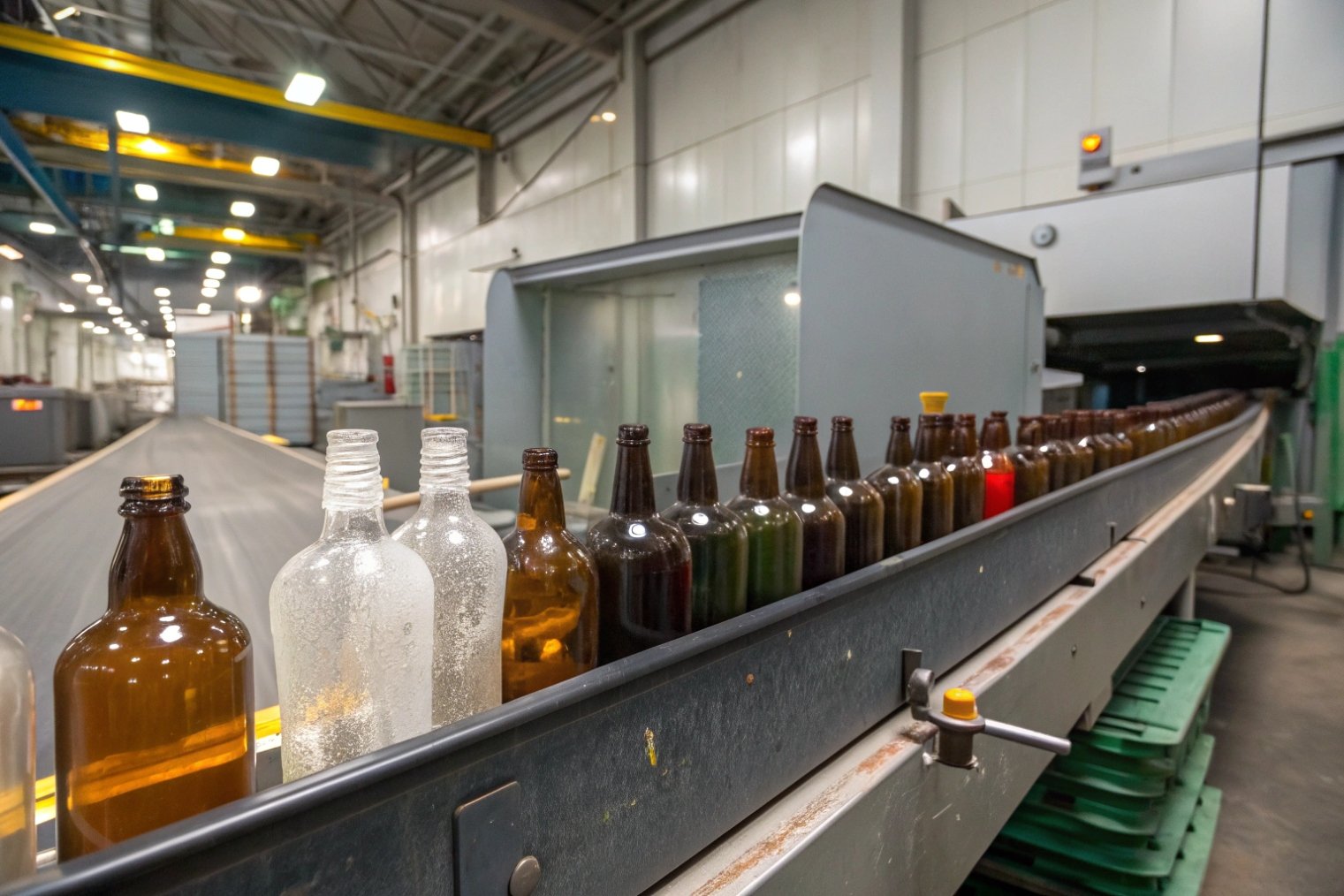
1. How MRFs see decorated glass
Material recovery facilities (MRFs) mainly care about three things:
- Does it behave like glass when broken and melted?
- Can their optical sorters still “see” the color?
- Is contamination from metals or ceramics low enough?
Normal frosted, etched, and simple painted bottles usually behave like standard container glass and are often accepted. The glass network stays the same, and thin coatings burn off or separate during processing.
Trouble grows when decorations become thick or non-glass:
- Full mirror coatings and internal silvering
- Ceramic glazes or enamel layers
- Heavy electroplated shells that wrap the whole bottle
These can confuse sorting systems or introduce non-glass fragments into cullet.
2. Typical acceptance of different finishes
| Finish type | Typical recyclability response* | Notes |
|---|---|---|
| Clear / amber / cobalt in-mass | Widely accepted container glass | Standard choice |
| Frosted or acid-etched | Often accepted as normal glass | Coating is thin |
| External lacquer / spray paint | Often accepted, if coating is thin | Thick layers can be an issue |
| Fully mirrored / silvered | Sometimes rejected | Acts more like mixed material |
| Heavy electroplated body | Often rejected or treated as special waste | Hard to break and sort |
| Ceramic-coated, stone-look | Often not accepted as container glass | May go with construction glass or landfill |
*Always subject to local rules.
Some MRFs also struggle with very dark or black glass, because optical systems can reject low-transmission pieces during the sorting of dark glass shards 4. In those areas, very dark perfume bottles may be pulled out even if the glass itself is high quality.
3. How brands can design for easier recycling
A few design choices reduce risk:
- Prefer in-mass colored glass (amber, green, cobalt) over full mirror or opaque ceramic shells.
- Keep decorative coatings thin and limit special effects to small areas.
- Avoid fully encapsulating the bottle in metal or resin.
If a design must use very heavy decoration, pairing it with take-back or refill programs is more honest than claiming simple curbside recyclability. We will look at those options later.
Can leftover fragrance residues contaminate the recycling stream?
Old perfume often smells strange. That is already a sign that the chemistry inside the bottle has changed.
Recycling facilities want bottles empty and lightly rinsed; large amounts of leftover perfume can contaminate glass cullet, add flammable solvent, and should go to hazardous-waste or special disposal instead.
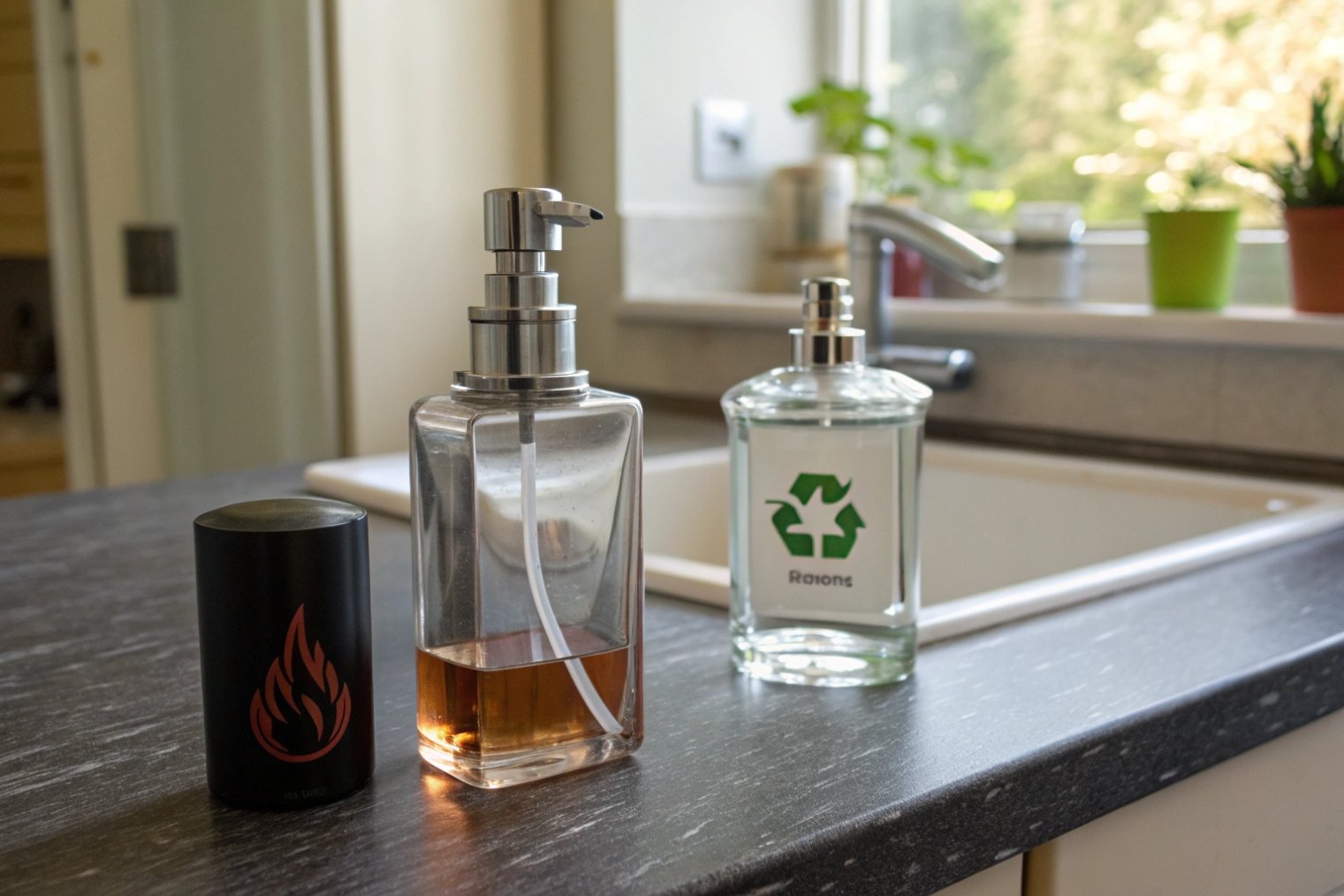
1. Why recyclers dislike “liquid inside”
Perfume is usually a mix of:
- High-proof ethanol
- Fragrance oils and other organics
- Sometimes water and solvents
If you send full or half-full bottles into a glass stream:
- The flammable liquid can be a safety risk in collection and at the plant.
- Leaking perfume coats other recyclables and can cause contamination.
- Strong odor can make workers reject whole loads.
Many guides now say clearly: recycle the glass only when the bottle is empty and reasonably clean. Leftover liquid should follow household hazardous waste guidance 5, not regular recycling.
2. Simple preparation steps for users
A basic routine that works in most regions:
- Use up or repurpose the perfume
- Use the last sprays on textiles, as room scent, or in DIY fresheners.
- Remove pumps and caps as described earlier.
- Let very small leftovers evaporate in a well-ventilated area, away from flames and children.
- For larger volumes, treat as household hazardous waste rather than evaporation in a room.
- Rinse the bottle with a little warm water and a drop of soap. Swirl and empty into the sink once only a faint smell remains.
- Let the bottle dry before placing in recycling.
A quick guide:
| Situation | What to do |
|---|---|
| Only a few drops left | Remove pump, let evaporate safely, then rinse bottle |
| Several milliliters left | Take to hazardous-waste collection or follow local advice |
| Strong perfume smell after rinse | Rinse again with warm soapy water |
| Sticky or oily residue | Use a bit of dish soap; for refill projects, use alcohol or vinegar soak first |
3. Brand responsibilities
Brands can help recyclability by:
- Printing simple “remove pump, empty, rinse, recycle glass” icons on cartons.
- Avoiding claims like “fully recyclable bottle” when the normal use pattern leaves a lot of residue.
- Offering guidance on safe disposal of unused perfume, not just the packaging.
- Pointing customers to a local locator (for example, a Where to Recycle map 6) when curbside rules differ by city.
When both brand and user do this small extra work, cullet quality stays higher, furnace issues drop, and the environmental benefit of glass recycling becomes real rather than theoretical.
What take-back or refill programs work for fragrance brands?
Not every bottle can enter curbside glass. Some are too decorated, too small, or sold in cities without glass collection.
Effective fragrance programs mix refillable bottles, in-store fountains, and branded take-back or mail-back schemes so glass stays in use longer and less mixed-material packaging enters municipal recycling streams.
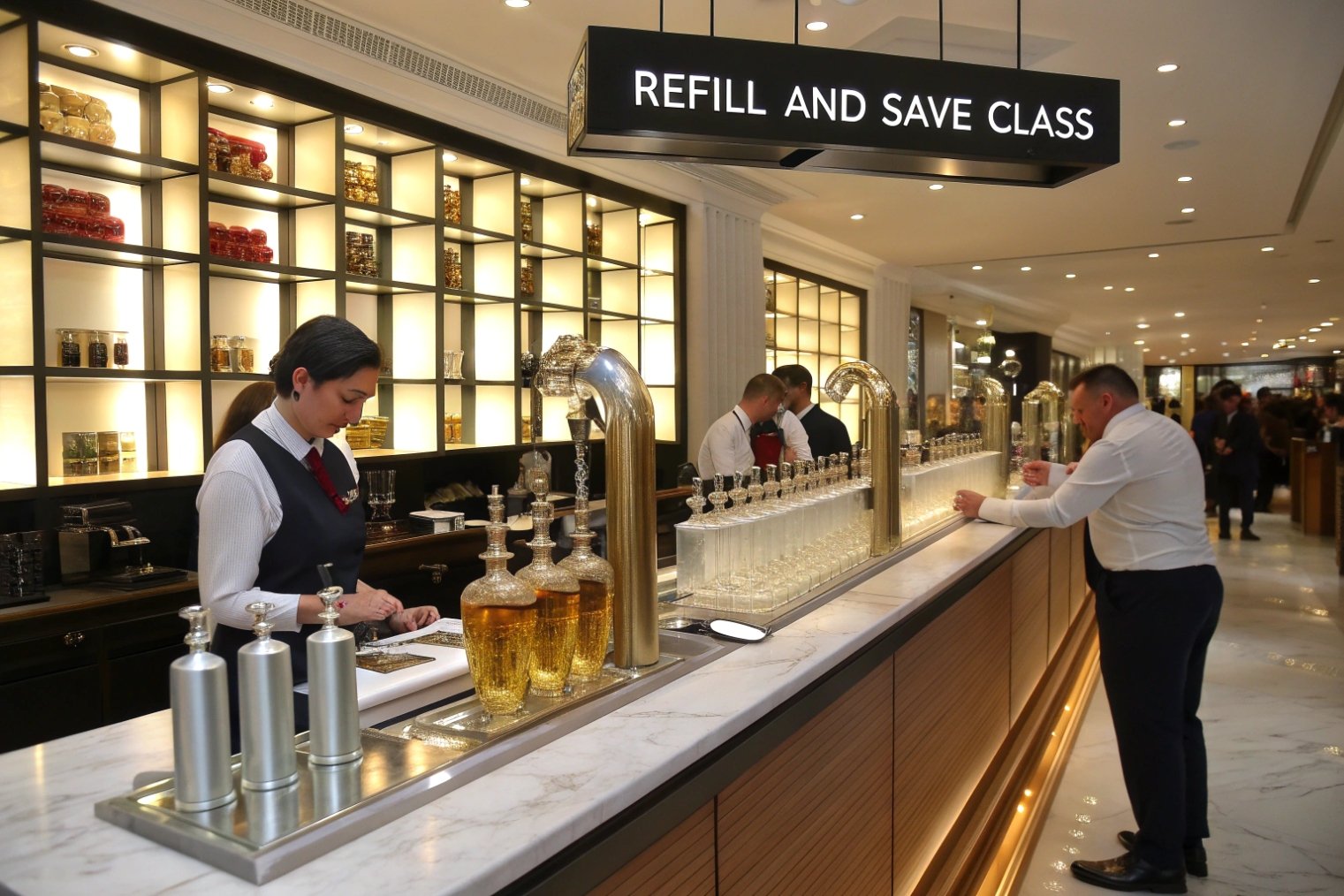
1. Main models that brands are using now
Several patterns are already working in the market:
-
Refillable flagship bottles
- A heavy, durable glass bottle used many times.
- Customers buy lighter refill pouches or cartridges.
- Some brands offer in-store “fountains” that top up the original bottle.
-
Brand take-back programs
- Customers bring or mail back empty bottles.
- The brand or its partner separates pumps, metals, and glass.
- Glass goes to specialized recyclers that can handle decorated containers.
-
Retailer collection schemes
- Multi-brand stores set up bins for empty fragrance and cosmetic packaging.
- Collected items go to aggregators who send them to dedicated recycling partners.
-
Upcycling and re-use
- Brands encourage customers to turn empty bottles into small vases, diffusers, or décor instead of discarding them.
For planning and messaging, many teams borrow structure from reusable packaging business models 7 so “refill” and “return” are clear to customers.
2. Pros and cons for brands and users
| Program type | For the brand | For the user |
|---|---|---|
| Refillable bottle | Strong loyalty, less glass over time | Saves money on refills, keeps favorite bottle |
| In-store fountain | Drives store visits, premium experience | Immediate refill, no new packaging |
| Mail-back take-back | Central control, better sorting | Needs effort to pack and ship |
| Retailer collection | Shared logistics, good PR | Easy drop-off during shopping |
| Upcycling guidance | Low cost, supports brand story | Fun DIY, but not for everyone |
The most robust systems combine these. For example, a flagship refillable bottle plus a take-back option for customers who want to change scents or declutter.
3. Design choices that support circular systems
To make take-back and refill work, the bottle itself must support many lives:
- Durable glass that withstands repeated handling and washing.
- Closures that can be removed and replaced without damaging the neck.
- Decoration that still looks good after years, or can be gently stripped and redone.
Inside the factory, collected bottles can go three ways:
- Direct reuse after cleaning and new pumps.
- Component recovery, where collars and pumps are separated for material recycling.
- Cullet production, where broken glass becomes feedstock for new bottles.
When the next generation of perfume packaging is designed with these flows in mind, recycling questions become much easier to answer. The goal shifts from “Can this bottle be recycled?” to “How many lives can this bottle have before it finally becomes cullet?”
Conclusion
Glass perfume bottles can be recycled and even reused many times when design, user preparation, and smart brand programs all work in the same direction.
Footnotes
-
Explains how coatings and metallization can affect cosmetic glass recycling outcomes. ↩ ↩
-
Shows how cullet supports glass recycling efficiency and why clean, single-material glass matters. ↩ ↩
-
Practical guidance for designing glass packs so decoration and components don’t block recycling. ↩ ↩
-
Explains why very dark glass can be mis-sorted and lost during optical glass recycling. ↩ ↩
-
Helps users handle leftover perfume safely using standard household hazardous waste best practices. ↩ ↩
-
Example of a local recycling locator for items that don’t fit uniform curbside rules. ↩ ↩
-
Clear framework for refill/return programs that keep premium glass bottles in use longer. ↩ ↩






