
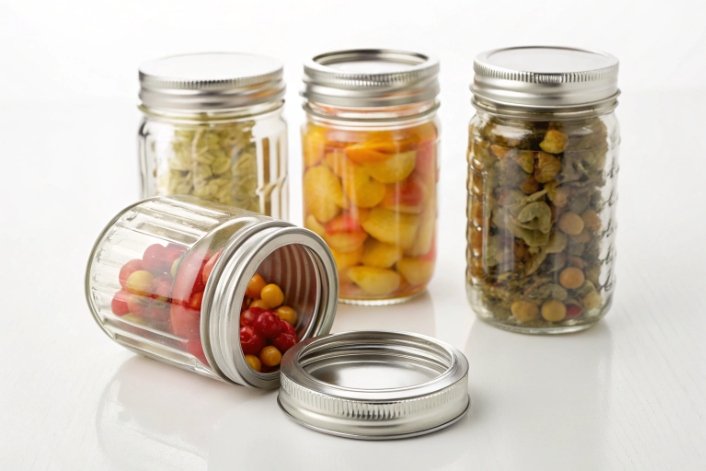
The Mason jar changed how families preserved food 1, offering a simple airtight design that saved harvests from spoilage.
A Mason jar is a type of glass jar with a threaded mouth and a two-piece metal lid that creates an airtight seal, invented in 1858 to revolutionize home canning.
From wartime kitchens to modern pantries, the Mason jar has traveled across centuries, adapting to needs and trends. Let’s explore how it began, why it works, and why industries still trust it today.
Who invented the Mason jar and how did the design evolve?
Before the Mason jar, preserving food at home was risky and inconsistent.
The Mason jar was invented and patented in 1858 by John Landis Mason, who aimed to solve the sealing issues of previous home canning methods.
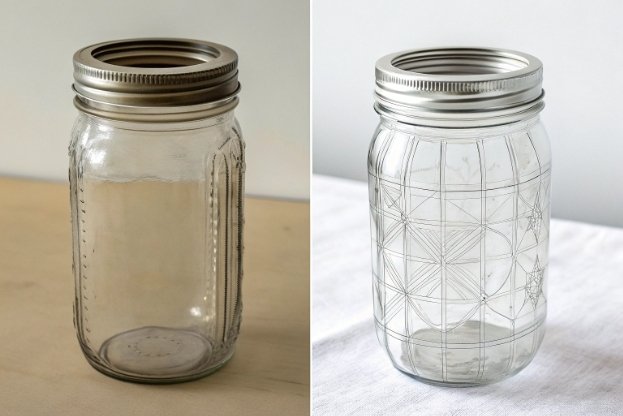
From Zinc Lids to Two-Piece Seals
John Landis Mason’s early design 2 used a zinc screw-on lid with a milk-glass liner. It was more secure than corks and wax seals. After Mason’s patent expired, the design spread widely. Ball Brothers, Kerr, and Atlas became leaders in glass jar production 3.
In 1915, Alexander H. Kerr introduced the two-piece lid still used today—a flat metal disc with a rubber-like ring underneath and a screw-on band. This innovation ensured better seals and easier handling.
| Year | Innovation | Inventor/Brand |
|---|---|---|
| 1858 | Screw-thread jar | John L. Mason |
| Late 1800s | Mass production of jars | Ball Brothers |
| 1915 | Two-piece lid system | Alexander H. Kerr |
The jar’s popularity surged during the Great Depression and WWII when home canning was a necessity. Even today, many of these antique jars are collectible items.
Why do regular-mouth and wide-mouth standards exist?
Different foods need different openings. Home canners needed flexibility.
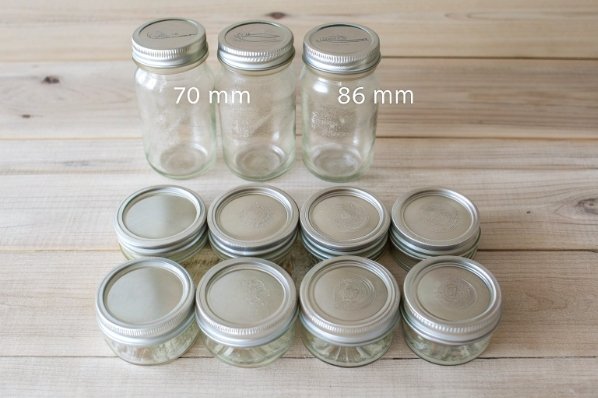
Regular-mouth (~70 mm) and wide-mouth (~86 mm) standards were introduced to improve usability and maintain lid compatibility across brands.
Functional and Standardized
Regular-mouth jars are ideal for pouring liquids like sauces 4. Wide-mouth jars suit solid foods like pickles or whole tomatoes. These mouth sizes became industry norms, especially during the 20th century when large brands like Ball and Kerr standardized them.
Standardization allowed users to buy lids and rings separately and still expect a proper fit—an important advantage during periods of material shortage or rationing.
| Mouth Size | Approx. Diameter | Best For |
|---|---|---|
| Regular | ~70 mm | Sauces, jams, juices |
| Wide | ~86 mm | Pickles, fruits, salads |
That’s why even today, you can use a Ball lid on a Kerr jar if the mouth size matches.
How are modern Mason jars manufactured at scale today?
Modern demand for quality and consistency requires more than just tradition.
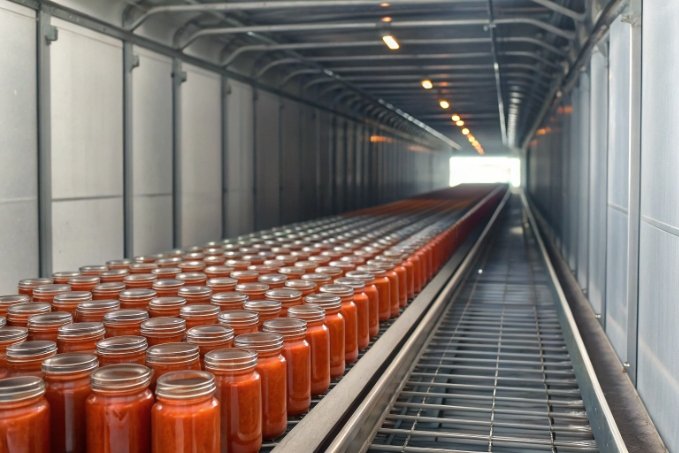
Today’s Mason jars are mass-produced in glass factories using automated molds, annealing ovens, and strict quality checks to ensure food safety and consistency.
From Raw Materials to Airtight Containers
The process starts with silica sand, soda ash, and limestone melted in a furnace 5. The molten glass is then shaped using precision molds. Automated machines ensure uniform wall thickness, accurate threading, and consistent sizing.
After molding, jars are annealed in controlled ovens to release internal stresses. They are then inspected for cracks, bubbles, or other defects. Many facilities conduct:
- Stress Testing: Ensuring jars withstand pressure canning 6
- Seal Testing: Verifying airtightness of lids
- Capacity and Dimension Checks: For consistent volume and compatibility
Lids are typically made of tinplate with BPA-free sealant rings. These are tested separately under USDA-recommended standards.
| Process Stage | Description |
|---|---|
| Melting | Raw glass materials heated to over 1400°C |
| Molding | Automated equipment shapes jars with precision |
| Annealing | Gradual cooling to avoid cracking |
| Quality Control | Includes visual inspection, pressure testing |
Modern production combines scale with precision to meet both hobbyist and commercial demand.
Which industries still rely on Mason jars commercially?
Some things never go out of style—especially reliability.
Mason jars remain vital in food, beverage, cosmetics, and home décor industries for their practicality, sustainability, and aesthetic value.

Beyond Grandma’s Pantry
In the food industry, artisan producers use Mason jars for jams, pickles, sauces, and honey 7. Their clear glass showcases product quality while the seal guarantees freshness.
Cosmetic brands package creams and scrubs in Mason-style jars to reinforce natural, handcrafted branding. In home décor, Mason jars appear as vases, candle holders, and lighting fixtures.
They’re also used in:
- Specialty drinks (iced tea, cold brew coffee)
- Meal kits and salads for portable, zero-waste meals
- Fermentation for kimchi, kombucha, and yogurt
| Industry | Common Use |
|---|---|
| Food | Canning, packaging, fermentation |
| Beverage | Cold brew, juices, cocktails |
| Cosmetics | Creams, bath salts, scrubs |
| Home Décor | Lighting, floral arrangements, candles |
The jar’s versatility and nostalgic charm keep it in demand from boutique shops to global retailers.
Conclusion
The Mason jar began as a food preservation tool and grew into a timeless symbol of practicality, creativity, and design.
Footnotes
-
Overview of Mason jar history and its impact on American home food preservation. ↩︎ ↩
-
National Inventors Hall of Fame biography for John Landis Mason and his 1858 screw-top jar patent. ↩︎ ↩
-
Historical background on Ball, Kerr, and Atlas brands and their roles in Mason jar production. ↩︎ ↩
-
Guide to standard regular and wide-mouth Mason jar diameters and common uses for each size. ↩︎ ↩
-
Step-by-step explanation of modern glass jar manufacturing, from raw materials to finished, food-safe containers. ↩︎ ↩
-
Overview of glass container quality control tests, including pressure resistance and thermal shock performance. ↩︎ ↩
-
Article describing Mason jars’ modern popularity and diverse uses in food, storage, crafts, and décor. ↩︎ ↩






