
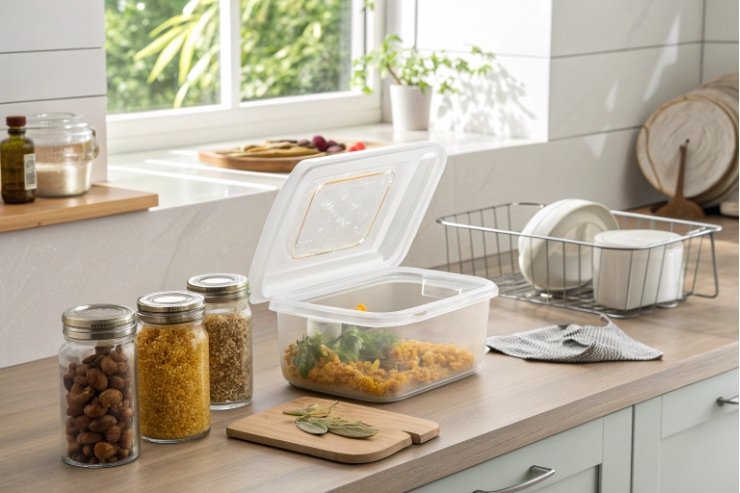
Every time a plastic box comes out of the cupboard smelling like last week’s curry, glass jars start to look very smart. They fix problems that plastics and bags cannot.
Glass jars reduce odor and taste transfer, handle hot-fill and dishwash cycles without warping, make pantry stock visible at a glance, and stay airtight when paired with the right lids and liners.
Glass is not just about aesthetics or social media pantries. It is a practical material choice. When jars are matched with good closures, they help food last longer, reduce waste, and make daily cooking simpler and safer. Groups like the European Container Glass Federation 1 describe glass as virtually inert and impermeable for packaging.
Does glass reduce odor, taste transfer, and stains?
Anyone who has scrubbed an orange-stained plastic tub knows how stubborn oils and colors can be. Strong-smelling foods seem to live forever in the lid.
Yes. Glass is non-porous and inert, so it does not absorb colors, oils, or aromas. When cleaned well, a glass jar goes back to “neutral”, even after tomato sauce, kimchi, or garlic.
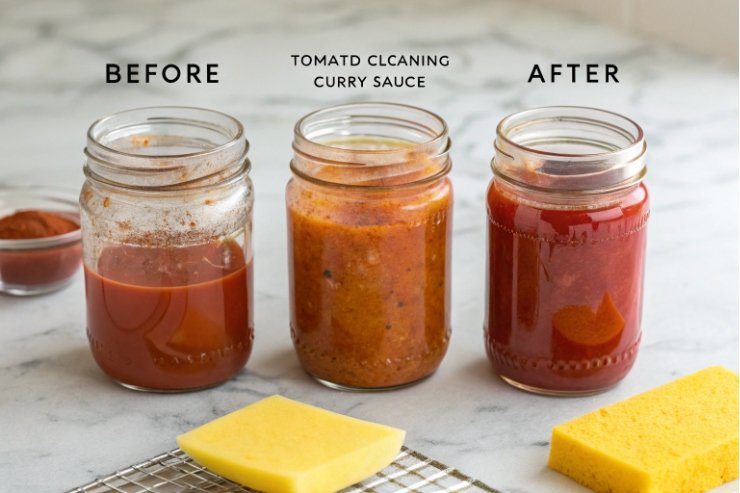
Why glass stays neutral when food does not
Glass has a smooth, non-porous surface 2. Food molecules sit on top of it, rather than soaking into it. There are no tiny pathways inside the material for oil or pigment to hide in. When hot water and detergent remove the surface film, the jar is truly clean again.
Most household plastics are different. They have microscopic pores and a softer surface. Oil, color, and aroma can sink slightly into this layer. Even after a good wash, a faint smell or stain can remain. That is why old plastic containers often smell like onion even when empty.
This difference matters when you store:
- Strongly colored foods (tomato sauce, curry, beetroot, chili pastes).
- Fermented foods (kimchi, sauerkraut, pickled garlic).
- High-fat items (pesto, nut butters, leftover frying oils).
Glass does not keep a “memory” of the dish. Plastic often does.
Stains, smells, and long-term use
Over time, light and heat can make plastic stains worse. Oils and sauces that seem fine at first can gradually yellow the container. Glass does not change color from food contact. If the jar looks tinted, it was made that way at the factory.
For smell, it helps to think in three layers:
- Food film on the surface.
- Oils in scratches and scuffs.
- Molecules that sank into the material itself.
With glass jars, cleaning removes layer one, and there is very little of layers two and three. With old plastic, layers two and three keep feeding new smell to the surface.
A simple comparison:
| Feature | Glass jar | Plastic tub |
|---|---|---|
| Absorbs odors | No | Yes, over time |
| Stains from tomato | Rare and easy to remove | Common and often permanent |
| Reacts with acids | No | Some plastics can dull or pit |
| Returns to “neutral” | Almost completely with washing | Often never fully neutral |
So if you want a container that can hold garlic one week and delicate baked goods the next, glass jars are the safer bet.
Are jars safer for hot-fill, canning, and dishwash?
Hot jam in a plastic tub, or boiling brine in a thin container, can feel risky. Some plastics warp or release more chemicals when heated.
Proper canning-grade glass jars handle hot-fill, boiling-water canning, and dishwasher cycles far better than most plastic, as long as you respect thermal shock limits and use canning-safe closures.
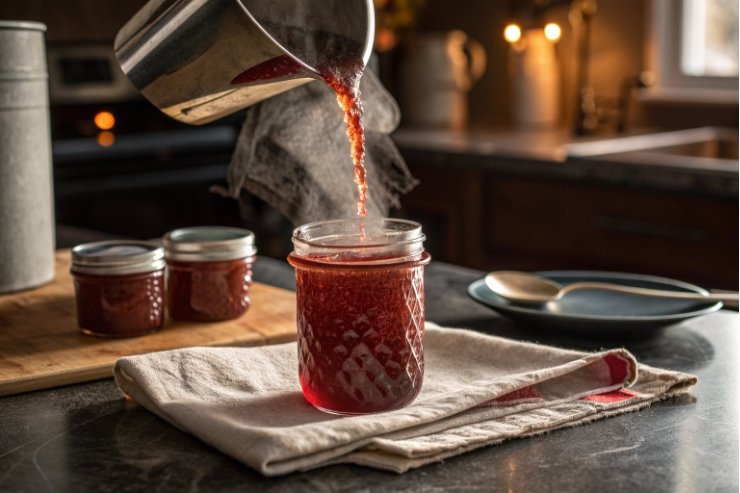
Heat tolerance for cooking and preserving
Glass can take high temperatures without melting or warping. That is why it suits:
- Hot-fill of sauces, jams, chutneys, and syrups.
- Boiling-water bath canning for high-acid foods like pickles and fruit preserves.
- Oven or microwave use (only if the jar and lid are rated and used without sudden temperature shocks).
Many plastics, by contrast, soften or deform near boiling. Some are not rated for repeated high-heat cycles, especially with oil or acid. That can lead to:
- Warped lids that no longer seal.
- Micro-cracks where bacteria can hide.
- More migration of additives into food at high temperature.
Thermal shock and safe handling
Glass is strong, but it does not like sudden, extreme temperature jumps. To avoid thermal shock 3, good practice:
- Do not pour boiling liquid into a fridge-cold jar.
- Warm jars gently before filling (for example, in hot tap water or a low oven).
- Let jars cool slowly on a towel after filling or canning, away from cold air streams.
Canning-grade jars are made with shapes and glass recipes that handle these stresses better than random reused bottles. That is why National Center for Home Food Preservation canning guidelines 4 insist on proper jars, not “any jar that fits a lid”.
Dishwashers and everyday cleaning
Glass jars are very happy in the dishwasher:
- They keep their shape.
- Surface stays smooth and easy to clean.
- Printed volume marks or embossed logos remain readable.
Most household plastics cannot handle years of hot dishwasher cycles without going cloudy, scratched, or warped. As they degrade, it becomes harder to trust them with hot fills or long storage.
A quick view of heat uses:
| Use case | Glass jar (canning-grade) | Typical plastic container |
|---|---|---|
| Hot-fill sauces | Safe with warm jar | Often not recommended |
| Boiling-water canning | Designed for this | Not suitable |
| Dishwasher high-temp cycle | Safe | May warp or cloud over time |
| Oven / microwave | Sometimes safe (no lid shock) | Only if specifically rated |
So jars are not just “okay” with heat. In many uses, they are the safest and most stable choice in a normal kitchen.
Do clear walls improve inventory rotation and safety?
Most of us have lost food at the back of the fridge in an opaque tub. “Mystery leftovers” are how waste begins.
Yes. Clear glass walls make pantry and fridge stock visible at a glance, which helps you rotate food properly, spot spoilage early, and avoid reusing the wrong ingredient by mistake.
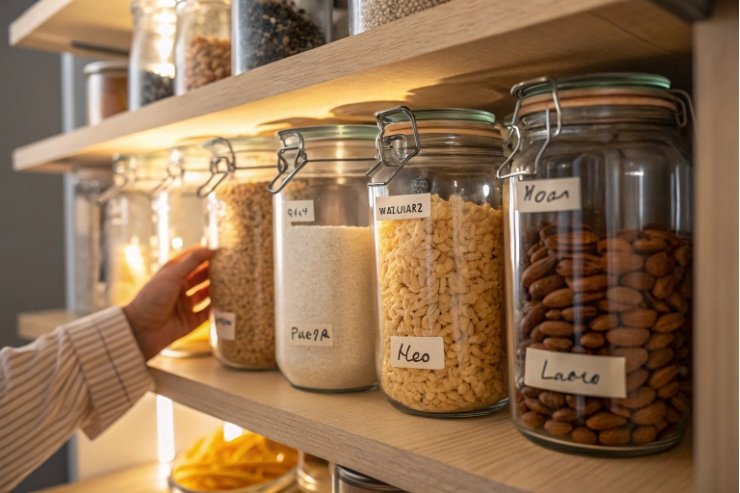
Seeing what you have, before it spoils
Glass jars show:
- The exact level of food left.
- Color changes that hint at age or oxidation.
- Condensation or mold developing on the inside.
This visual information helps you:
- Reach for older jars first, not just the ones on top.
- Notice when herbs, sauces, and stocks are nearing their limit.
- Throw out spoiled food before it contaminates nearby items.
If you also want official timelines, the FoodKeeper app’s storage guidance 5 helps you track how long foods keep in the fridge, freezer, and pantry.
In contrast, opaque containers hide all of this. You have to open them to check, which many people delay. That delay turns “maybe still fine” into “definitely bad”.
Safer identification in a busy kitchen
When many foods have similar texture or color (for example, sugar vs salt, flour vs baking mix, chili sauce vs barbecue sauce), clear jars plus labels lower the chance of mistakes.
You can:
- Confirm contents with eyes before measuring.
- See foreign objects or broken pieces in a jar.
- Check if pests or moisture got into a dry good.
In a home or small commercial setting, this simple visibility raises safety without new gadgets or sensors.
Better rotation and less waste
It is easier to run a “first in, first out (FIFO) 6” system with glass:
- Older jars look older. You can see dates and levels.
- Half-used jars are obvious, so they get used up.
- New batches can be layered behind or below older ones.
Over time, this cuts down:
- Duplicate buys (“I did not know we still had lentils”).
- Forgotten leftovers that create smells and bacteria.
- Confusion about how long something has been open.
A quick comparison:
| Feature | Clear glass jar | Opaque / colored plastic |
|---|---|---|
| See contents | Yes, instantly | No, must open |
| Check for spoilage | Easy (color, mold, bubbles) | Hard without opening |
| Stock at a glance | Simple, visual “inventory” | Requires labels or memory |
| Risk of wrong item use | Lower | Higher (look-alike tubs) |
So clear glass does more than look pretty. It is a low-tech safety and rotation tool for any kitchen.
Which lids and liners ensure long-term airtightness?
A perfect jar with a poor lid is like a great door without a lock. Food dries out, absorbs fridge smells, or ferments when you do not want it to.
For long-term airtightness, use good-condition lids matched to the jar finish: two-piece metal canning lids with plastisol for preserved foods, twist-off lids with sound seals for pantry items, and clip-top jars with healthy rubber gaskets for dry and semi-wet goods.
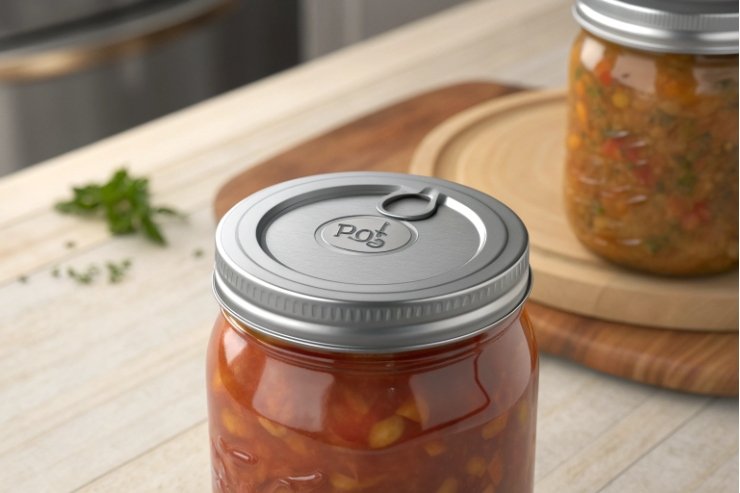
Main lid systems and where they shine
You will usually meet four lid styles in a glass food jar world:
- Two-piece canning lids (flat disc + screw band).
- One-piece twist-off metal lids.
- Clip-top (bail) jars with rubber gasket.
- Plastic screw caps with integrated or separate liners.
Each has its sweet spot.
Two-piece canning lids
These are the workhorses for home canning:
- The flat disc has a plastisol lining that softens when heated.
- As the jar cools, vacuum pulls the lid down and creates a tight seal.
- The screw band holds the lid during processing, then can be removed.
Best for:
- Shelf-stable jams, pickles, fruits, and sauces processed in a boiling bath.
- Foods where a vacuum “pop” and clear seal status matter.
Important rule: do not reuse the flat disc for new canning batches. Penn State Extension’s canning jars and lids update 7 explains why a fresh sealing surface matters.
Twist-off metal lids
These are common on store-bought jars:
- One-piece metal cap with a sealing compound ring on the inside.
- Designed to lock down under vacuum and “pop” when first opened.
For reuse, they work well for:
- Shelf-stable pantry items (dry goods, sugar, salt, nuts).
- Shorter-term fridge storage for sauces and leftovers.
Inspect the seal ring. If it is cracked, flattened, or rusted, replace the lid.
Clip-top jars with rubber gaskets
These have a glass lid, metal bail, and removable rubber ring. The gasket does the sealing work.
Good for:
- Dry goods (flour, grains, coffee, snacks).
- Ferments (when used with airlock methods or careful burping).
- Items you open and close often.
Rubber rings wear out over time. Replace them when they crack, harden, or stay flattened.
Plastic screw caps and liners
Some jars come with plastic lids that include:
- A flexible inner liner (silicone, foam, or soft plastic).
- Threads matched to the jar finish for a decent seal.
Useful for:
- Fridge storage where impact risk is higher (plastic will not dent).
- Acidic foods where bare metal might corrode, unless lined.
Check that the liner stays flexible. A brittle liner does not seal well.
Matching lid type to storage length
You can map lid choices to how long and how “safe” you need the seal to be:
| Storage need | Best lid type |
|---|---|
| Shelf-stable home-canned foods | New two-piece canning lid |
| Long-term commercial preserves | Purpose-made twist-off with good seal |
| Everyday pantry dry goods | Clip-top with good gasket, or twist-off |
| Short-term leftovers in fridge | Any sound screw cap with intact liner |
| High-acid ferments (kraut, kimchi) | Clip-top with gas management or special ferment lid |
Airtightness and inspection habits
Whatever lid you use, make a few simple checks part of your routine:
- Look at threads and sealing surfaces on the jar: chips or cracks here ruin seals.
- Check liners and gaskets for cracks, discoloration, or strong odors that will not wash out.
- Avoid overtightening: too much force can distort lids or crush gaskets.
For serious long-term storage, if a lid or gasket feels doubtful, replace it. The cost of a new closure is tiny compared to the cost of lost food or unsafe preserves.
Conclusion
Glass jars keep food safer and tastier by staying neutral, handling heat, making contents visible, and sealing tightly with the right lids, so your pantry feels calmer and your food lasts longer.
Footnotes
-
Overview of glass as an inert, impermeable packaging material. ↩ ↩
-
Explains why glass is nonporous and doesn’t affect food flavor. ↩ ↩
-
Shows how to prevent jar breakage from temperature shock during canning. ↩ ↩
-
Trusted, research-based home canning steps and safety rules. ↩ ↩
-
Official storage-time database to reduce waste and prevent unsafe leftovers. ↩ ↩
-
Simple FIFO rotation method to cut waste and keep food safer. ↩ ↩
-
Clarifies which canning lids can be reused and when to replace them. ↩ ↩






