
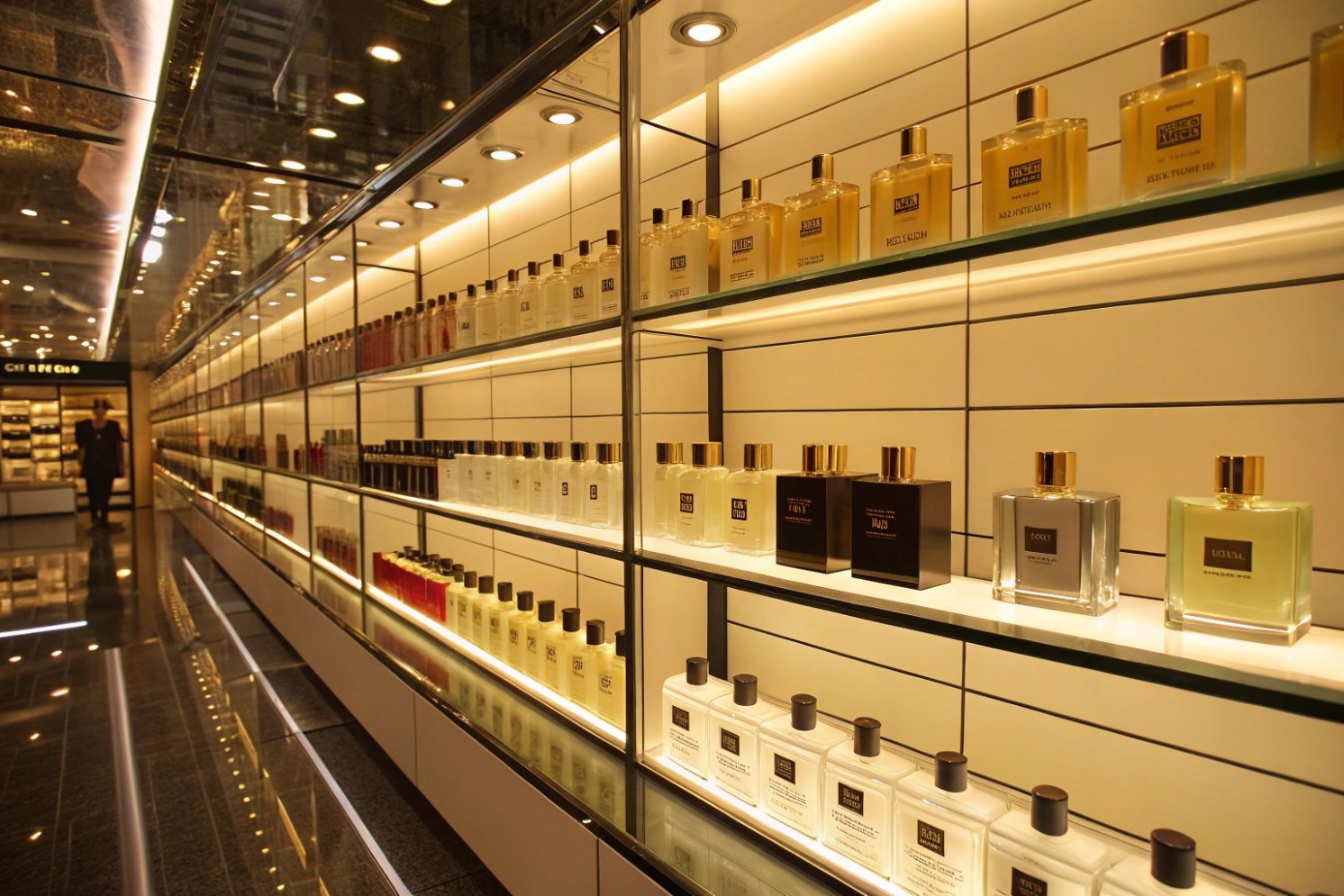
On a crowded perfume shelf, scent is silent. The bottle speaks first.
Perfume brands should invest in distinctive bottle designs because unique silhouettes boost recall, support premium pricing, improve the spray experience, and, when chosen wisely, repay tooling and MOQ costs over a launch’s lifetime.
A good bottle is not only a container for alcohol and aromatics. It is a small sculpture that sells, protects, and positions the fragrance every single time a shopper’s eyes pass over the shelf.
Does a unique silhouette boost brand recall and shelf impact?
If every fragrance smells invisible on screen or shelf, the bottle must do the first job of selling.
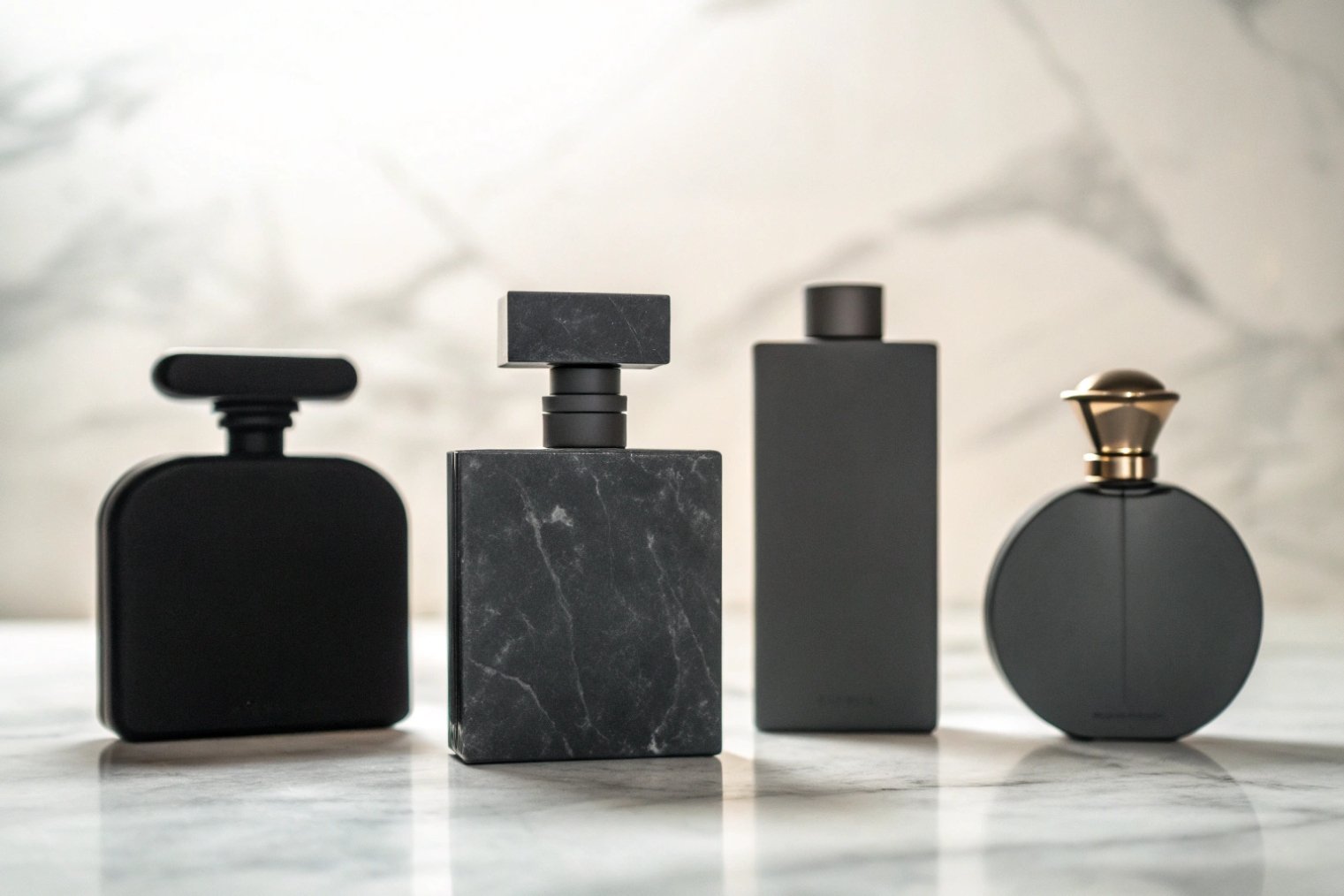
A unique bottle silhouette acts like a three-dimensional logo: it grabs attention at first glance, builds fast recognition, and helps shoppers find “their” brand in a crowded display.
How a unique bottle works in the mind
The brain remembers shapes faster than names. A strong bottle outline turns your fragrance into a “shape memory” product. Even if someone forgets the exact name, they remember “the round bottle with the heavy cap” or “the faceted star”.
This matters in three places:
- Physical retail: From a distance, only color blocks and silhouettes are readable. A distinctive bottle cuts through that noise.
- E-commerce and social: Thumbnails are tiny. A recognizable outline still reads in a 1–2 cm image.
- Word of mouth: People describe “the bottle that looks like…” as much as they describe the scent itself.
A unique silhouette becomes a branding shortcut: it behaves like a three-dimensional trademark 1 and strengthens brand recall 2 when shoppers are scanning quickly.
A simple way to look at impact:
| Bottle type | Shelf effect | Memory effect |
|---|---|---|
| Generic cylinder or brick | Blends into other SKUs | Name must carry all the memory |
| Slightly modified stock mold | Modest differentiation | Some recall, easy to copy |
| Fully ownable silhouette | Immediate visual anchor | Shape becomes shorthand for the brand |
Turning shape into brand equity
Over time, a consistent silhouette becomes part of your brand’s assets. You can vary colors, finishes, and collars while keeping the core outline. Customers start to trust that shape as “yours”.
This is also where trade dress 3 and 3D trademarks come in. Truly ownable shapes can be protected, which makes direct copying harder and keeps discount imitators from riding on your visual equity. That legal defence is much weaker if the bottle is a simple stock form with only minor tweaks.
Distinctive silhouettes also fuel gifting and collectability. People like to leave special bottles on display. They appear in social media posts, vanity shots, and flat lays. Every time the shape appears, your brand earns another impression without paying for traditional ads.
So yes, a unique silhouette is not only “nice design”. It is a long-term memory tool that keeps working as long as the bottle stays in the market.
Can custom molds support higher price points and margins?
A luxury fragrance cannot feel premium if the bottle looks and feels like a commodity. Custom molds are one of the clearest signals that the brand invested real money in the object.
Custom glass molds support higher price points and margins because they raise perceived value, enable thicker and heavier glass, and create an ownable look that is harder to price-compare directly.
Why custom tooling changes price perception
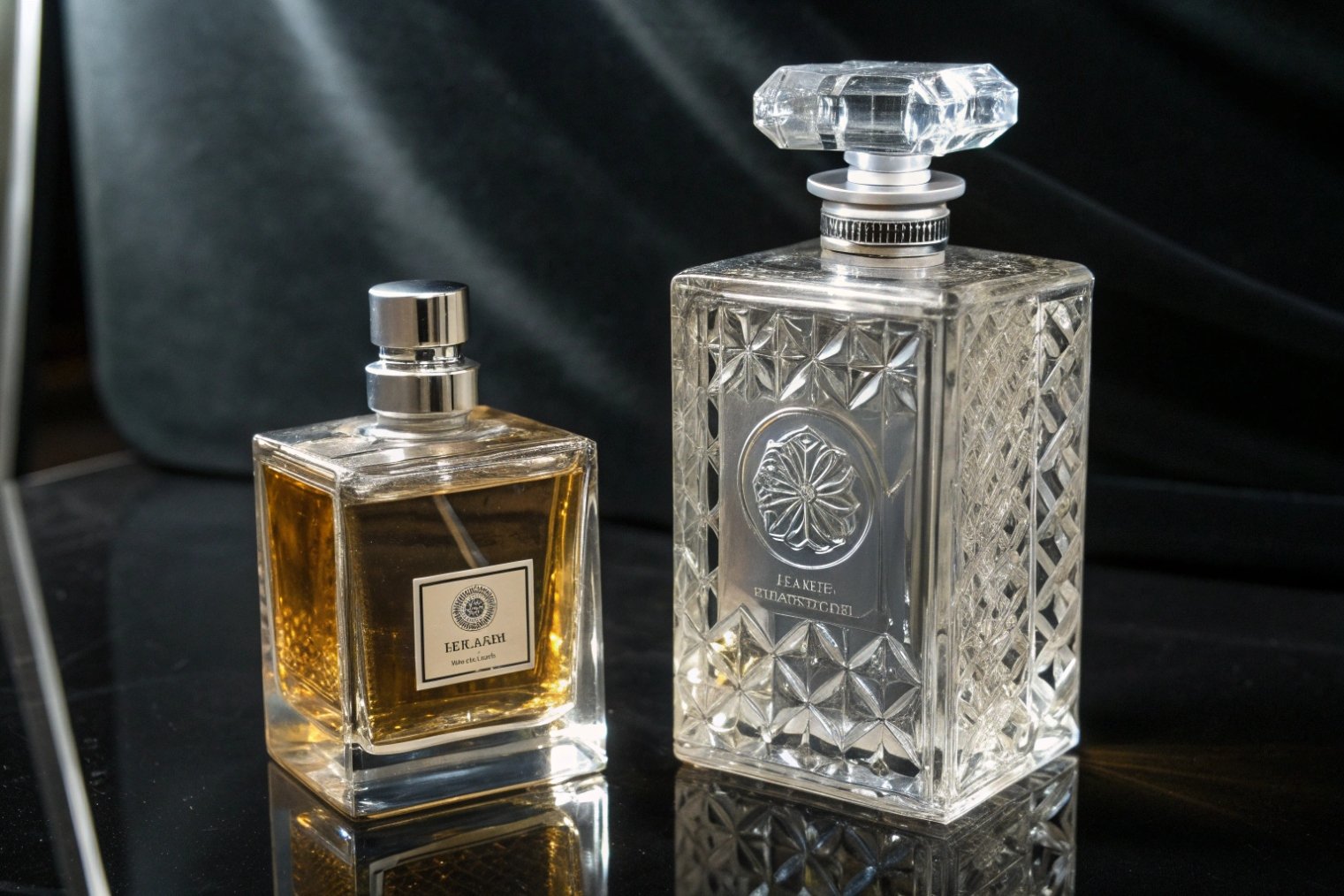
When the consumer first lifts a bottle, weight, thickness, and balance talk louder than the note pyramid. Custom molds allow:
- Thicker bases and walls for a heavy, “keepsake” feel.
- Deep engravings or embossing with logos and textures.
- Complex profiles that simple stock bottles cannot mimic.
All of this increases perceived value 4 in the hand, which is exactly where premium pricing has to “feel true” to the buyer.
From a commercial view, a custom bottle also makes price comparison harder. With a very generic pack, the shopper can easily compare your 50 ml to a cheaper 50 ml nearby and ask, “why is this one more expensive?” A high-impact bottle shifts attention away from pure volume comparison toward perceived artistry and exclusivity.
A quick comparison:
| Aspect | Stock bottle with label | Custom-mold bottle |
|---|---|---|
| Visual uniqueness | Low | High |
| Perceived luxury | Mid | High |
| Justifiable price gap | Narrow | Wider |
| Competitive copy risk | High (easy to match) | Lower (tooling barrier) |
When the extra cost makes sense
Custom molds do bring upfront cost and minimum order quantities. They make the most sense when:
- The scent is part of a long-term pillar line, not a quick seasonal.
- There is a clear premium or niche positioning with room for higher margins.
- The bottle can be reused across flankers, concentrations, or limited editions.
If a mold serves one short run, payback is hard. But if the same shape carries a family of flankers for five or ten years, the initial tooling cost becomes very small per bottle.
In practice, many brands start with a stock glass shape and invest in a custom cap or collar on the first launch. Once the line proves itself, they step up to a fully custom glass silhouette. That way the mold cost lands on a project with real sales data, not just a design dream.
How do ergonomic shapes improve the spraying experience?
If the bottle looks stunning but feels awkward in the hand, people will use it less, or worse, drop it. That small frustration can quietly damage repeat sales.
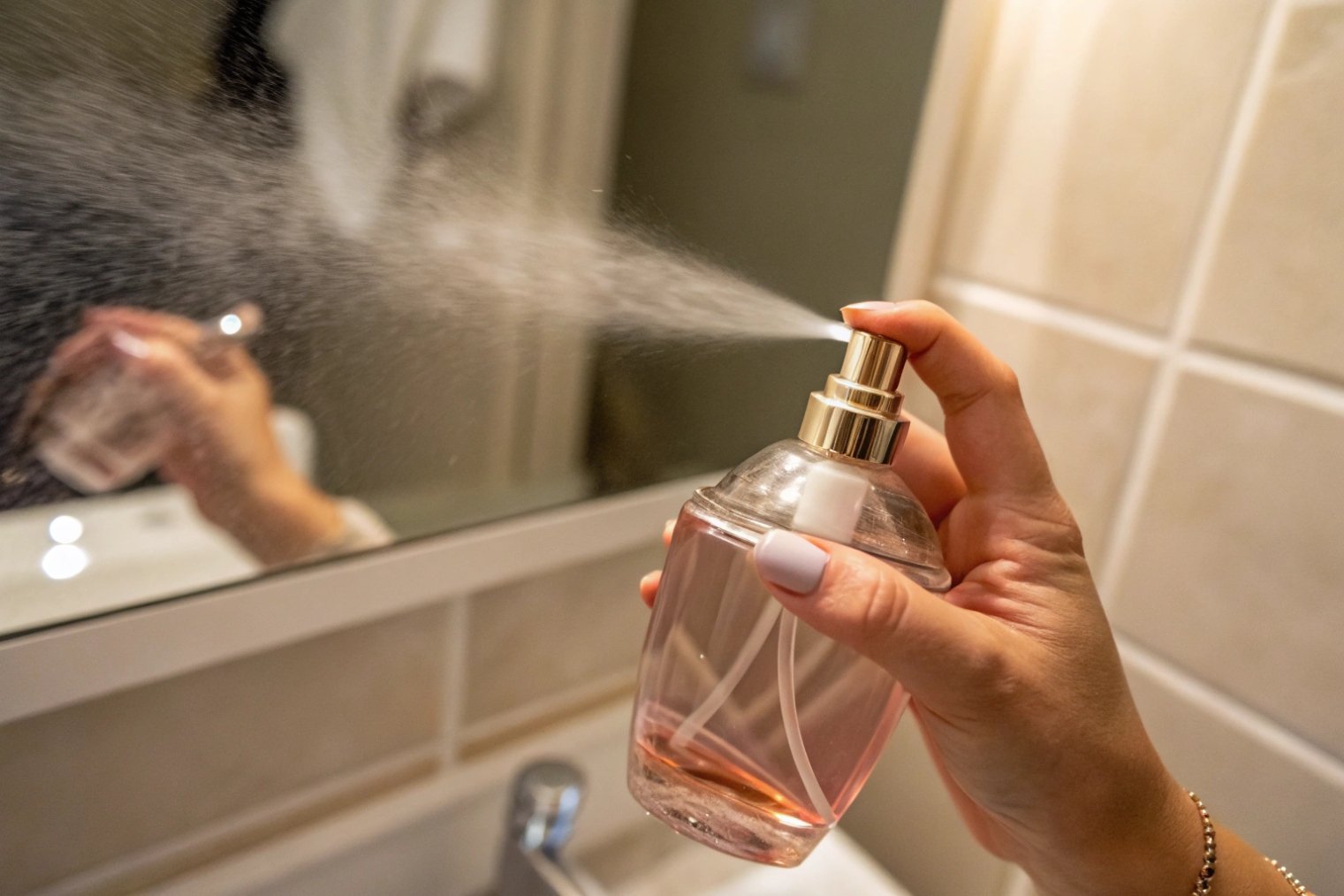
Ergonomic perfume bottle shapes improve the spraying experience by fitting naturally in the hand, stabilizing grip, and positioning the actuator so each spray feels controlled, comfortable, and consistent.
What “ergonomic” means for perfume
A perfume bottle does not have to look like a tool, but it does need to behave like one. Good ergonomic design principles 5 cover:
- Grip: flat facets or gentle curves where fingers land, so the bottle does not twist.
- Balance: a center of gravity 6 that stops the pack from tipping forward when you press.
- Reach: a neck height and actuator position that match typical finger length.
The goal is simple: the user should get a fine, even mist without thinking about it.
When shaping the glass, small details help:
| Design element | Ergonomic effect |
|---|---|
| Slight waist or pinch | Clear “hold here” zone for fingers |
| Faceted shoulders | Prevents slipping, especially with dry hands |
| Stable base width | Reduces tipping on vanities and shelves |
| Rounded edges | More comfortable in daily use |
How ergonomics supports brand loyalty
Spray feel is part of the product experience. A smooth, quiet, predictable spray makes people apply just enough. A harsh jet or uneven mist encourages over-spraying or under-spraying.
Over time, users remember this as “how nice it is to use” a certain brand, not just how it smells. That small advantage can tip a repurchase decision, especially when several fragrances compete inside the same price tier.
Ergonomics also links to safety and returns. Bottles that are hard to hold are more likely to be dropped, especially in bathrooms with hard floors. Each break is not just a lost bottle; it is a negative story told to friends.
So when shaping a distinctive bottle, the best results come from mixing sculpture with simple human factors: mockups in hand, tests with different hand sizes, and attention to how people actually spray in daily life, not just in a studio shot.
When do tooling costs and MOQs pay back for new launches?
Custom bottles sound exciting until the finance team sees the mold quote and the minimum order quantities. The question then becomes very practical: “When does this investment come back?”
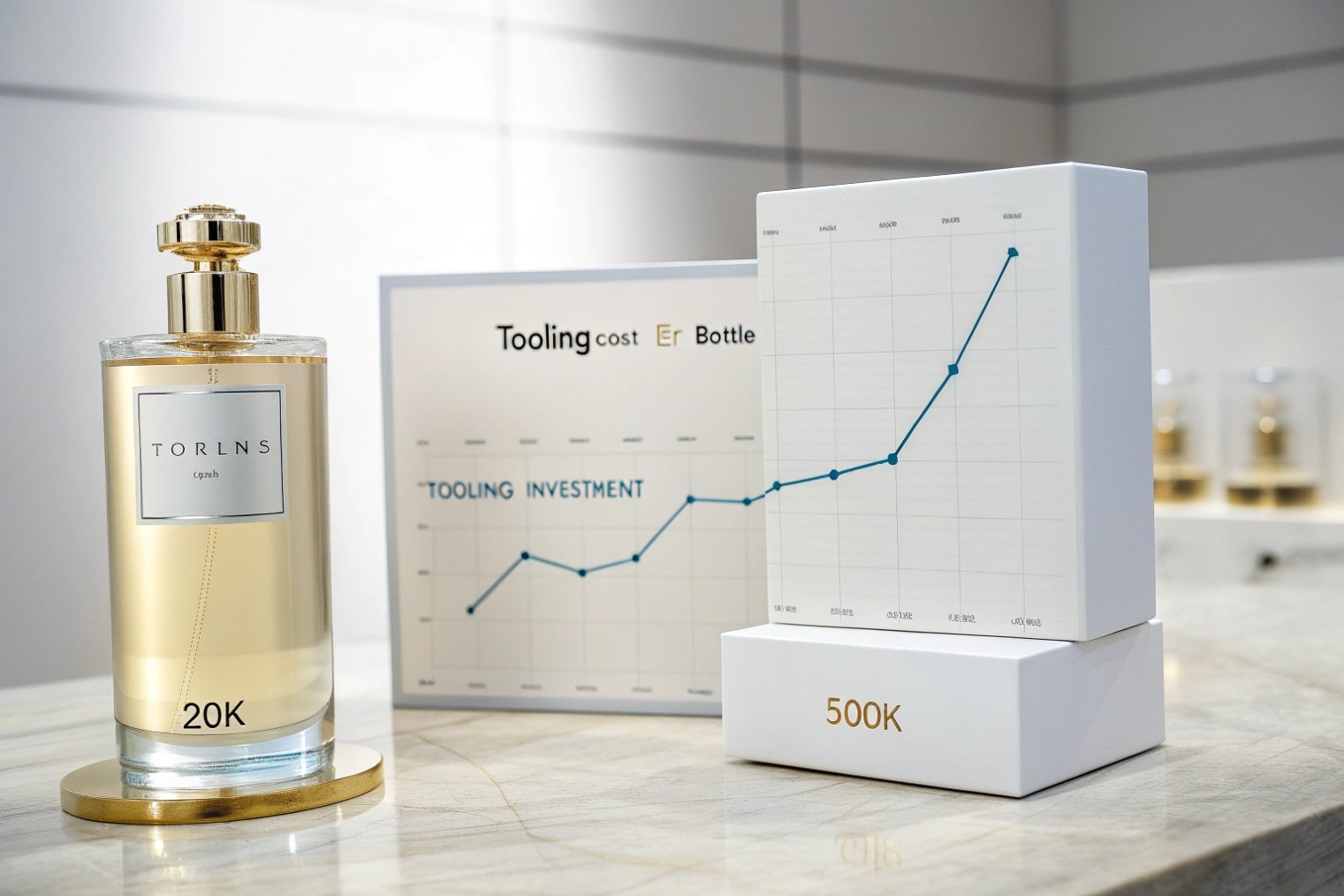
Tooling costs and MOQs pay back when the bottle will serve as a long-term pillar, support higher pricing, and be reused across flankers or sizes so the cost per filled bottle drops sharply over time.
Thinking in lifetime, not first batch
A mold is a fixed cost. The more units that run through it, the cheaper it becomes per bottle. Instead of looking only at the first launch, it helps to map:
- Expected yearly volume across all planned sizes.
- Number of years the bottle will stay in active use.
- How many flankers or limited editions will reuse the same shape.
A simple model:
| Scenario | Total units over life | Tooling cost per bottle* | Comment |
|---|---|---|---|
| Short seasonal, 20k units | 20,000 | High | Hard to justify custom mold |
| Pillar, 50k units/year × 3 | 150,000 | Medium | Usually workable |
| Icon line, 100k/year × 5 | 500,000 | Low | Strong case for custom tooling |
*Tooling cost per bottle = total mold cost ÷ total bottles produced (ignoring other savings).
Beyond pure cost per unit
Custom bottles can also repay investment through:
- Higher net price: even a small premium per bottle adds up across volume.
- Reduced price pressure: an ownable pack is harder to compare and discount.
- Counterfeit friction: complex shapes and embossing make copying more expensive.
At the same time, there are genuine risks:
- High minimum order quantities (MOQs) 7 tie cash into inventory if sales run below forecast.
- A very niche silhouette may not adapt well to future flankers.
- Over-complexity can slow production and increase defect rates.
A practical path many brands follow:
- Test the market with a stock or semi-custom pack and strong decoration.
- Once the fragrance proves itself as a keeper, commission custom molds that refine the look.
- Spread that bottle shape across EDP, EDT, body line, and limited shades to increase throughput.
When the design work, positioning, and long-term plan line up, tooling and MOQs stop being just a cost. They become a lever for building a recognisable, profitable perfume platform that supports many launches, not just one.
Conclusion
Distinctive perfume bottle designs pay back when they protect the juice, sharpen brand identity, feel good in the hand, and support a long-term, reusable platform instead of a one-season story.
Footnotes
-
See how 3D trademarks protect distinctive shapes and reduce direct copying in packaging-heavy categories. ↩ ↩
-
Learn the difference between recognition and brand recall, and why distinctive packs are easier to find fast. ↩ ↩
-
Understand trade dress protection and when a bottle’s overall look can be legally defendable. ↩ ↩
-
Definition of perceived value and why tactile cues like weight and finish support premium pricing. ↩ ↩
-
Ergonomic design basics for making products comfortable, stable, and easy to use every day. ↩ ↩
-
Explains center of gravity and why balance affects tipping risk when pressing a perfume actuator. ↩ ↩
-
Clear explanation of MOQs and how they impact inventory risk, cash flow, and launch planning. ↩ ↩






