
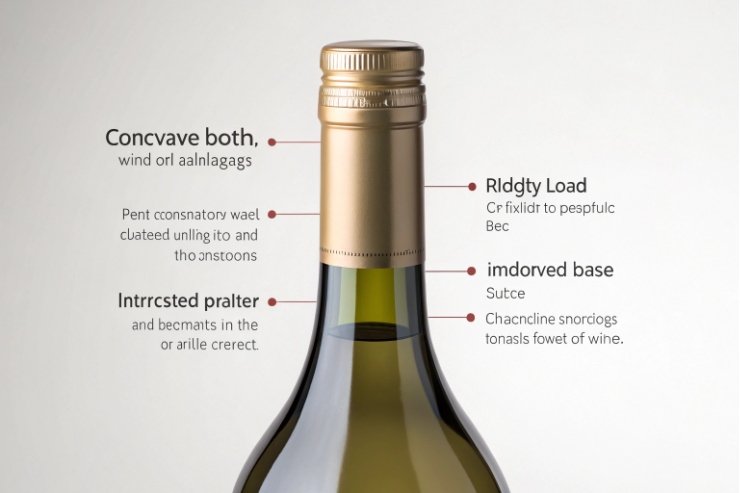
A wine bottle looks simple, yet the base is doing quiet work. If the bottom were flat, more bottles would wobble, crack, and pour messy.
The concave bottom (the punt) exists because it helps base strength, stabilizes imperfect glass, supports cleaner pouring with sediment, and also signals tradition that many buyers read as “premium.”
In bottle anatomy terms, that concave base is often called the punt (push-up) 1{#fnref1}. The punt is not magic, and it is not the same for every wine. Still wine, sparkling wine, mass-market, and luxury all use it in different ways. What matters is how the punt works with the full bottle design: base ring, wall thickness, glass quality, and the filling line setup.
Does a punt improve strength and pressure spread?
When a bottle fails, it often starts at the base. A flat bottom gives cracks an easy path. A weak base can ruin pallets, brands, and trust.
Yes. A punt can increase base rigidity and help spread loads through a contact ring, but strength comes from the whole base geometry, not punt depth alone.
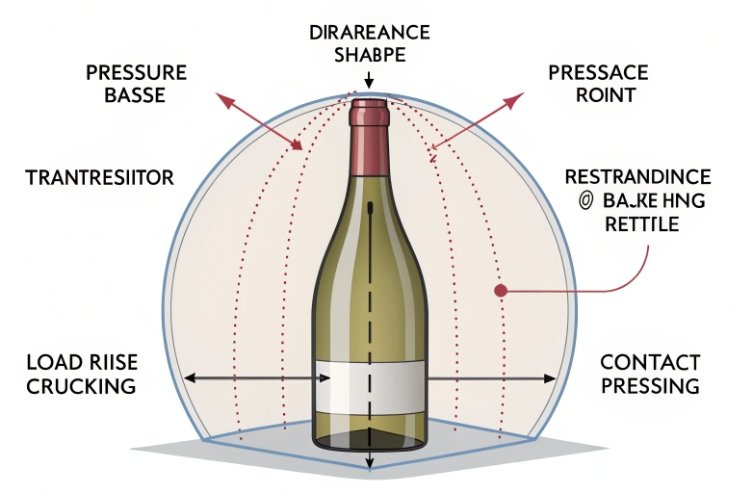
The base is a “structure,” not a surface
A punt turns the bottom into a shallow dome. Domes are stiff shapes. That stiffness matters because bottles see compression in cases, shocks in transport, and quick temperature changes after filling. With a punt, the bottle stands on a thicker outer ring. That ring acts like a frame. Loads move around the perimeter, not through a broad flat plate.
This matters even more for sparkling wine. Internal pressure is high—often around 5–6 atmospheres of pressure 2{#fnref3}. The base has to resist stress without growing thick everywhere. A well-designed punt can support thinner side walls because the base is less likely to flex and start a crack. Still, the punt does not “remove” pressure. Pressure acts on every internal surface. The goal is to shape the glass so it resists bending and avoids stress spikes.
Why the contact ring is the real hero
Many people point to the punt depth. In practice, the shape of the heel and the thickness and roundness of the standing ring matter more. A stable ring reduces rocking. It also reduces point contact with tables and conveyors. That lowers impact damage. For glass, point loads are trouble. A clean ring spreads those loads.
Glass is also sensitive to stress concentrations 3{#fnref2} at sharp transitions, which is why smooth curves and controlled radii matter as much as “deep punt” marketing.
Thermal shock and base failures
Hot liquid meets cooler glass during bottling. Then bottles may hit cooler air or rinse water. The base can crack if it has thin spots or sharp transitions. Managing thermal shock 4{#fnref4} is one reason base geometry favors smooth curves and consistent thickness over flat plates and sharp corners.
| Base feature | What it improves | Why it helps | What can go wrong |
|---|---|---|---|
| Punt (push-up) | Rigidity | Dome-like shape resists bending | Too deep can add weight and cost |
| Standing ring | Stability | Spreads external loads | If uneven, bottle rocks on tables |
| Heel radius | Crack resistance | Smooth transition lowers stress | Sharp heel can crack under shock |
| Base thickness control | Strength + safety | Avoids thin spots and weak points | Heavy variance raises breakage rates |
How does a punt aid sediment capture and steady pouring?
Nothing hurts a pour like a last-second cloud of sediment. Nobody likes grit in the final glass. The punt was not made only for sediment, but it can help.
A punt encourages sediment to settle near the outer edge and gives a natural thumb hold for service pouring, which can improve control and reduce swirl near the bottle’s mouth.
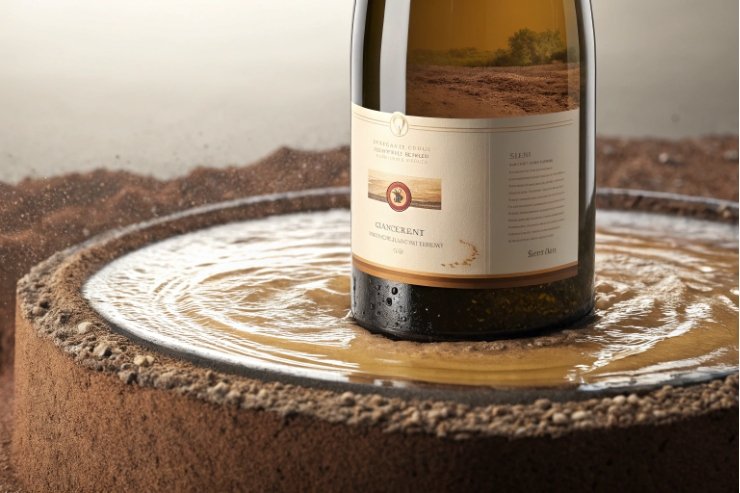
Sediment behavior: ring, not pile
In older red wines, sediment can form from pigments and tannins. In white wines, tartrate crystals can form, especially after cold storage. In sparkling wine, lees handling is its own topic, yet the base still matters for stability. With a punt, the lowest “resting” zone is often near the standing ring. Sediment tends to collect around that edge because the center is raised. This does not trap sediment like a filter. It only changes where it rests.
That ring placement helps during careful pouring. When the bottle tilts, the sediment has a shorter path to slide if it is already gathered in a stable band. A slow, steady tilt keeps sediment down. A rushed pour stirs it up no matter what base shape exists. So the punt is a helper, not a guarantee.
If you want the practical serving playbook, decanting wine 5{#fnref5} matters far more than punt depth.
The service grip: control and confidence
In fine dining, many servers place the thumb into the punt and rest fingers on the base ring. This grip feels stable and looks practiced. It also limits hand heat on the bottle, which matters for chilled whites and sparkling. A stable grip reduces micro-shakes that can disturb sediment. It also helps keep a clean, slow stream into the glass.
That said, the “thumb in punt” move is not required. Many modern pours use a simple side grip, especially for heavier bottles. Still, for standard 750 ml bottles, the punt grip remains popular because it offers leverage and a clear hand position.
Pour steadiness is mostly center of mass, not punt depth
A heavy base can smooth a pour because the bottle swings less. Some premium bottles use extra glass in the base. This can reduce hand wobble, yet it also makes the bottle tiring in high-volume bar service. The best pour feel comes from balanced weight distribution: not too base-heavy, not too top-heavy.
| Pour factor | What the punt contributes | What matters more | Practical takeaway |
|---|---|---|---|
| Sediment control | Encourages edge settling | Pour speed and bottle handling | Slow tilt wins every time |
| Grip | Thumb pocket for control | Bottle weight balance | Choose a base that fits the use case |
| Stream steadiness | Can add inertia if base is heavier | Neck and shoulder design | Smooth shoulder reduces glugging |
| Temperature hold | Less hand contact on body | Cooling method and service time | Use the punt grip for chilled wines |
Buyers love shortcuts. A deep punt looks serious. It looks like tradition. Many people assume “deeper punt equals better wine,” yet reality is more complex.
Punt depth is strongly linked to premium perception because it adds visual drama and often adds weight, but it is not a reliable indicator of wine quality.
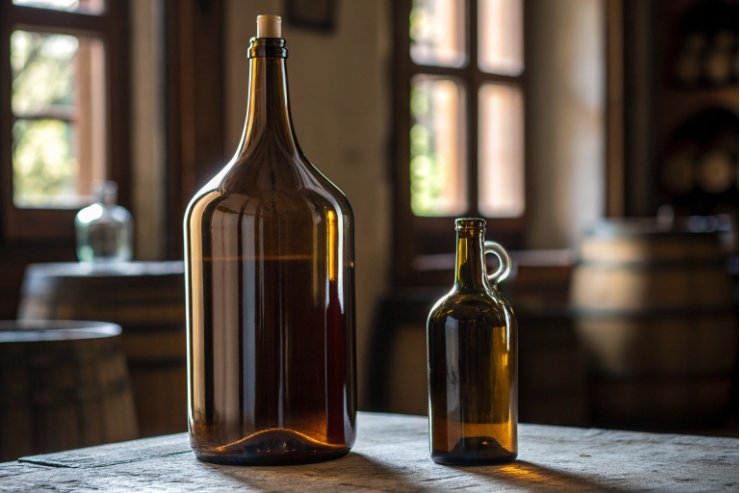
Why deeper punts feel expensive
A deep punt changes proportions. The bottle can look taller and more sculpted. It can also create the impression of thicker glass and stronger build. Even when the fill volume is standard, the bottle can look larger because the base pushes inward and the outer silhouette stays bold. That visual trick works well in retail.
Weight also plays a role. Many premium producers choose heavier bottles. The heft signals value to many consumers. The punt is one way to add base mass without changing the external diameter much. The “hand feel” becomes part of the story.
The costs behind the look
Heavier glass increases shipping costs. It also increases energy use in manufacturing and transport. Some markets now push lightweighting for sustainability. That is why initiatives like the Bottle Weight Accord 6{#fnref7} exist: to shift the category toward “right-weight” bottles without sacrificing line performance.
Quality is inside, not under the bottle
A deep punt can show that a producer invested in packaging. It can also show nothing at all. Many excellent wines use modest punts. Many average wines use deep punts to play the premium game. For sparkling wine, a stronger bottle is needed, yet strength comes from overall design and glass specs, not just a dramatic punt.
A practical way to think about it
When building a brand, punt depth should match the product promise. If the wine is entry-level and high-volume, a dramatic punt may create cost without payback. If the wine is cellar-worthy, giftable, and priced higher, the punt can support the ritual and the shelf presence.
| Punt style | Typical perception | Typical real reason | Best fit |
|---|---|---|---|
| Shallow punt | “Simple” or “modern” | Lightweighting, cost control | High-volume, sustainable brands |
| Medium punt | “Classic” | Balanced stability and tradition | Most still wines |
| Deep punt | “Premium” or “celebration” | Heft, styling, sparkling specs | Luxury still, sparkling, gifting |
Do punts affect labeling and line handling?
A bottle is not only a container. It is a production component. If it jams a line, the cost is brutal. Base design matters for speed, rejects, and downtime.
Yes. Punts can improve line handling by creating a consistent standing ring and stable centering, but they also change internal volume and base reference points that filling and inspection systems must control.
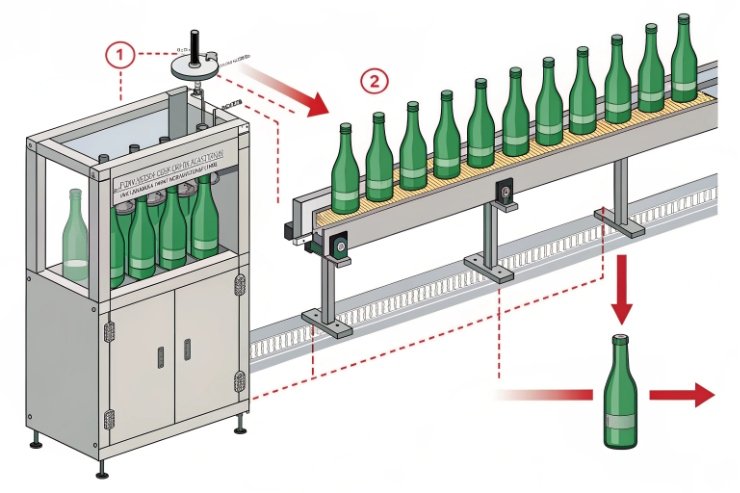
Conveyors and starwheels care about the standing ring
On many bottling lines, bottles travel on conveyors and index through star wheel 7{#fnref6} transfer points. A stable, consistent contact ring helps. It reduces rocking. It reduces random tip events at speed. It also creates a predictable base diameter for guides and rails. In older glassblowing history, the punt also helped hide or manage irregularities in the base seam. Modern machines are more precise, yet the principle remains: a defined ring is easier to run than a messy flat bottom.
Fill level control and internal volume
A punt reduces internal volume at the base. The bottle still holds 750 ml, but the internal shape changes. Filling systems that target a visual fill height must match the bottle design. If the punt changes, the same volume can sit at a different height, especially when shoulder geometry differs too. That means new bottle designs often require new fill height settings and sometimes new sensors or cameras for inspection.
Labeling is mostly about the body, yet the base still plays a role
Labelers mainly care about the body diameter, panel flatness, and surface treatment. Punts do not directly affect label adhesion. Still, base stability affects label placement accuracy. If a bottle wobbles on a spin station, label registration suffers. A clean standing ring can reduce wobble. That improves label alignment, especially at higher speeds.
Handling after labeling
Cases, dividers, and packers also benefit from stable bases. A bottle that stands consistently reduces scuffs and collisions. That protects decoration like screen printing, frosting, or metallic inks, which are common in premium wines.
| Line step | How the punt helps | What must be tuned | Risk if ignored |
|---|---|---|---|
| Conveying | Stable standing ring reduces rocking | Rail height and guide spacing | Tip-overs and jams |
| Filling | Predictable bottle positioning | Fill height settings per bottle | Off-spec headspace or appearance |
| Inspection | Clear base geometry for cameras | Reference points and tolerances | False rejects or missed defects |
| Labeling | Better stability in spin stations | Body specs and surface energy | Skewed labels at high speed |
| Case packing | Upright behavior reduces collisions | Divider design and pack pattern | Scuffing and breakage |
Conclusion
The punt exists because it makes bottles stronger, steadier, and easier to serve, and it also carries a premium story that buyers recognize fast.
Footnotes
-
Defines punt/push-up and base parts so teams align on bottle anatomy. ↩ ↩
-
Gives context on sparkling-wine bottle pressure and why stout base design matters. ↩ ↩
-
Explains stress concentrations and why sharp geometry can trigger cracks in glass. ↩ ↩
-
Explains thermal shock and how rapid temperature changes can crack glass containers. ↩ ↩
-
Practical guide to decanting and separating sediment for a cleaner pour. ↩ ↩
-
Explains lightweight bottle initiatives and why heavy glass can raise emissions and packaging fees. ↩ ↩
-
Explains what star wheels do to position bottles smoothly through filling, capping, and labeling. ↩ ↩






