
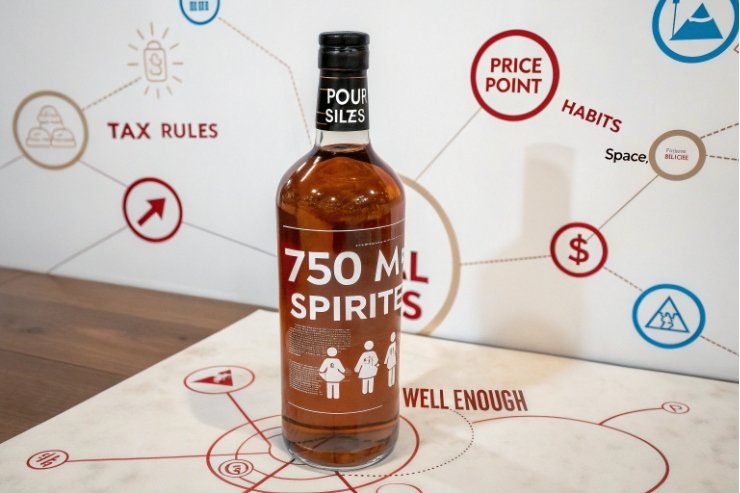
In tasting rooms, duty-free shops, and back bars, 75cl bottles feel like the “default” size even when no one says it out loud. That did not happen by chance.
The 75cl spirits bottle is seen as the “golden capacity” because it lines up with historic barrel math, modern tax rules, pour sizes, case-packs, shelf standards, and how people actually drink and buy spirits.
When I explain this to distillers, I like to say that 75cl sits right in the middle of many pressures: producers, regulators, bar owners, retailers, and drinkers. It works “well enough” for all of them, so it becomes the most stable point in the system.
Does 750 ml optimize consumer price points and on-premise pour sizes?
Most drinkers do not think in milliliters. They think in “how long will this bottle last” and “does this price feel fair”. Bars think in shots and yield per case.
For both home drinkers and on-premise venues, a 75cl bottle gives a comfortable number of servings, clear cost-per-pour math, and a price that feels substantial but not extreme.
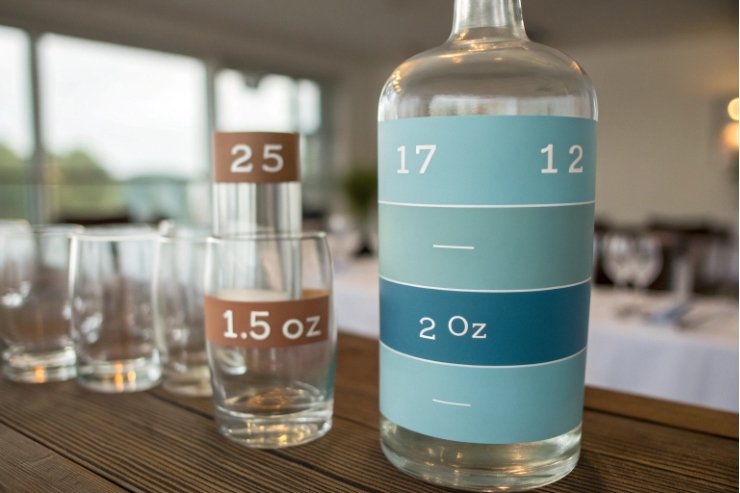
How 75cl maps to glasses and pours
For consumers, 75cl sits in a sweet spot:
- It is big enough for several evenings or a small party.
- It is small enough to finish before the spirit loses charm on the bar cart.
- It feels like a “real bottle”, not a sampler or a jug.
Bars and restaurants see it in simple numbers. Using a standard 1.5 oz (44 ml) pour 1, a 750 ml bottle gives roughly 17 standard pours. With a 2 oz (about 60 ml) premium pour, you get about 12 servings. That makes menu costing and stock planning very clear.
Simple view:
| Pour size | Approx. pours from 75cl | Use case |
|---|---|---|
| 1 oz / ~30 ml | ~25 pours | Tasting flights, spirit-forward |
| 1.5 oz / ~44 ml | ~17 pours | Standard mixed drinks |
| 2 oz / ~60 ml | ~12 pours | Premium neat or rocks servings |
Because the maths stay round and predictable, managers can plan margins quickly. They know how many cocktails or neat serves one case will support, which supports steady re-orders and strong relationships with distilleries.
Price psychology and value perception
At the shelf, 75cl also hits a mental “just right” point. A 500 ml bottle often feels small for a serious spirit unless it is very rare. A 1L or 1.75L bottle starts to feel like a trade or “value” format.
With 75cl, brands can:
- Offer a price that feels serious but still giftable.
- Keep the bottle tall and elegant instead of bulky.
- Leave space in the budget for custom glass and decoration.
Consumers also compare across brands by “price per normal bottle”. Since 75cl is the reference, it is easier to hold a premium position when you stay at that size, then reserve very small or very large formats for clear special roles.
In short, 75cl gives both sides enough units to work with: enough pours to make good margin per case, and enough perceived value to justify paying extra for a beautiful, premium package.
How do retail standards and excise/tax norms favor 75cl over other sizes?
Bottle size is not only a design choice. It is also a regulatory and tax choice. Many of the “mysterious” size rules come from old barrel trade, import laws, and excise systems.
The 75cl format fits neatly into historic barrel volumes, modern legal standards, and many tax frameworks, so regulators, wholesalers, and retailers build their systems around it and treat it as the normal full-size bottle.
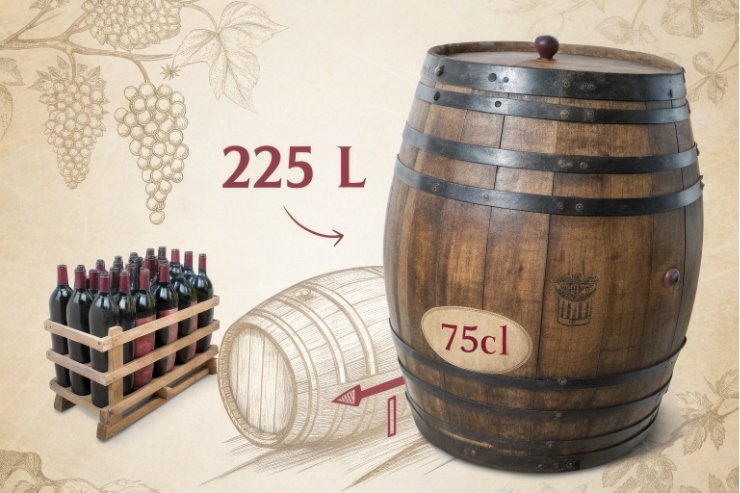
From barrel math to bottle standard
A big reason 75cl took hold comes from wine, and spirits later inherited it.
- A classic Bordeaux barrique holds 225 liters 2.
- 225 liters divide cleanly into 300 bottles of 0.75 L.
- Six 75cl bottles sit close to one imperial gallon, which made early Anglo-French trade easy to count.
Once that pattern locked in, merchants, customs officers, and transport companies all optimized for it. Crates, ledgers, and duty tables started to assume 75cl as the default single bottle.
Spirits brands then followed the same size, because it made sense to share case formats, logistics routines, and later, retail shelf standards.
Legal standards and export reality
In many markets, 75cl (750 ml) is not just common; it is the official standard for full-size bottles of wine and spirits. For example, North America treats 750 ml as the default spirits container under the U.S. standards of fill for distilled spirits 3, while Europe often uses 70cl for spirits but 75cl for wine. The same logic shows up in the EU standards of fill under Directive 2007/45/EC 4 and the systems built around them.
International brands solve this by:
- Using 70cl for EU-only SKUs.
- Using 75cl for the US and some global channels.
- Basing their “hero” design language on one of these, usually 75cl, then adapting.
Because so many regulations, excise codes, and shelf plans reference 750 ml, it tends to win when a single global “golden capacity” is needed for spirits.
Retail standards and duty calculations
Many excise systems tax alcohol per liter of pure spirit. When the bottle size is standard, this math becomes very direct. Retailers then build shelf blocks and planograms around that size.
This gives 75cl several quiet advantages:
- It fits standard shelf height and depth.
- It supports simple “per bottle” duty planning.
- It keeps price ladders clean across competing brands.
Alternative sizes can still work, but they tend to send a different message: 50cl might read as tasting or budget, 1L as trade or value. The “normal” premium bottle that fits the regulatory and retail grid is 75cl.
Do case packs, pallet patterns, and shipping costs scale best at 75cl?
Once a brand moves beyond a few craft pallets, logistics decisions become real strategy. Case size, pallet count, and freight cost all decide how profitable each market will be.
At 75cl, case and pallet patterns are well-known, easy to plan, and efficient to ship. This reduces friction in the chain from glass plant to filler to importer to retailer.
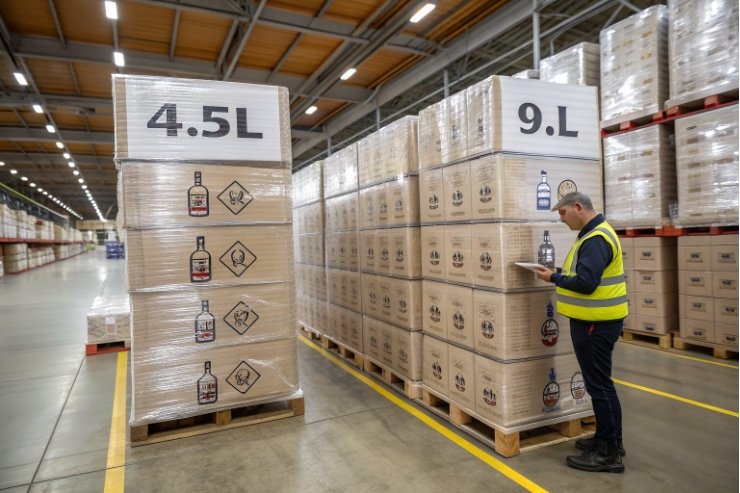
Why 6 and 12 bottle cases make sense
Over time, two case sizes became the norm: 6 and 12 bottles. Both come straight from the old barrel and gallon relationships.
With 75cl:
- 6 bottles = 4.5 liters
- 12 bottles = 9 liters
These are simple, round volumes that logistics teams can multiply fast. A pallet might carry, for example, 56 or 72 cases, and everyone from broker to retailer knows roughly how many liters and how many serves that means.
For spirits, the same logic holds:
| Case format | Total contents at 75cl | Typical use |
|---|---|---|
| 6 x 75cl | 4.5 L | Higher-end spirits, heavy bottles |
| 12 x 75cl | 9 L | Mainline premium, value control |
Because these formats are common, carton suppliers, warehouse systems, and distributors already have matching setups. You are not fighting the system; you are flowing with it.
Pallet and container efficiency
On a pallet or in a container, 75cl bottles keep a good balance between height, weight, and stability:
- Bottles are tall enough to use vertical space well.
- Cases are compact enough to stack without crushing.
- The weight per pallet stays manageable for handling equipment.
Once you mix in very tall non-standard bottles or odd volumes, you often lose rows or columns on a pallet, or you need special dividers and case sizes. That adds cost without adding liters.
Because 75cl has been standard for so long, most “ideal” pallet patterns in the spirits trade assume this size and its typical heavy-glass weights.
Freight cost and damage risk
Freight cost cares about both volume and weight. 75cl is a good compromise:
- Smaller bottles increase packaging and glass per liter.
- Much larger bottles increase total weight and can raise breakage risk if cartons are too heavy to handle carefully.
With 75cl, a case is heavy but still realistic for manual handling in many warehouses and stores. That helps reduce drops, splits, and stress on seams.
When you’re scaling globally, the delivery terms also matter. Using the Incoterms® 2020 rules 5 as your shared language helps lock down who controls freight, insurance, and risk at each handoff.
In short, 75cl is not perfect in theory, but in practice it fits the real-world patterns that shipping companies, warehouses, and retailers already use. That is why it feels like the natural choice when scaling up.
Premium spirits want heavy glass and a solid presence in hand. Sustainability targets want lighter bottles, less glass per liter, and more recycled content. These two goals can seem to fight each other.
At 75cl, brands can give a premium feeling heavy base while still meeting reasonable glass-weight and sustainability goals, because the volume is large enough to dilute packaging weight per liter without forcing extreme designs.
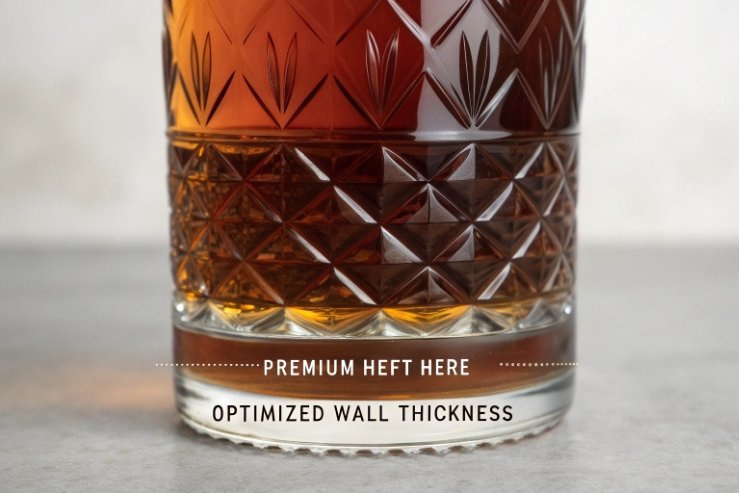
Premium feel without overdoing glass
A 75cl bottle gives space to play with structure:
- You can load glass into the base for a strong “heft” signal.
- You can slim the body walls slightly to offset base weight.
- You keep enough height for a proud, elegant silhouette.
If you tried the same base on a much smaller volume, the bottle could feel strangely heavy and short. On a much larger volume, the full bottle could become awkward to handle and ship.
With 75cl, you can usually hit a weight that feels indulgent in hand but still fits within internal targets such as the LCBO lightweight glass bottle program 6.
Glass per liter and recycled content
Sustainability is not only about total weight. It is also about weight per liter of liquid and the share of recycled cullet in the glass.
For a very rough illustration:
| Bottle size | Example empty weight | Glass per liter (approx.) |
|---|---|---|
| 50cl | 500 g | 1000 g / L |
| 75cl | 700 g | ~933 g / L |
| 1L | 900 g | 900 g / L |
The exact numbers will change by brand, but the pattern is clear. Larger sizes can reduce glass per liter, yet 75cl stays close to the lower end while still supporting a luxury feel and wide acceptance.
Because 75cl is dominant, glass plants can also run it with higher recycled content while keeping color and clarity within premium standards. They have more data and practice with this size, so optimization is easier—especially when you anchor your claims in glass recycling facts and cullet benefits 7.
Consumer expectations and “right size” sustainability
Finally, there is the human side. A sustainability story works best when it feels natural, not forced.
With 75cl, it is easy to say:
- The bottle is the standard size people expect.
- The glass weight is optimized and not excessive.
- The material is fully recyclable and may already include recycled glass.
If you jump too far to very light, unfamiliar formats, some premium buyers worry that quality has dropped or the spirit is less serious. The 75cl format lets you raise sustainability performance step by step without asking people to rethink what a “proper” bottle looks like.
Conclusion
The 75cl spirits bottle became the “golden capacity” because it quietly balances history, trade, pours, price, logistics, and sustainability in one familiar, premium-friendly format.
Footnotes
-
Confirms common U.S. shot-to-ml conversions for accurate bar yield and costing math. ↩︎ ↩
-
Explains the 225L barrique size behind the “300 bottles of 0.75L” barrel-to-bottle logic. ↩︎ ↩
-
Official U.S. container-size rule listing 750 mL among authorized distilled-spirits standards of fill. ↩︎ ↩
-
EU standards-of-fill reference that helps plan export SKUs and avoid non-compliant bottle sizes. ↩︎ ↩
-
Defines FOB/CIF/DDP responsibilities so your freight risk and handoffs are clear from day one. ↩︎ ↩
-
Concrete weight targets for common bottle sizes—useful for balancing premium heft with sustainability goals. ↩︎ ↩
-
Practical facts on recycling and cullet value to support credible “recycled content” and circularity claims. ↩︎ ↩






