
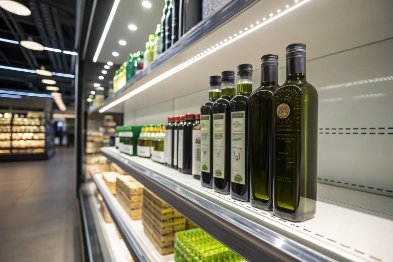
Clear glass looks great on a shelf, but light can ruin olive oil quietly. Many brands learn this after complaints about “stale” taste even when the oil is fresh.
Amber and green bottles reduce light exposure, which slows photo-oxidation and rancidity. Dark glass plus a tight closure protects flavor, aroma, and antioxidants far better than clear packaging under retail and kitchen lighting.
Light is not a small problem for olive oil
Olive oil ages in three main ways: oxygen, light, and heat. Oxygen drives oxidation, heat speeds every reaction, and light can trigger photo-oxidation in extra-virgin olive oil 1. Photo-oxidation is a fast track to off-flavors because olive oil contains compounds that react under light. Chlorophyll is a good example. It gives some oils a green tone, and naturally occurring chlorophyll pigments 2 can act like light “activators” that accelerate oxidation under bright exposure.
That is why dark bottles became the default. A dark bottle is not a marketing trick first. It is a simple barrier. If less light reaches the oil, fewer reactions start. The benefit shows up as longer time before the oil develops the “cardboard” or “paint-like” notes that people call rancid.
But it is not only UV. Most retail damage comes from blue and visible light, not only from direct sunlight. Store LEDs can still push photo reactions. Kitchens add another layer because bottles sit near windows and under bright task lights. Dark glass reduces those hits, and it keeps quality more stable across different homes and stores.
Below is a quick way I explain it to brand teams. Protection is a system, not one part.
| Risk to olive oil | What causes it | What packaging can do | What dark glass helps most |
|---|---|---|---|
| Photo-oxidation | UV + blue/visible light | Block light, reduce exposure time | Strong impact |
| Oxidation | Oxygen exposure | Tight seal, low headspace exchange | Indirect impact |
| Heat damage | Warm storage and transport | Insulation, faster turnover | No direct impact |
| Flavor loss | Light + oxygen | Light barrier + good closure | Strong impact |
If the goal is to keep extra-virgin quality longer, dark glass is an easy win. After that, closures and usage habits decide how long the oil stays fresh after opening.
So the real question becomes: how much protection is needed, and what design still fits the brand?
Do amber/green bottles reduce UV-driven rancidity?
Light damage feels invisible until the first bad pour. Then the consumer blames the oil, not the lighting on the shelf.
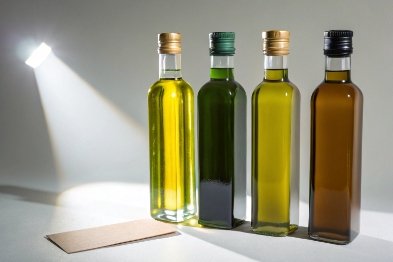
Yes. Amber and green glass reduce UV and short-wavelength light exposure, which slows photo-oxidation and rancidity. Amber usually blocks more light than standard green, but the exact protection depends on the glass formula and darkness.
What “dark” really blocks
Not all colored glass blocks the same wavelengths. In simple terms:
- Amber tends to block a wide range of UV and a lot of blue light.
- Green blocks some UV and some visible light, but performance varies a lot by shade.
- Very dark green (antique green) can perform closer to amber than people expect.
- Flint (clear) lets the most light through and offers the least protection.
A common myth is “UV is the only enemy.” UV matters, but olive oil reacts under visible light too. That is why even indoor lighting can slowly push quality down. Dark bottles help because they reduce the energy that reaches the oil.
If your team wants numbers, use a bottle colour and storage conditions study 3 as a reference point: clear bottles typically shield the least, green shields more, and amber shields the most.
Why some brands choose green over amber
Green is not only a style choice. It can be a practical middle ground:
- It signals “olive oil” in many markets.
- It protects better than clear without moving into a heavy brown look.
- It hides small batch-to-batch color variation in the oil.
For premium extra-virgin, many brands still choose very dark green or amber because the product value is higher and shelf time can be long.
A simple selection rule used in packaging briefs
When a team asks which color to pick, I keep it direct:
- If the oil will sit under strong light or move slowly: choose amber or very dark green.
- If turnover is fast and the brand needs a “fresh green” look: choose dark green and add extra label coverage.
- If the brand insists on clear glass: plan added protection (sleeve, coating, carton) and accept shorter light tolerance.
| Bottle color | Light protection | Shelf look | Best fit |
|---|---|---|---|
| Amber | High | Classic, pharmacy-like | Long shelf life, export, premium EVOO |
| Antique/dark green | Medium to high | Traditional olive oil cue | Most EVOO brands |
| Standard green | Medium | Familiar | Faster turnover, mid-tier |
| Black/opaque | Very high | Luxury, bold | Ultra-premium, gifting |
| Flint (clear) | Low | Shows oil color | Only when extra protection exists |
So yes, amber and green reduce UV-driven rancidity. The better statement is: they reduce light-driven quality loss overall, and that usually means fewer complaints and a more stable taste at the end of shelf life.
How do pourers and flow restrictors preserve freshness?
A beautiful bottle can still age fast after opening. The bottle may block light, but the neck becomes the new weak spot.
Pourers and flow restrictors help by reducing spills and limiting how much air moves in and out during each pour. They support freshness, but they do not replace a tight re-close, because oxygen exposure still builds over time.
What a flow restrictor actually does
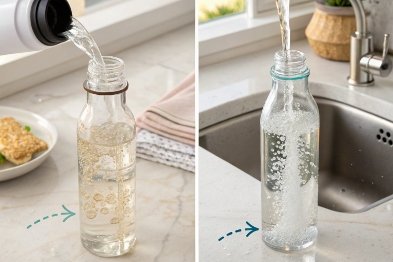
Most flow restrictors are inserts that narrow the outlet. This changes pouring in three ways:
- Cleaner pour: fewer drips means less oil on the neck, which reduces rancid smell around the cap area.
- Controlled flow: people pour less by accident, so the bottle lasts longer in the kitchen.
- Lower air exchange per second: a smaller opening can reduce the turbulence that pulls air in quickly.
That third point is where freshness comes in. Less turbulence can mean slower oxygen contact during active pouring. It also reduces backflow contamination from dirty spoons touching the lip.
The limit: oxygen still enters
A restrictor does not create a sealed package. After pouring, the bottle still needs a proper closure. If a pourer is left open all day, oxygen exposure increases. In real kitchens, many people never clean the pour spout. That becomes a hygiene issue, not only a freshness issue.
This is also why some quality teams explicitly warn that special pourers can speed oxygen exposure 4 if the oil is not used quickly.
So the best setup is usually one of these:
- Restrictor + screw cap that seals well after each use
- Non-refillable pourer used in food service, where turnover is fast
- Cap with integrated dosing spout that closes automatically
What to pair with a pour system
In packaging development, I like to match the pour system to the channel:
- Retail home use: restrictor insert + re-close cap.
- Restaurant: controlled pour spout that can be cleaned and replaced, or single-use sealed packs.
- Premium gifting: keep the closure premium-looking, and let the label explain storage.
| Component | Helps with | Does not solve | Best channel |
|---|---|---|---|
| Flow restrictor insert | Drips, portion control, calmer pour | Long-term oxygen exposure | Retail, home kitchens |
| Open pour spout | Fast service | Oxidation and dust risk | Restaurants (high turnover) |
| Tight screw cap + liner | Oxygen barrier after use | Light exposure | All channels |
| Induction seal (tamper) | First-open protection | After-opening care | Retail |
Pourers and restrictors can support freshness, but the real preservation comes from the full system: dark glass, tight sealing, and the habit of closing the bottle right away.
When are UV sleeves or coated flint justified?
Some brands want clear glass because it looks modern and clean. That choice can work, but only when the protection plan is honest.
UV sleeves or coated flint are justified when clear glass is a brand requirement, when the oil will face strong retail lighting, or when the product is premium enough to justify added cost. These solutions protect better than naked flint, but they add complexity and must be tested for durability and recyclability.
UV sleeves: the practical “clear bottle” workaround
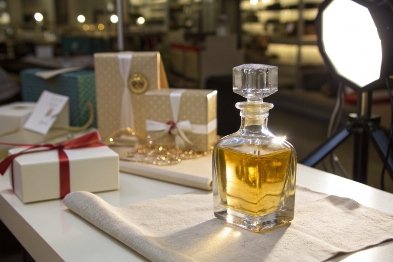
A sleeve can block light while keeping a clear-glass silhouette. The sleeve can be full-body or partial. When done well, it gives:
- Strong light barrier
- Large printable area
- A premium “bottle as a canvas” look
The trade-offs are real:
- Sleeves can scuff in shipping if the film is thin.
- They can trap moisture in cold chains if not designed well.
- They can affect recycling streams in some regions if not easy to separate.
For short-run launches, sleeves are often easier than changing glass color because the glass can stay standard.
Coated flint usually means a surface treatment that reduces light transmission. It can be a spray coating or a specialized coating system. This can look elegant, but it needs testing because:
- Coatings can scratch in distribution.
- Coatings can react with certain cleaners in reuse systems.
- Coating thickness can affect friction on filling lines.
For premium oils that sit in gift boxes, coatings can be a strong match because the bottle is handled carefully and the presentation is part of the price.
When it is not worth it
If the product is value-tier and turnover is fast, a sleeve or coating may not pay back. A dark green bottle plus a strong label often gives enough protection at lower risk.
| Option | Protection level | Cost level | Best use case |
|---|---|---|---|
| Dark glass (amber/dark green) | High | Low to medium | Most EVOO brands |
| Clear glass + full sleeve | Medium to high | Medium | Modern brands needing clear look |
| Clear glass + coating | Medium to high | Medium to high | Premium presentation, gift sets |
| Clear glass + carton | High (if always boxed) | Medium | Export, e-commerce, gifting |
A clear bottle can work, but it must be supported. If the brand wants clear glass and no extra barrier, quality will depend on fast turnover and careful storage. That is a risky promise to make at scale.
Which colors balance brand aesthetics with protection?
Color is both a quality tool and a brand signal. The best color is the one that protects the oil and also matches how the buyer shops.
The best balance usually sits between amber and very dark green. Amber gives the strongest broad protection, while dark green keeps the “olive oil cue” and still shields the oil well. Black and opaque options maximize protection for ultra-premium or slow-turn products.
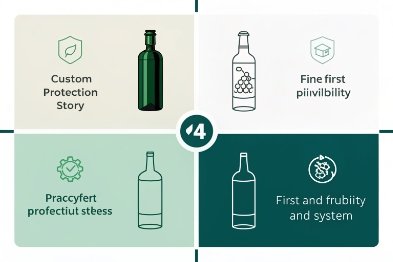
A color framework that helps decisions
I like to frame color choices by two questions:
- How long will the bottle face strong light before it is finished?
- Does the brand need the consumer to see the oil color?
Many olive oil buyers do not need to see the oil. They want freshness and trust. In that case, darker is safer. If the brand story depends on the oil’s golden color, then the package must carry the protection load in other ways.
Common color positions in the market
- Amber: “serious preservation,” often used by quality-focused brands and export products.
- Dark green / antique green: “traditional olive oil,” strong category fit.
- Black: “luxury and secrecy,” often used for limited or high-end lines.
- Cobalt or special colors: strong branding, but protection depends on formulation.
- Flint: “show the liquid,” best when paired with sleeve/carton and fast turnover.
A decision table that ties color to channel
| Channel | Light exposure | Best color choice | Notes |
|---|---|---|---|
| Supermarket shelf | High | Amber or dark green | Bright LEDs and long shelf time |
| Specialty shop | Medium | Dark green | Faster turnover and better storage |
| E-commerce in cartons | Lower (boxed) | Dark green, amber, or coated flint | Carton becomes part of protection |
| Restaurant back bar | High | Dark green or opaque | Heat and light plus frequent opening |
| Gift sets | Medium | Black/opaque or coated flint | Premium look and extra barrier |
The final choice should match the brand story, but it should not fight the chemistry of olive oil. Protection protects reputation. A bottle that keeps flavor stable does more for premium positioning than any fancy label alone.
Conclusion
Dark bottles protect olive oil from light-driven aging. Pair amber or dark green glass with a tight closure, smart pour control, and storage habits aligned with International Olive Council consumer storage guidance 5 and dark-glass packaging recommendations 6, and the oil stays fresher for longer. Quality control also ties back to avoiding sensory defects such as rancidity 7 that consumers notice immediately.
Footnotes
-
Evidence-based overview of how light exposure drives quality loss in extra-virgin olive oils. ↩ ↩
-
Explains chlorophyll-driven photooxidation and why light accelerates off-flavors in olive oil. ↩ ↩
-
Quantifies how clear, green, and amber bottles shield light during storage. ↩ ↩
-
Explains why open pour spouts can increase oxygen exposure unless the oil is used quickly. ↩ ↩
-
Practical storage rules: protect from light, seal tightly, and limit headspace after opening. ↩ ↩
-
Best-practice guidance favoring dark glass/cans for stronger oxidation protection during purchase and distribution. ↩ ↩
-
Defines rancidity as a key sensory defect and shows why defects matter for extra-virgin grading. ↩ ↩






