
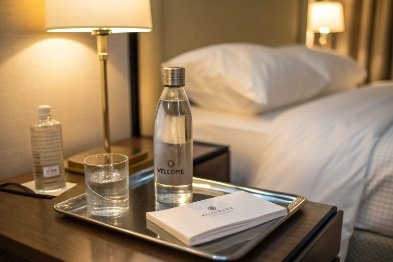
Plastic water can feel cheap in a premium room. Guests notice the smell, the look, and the waste, and that small detail can pull down the whole stay.
Glass-bottled water is popular in hotels because it signals purity and luxury, supports refill programs, and reduces visible plastic waste. With the right handling and safety rules, breakage risk stays controlled.
Hotels do not choose glass only for “green marketing.” They choose it because it upgrades the guest experience, it photographs well, and it fits new waste rules and ESG goals. The decision becomes even stronger when a property can refill safely and manage glass handling with clear SOPs.
A guest may not remember the thread count. They will remember the first sip and the first impression on the nightstand.
Yes. Glass supports a cleaner taste because it is odor-neutral and does not add a “plastic note.” It also looks and feels premium, so guests read it as higher quality and better care from the hotel.
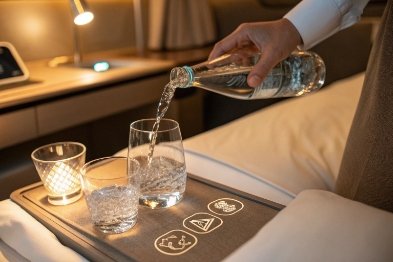
Taste is a sensory story, not only chemistry
Glass helps hotels in a simple way: it keeps water tasting like water. In busy guest rooms, plastic bottles can sit near sunlight, heat, or cleaning-product odors. That environment can make guests more sensitive to any smell. Glass is impermeable, nonporous, and chemically inert 1, so it does not absorb odors from the room and it does not give off packaging smells.
{: #ref-1}
In PET bottles, acetaldehyde can migrate into bottled water over shelf life 2, which can contribute to off-notes for sensitive guests. That makes the “first sip” feel fresher with glass, even when the water source is the same.
{: #ref-2}
The premium effect is also physical. Glass has weight. It has clarity. It feels like a real object, not a disposable one. That supports a hotel’s promise of comfort and detail. In rooms, minibars, and meeting spaces, glass bottles also look cleaner and more intentional. Guests often connect that look with safety and quality, even if they do not say it out loud.
- In-room welcome water feels like a gift, not a commodity.
- Conference tables look more upscale with glass.
- Spa and wellness zones match the “clean living” mood.
| Guest touchpoint | What glass signals | What the hotel must do |
|---|---|---|
| Nightstand bottle | care, purity, calm | spotless bottle and cap |
| Minibar water | premium value | consistent branding and pricing |
| Meeting room | professional image | fast replenishment and safe handling |
A practical positioning tip
If the property uses filtered local water, glass makes that story believable. Guests see the bottle, the clarity, and the label, so they accept “house water” as a premium choice, not a cost cut.
Are refillable glass programs really cutting plastic waste?
Guests want to see action, not slogans. Refillable glass can make sustainability visible in one second.
It also speaks to growing concern about plastic pollution 3 that guests recognize instantly.
{: #ref-3}
Yes, when the refill loop is real and controlled. Refillable glass programs can reduce single-use plastic, lower waste-hauling volume, and support ESG reporting. The best results come from strong cleaning control and clear “refill or replace” rules.
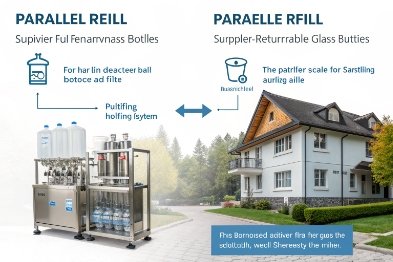
Two main models hotels use
Hotels usually pick one of these refill systems:
1) Supplier-delivered returnable glass
A vendor delivers full bottles and collects empties. The vendor handles washing and inspection off-site. This works well when:
- the hotel wants low operational complexity
- regulations favor licensed bottlers
- volume is stable and predictable
This mirrors many returnable reusable packaging systems 4 where collection, washing, and refilling are managed as a loop.
{: #ref-4}
2) On-site filtration + bottling into glass
The hotel filters water (still or sparkling) and bottles it on-site. This can cut transport and reduce dependence on branded single-use water. It works best when:
- the property has consistent housekeeping discipline
- the hotel can maintain sanitation logs
- water quality monitoring is routine
Many hotels specify filtration aligned to NSF/ANSI Standard 53 5 (or equivalent) when making contaminant-reduction claims.
{: #ref-6}
Refill programs can reduce the cost of buying branded plastic water, but they add labor and process control. The savings become real when the program is stable, not improvised.
For properties tracking impacts, aligning metrics with the GRI Standards 6 can make ESG reporting clearer and more comparable.
{: #ref-5}
| Cost or benefit | One-way plastic | Refillable glass | What decides the winner |
|---|---|---|---|
| Visible waste | high | low | guest participation and staff follow-through |
| Purchasing cost | predictable | can drop over time | volume, supplier terms, refill rate |
| Labor | low | higher | workflow design and training |
| Risk | low shatter | higher shatter | handling SOPs and bottle choice |
What makes refill programs succeed
- Standard bottle sizes and standardized crates
- Clear cleaning steps and verification checks
- Tight cap control so bottles do not leak in rooms
- Simple guest messaging: “refillable, sanitized, and local”
When the system is credible, guests often accept it as a luxury upgrade, not a compromise.
Do branding and decoration options improve presentation?
In hotels, water bottles are part of interior design. They sit in photos, reviews, and social posts.
Yes. Branding and decoration on glass can make water feel like a signature amenity. Options like screen printing, frosting, embossing, and premium caps improve presentation, as long as the decoration is durable and easy to keep spotless.
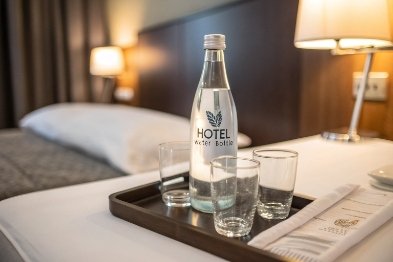
What hotels want from decoration
Hotels want three outcomes:
- The bottle looks premium in the room.
- The branding matches the property style.
- The bottle stays attractive after repeated handling and washing.
Glass gives more “high-end” decoration choices than many plastics. It also gives better clarity and shine. That matters under warm room lighting.
Common decoration choices and trade-offs
Some finishes look amazing but need stricter handling. A bottle that scratches easily will look tired fast, and that hurts the luxury signal.
| Decoration method | Best look | Main risk | Best use case |
|---|---|---|---|
| Silk screen printing | clean, modern | abrasion over time | in-room and conference |
| Frosted glass | spa luxury | fingerprint marks | wellness and spa zones |
| Embossed logo | timeless premium | higher mold cost | long-term signature bottle |
| Label (paper/film) | flexible and low MOQ | peeling in ice buckets | events and seasonal promos |
| Metalized cap | luxury cue | scuffs and oxidation | premium suites |
Branding that also helps operations
A smart hotel bottle design is not only pretty. It is also easy for staff:
- clear “still” vs “sparkling” marks
- simple room-number batch code or date mark for refill cycles
- high-contrast logo that looks good under low light
A simple presentation rule
The bottle should look intentional even when it is half full. That is why many hotels prefer clear glass with a clean label and a balanced shape. It looks neat on a tray and it looks honest to guests.
How are breakage and safety managed in housekeeping?
Glass breaks when systems are sloppy. When systems are clear, glass is not scary.
Hotels manage breakage risk with the right bottle design, protective storage, staff training, and strict cleanup SOPs. They also use controlled placement in rooms and avoid weak points like thin bases and sharp edges.
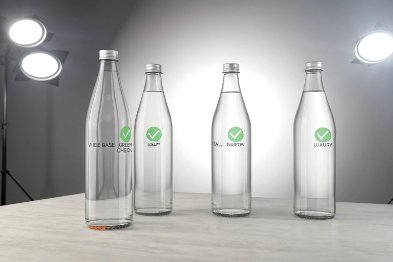
Choose bottles designed for hospitality, not only retail
Hospitality bottles should be:
- stable with a wide base
- moderate weight (not ultra-heavy luxury)
- smooth shoulders (less chip risk)
- compatible with reliable caps that do not leak
Many hotels also prefer smaller formats in rooms, since a smaller bottle is easier to handle and less dangerous if dropped.
Control the “danger zones”
Breakage tends to happen in a few places:
- bathroom vanity tops (hard surfaces)
- tile floors near sinks
- housekeeping carts during tight turns
- dish areas and back-of-house wash zones
Hotels reduce risk with:
- covered crates instead of loose bottles
- separators in carts so bottles do not touch
- defined placement spots in the room (tray, coaster, or recessed area)
- “no glass in the shower area” rule
Cleaning and handling SOPs that work
A practical SOP has four parts:
- Inspect: reject chipped lips and scratched bottles.
- Wash: clean with proper detergent and rinse fully.
- Sanitize: sanitize right before refill and cap immediately.
- Store: store inverted or capped in a covered clean bin.
Safety response matters as much as prevention
If a bottle breaks, staff need a simple script and a simple tool kit:
- gloves, broom, dustpan, and a sealed disposal bag
- “glass break” sign for guest safety
- no vacuum use unless it is a unit made for glass and sharp debris
For staff training, OSHA’s guidance to use a broom and dustpan to clean up broken glass 7 is an easy, memorable rule.
{: #ref-7}
| Risk | Prevention | Response |
|---|---|---|
| Drop in room | stable placement + smaller size | fast cleanup + check for fragments |
| Break on cart | crate dividers + slow turns | stop cart + isolate area |
| Chipped finish | inspection + rejection | remove from pool immediately |
| Guest injury concern | avoid glass near barefoot zones | clear reporting and support |
When the hotel treats glass as a managed system, not an “extra task,” safety stays under control and the guest experience improves.
Conclusion
Hotels use glass water bottles because they lift taste and luxury cues, support visible waste reduction, and allow beautiful branding. With strong handling and cleaning SOPs, breakage risk stays manageable.
Footnotes
-
Research summary on why glass is impermeable, nonporous, and chemically inert as packaging. ↩︎ ↩
-
Study explaining how acetaldehyde in PET can migrate into bottled water and affect taste. ↩︎ ↩
-
Overview of the global plastic pollution problem and why reducing single-use plastics matters. ↩︎ ↩
-
Framework for scaling returnable packaging systems, including collection, cleaning, and refill logistics. ↩︎ ↩
-
Official NSF listings tied to NSF/ANSI 53, helpful when selecting and validating filtration systems. ↩︎ ↩
-
The official GRI Standards hub used to structure and compare sustainability and ESG reporting. ↩︎ ↩
-
OSHA tips on safe cleanup, including using gloves plus a broom and dustpan for broken glass. ↩︎ ↩






