
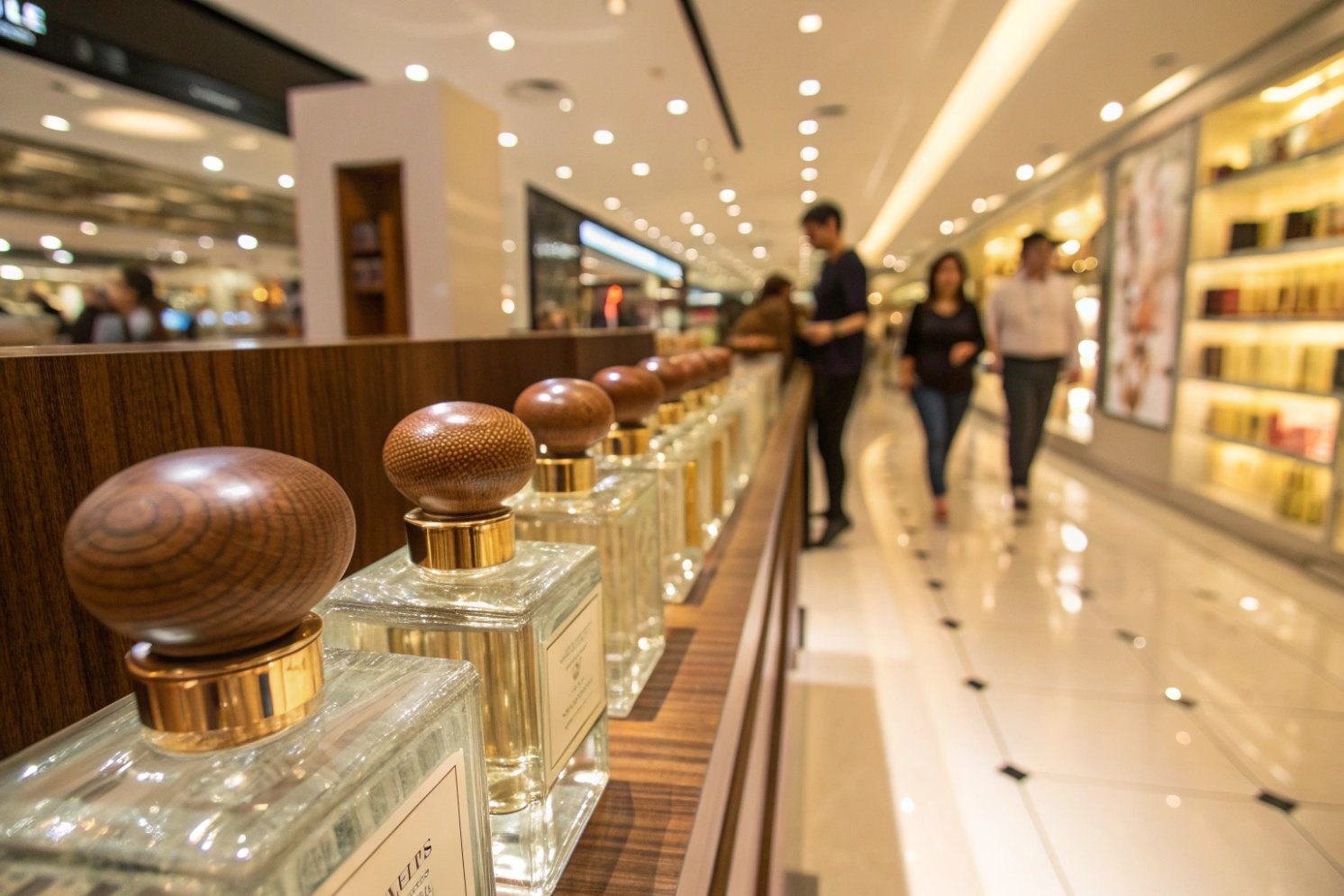
The juice may sell the second bottle, but the cap often sells the first one. That tiny piece on top quietly decides a lot of buying decisions.
Luxury brands invest in unique caps because materials, weight, sound, and security features all signal quality, justify higher prices, and protect both brand identity and the fragrance inside.
When a customer picks up a bottle, the hand meets the cap before the nose meets the scent. That is why caps have become a strategic design space: cheaper than a fully custom bottle, but powerful enough to carry story, status, and even security.
The first contact is not with alcohol or aromatics. It is with the cap’s weight, temperature, and texture in the fingers.
Weighted metals, carved wood, and polished resin caps signal craftsmanship and cost, so customers accept higher price points and see the perfume as a luxury object, not just a liquid.
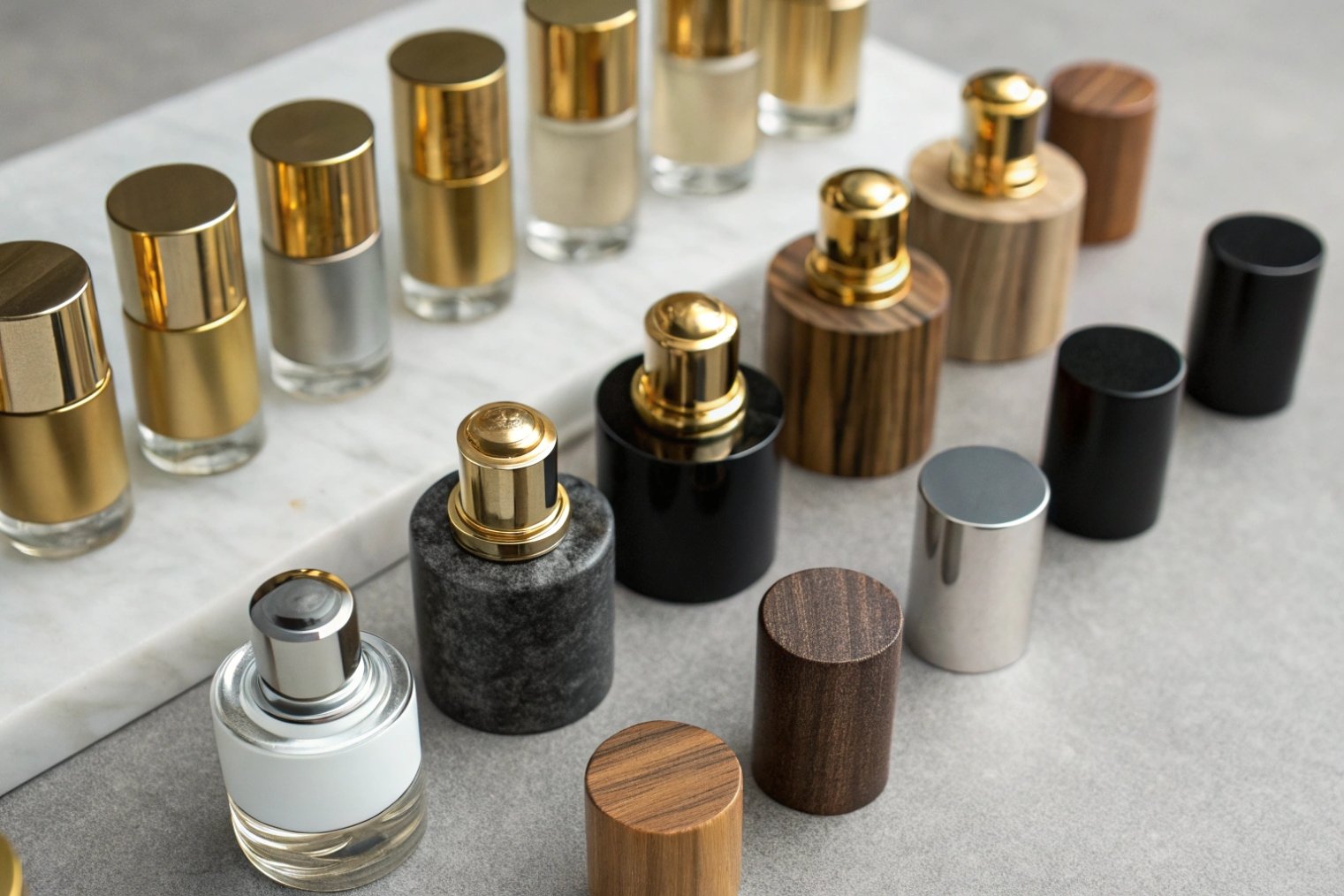
What different materials tell the customer
When a cap is lifted, the brain quickly reads three things: weight, temperature, and surface feel. Each material creates its own message.
- Zamac or solid metal: cool to the touch, heavy, often with crisp edges. Many premium closures use a zinc alloy (zamak) [^1] to get that “engineered” weight and durability.
- Wood: warm, organic, sometimes with visible grain. It suggests craft, naturality, and eco-conscious choices.
- High-grade resin or acetate: silky, polished, with rich color options. It feels modern and expressive, especially in niche or artistic lines.
A simple map of material cues:
| Cap material | Perceived message | Typical positioning |
|---|---|---|
| Zamac / metal | High luxury, precision, durability | Designer and prestige lines |
| Wood | Natural, artisanal, sustainable | Niche, eco, or story-driven brands |
| Resin/acetate | Artistic, colorful, contemporary | Fashion, indie and experimental lines |
| Plain plastic | Functional, entry-level, mass | Value or mainstream lower price tiers |
When customers feel a substantial, well-finished cap, they unconsciously upgrade their expectations for the scent and the brand. That gives you more headroom for pricing and margin, especially when the cap design is unique enough to be “ownable”.
Why caps are a smart place to “spend” luxury
Custom glass molds are expensive and carry high MOQs. By contrast, a brand can:
- Use a semi-standard bottle
- Pair it with a fully custom cap in metal, wood, or resin
- Still achieve strong shelf distinction at a lower total packaging cost
This makes caps a strategic upgrade point. The same glass bottle can support several “tiers” in a line just by changing cap material and finishing:
- Entry SKU → lacquered plastic cap
- Core line → heavier plated metal cap
- Limited edition → special wood or stone-look resin cap
From a production perspective, this modularity is efficient. From a market perspective, it lets the brand tune perceived luxury and justify price ladders without constantly retooling glass.
Do magnetic closures and a crisp “click” really raise perceived quality?
There is a reason people keep opening and closing certain caps in stores. That small “click” becomes part of the pleasure.
Magnetic closures and a crisp mechanical “click” act as micro-signals of precision; they make the ritual of opening and closing the bottle feel more expensive, even though the juice has not changed.
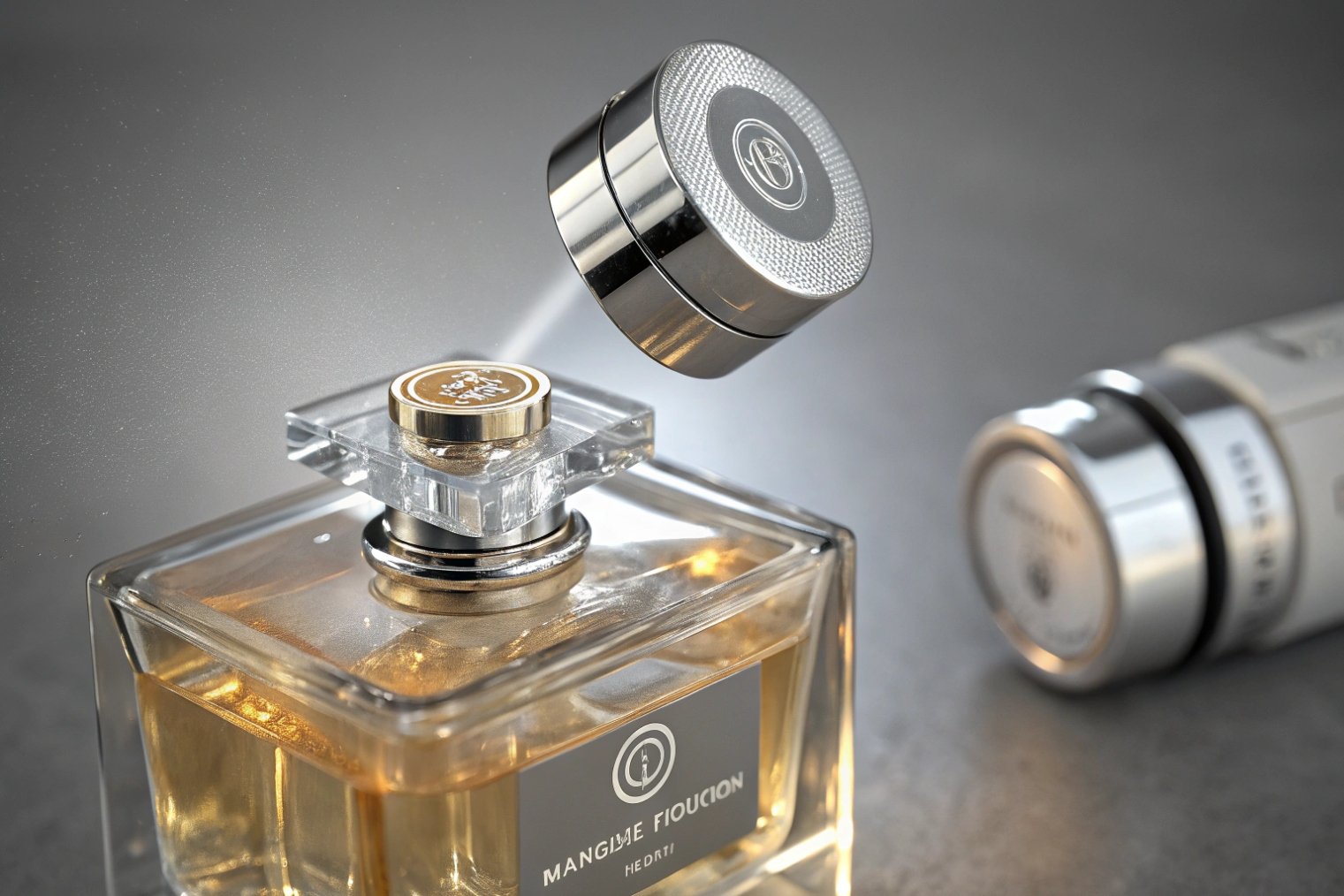
The sound and feel of quality
When a cap slides into place and the magnet catches, three senses fire at once:
- The hand feels the gentle pull and firm stop.
- The ear hears a short, clean sound instead of a dull rattle.
- The eye sees perfect alignment of logo and bottle front.
This is sensory branding [^2]. The opening/closing ritual becomes as recognisable as the scent itself. In a premium context, that matters a lot. Customers may not use technical words, but they know the difference between a loose plastic snap and a centered magnetic lock.
In many premium packs, well-engineered magnetic closures [^3] also prevent the cap from being put back on crooked, which is a small but important detail for vanity display and photography. The bottle always “faces” correctly.
Why engineering the mechanism is worth it
A good closure must balance:
- Security: strong enough not to fall off in a bag or during freight.
- Comfort: easy to remove with one hand without excessive force.
- Durability: performance does not degrade after hundreds of cycles.
Designers tune:
- Magnet size and placement
- Inner core geometry (usually plastic)
- Tolerance between collar and cap
Even without magnets, a well-engineered friction or snap cap can deliver a satisfying click. The key is consistent tolerances and sturdy materials. Loose or squeaky caps quickly dilute the luxury story, no matter how beautiful they look.
In real use, customers remember the complete micro-ritual:
- Sight of the cap and logo.
- Weight in the hand.
- Sound when opening and closing.
Every part of that sequence is an opportunity to say “this is high quality” without a single printed word.
Which anti-counterfeit features can be built into caps and collars?
Once a fragrance reaches a certain level of success, copies appear. Many of them try to mimic the cap first, because it is the easiest visual shortcut.
Caps and collars can hide security features like unique tooling details, complex inserts, engraving, and even NFC/RFID chips, which raise counterfeiting costs and help customers verify authenticity.
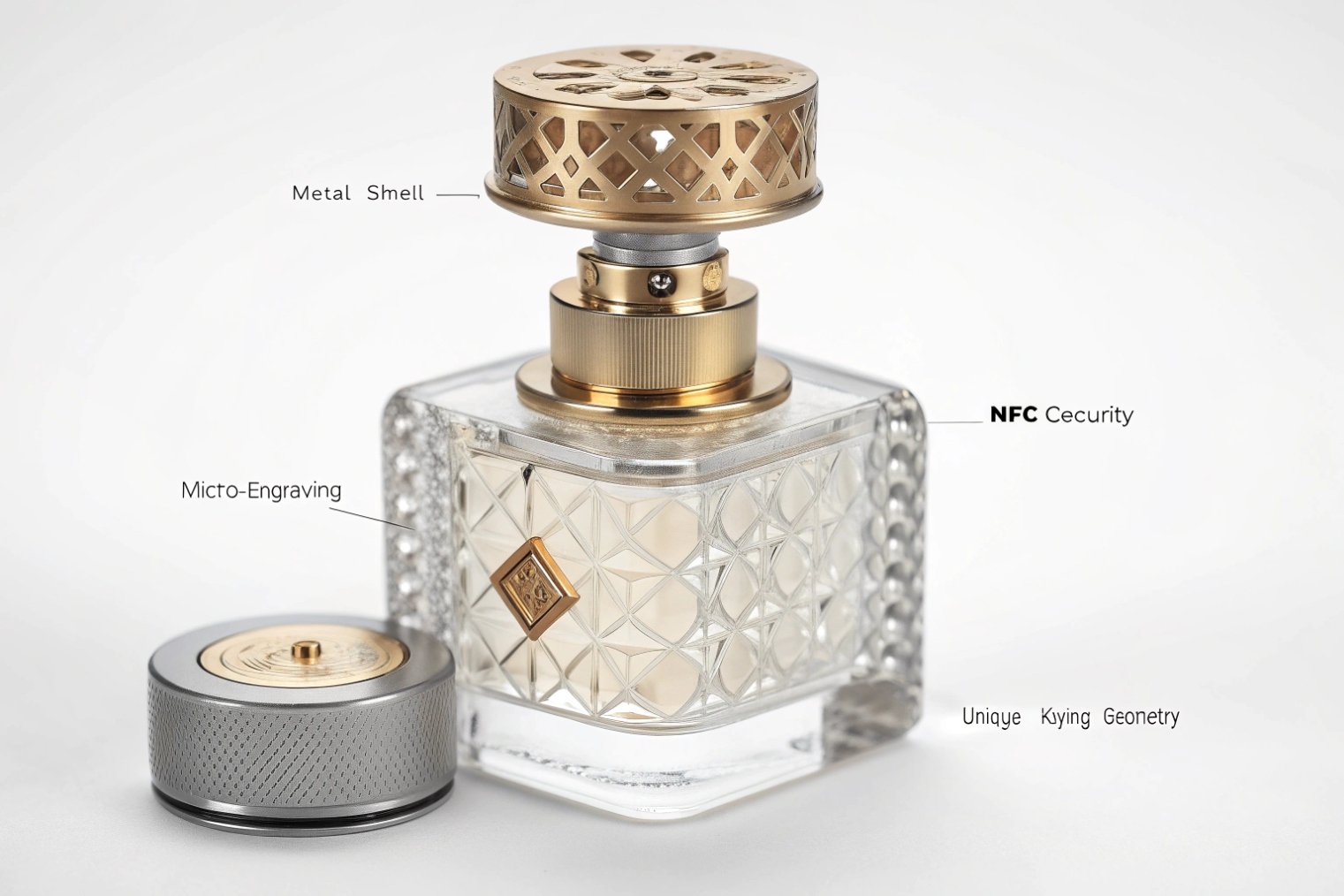
Structural tricks that fakes find hard to copy
The simplest protection is complexity. Well-designed caps use:
- Multi-part construction: metal shell, plastic inner, decorative plaque, and liner.
- Fine engravings or micro-etching on the underside.
- Asymmetric internal geometry that matches a specific collar or pump.
Cheap copies often cut corners. They may:
- Replace metal with painted plastic.
- Simplify inner cores to one part.
- Skip precise engraving or embossing deta






