
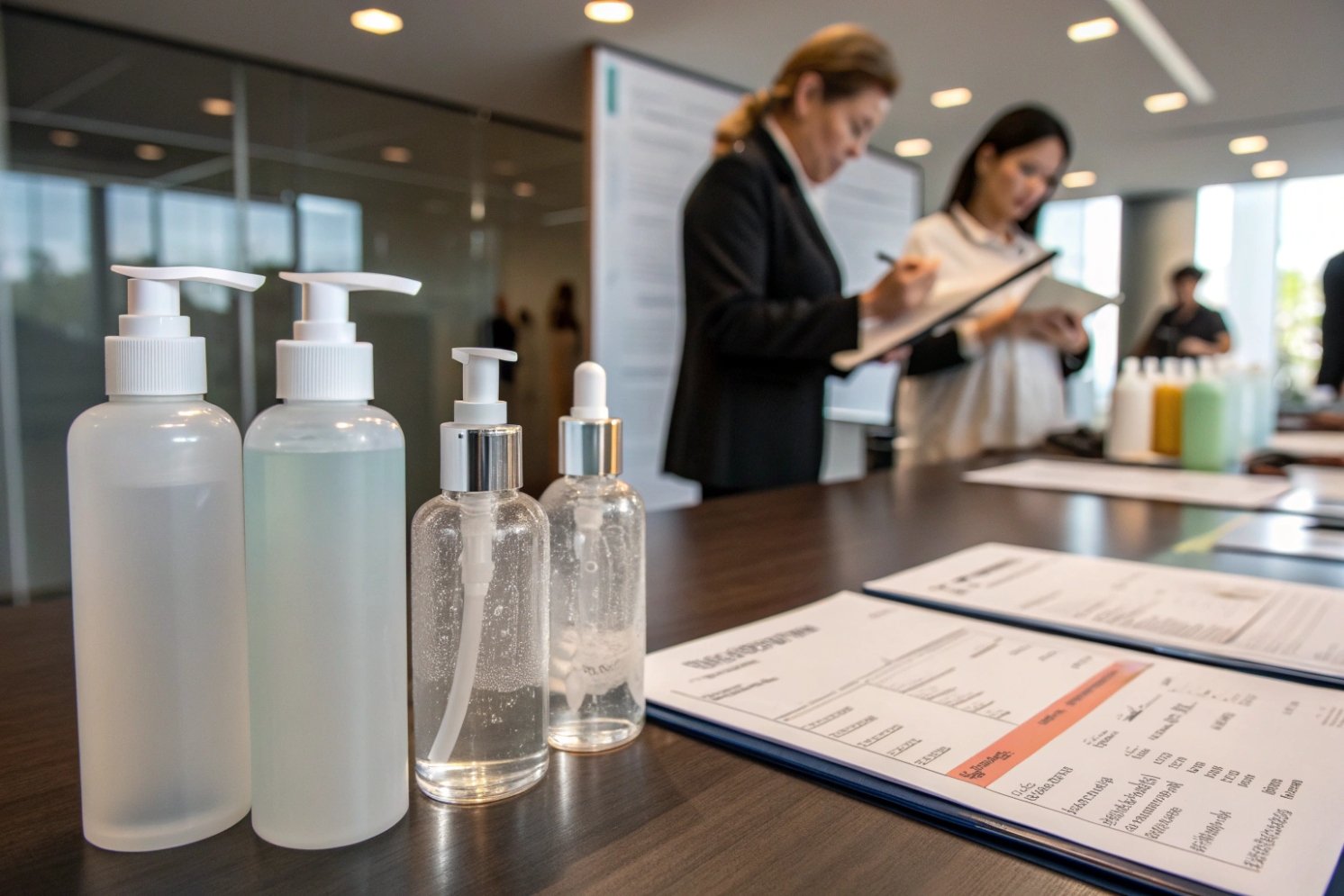
Many brands invest heavily in formulas, then lose trust and value because the packaging feels cheap, unstable, or unsafe for active ingredients.
High-end cosmetics prefer glass bottles because glass protects complex formulas, signals luxury through weight and clarity, allows advanced decoration, resists heat and UV, recycles easily, and enables precise, leak-free systems that support refillable beauty.
When we design a premium skincare or makeup line, the bottle must do more than hold liquid. It needs to keep actives stable, look beautiful for years, and align with a sustainability story. Glass solves these jobs at the same time. It is inert, rigid, and durable, so it works very well with powerful actives, luxury textures, and refillable systems. Plastic still has a role, but for prestige ranges, glass usually becomes the hero material.
Is glass chemically inert and fragrance-safe for actives?
If a formula changes color, smell, or texture in the bottle, trust disappears fast, no matter how strong the marketing is.
Glass is chemically inert, odor-neutral, and has strong barrier performance, so it protects sensitive actives, fragrances, and solvents much better than most plastics and keeps the formula stable throughout its shelf life.

How inertness and barrier performance protect high-value formulas
Glass has a very stable structure. As the European Container Glass Federation’s summary of glass packaging benefits 1 highlights, it is widely valued for inert contact, low interaction risk, and strong barrier behavior in real packaging use.
This means strong actives like vitamin C, retinol, AHAs, BHAs, and essential oils can stay in contact with the container for months or years without leaching or off-odors. If your line uses L-ascorbic acid specifically, a quick read on ascorbic acid stability in topical formulations 2 helps teams understand why packaging and storage conditions matter.
Barrier performance is just as important. Glass is essentially impermeable to oxygen and water vapor, which implies an extremely low oxygen transmission rate (OTR) 3 compared with many polymer bottles. With less oxygen moving through the walls, there is less risk of yellowing, phase separation, or loss of fragrance top notes.
Dimensional rigidity adds another layer of safety. A glass neck does not deform under normal conditions. So pumps and droppers seat in a very predictable way. This gives a tight seal and reduces micro-leaks and weeping around the closure.
Here is a simple comparison of key points:
| Property | Glass Bottle | Typical Plastic Bottle |
|---|---|---|
| Chemical reactivity | Very low / inert | Can react with some actives and oils |
| Odor neutrality | No smell | Can absorb or release odors |
| Oxygen / vapor barrier | Excellent | Moderate to weak |
| Solvent resistance | High, even with alcohol | Variable, stress-cracking possible |
| Neck rigidity | Very stable | Can warp under heat or pressure |
Because of these factors, high-end brands feel safe placing their most complex and expensive formulas into glass first. Plastics are then used more for mass lines, lower-solvent products, or formats where weight must be as low as possible.
Does clarity and heft communicate trust and luxury?
A formula can be clinically strong, but if the bottle feels light, thin, or plastic-like, many customers doubt the quality before they even pump the first drop.
Clarity, weight, and cool touch make glass feel luxurious and honest, so consumers read it as “serious skincare” or “real active serum”, which supports premium pricing and repeat purchase.
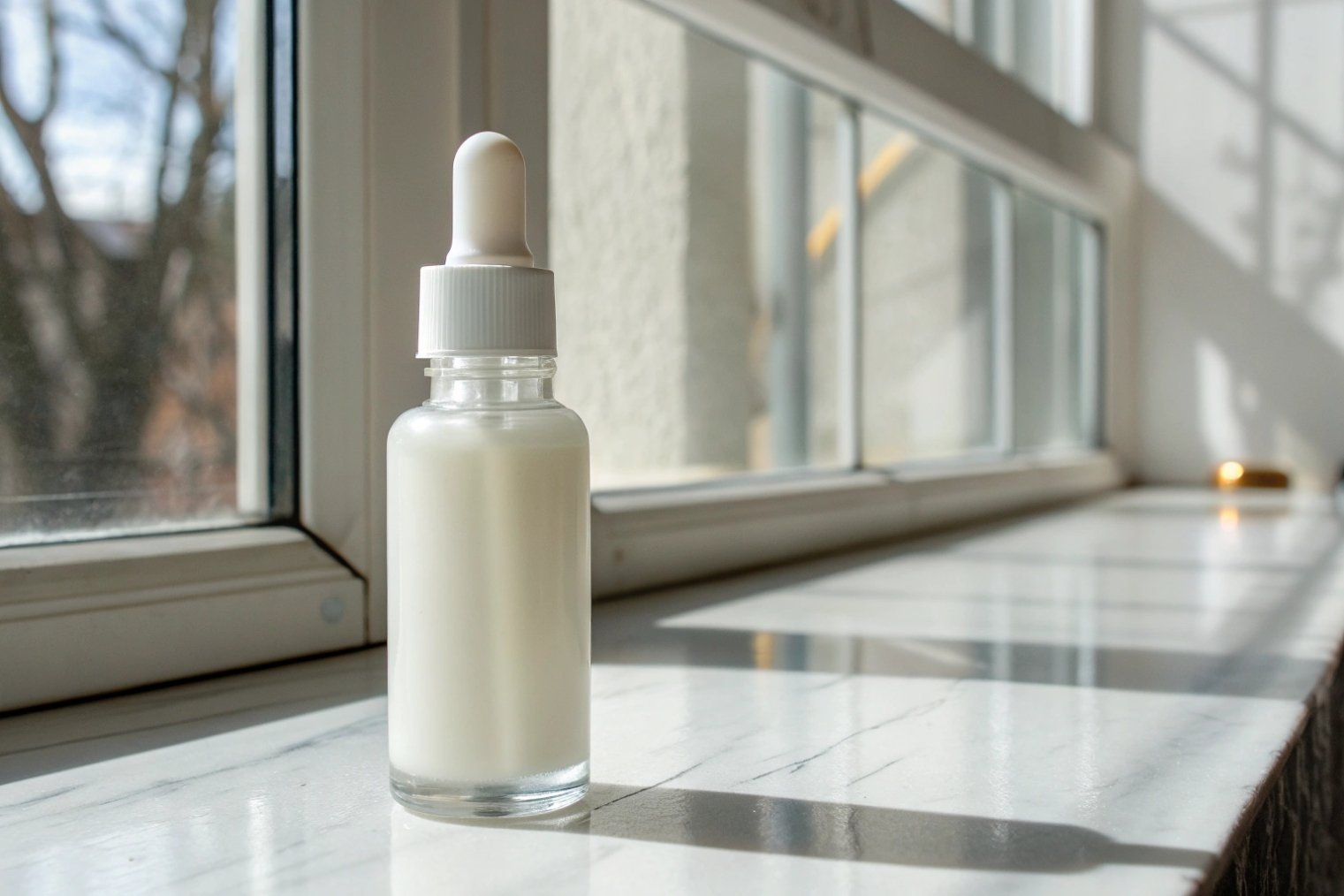
The sensory cues that glass gives to the hand and eye
Glass communicates value in a very direct way. When someone picks up a glass bottle, they feel weight and coolness. The walls feel hard and smooth, not flexible. This matches the mental picture of “laboratory-grade” and “stable”. Clear glass also lets people see the formula color and texture, which builds trust. Many clean beauty brands use transparent or lightly tinted glass for this reason.
Frosted or matte glass adds a different cue. It diffuses light and hides fingerprints. This feels soft and calm, which fits well with spa-style brands and sensitive-skin care. The surface also resists scratches better than many coated plastics, so the pack stays beautiful on the vanity for a longer time.
These sensory signals matter in-store and online. Photos of glass bottles reflect light in a sharp and structured way. They stand out in lifestyle shots and flat lays. This helps social content and product pages look premium without much extra styling.
We can map some of the main sensory benefits:
| Sensory Element | Glass Signal | Customer Perception |
|---|---|---|
| Weight | Solid, stable, “worth paying for” | Feels like a serious, long-term product |
| Clarity | Clean, transparent, no warping | Trust in formula purity |
| Cool touch | Fresh, smooth surface | Clean, hygienic, high-tech |
| Sound | Subtle clink on counter | Luxury, similar to fragrance rituals |
| Visual edges | Sharp lines, crisp reflections | Precision and craftsmanship |
Surface durability also supports this perception. A glass jar or bottle can sit on a bathroom shelf and still look new after months. This is important for gifting and display. Premium customers often keep empty bottles as decor. So a hard, scratch-resistant surface keeps the brand visible and admired even after use.
Are glass/metal systems more heat and UV resistant?
High-end cosmetics often use fragile actives that break down under heat and light, and shipping conditions are rarely perfect.
Glass, especially when tinted or frosted and paired with metal or high-barrier closures, gives better resistance to heat and UV than most plastics, so formulas stay more stable through transport, storage, and daily use.
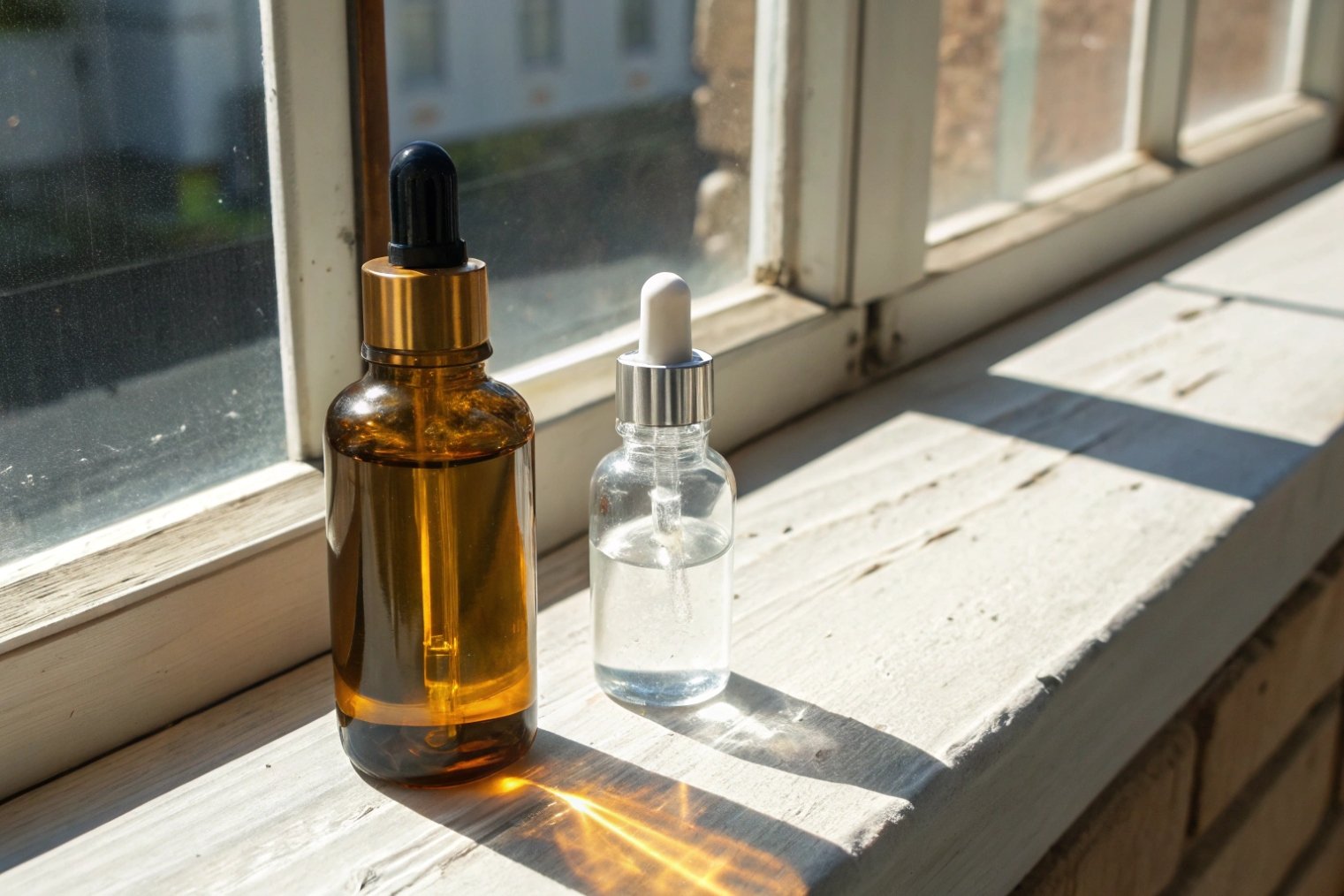
Managing heat, light, and solvents with glass and metal
Glass handles temperature swings better than many plastics used in beauty. It can go through hot-filling, controlled sterilization steps, or long transport in warm climates with less deformation. The neck stays true, the body does not warp, and the base remains flat. This stability helps pumps and droppers keep a good seal even when the bottle experiences heat during shipping.
UV protection is a second big advantage. Amber glass 4 and other dark tints reduce light exposure, which is helpful for many light-sensitive cosmetic actives. Frosted coatings can also scatter light, which reduces direct penetration.
Glass also tolerates high solvent loads. Many actives use ethanol, glycols, or strong oils as carriers. These can soften or stress-crack some plastics over time. Glass stays neutral. Metal overshells, collars, or sleeves can add more protection from light and mechanical impact. They also support a strong click when closing, which feels secure.
Here is a quick view of environmental resistance:
| Factor | Glass + Metal System | Typical Plastic System |
|---|---|---|
| Heat tolerance | High, stable dimensions | Can warp or soften at high temps |
| UV resistance | Strong with tinted/frosted glass | Needs special masterbatch or coatings |
| Solvent load | Excellent | Limited with some aggressive solvents |
| Long display | Holds shape, color, and fit | Risk of yellowing or distortion |
Because of this, many high-end lines keep their flagship serums and treatment oils in glass, and only move to airless plastics when weight or drop resistance must be the main priority. Even then, secondary packs or refills often return to glass for long-term storage.
Luxury brands need strong shelf impact and clear identity, and often struggle to achieve fine, durable decoration on flexible or low-heat plastics.
Glass accepts a wide range of high-end decorations—frosting, embossing, screen and UV printing, lacquers, and metallization—while staying rigid and heat-tolerant, so details look sharper and last longer than on most plastic bottles.
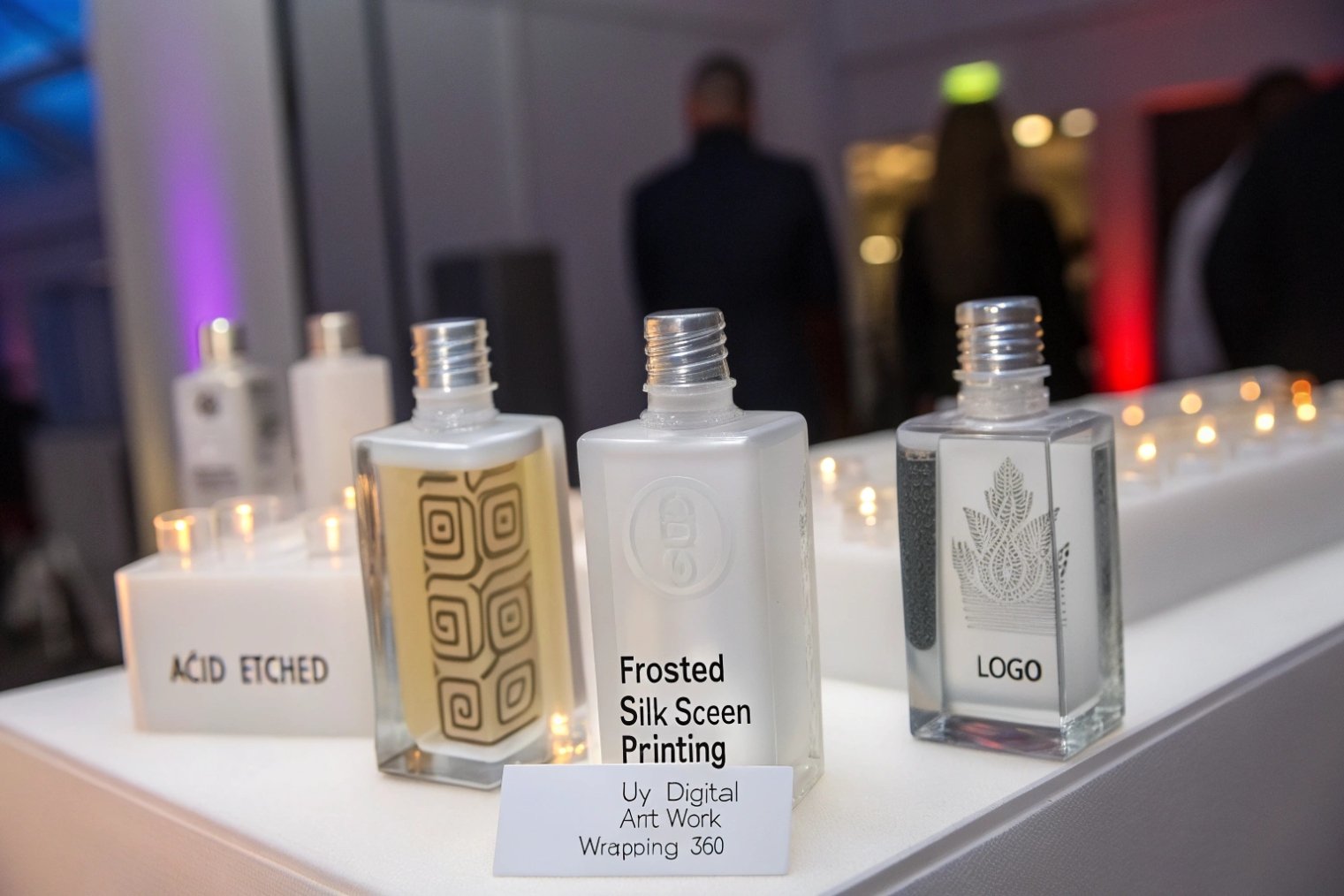
Decoration freedom and long-term appearance
Glass is a very forgiving canvas for decorators. It withstands high curing temperatures for inks and coatings. It also keeps its shape under pressure, so printing plates and screens can apply artwork with fine detail and accurate registration. This is key when logos use thin lines, small type, or metallic accents.
Common premium treatments on glass include:
| Decoration Type | Effect on Shelf | Benefit for Brand |
|---|---|---|
| Acid etching / frosting | Soft, matte, diffused light | Calm, spa-like, high-touch feel |
| Embossing / debossing | 3D logos or patterns in glass | Tactile identity, no label needed |
| Silk screen printing 5 | Opaque or metallic graphics | Strong, durable branding |
| UV digital printing | 360° full-color, low MOQ | Fast limited editions, personalization |
| Sprayed lacquers | Solid or gradient color layers | Signature look by shade |
| Metallization | Mirror-like or brushed finishes | Futuristic or jewelry-like presence |
Because the surface is hard and scratch-resistant, these decorations last longer. A frosted glass bottle with hot-stamped logo will still look sharp after months of handling. A plastic surface with the same look often scratches or peels, which weakens the luxury feeling.
Decoration also supports refillable systems. The outer glass shell can carry the highest-value artwork and effects. Inside, a simple refill insert or inner bottle uses a more basic decoration. When the customer replaces the refill, the outer glass keeps its perfect finish—an approach aligned with scaling reuse models for packaging 6. This reduces material use per refill and keeps the most expensive visual part in use for many years.
From a sustainability view, glass plus simple coatings also works well. When brands avoid heavy multi-layer plastic labels and complex laminates, the end-of-life stream becomes cleaner. Many markets already have a mature glass recycling stream 7, so decorated glass can fit naturally into existing loops. Refillable and recyclable can live together in one design language.
Conclusion
High-end cosmetics choose glass bottles because they protect advanced formulas, signal real luxury in hand and on shelf, support strong decoration and refillable systems, and align premium beauty with long-term sustainability.
Footnotes
-
Industry federation overview of glass inertness, recyclability, and barrier performance to support packaging material choices. ↩ ↩
-
Review on topical vitamin C stability, helping assess packaging and storage needs for ascorbic acid products. ↩ ↩
-
Defines oxygen transmission rate and why low OTR matters for oxidation-sensitive formulas. ↩ ↩
-
Explains amber glass and its light-filtering behavior, useful for choosing bottle color for light-sensitive actives. ↩ ↩
-
Overview of screen-printing processes, useful for understanding durability and registration of direct-to-glass branding. ↩ ↩
-
Framework for reuse models and circular economy packaging, useful for planning refill and return programs. ↩ ↩
-
Explains glass recycling pathways and constraints, helpful for designing bottles and decorations that recycle in real systems. ↩ ↩






