
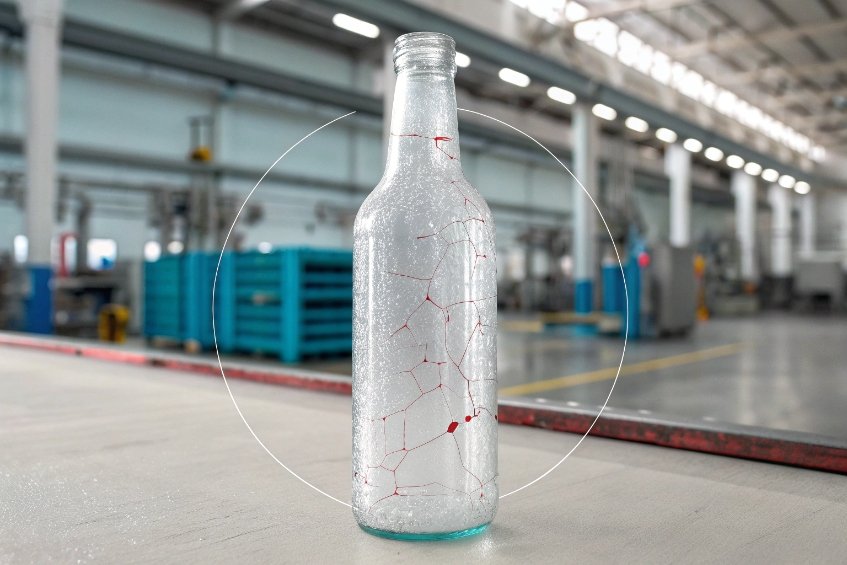
A bare glass bottle looks strong, but its surface is fragile. Every tiny scratch on the line is a future breakage, complaint, or dull-looking brand.
Surface coatings protect bottle strength, improve slip, carry brand color and effects, and support lightweight and reuse. Done right, they cut losses from forming to pallet and still stay safe for food and cosmetics.
When we design a coating system, we are not just adding “paint”. We are tuning how the bottle behaves in forming, conveying, packing, shipping, and unboxing. That is why hot-end oxide surface treatments 1, cold-end slip, and decorative layers must work together as one engineered surface.
How do coatings cut abrasion losses and pallet-to-shelf breakage?
On a fast line, bottles hit guides, starwheels, and each other thousands of times. Bare glass cannot survive that without losing strength.
Coatings reduce surface friction and scuffing, so fewer micro-cracks start. This preserves mechanical strength, lowers breakage from pallet to shelf, and keeps the surface clear and glossy for labels and printing.
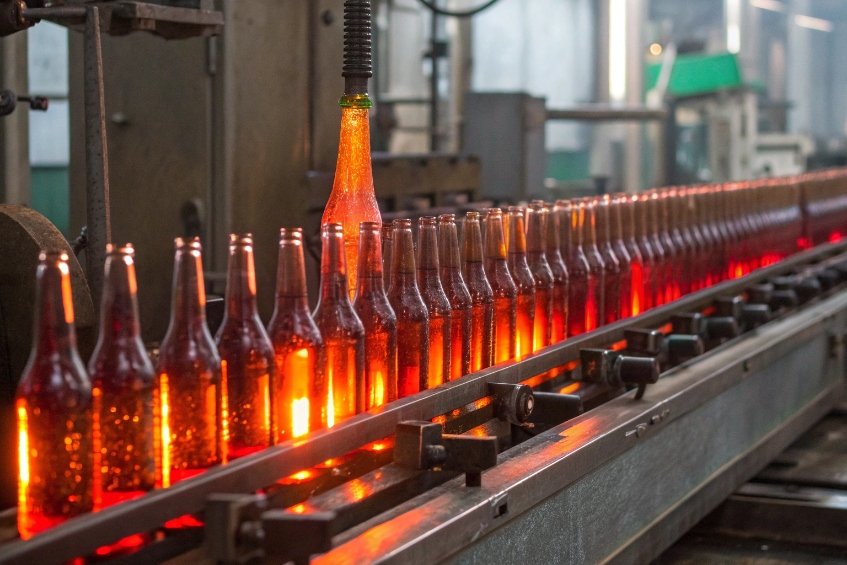
How coatings protect strength and line efficiency
We can think of the coating system as a safety buffer around the glass:
1. Hot-end coatings: protect strength from the start
At the hot end, a thin oxide layer (often SnO₂ / TEO) is applied while the bottle is still very hot. This layer:
- Covers micro-defects created during forming.
- Reduces direct glass-to-glass damage in the first seconds on the conveyor.
- Creates a “keyed” surface for later cold-end slip layers.
Because it bonds into the surface, it moves with the glass instead of peeling off. It does not change dimensions. It simply makes the surface more robust.
2. Cold-end slip: control friction, not just “make it slippery”
Cold-end coatings (PE, wax, stearate, organosiloxane) are applied when the ware leaves the lehr. Many plants use cold-end wax emulsion coatings 2 whose main jobs are:
- Lower the coefficient of friction (COF) between bottles.
- Reduce scuffing against guides, dividers, and case packers.
- Help bottles move smoothly through accumulation and palletizing.
We do not aim for “lowest possible COF”. If the surface is too slippery, bottles slide in boxes, and packs lose stability. So we define a coefficient of friction (COF) 3 window and design cold-end chemistry to stay inside that band.
3. From fewer scratches to fewer breaks
Scratches act as crack starters. Every scuff line cuts the effective wall thickness at that point. When bottles later see:
- Internal pressure from carbonation or hot-fill.
- Impact in a warehouse or during transport.
- Thermal shock in washing or pasteurization.
These flaws can become full fractures.
By lowering abrasion in forming, conveying, and packing, coatings:
- Preserve the original wall strength from the mold.
- Reduce impact and pressure failures.
- Cut pallet-to-shelf breakage, which is often the most expensive breakage of all.
A simple view of the benefits:
| Stage | Risk without coatings | What coatings change |
|---|---|---|
| Hot conveyor | Early surface damage, weak spots | Hot-end oxide shields the fresh surface |
| High-speed conveying | Scuffs and impact scratches | Cold-end slip lowers friction and scuff |
| Case packing / pallets | Rubbing in dividers, label wear | Anti-scuff layers keep panels smooth and clear |
So one main reason bottles need coatings is simple: not to make glass stronger in theory, but to stop the line and the supply chain from taking that strength away.
How do coatings enable brand aesthetics without compromising food safety?
Marketing teams want bold colors, deep frost, and metallic finishes. Technical teams want safe, inert surfaces that do not contaminate product. Coatings sit between these two goals.
Decorative coatings give color, gloss, matte, and metallic effects on the outside of the bottle, while safety rules keep the inside in direct contact with plain glass or inert inorganic layers.
Balancing branding freedom with product safety
We can separate the bottle into two “zones”:
1. Product-contact side: keep it inert
On the inside:
- The product usually touches only bare soda-lime glass, or glass with fused inorganic layers (for example, internal enamel in special cases).
- Organic paints, lacquers, or PE cold-end layers do not sit on the food-contact surface.
- All materials must respect food-contact materials legislation 4 and migration limits.
This keeps product safety simple and robust.
2. Outer surface: playground for design
On the outside, coatings support brand language:
- Color coats for solid or translucent brand colors.
- Frosted or matte finishes for premium feel and light diffusion.
- Metallic effects from metallization or metallic pigments.
- Gloss and texture control from high-gloss to soft touch.
These layers are selected and tested so that:
- They have low migration into typical liquids (alcohol, oils, water-based formulas) under realistic conditions.
- They pass adhesion, hardness, and caustic or detergent resistance tests.
- They work with standard label adhesives and printing systems.
3. How we confirm safety and performance
For food and cosmetics, we support design freedom with testing:
- Migration tests with food simulants 5 or real formulas.
- Cross-hatch and tape adhesion at body and shoulder.
- MEK or solvent rubs to verify cure.
- Dish-washer or caustic-wash cycles where needed.
If we treat coatings as an engineered stack—glass / hot-end / cold-end / primer / ink / varnish—then aesthetics come without surprise failures.
In short, coatings let the brand speak through color and finish, while safety comes from smart layering: keep organics outside, keep inorganic and certified materials where there is any chance of contact.
Can coatings support lightweighting and thinner walls?
Lightweighting is one of the strongest trends in glass. Less glass means less CO₂, lower transport cost, and easier handling. But thinner walls are more sensitive to surface damage.
Coatings help lightweight bottles by protecting thin walls from scratches and scuffs, so the container keeps the strength it needs for filling, transport, and consumer use.
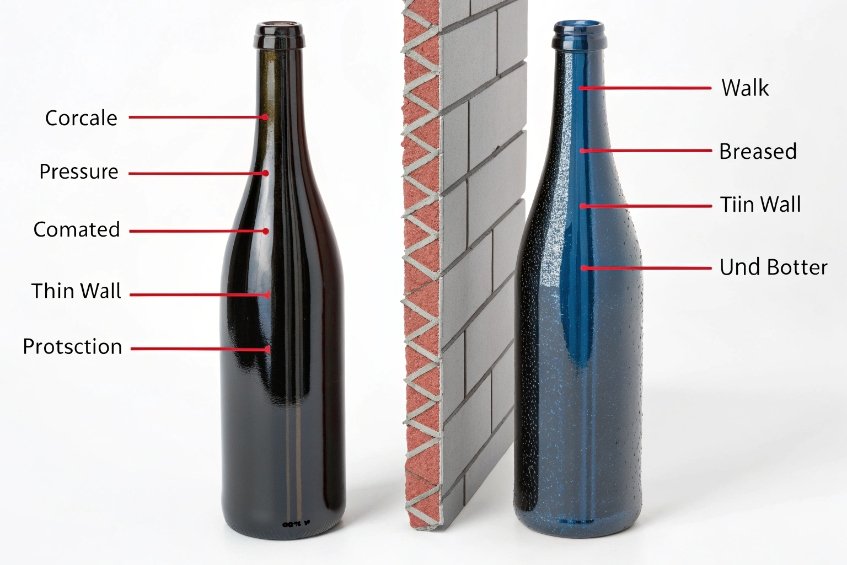
Using coatings as “strength insurance” for thin glass
Lightweight designs move more strength responsibility onto the surface:
1. Thinner glass means higher stress at the surface
In a thin-wall bottle:
- Internal pressure from carbonation or hot-fill translates into higher stress per millimeter of thickness.
- A scratch that would be harmless on a heavy bottle can become critical.
- Edge and panel impacts during conveying become more dangerous.
Because of this, surface protection is no longer “nice to have”. It becomes a structural support.
2. Hot-end + cold-end stack for lightweight bottles
For lightweight ware, we usually:
- Optimize hot-end oxide coverage to reduce initial flaw severity.
- Use more controlled cold-end slip with tight COF and coverage tolerances.
- Sometimes add harder clear-coats or sol-gel layers on high-risk areas (for example, where bottles rub against each other in crates).
This stack does not increase wall thickness. Instead, it keeps thin walls from losing strength due to handling damage.
3. Coatings and design freedom
With better surface protection, designers can:
- Use more aggressive weight reductions without unacceptable breakage.
- Introduce taller or more complex shapes without high scuff risk.
- Run lighter bottles at modern high line speeds.
We still need full validation through pressure, impact, and pasteurization tests. But coatings widen the safe operating window for lightweight designs.
So yes, coatings support lightweighting. They act as “wear layers” for thin glass, so we can remove material from the body and shoulder without paying for it later in higher breakage.
What sustainability gains come from coatings, reuse, and fewer rejects?
Sustainability is not only about recycled content. It is also about how many times one bottle survives the system without turning into cullet.
Coatings help sustainability by extending bottle life, improving reuse cycles, lowering breakage, and reducing scrap and returns. The result is lower total energy per filled unit and less waste, even if the glass recipe stays the same.
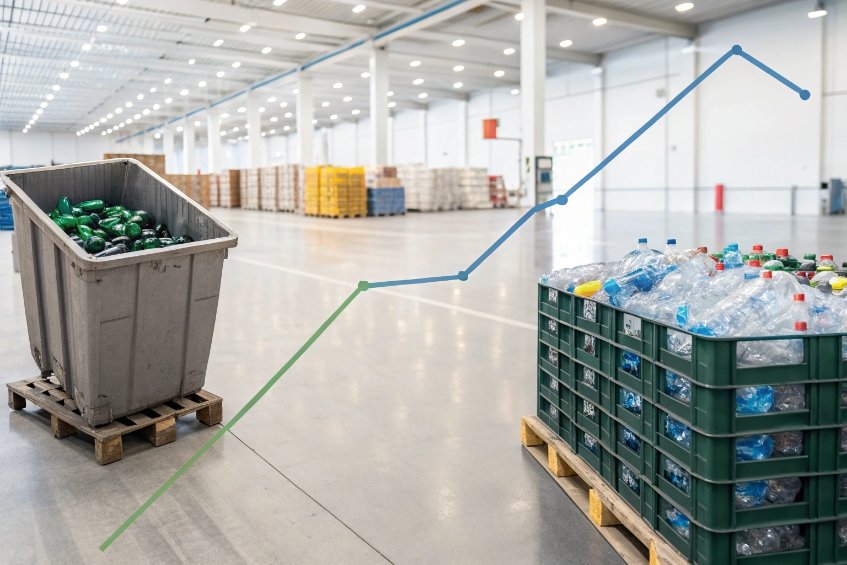
How coatings shift the sustainability balance
We can look at four main gains:
1. Fewer rejects and line losses
Every rejected bottle has already used:
- Melting energy.
- Forming energy.
- Coating chemicals, air, and water.
- Labor and line time.
By reducing coating-related defects and abrasion-triggered breakage, we:
- Scrap fewer bottles at inspection.
- Reduce emergency stops and rework.
- Send more “first-time-right” bottles to customers.
This improves energy per good bottle and reduces waste at the plant.
2. Longer life in returnable systems
For returnable beer, soft drinks, or milk bottles, the biggest sustainability win is reuse count. Coatings help by:
- Resisting caustic washers and mechanical contact.
- Reducing scuff and haze, so bottles still look acceptable after many cycles.
- Protecting printed or embossed areas from heavy wear.
If a returnable bottle can survive more trips before retirement, the energy and emissions per trip drop sharply. (See a practical overview of the returnable glass bottle washing cycle 6.)
3. Supporting lightweight and lower transport emissions
As we saw, coatings help lightweight bottles stay strong enough for real life. Lighter bottles:
- Reduce transport emissions per liter shipped.
- Use less raw material from the start.
- Still meet performance and shelf-life demands.
Without coatings, many lightweight designs would need to stay thicker for safety, which locks in higher CO₂ and cost. Industry context on long-term weight reduction is summarized in glass container lightweighting 7.
4. Better consumer experience and less damage in e-commerce
Anti-fingerprint and easy-clean topcoats keep bottles looking new longer. Anti-scuff layers reduce cosmetic damage in mixed or tight packaging. Shatter-containment coatings keep broken fragments from spreading.
These features:
- Reduce returns and complaints from e-commerce and retail.
- Allow tighter, more efficient packaging without as much risk of visual damage.
- Support reuse by keeping bottles “presentable” over a longer life.
In simple terms, coatings help each bottle travel more kilometers, carry more fills, and reach more customers before it becomes cullet. That is a direct sustainability gain, even before we talk about greener chemistries and lower-VOC formulations.
Conclusion
Glass bottles need coatings because the real world is rough. Coatings protect surface strength, control slip, carry brand aesthetics, support lightweight designs, and extend reuse and shelf life. With smart stacks and testing, they do all this while staying safe for food and cosmetics.
Footnotes
-
Hot-end and cold-end surface treatment fundamentals (SnO₂ anchoring, abrasion reduction) for container glass. ↩ ↩
-
Cold-end wax emulsion coatings and how they reduce scuffing, fractures, and handling damage. ↩ ↩
-
How COF is measured and why controlling it prevents slipping, jamming, and load instability. ↩ ↩
-
Official EU overview of food-contact materials rules and migration concepts. ↩ ↩
-
Practical migration-testing guidance (simulants, conditions) used to support compliance decisions. ↩ ↩
-
Bottle washing stages and how hot caustic conditions affect returnable glass performance. ↩ ↩
-
Industry facts on long-term glass container weight reduction and ongoing lightweighting efforts. ↩ ↩






