
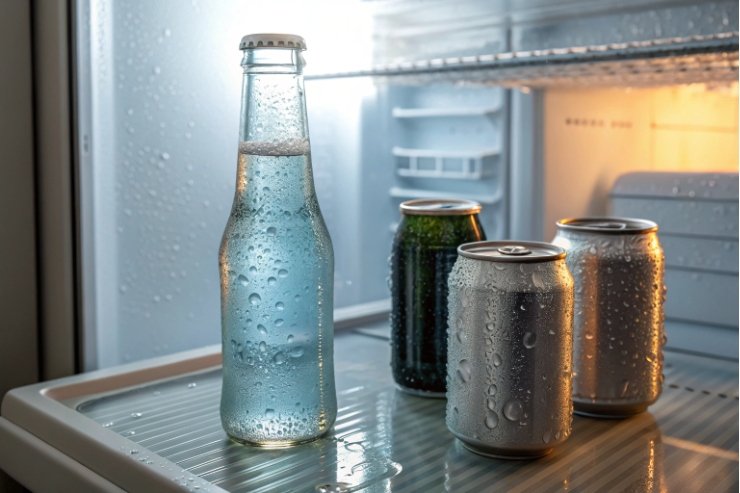
Most people can feel the difference without any lab data: the same soda or beer seems cleaner, crisper, and “truer” from glass. That is not just nostalgia.
Drinks often taste better from glass bottles because glass is neutral, keeps CO₂ and aromas locked in, defends against light and oxygen, and gives a heavier, cleaner mouth contact than plastic or metal.
When I choose packaging specs with customers, we treat glass as the “reference” for flavor because it is nonporous and impermeable 1. PET and cans can be good, but they work around limits. Glass starts from neutral and builds up from there.
Do barrier and liner neutrality cut flavor scalping?
You open a cold drink, take the first sip, and something tastes faintly “plasticky” or “can-like”. The liquid did not change recipe. The packaging joined the recipe.
Yes. Glass and its liner systems are much more neutral than many plastics and some metals, so they reduce flavor scalping, off-odors, and any “extra” notes that ride on the first sip.
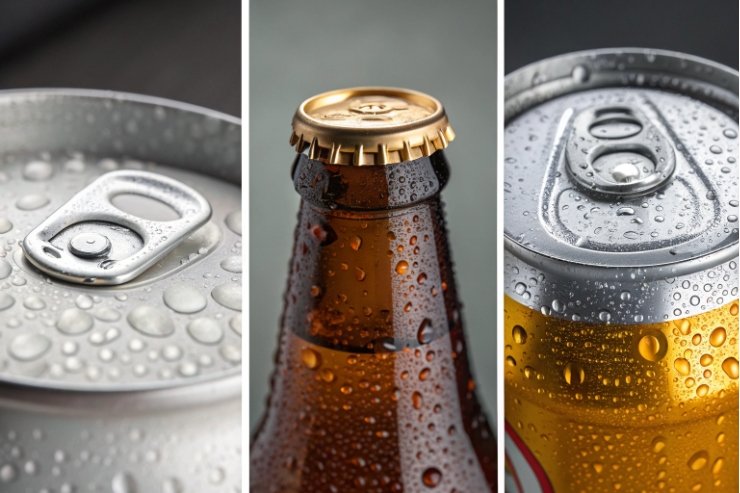
Glass vs plastic vs metal on taste
Flavor scalping 2 is what happens when the package steals aroma molecules from the drink or donates its own. Plastics can absorb flavor-active compounds from citrus, hops, herbs, and cola essences. Over time, the drink tastes flatter and less bright. The plastic can also release its own trace notes, especially when warm.
Glass behaves differently:
- It is chemically inert with typical beverages.
- The surface is non-porous, so it does not soak up aroma molecules.
- With proper washing or rinsing, there is no memory of the previous fill.
Metal cans protect well once the internal can coatings 3 are right, but if that lacquer is not matched to the drink or gets damaged, metallic or “tinny” notes can show up. Glass does not need an internal lacquer, so one variable disappears.
For most recipes, the clean ranking looks like this:
- Glass bottle with a suitable crown or ROPP closure.
- Well-specified, properly lacquered can.
- PET or other plastic bottles, which must work harder to protect flavor.
Why the rim and mouth contact matter
The first contact point between your mouth and the package is the rim. If the rim smells like plastic, ink, or can coating, your nose registers this even before your tongue does any work. That shapes your judgment of taste.
With glass:
- The lip area stays neutral after a normal wash and rinse.
- There is no plastic feel or chemical smell right under the nose.
- Any aroma you sense is from the drink, not the package.
Crowns and screw caps also sit away from the sip point. They may carry liners and coatings, but you are not putting them in your mouth. When the cap is off, the only material at the contact zone is clean glass.
PET bottles put the plastic thread and finish right under the nose. Cans put a coated metal rim in contact with your lips. Both can still work very well, but they need more care in design and production to stay out of the sensory picture.
Liner design without flavor “bonus”
Even on glass, closures matter. Crown liners, ROPP liners, and gaskets can scalps aroma or leak plastic notes if the wrong polymer is used. Good beverage lines:
- Match liner chemistry to acidity, alcohol, and flavor load.
- Test for sensory neutrality over the full shelf life.
- Keep liner thickness and cure under control.
The key is that glass itself does not add another layer of risk. When you solve liner and closure design, you really can get as close as possible to “just the drink”.
Is CO₂ retention and serving temperature more stable?
Flat soda or beer is one of the fastest ways to ruin taste. Warm beer is another. Even with a perfect recipe, poor carbonation and temperature kill the experience.
Yes. Glass walls are gas-tight and thermally stable, so CO₂ levels and serving temperature are often more consistent in glass bottles than in many plastics, and they stay cold for longer once poured.
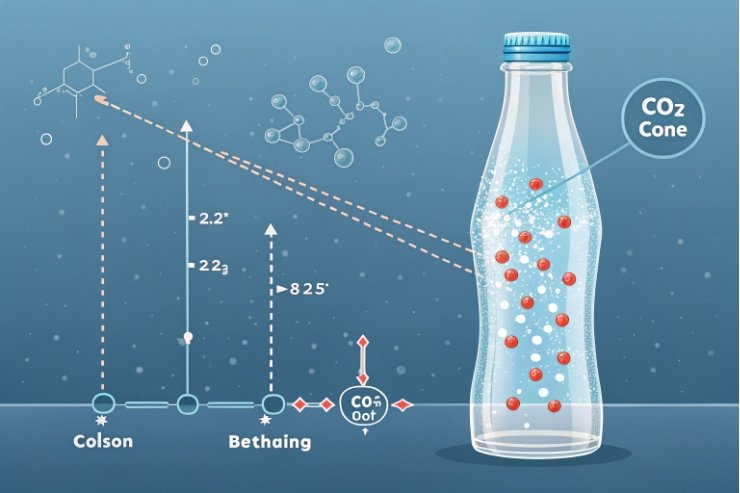
CO₂ retention and gas barrier
CO₂ molecules are small and restless. They want to escape. A good package has to trap them long enough that the drink still feels alive on the tongue when the consumer opens it.
Glass:
- Has zero gas permeability through the wall.
- Leaves only the closure system as a path for CO₂ loss.
- Works well with crowns and high-integrity screw caps.
PET and similar plastics have improved barriers, but they still allow slow gas transfer over time. Peer-reviewed work on bottled beverages highlights the gas permeability of monolayer PET 4 versus glass over storage. For short shelf life and high rotation, this can be fine. For long export runs, warm storage, or slow-moving premium SKUs, you can see more CO₂ slip away.
From a practical view:
- The same soda or beer in glass usually tastes crisper on the far end of its shelf life.
- Sparkling waters and tonics often feel more lively from glass at the same date code.
Cans also hold CO₂ very well through the metal body. Their performance depends heavily on seam integrity and lacquer, while glass depends mainly on closure and fill headspace.
Temperature feel and thermal mass
People often say “glass keeps drinks colder”. Physically, the liquid will warm up over time in any package, but glass brings two helpful effects:
- Higher thermal mass in the bottle wall slows perceived warming in the hand.
- Smooth, rigid walls keep internal pressure and bubble behavior stable as temperature changes.
When you pull a glass bottle from ice:
- The outer glass chills and shows condensation.
- That “frosty” look and cool feel tell your brain “this is very cold”.
- The drink inside warms at a steady rate, without the bottle going soft.
A thin plastic bottle warms faster in your hand and flexes when you squeeze or pour. That can disturb bubble structure and make carbonation feel less fine, even at the same objective CO₂ volume.
Stability in the cold chain and at home
On the logistics side, glass bottles:
- Tolerate repeated chill and re-warm cycles if designed correctly.
- Do not change shape when cold, so closures stay properly torqued.
- Avoid the “paneling” or slight vacuum collapse that some PET bottles show after hot-fill and cooling.
At home, a row of glass bottles in the fridge keeps a stable presence: upright, heavy, and visually cold. The drinker trusts them more and often judges the first sip as fresher.
So while good PET and cans can also deliver strong CO₂ and temperature performance, glass has fewer moving parts and a more forgiving material behavior.
How does mouthfeel and aroma release differ by material?
Taste is not just chemistry. It is physics and psychology. The shape and feel of the package change how the drink hits your tongue and what your nose picks up on the first breath.
Glass shapes and lips often give a smoother flow, cleaner rim contact, and better aroma release than cans or many plastic bottles, while the weight and feel of glass can bias people toward describing the drink as “better”.
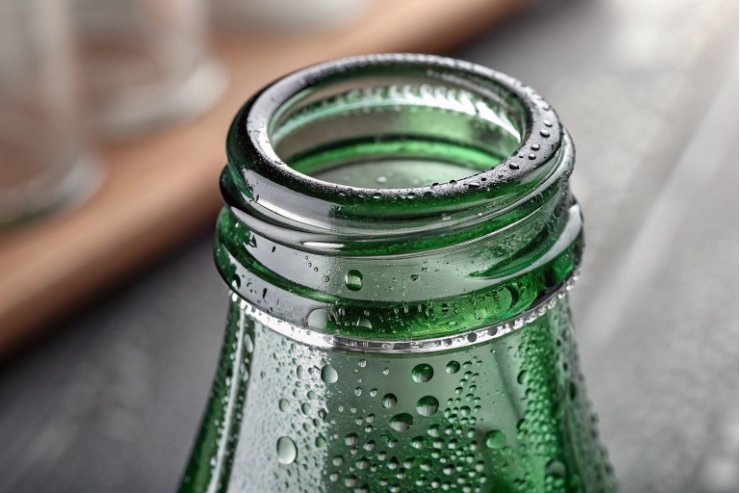
Flow, bubbles, and how the liquid enters the mouth
The internal geometry of a glass bottle neck and the shape of its lip guide the flow:
- Rounded glass lips let liquid roll smoothly over the edge.
- Thin glass at the rim can feel almost like a proper drinking glass.
- Bubble release in the neck can be tuned by diameter and shoulder design.
Cans and some plastic bottles deliver the drink through a more abrupt opening:
- Sharp metal or formed plastic edges change how the liquid stream hits the tongue.
- The flow can be slightly more turbulent and less controlled.
- It is harder to tilt the package slowly and sip in small, steady amounts.
Even though these differences sound minor, they matter. A thin, smooth stream across the front of the tongue delivers sweetness, acid, and aroma in a different pattern than a thicker, broken stream from a wide can opening.
Aroma under the nose
Flavor is strongly linked to what the nose picks up retronasally. Glass bottles help in two ways:
- Neutral rim: your nose does not get extra plastic or metal notes.
- Headspace shape: the small space above the liquid collects aroma before each sip.
When you tilt a glass bottle, the neck and top of the body act like a small chimney. Volatile compounds rise there and sit just under your nose at the moment you drink.
With a can, aroma has to escape through a punched hole in a flat top. The headspace is wide and shallow, and your nose sits partly above the can end, not in a funnel. That reduces the “aroma cone” effect that glass gives.
Plastic bottles can be somewhere in between, but the plastic smell of the neck area can still soften the effect.
Weight, touch, and expectation bias
People judge taste partly based on what they see and feel. Research on touch cues suggests packaging weight affects perceived flavor intensity 5, even when the liquid is identical.
- A heavier container quietly signals “premium” and “quality”.
- Clear glass that shows tiny bubbles and clean color tells your brain “fresh”.
- The cool, hard surface against the hand feels different from soft plastic.
This is not just marketing theory. In blind tests where the same liquid is served in different packages, people often rate the glass-packaged version as:
- More refreshing.
- More flavorful.
- Better balanced, even though the recipe is identical.
So the drink is not chemically improved by the bottle, but the total sensory frame is. Glass shapes and surfaces help the drink show its best self.
Do light and oxygen defenses improve shelf flavor?
A drink can leave the filling line tasting perfect and reach the consumer dull, oxidized, or even skunked. Light and oxygen are the two main enemies on that journey.
Yes. Glass can be tuned with dark colors and tight closures to block light and oxygen, slowing flavor damage and keeping the drink closer to its “day one” profile for longer.
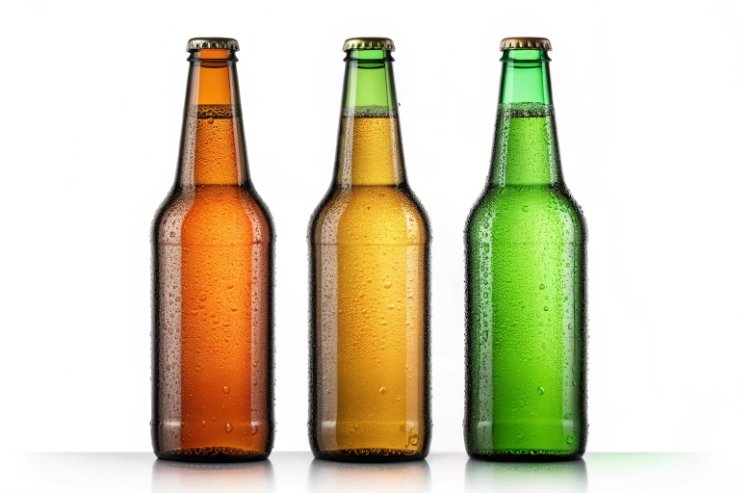
Light protection with tinted glass
Many drinks carry light-sensitive compounds:
- Hop-derived molecules in beer.
- Natural colors and aromatics in juices and teas.
- Some vitamins and plant extracts in functional drinks.
Clear and light-colored packages let UV and some visible wavelengths pass easily. This can drive photochemical reactions that lead to:
- “Skunky” or sulfur notes in beer.
- Faded color and flavor in juices.
- Loss of delicate top notes in herbal drinks.
Beer is a classic example: the lightstruck off-flavour 6 pathway is why amber glass is preferred for many hop-forward styles.
Amber or dark green glass can block large parts of the harmful spectrum. This:
- Extends shelf life in bright retail displays.
- Reduces off-flavor risk in outdoor storage or sunlit fridges.
- Lets sensitive recipes survive longer shipping routes.
Cans of course block light fully, but they trade other factors like rim feel and the need for perfect lacquer systems. Glass lets you pick a color that matches both protection and brand style.
Oxygen ingress and staling
Oxygen slowly flattens flavor:
- It mutes fresh fruit and hop notes.
- It increases cardboard-like or winey off-flavors.
- It changes color in some drinks.
Glass walls are fully oxygen-tight. The only real oxygen paths are:
- The closure interface (liner, threads, crown bead).
- The headspace during filling (how much air you trap or flush).
With good glass and closure design, oxygen pickup can be kept very low, and oxygen ingress over time can be made almost negligible for many drinks.
PET and some other plastics allow slow oxygen movement through the wall. Barrier layers and special resins can help, but they add complexity and cost. Metal cans again block oxygen through the body but rely heavily on seam integrity.
Shelf flavor over real time
From the shelf or cooler point of view, a glass-packed drink has a simple protection story. Industry groups describe glass as virtually inert and impermeable 7, so if you use good color and a strong closure, the recipe is well shielded from both light and oxygen.
If the supply chain has some weak spots (hot days, bright stores), glass gives a bigger safety cushion. That is why many brands keep their flagship or most delicate products in glass even when they offer PET or cans for volume or convenience. They know that, over months, glass gives the best chance that the flavor in the consumer’s glass matches what left the tank.
Conclusion
Drinks taste better from glass bottles because glass mostly disappears from the flavor equation, while quietly protecting CO₂, aroma, light-sensitive compounds, and our own expectations of how a good drink should feel.
Footnotes
-
How glass’s nonporous surface helps prevent taste and odor interaction with beverages. ↩ ↩
-
Overview of aroma sorption (“flavor scalping”) mechanisms between foods and packaging materials. ↩ ↩
-
Explains why can linings matter for corrosion control, migration, and beverage flavor preservation. ↩ ↩
-
Study comparing CO₂ loss and O₂ gain in PET versus glass bottles during storage. ↩ ↩
-
Review showing how heavier packaging can increase perceived flavor intensity and liking through touch cues. ↩ ↩
-
Defines lightstruck beer chemistry and why bottle color changes protection from UV/visible light. ↩ ↩
-
Summary of glass as an inert, impermeable packaging material with minimal chemical interaction risk. ↩ ↩






