
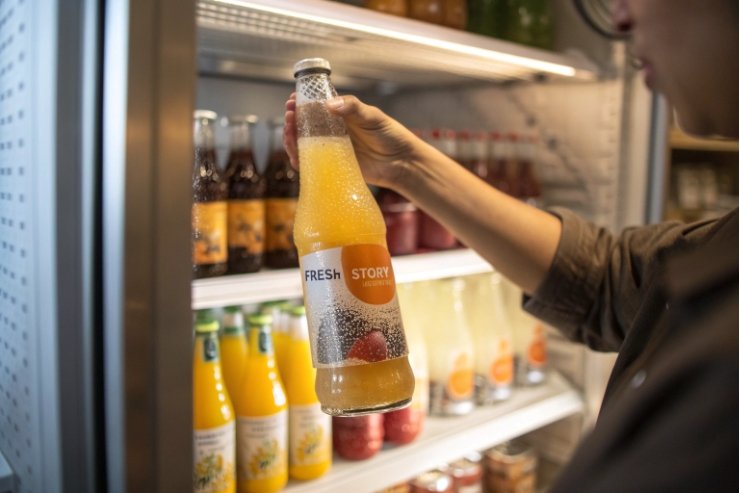
Launching or upgrading a juice brand is not only about recipes. The bottle decides how fresh the juice stays, how it looks on shelf, and how people feel in their hand.
Glass bottles are a smart choice for juice brands because they protect flavor and vitamins, unlock hot-fill and cold-pressed options, support refill and recycling loops, and allow shapes and decoration that sell a premium, fresh story at retail.
When I move a juice project into glass, three things usually happen at the same time. Complaints about “flat” flavor drop. Shelf presence improves. And the sustainability story becomes easier to explain. In the rest of this article, I focus on the parts brand owners ask about most: sizes and shapes, light protection for cold-pressed juice, reuse programs, and decorations that can survive condensation and the cold chain.
Which bottle sizes and shapes maximize grab-and-go and retail facings?
Small mistakes in size and shape can cost you retail facings 1, fridge slots, and impulse buys, even when the juice itself is great.
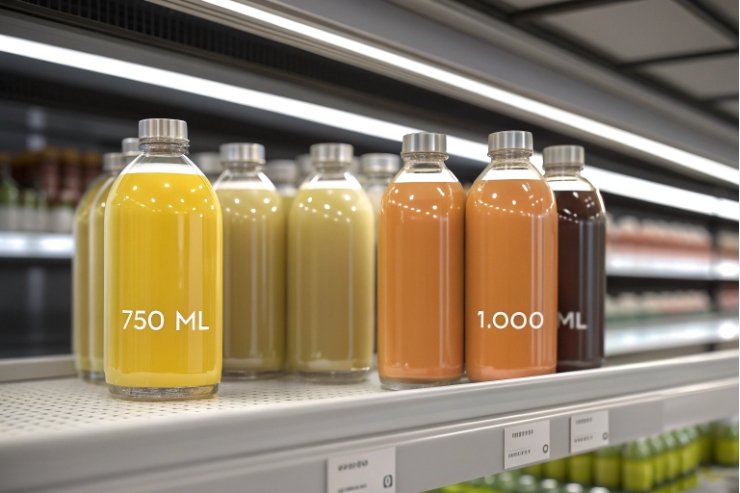
For grab-and-go, 200–350 ml slim bottles with a narrow footprint work best, while 500–1,000 ml family bottles anchor the shelf; round or softly square bodies balance speed on the line with dense retail facings.
Size ranges that actually sell
In juice, a few volumes cover most use cases:
| Use case | Typical volume | Notes |
|---|---|---|
| Shots / boosters | 50–100 ml | Ginger, turmeric, functional shots |
| Grab-and-go single | 200–350 ml | Core for cafés, convenience, foodservice |
| Larger on-the-go | 400–500 ml | Gym, travel, “meal replacement” juices |
| Share / at-home | 750–1,000 ml | Family bottles, breakfast table |
For fast-moving grab-and-go, 250–300 ml is a sweet spot. It feels generous but not heavy. It finishes in one or two servings, which fits with a “fresh” positioning. If the shelf is tight, a tall and slim bottle lets you place more front labels across one shelf level.
Bottle diameter directly controls how many facings you win per meter. When I plan with clients, I often lay it out like this:
- Slightly smaller diameter = more bottles per shelf, more color blocks.
- Slightly taller height = more vertical impact, but watch fridge door height.
A good rule is to pick one or two standard heights and diameters across the range, then play with shoulders, bases, and decoration for variety.
Shapes that balance line speed and shelf efficiency
From a production view, round bottles still run fastest on filling lines, labelers, and conveyors. They spin cleanly for wrap labels and need less changeover. But retail wants flat faces and tight packing.
So I usually steer toward:
- Round or near-round footprints for process speed and strength.
- Slightly flattened sides or soft square bodies when extra shelf density matters.
- A common neck finish across sizes, so one cap family fits all.
Soft square or oval shapes give:
- A front “panel” that looks bigger for the same glass weight.
- A sense of modern design without risking stress at sharp corners.
- Better blocking on the shelf than a classic round, but still friendly in the hand.
If you want a strong brand block, you can align heights and shoulder lines across different volumes. The smaller size looks like the “little brother” of the large bottle. Retailers like this because it lines up neatly, and consumers recognize your family at a glance.
Do amber or UV-coated glass bottles protect cold-pressed juices better?
Cold-pressed and high-pressure processing (HPP) 2 juices are sold as very fresh, often with minimal processing. They are also more sensitive to light and oxygen than many ambient juices.
Yes, amber or UV-protected glass gives better protection for cold-pressed juices by cutting UV and blue light that speed vitamin C loss, chlorophyll breakdown, and flavor fade, especially in bright fridges and open displays.
What light actually does to cold-pressed juice
Cold-pressed juices usually keep more native enzymes, pigments, and vitamins. That is the selling point. It is also the weakness. Light, especially UV and blue wavelengths 3, can:
- Break down vitamin C and other antioxidants.
- Fade green and orange pigments.
- Create off-flavors in leafy or herb-heavy blends.
Clear flint glass lets all that light in. On a sunlit café shelf or under harsh LED lighting, those bottles may look bright, but the product changes faster than you want, even in the cold chain.
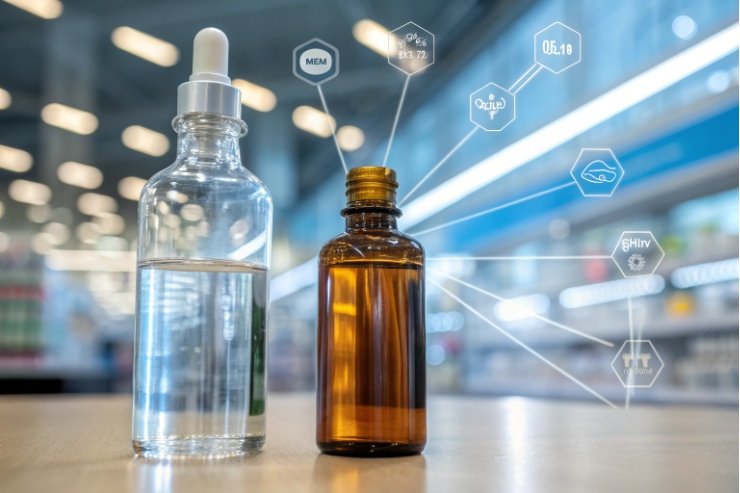
Amber glass bottles 4, and to a lesser degree dark green, filter much of the UV and some blue light. UV coatings or printed shrink sleeve labels 5 can add more protection on top of clear or lightly tinted glass.
Choosing between clear, amber, and coated options
When I help choose color for cold-pressed lines, the decision often looks like this:
| Option | Protection level | Visibility | Best for |
|---|---|---|---|
| Flint (clear), no sleeve | Low | Maximum | Very fast turnover, strict cold chain |
| Flint with UV sleeve | High | Medium–high | Design-led brands, busy fridges, glass doors |
| Light green / flint tint | Medium | High | Moderate shelf life, some light exposure |
| Amber glass | High | Lower | Sensitive recipes, long exposure or transport |
| Amber + sleeve / print | Very high | Medium | Premium juices, long routes, bright retail |
For premium cold-pressed SKUs with higher price points, I lean toward clear or lightly tinted glass plus a smart sleeve design. The sleeve blocks UV but gives “windows” where the consumer can see the juice. This mix keeps the freshness cue without sacrificing protection.
If your juice includes chlorophyll-rich greens, charcoal, or delicate botanicals, amber or a darker UV-coated glass becomes much more attractive. The extra protection can make a clear difference in how the product tastes at the end of its stated life.
Managing light along the full route
Glass choice is only one layer. If you want real protection, you also:
- Keep full cartons closed until the last mile.
- Position fridges away from direct sunlight.
- Avoid top-shelf spots right under intense lights.
When these simple handling rules combine with tinted or coated glass, cold-pressed juices stay closer to the “press day” profile and justify their premium positioning more convincingly.
How do returnable or refill glass programs cut long-term costs and waste?
Single-use glass looks heavy and expensive next to PET and cartons. But once you introduce reuse or refill, the math changes fast.
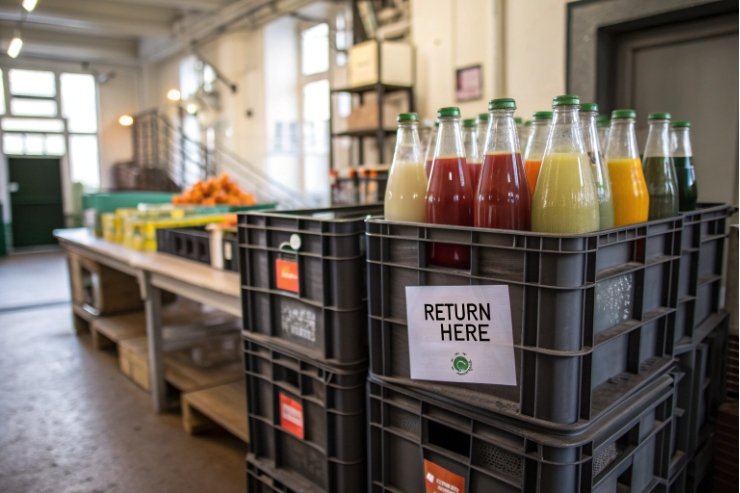
Returnable or refillable glass programs spread bottle cost over many trips, cut packaging waste, and can reduce total carbon impact when return rates are high and washing is efficient, even though transport and cleaning add complexity.
When reuse beats single-use
A returnable bottle usually costs more per unit than a light, one-way bottle. But if it survives 10, 20, or more trips, the cost per filling drops far below any single-use option.
The total impact depends on:
- Return and refill rates 6 and breakage rate.
- Distance between filling site, retailers, and collection points.
- Efficiency of the washing line (water, energy, chemicals).
In short, refill makes the most sense when:
- Your distribution is regional, not global.
- You have strong relationships with cafés, restaurants, or local stores.
- You can set up deposit-return programs 7 that bring bottles back.
For juice brands that sell a lot through horeca or direct-to-consumer subscriptions, this model can work very well. The brand story of “same bottle, many lives” is easy to explain, and you visibly reduce bin volume for your customers.
Practical design choices for returnable bottles
Returnable glass needs more rugged features than single-use bottles:
- Slightly heavier walls, especially at heel and shoulder.
- Robust, simple shapes without fragile embossing
Footnotes
-
Learn how facings and shelf layout are planned so your bottle footprint wins more visible placements. ↩︎ ↩
-
Understand how HPP works for juices and what it preserves compared with heat processing. ↩︎ ↩
-
See how UV-Vis exposure can change juice quality attributes, including sensitive nutrients and sensory traits. ↩︎ ↩
-
Compare how amber glass filters damaging light, helping protect color, vitamins, and delicate flavors. ↩︎ ↩
-
Learn why shrink sleeves handle 360° design needs and hold up better in wet, cold conditions. ↩︎ ↩
-
Use reuse metrics like return and refill rates to design programs that actually deliver environmental benefits. ↩︎ ↩
-
Understand how deposit-return systems incentivize returns and improve collection for recycling and reuse. ↩︎ ↩






