
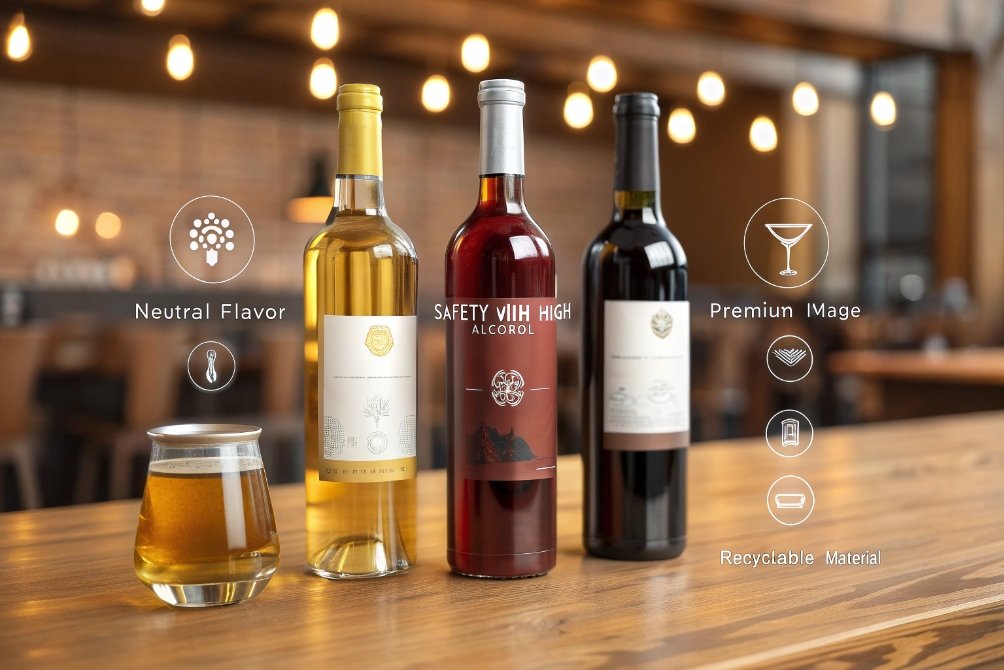
Many alcohol brands feel stuck between tradition and cost. If the bottle fails on flavor, safety, or image, the whole drink feels cheaper, no matter how good the liquid is.
Glass bottles give neutral flavor for aging, strong safety for high-proof alcohol, and a premium, recyclable pack that supports branding while meeting strict food-contact rules.
Glass packaging is not only about nostalgia. It is about how ethanol behaves, how aromas age, how regulators think, and how a bottle feels in the hand. When we break this down, the choice becomes much clearer.
Does glass offer superior flavor neutrality for aging?
If the container changes the flavor, all the careful work in the vineyard or distillery is wasted. Many defects in packaging show up slowly, during storage and aging.
Glass is chemically inert and non-porous, so it does not react with ethanol or extract flavors. This neutrality protects aroma, color, and structure during long aging in bottle.
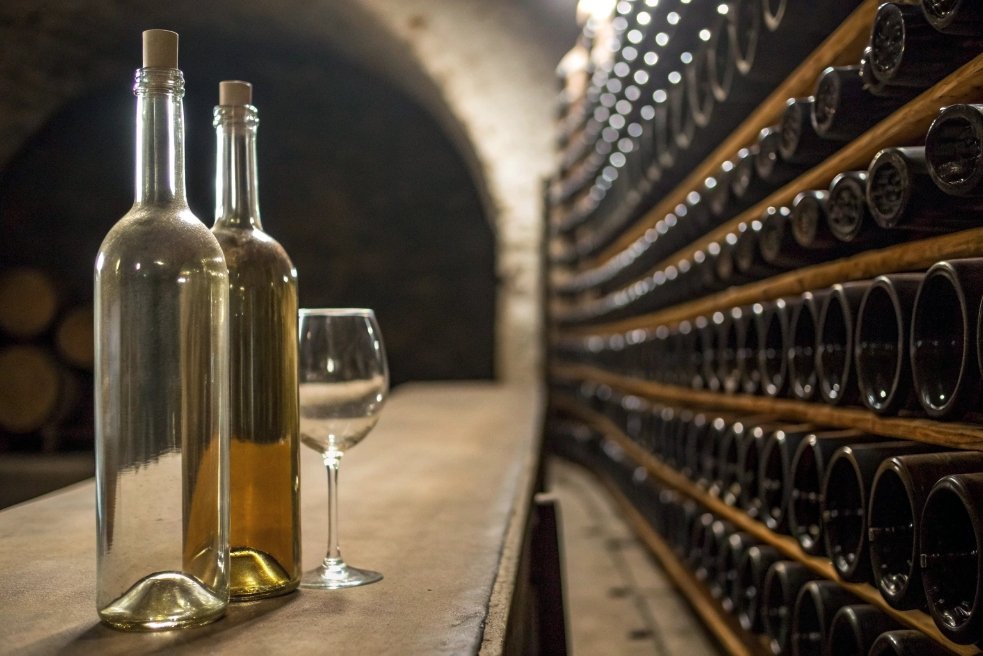
How glass protects flavor, aroma, and structure
Glass does not take part in the chemistry of alcohol. Ethanol and complex aroma molecules do not dissolve glass or pull out additives. There are no plasticizers, no residual monomers, and no strange tastes from the container wall. This is very important for spirits 1 and wines that spend years in bottle.
Because glass is non-porous, it blocks gas transfer through the wall. Oxygen and CO₂ do not slowly drift in or out. For still wines, this keeps oxidation under control. For sparkling wines and some ciders, it helps preserve bubbles and mouthfeel. The main gas exchange happens at the closure, not through the bottle.
Colored glass adds another layer of protection. Amber and green bottles reduce UV and short-wavelength visible light. This lowers the risk of light-strike, which can create sulfur notes in beer and some wines. For delicate aromatics, color choice matters almost as much as closure choice.
Thermal resistance also supports flavor. Glass tolerates hot-fill, pasteurization, and deep cleaning without deforming or absorbing odors. The bottle can meet strict hygiene steps, then stand quietly in the cellar. No softening, no paneling, no absorbed smells from previous storage.
Here is a simple view of why glass helps aging:
| Factor | Glass bottle effect |
|---|---|
| Chemical reaction | No reaction with ethanol or flavors |
| Gas barrier | Near-zero oxygen and CO₂ permeability |
| Light exposure | Colored glass cuts UV, reduces light-strike |
| Odor memory | No odor absorption or release |
| Heat processes | Can handle pasteurization and hot-fill |
So when a product relies on slow, controlled aging, glass works like a silent guardian. The bottle protects. The closure and the liquid do the rest.
On the shelf, customers see the bottle before they see the label text. Shape, weight, and clarity send a message in one second.
Glass gives a clear, heavy, and refined canvas for premium alcohol branding. It helps show color, supports custom shapes, and feels higher value in the hand.
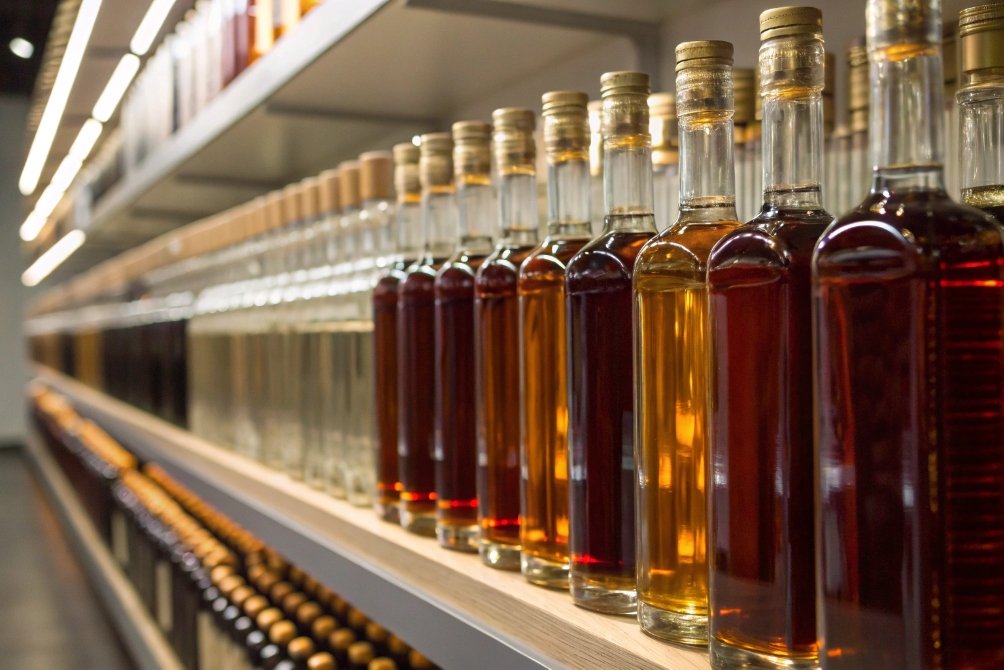
Glass makes color visible. Amber rum, golden whisky, ruby port, deep red wine, and bright liqueurs all look more attractive in clear or slightly tinted glass. The liquid becomes part of the design. With plastic, brand owners often hide the product behind labels or tints to avoid cheap impressions.
Weight is another strong signal. A solid glass base and a well-designed shoulder give a feeling of quality. Customers may not know the exact weight, but they feel the difference when they lift the bottle. For spirits 2 and premium wines, this weight supports a higher price position and a more serious image. Of course, there is a balance with sustainability goals, so “smart weight” glass is growing.
Surface quality also matters. Glass resists scratching better than many plastics. It keeps sharp edges, crisp embossing, and fine engraving over time. Logos, crests, and patterns can be molded into the bottle. Hot stamping, frosting, spraying, and electroplating add even more branding tools. These finishes look more natural and durable on glass than on soft plastic.
Glass also fits the story. Many alcohol brands rely on heritage, craft, and authenticity. Glass aligns with those stories. It feels timeless. It works well in bars, hotels, gift boxes, and duty-free displays. A fine spirit in a flimsy plastic bottle sends the wrong message, even if the liquid is good.
A quick comparison:
| Branding element | Glass bottle advantage |
|---|---|
| Visual color | Shows real liquid color clearly |
| Tactile feel | Solid, cool, and smooth in the hand |
| Decor options | Embossing, frosting, spraying, hot stamping |
| Shelf presence | Strong vertical lines, attractive shoulders |
| Storytelling | Fits heritage, craft, and luxury positioning |
So glass is not just a container. It becomes a core part of the brand identity.
What compliance and safety benefits matter for spirits?
High-proof spirits bring their own risks. Ethanol is a strong solvent and a flammable liquid. Regulators pay close attention to the packaging that holds it.
Glass is stable with high alcohol content, supports approved closures, and offers a non-flammable, non-permeable shell. This makes regulatory compliance and global shipping easier.
How glass supports safety, regulations, and global trade
Strong spirits can attack some plastics. Over time, ethanol and flavor compounds can extract additives or weaken certain polymers. This is why many regulations 3 limit plastic use for long-term storage of high-proof liquids. Glass does not have this problem. It keeps shape, clarity, and chemical stability even at very high ABV.
Food-contact rules also favor materials with known behavior. Glass composition and performance are well documented. Leaching of heavy metals and alkali can be tested and controlled. Once a glass formulation is compliant, it usually stays compliant for that design and furnace. This helps with approvals in different markets.
Fire safety is another point. Glass does not burn. In storage areas and containers, the bottle itself does not add fuel. Only the liquid inside is flammable. This helps with risk assessments and insurance conditions for large warehouses of spirits.
Glass neck finishes support secure sealing systems. Spirits use corks, synthetic stoppers, screw caps, and sometimes special tamper-evident closures. These closures rely on rigid, accurate finishes to keep oxygen out and prevent leaks. A good glass finish holds tolerances over time. That helps with tax stamping, customs seals, and long transport.
Pressure strength also matters for some products. Liqueurs, premixed cocktails, and carbonated alcoholic drinks need containers that withstand internal pressure and heat during transport. Properly designed glass bottles can handle these loads with clear safety margins.
A simple overview:
| Safety / compliance need | Glass contribution |
|---|---|
| High ABV resistance | No attack by ethanol or flavor solvents |
| Food-contact rules | Stable, testable composition |
| Fire safety | Non-flammable container |
| Closure integrity | Precise rigid finish for secure sealing |
| Global shipping | Strong, known performance under varied climates |
This mix of properties is one reason many regulators and brand owners still favor glass for spirits, even when other formats are cheaper to move.
Can reuse and recycling offset higher logistics costs?
Glass is heavy. There is no way around that. Heavier bottles mean higher transport emissions and higher freight costs per liter.
Reuse and recycling can help offset these costs by saving raw materials and energy, and by supporting visible sustainability commitments.
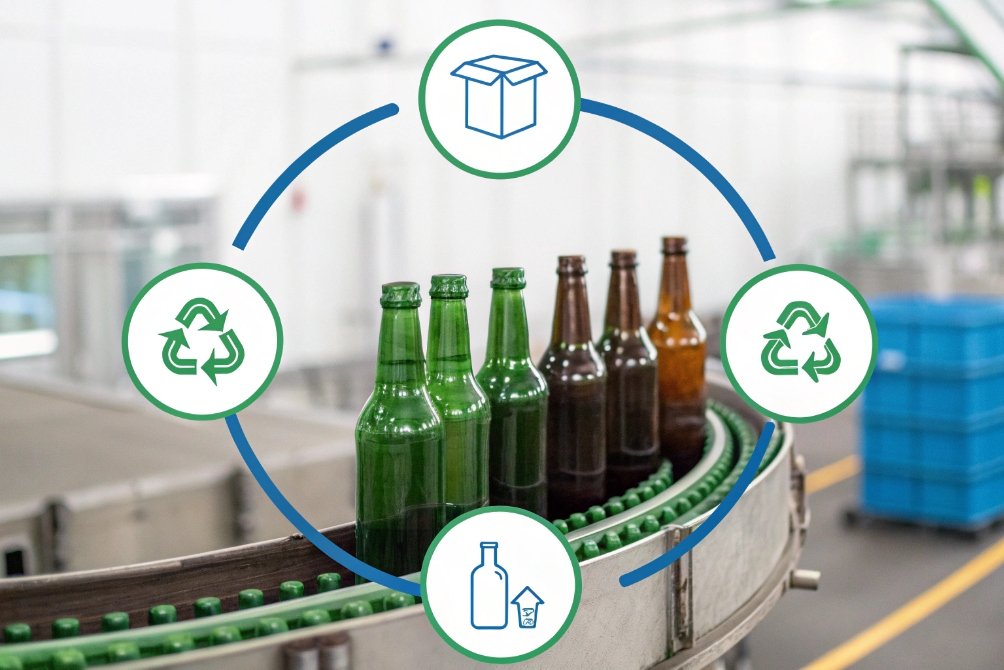
How returnable bottles and recycling change the cost equation
A single-use heavy bottle pays its weight only once. In that case, the transport cost is a fixed penalty. But returnable systems change the math. A sturdy, standardized glass bottle can run through many cycles of filling, washing, and reuse. The production energy spreads over all these cycles.
For local and regional beer and spirits brands, refillable bottles can work well. Bottles return through deposit schemes or trade channels. Industrial washing removes labels and residues. The glass then goes back on the line. Breakage and loss exist, but they are lower than making new bottles each time.
Even when reuse is not possible, recycling 4 helps. Glass can be recycled again and again without meaningful loss in quality. Higher cullet content in the furnace cuts energy use and lowers CO₂ emissions compared with raw materials only. Closed-loop recycling, where a bottle becomes a bottle again, is the best case.
There is also a branding gain. Many consumers accept a bit more weight if they see clear environmental benefits. Light-weighted glass with a smart punt, high recycled content, and clear recycling messages on the label can balance the premium look with responsible performance.
Here is how these factors connect:
| Factor | Effect on cost and impact |
|---|---|
| Transport weight | Raises logistics cost per unit |
| Reuse cycles | Spread production impact over many uses |
| Recycling content | Reduces energy and raw-material demand |
| Consumer perception | Supports “premium but responsible” image |
| Design choices | Lighter bottles reduce cost without losing look |
So glass will likely stay heavier than plastic. But smart bottle design, reuse models, and strong recycling systems can narrow the gap and make glass work as both premium and responsible packaging.
Conclusion
Glass bottles give neutral flavor, stronger safety, and premium branding for alcoholic beverages. With careful design, reuse and recycling can soften the weight penalty and support long-term sustainability goals.
Footnotes
-
Spirits are best stored in glass for long-term flavor stability and neutral characteristics. ↩
-
Spirits packaging and weight play a role in premium positioning and brand perception. ↩
-
FDA guidelines on food-contact substances ensure safety for alcohol packaging. ↩
-
Recycling programs that help reduce energy use and support circular economy goals. ↩






