
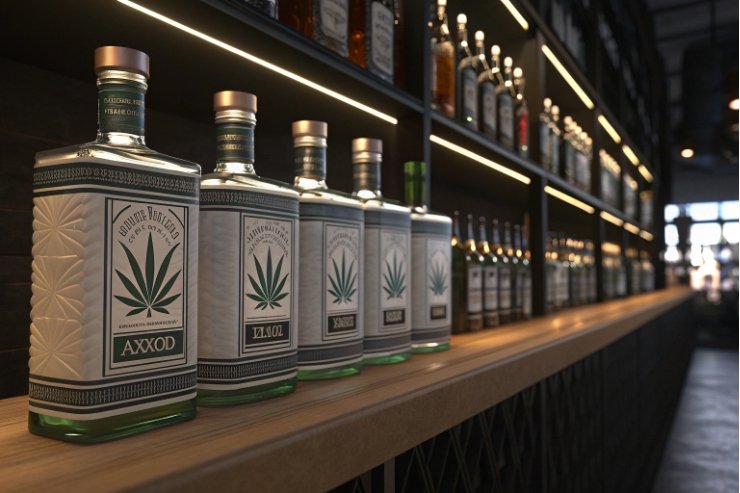
Square tequila bottles look like a style choice, but they solve real problems. On a busy shelf, a round bottle can disappear. A weak pack can break. A cheap finish can kill a premium feel.
Tequila bottles are often square because the shape improves shelf presence, label space, grip and stability, and shipping density, while still allowing strong glass design and standard closures for sealing and tamper evidence.
A square bottle is not “better” in every way. It is a trade. The brands that win with it treat it as a full system: shelf blocking, hand feel, glass strength, packing pattern, and the right closure and shroud. In merchandising terms, the square silhouette can function like brand blocking on store shelves 1.
Square vs round is also a known packaging trade space—especially around label real estate, corner strength, and logistics—covered well in round vs square bottle design trade-offs 2.
Do shelf blocking and grip ergonomics favor square forms?
A tequila brand gets judged in seconds. On a bar shelf, there is glare, low light, and clutter. A round bottle becomes a cylinder in a crowd. A square bottle becomes a sign.
Yes. Square bottles often win on shelf blocking and recognition, and they can pour well when edges are softened and the weight balance is planned for real hands and fast bar service.
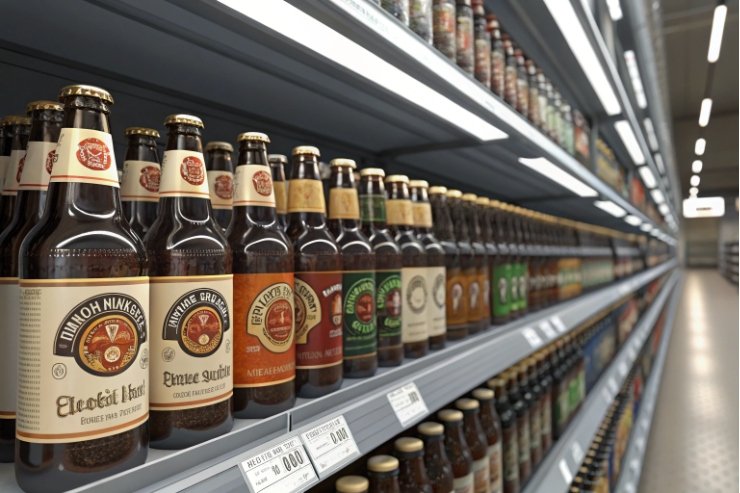
Shelf blocking is about “faces,” not volume
A square bottle gives four broad faces. That matters for premium tequila because the story is part of the product. It is where NOM cues, agave origin, and heritage details can live without label curve distortion. Flat panels also make embossing, engraving, and sharp line artwork easier to read from a distance. A bottle that reads well at three meters sells better than one that needs a close look.
Square outlines also behave well in photos and video. Bars and consumers shoot bottles straight-on. The silhouette becomes a logo. This is a quiet reason many premium añejo and extra-añejo brands stay with sculptural, thick-glass square forms.
Grip ergonomics can be better, but only if the edges are engineered
Flat sides give predictable contact. That helps when the bottle is heavy. It also helps a bartender who does repeated pours. But sharp corners are a problem. They feel harsh, and they concentrate pressure in the hand. A good square tequila bottle uses generous corner radii, small chamfers, or a slight “waist” that creates a natural grip zone.
The center of gravity is another factor. Square bases can feel more stable on a bar top because the footprint reads larger and the bottle rocks less. Still, the real stability comes from base design and weight distribution, not the number of sides.
What I look for when advising a square bottle
A square bottle should feel confident, not clumsy. When the glass is thick, the bottle must still pour clean. That means planning the shoulder slope, neck length, and grip area like a tool, not a sculpture.
| Factor | Square bottle advantage | Square bottle risk | Practical design fix |
|---|---|---|---|
| Shelf blocking | Strong front “face” and silhouette | Can look boxy or generic | Add distinctive shoulder/heel details |
| Labeling | Flat panels reduce label distortion | Big label invites clutter | Use clear hierarchy, fewer claims |
| Grip | Flat sides can feel secure | Corners dig into the hand | Add radii, chamfers, grip waist |
| Stability | Wide footprint reads stable | Heavy top can still tip | Lower CG with base mass control |
| Premium cue | Sculptural feel supports price | Overweight raises freight cost | Balance glass mass where it matters |
How do punts and wall profiles preserve strength in corners?
Glass does not “like” corners. Corners are stress concentrators. A square bottle survives because the corners are rarely true 90-degree edges, and the base and walls share load in smart ways.
Square bottles stay strong when corners have generous radii, wall thickness is controlled, and the base uses a heel and push-up (punt) to spread impact forces away from sharp transitions.
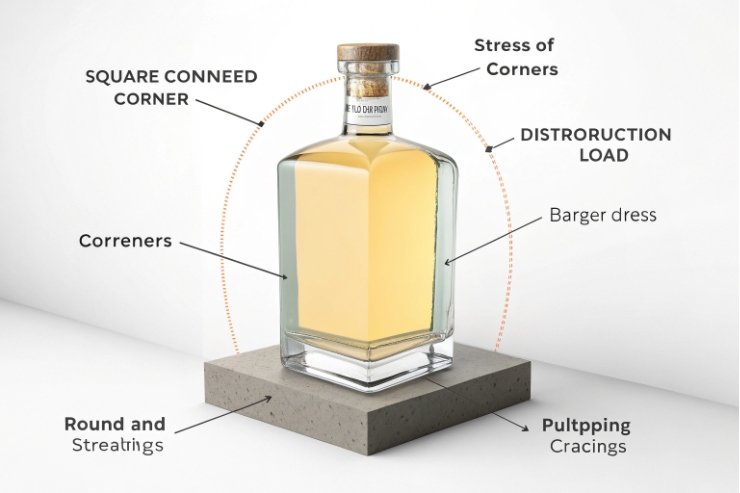
Corners fail for two reasons: stress and impact
In use, bottles face two kinds of damage. First is static stress from internal pressure changes, stacking loads, and thermal shocks. Second is impact from clinks, drops, and case vibration. Corners and the heel area see both.
This is why engineers treat sharp geometry as a risk: stress concentrations at sharp corners 3 are common crack-start zones in brittle materials.
A well-made “square” bottle is usually a radiused square. The corner radius is not just cosmetic. It lowers stress concentration. It also reduces micro-chipping during handling. When a corner chips, cracks can start. That is why premium square tequila bottles often look crisp but feel slightly softened when touched.
Wall profile is a strength map
A bottle should not be “thick everywhere.” It should be thick where loads and impacts concentrate. Corners and heel zones need more support. Panels can be lighter if the geometry adds stiffness. Small ribs, shallow panel emboss, and controlled curvature can add strength without huge weight.
The shoulder transition is another danger zone. If the shoulder drops too sharply into a flat panel, stress rises. A smoother shoulder curve spreads load.
The punt is not just for wine
A push-up (often called a punt) changes how the base takes hits. It can move the contact ring outward, reduce rocking, and protect the center of the base from point impacts. It also supports vertical load when bottles are stacked or when cases are compressed in freight.
For square bottles, the heel design matters even more. The heel is where the side wall meets the base. A generous heel radius reduces crack initiation. A clean contact ring reduces wobble and keeps the base from “pecking” into hard surfaces. If you want consistent terminology, it helps to know the heel, base, and push-up (punt) features 4 that packaging teams standardize around.
| Design feature | What it protects | Why it works on square bottles | Typical trade-off |
|---|---|---|---|
| Corner radius | Corners and edges | Reduces stress concentration and chipping | Slightly less “sharp” look |
| Heel radius | Wall-to-base junction | Smooth transition prevents crack start | Needs tighter mold control |
| Push-up / punt | Base impact and stacking | Moves stress away from center base | Adds glass mass if overdone |
| Panel emboss / ribs | Flat wall stiffness | Stops “oil can” flex on panels | Too much detail can trap air in molding |
| Controlled thickness | Weak zones | Puts glass where impact happens | Requires strong QC to avoid heavy variance |
Are freight and case-pack efficiencies improved?
This is where square bottles can pay for themselves. Freight is math. Space and breakage drive cost. A round bottle wastes space between curves. A square bottle nests tighter in a case and on a pallet.
Often yes. Square bottles can improve case-pack density and reduce void space, which supports pallet efficiency and lower breakage risk, as long as the design avoids fragile corners and allows stable dividers.
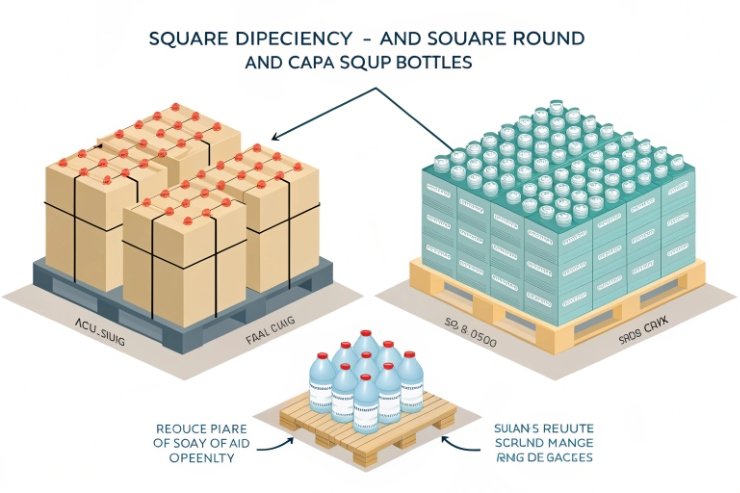
Case geometry rewards square geometry
When bottles are packed in rectangular cartons, square bases line up with the carton walls. This reduces “air shipping.” For many standard pack counts, the layout becomes simpler. Dividers fit cleanly. Bottles resist rolling. On a pallet, the footprint can be more stable, especially when layers are aligned.
But there is a catch: heavy, thick-glass square bottles can increase total freight weight. So the win comes from better cubic efficiency, not just the shape. The best outcome is a square bottle that is stiff and premium-looking without being overweight.
Breakage and scuffing are part of the equation
A tight pack can also increase glass-to-glass contact if the partition system is weak. Square corners can rub dividers and scuff. That is why corner radii and protective coatings matter. A small radius reduces abrasion. A good carton divider design reduces impact transfer.
If you want a practical reference point for partitions, dividers, and common pack styles, start with packing methods for rigid packaging 5.
Real-world patterns matter more than theory
Case-pack efficiency depends on the exact base size, label clearance, and closure height. A square bottle that is too wide can reduce bottles per layer. A bottle with a wide shoulder can force a taller case. That can reduce pallet layers. So the right question is not “square vs round.” The right question is “what is the best bottle footprint for the target case and pallet standard.”
| Metric | Round bottle tendency | Square bottle tendency | What I try to optimize |
|---|---|---|---|
| Void space in case | Higher (gaps between circles) | Lower (tiles better) | Lower cube per liter shipped |
| Bottle movement | More rolling risk | Less rolling risk | Fewer vibration chips |
| Divider fit | Needs more tolerance | Cleaner fit | Simple, repeatable partitions |
| Pallet stability | Can be fine with good wrap | Often more rigid footprint | Better layer alignment |
| Freight cost | Can be lighter glass | Often heavier premium glass | Balance cube savings vs weight |
Which closures and shrouds match square necks?
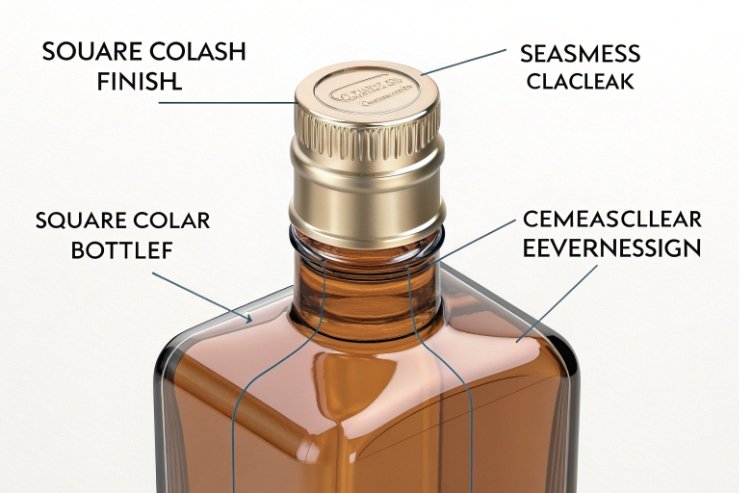
This part surprises many brand owners: most “square” tequila bottles still use a round neck finish. The seal wants a circle. The consumer wants a familiar open-and-pour action.
Most square tequila bottles use standard round neck finishes (bar-top cork, screw caps, or pilfer-proof systems), then add square-looking collars, shrouds, or overcaps to match the bottle’s geometry and strengthen premium cues.
The neck is usually round for sealing and line speed
Closures need even compression to seal. That is easiest on a circular finish. It also keeps supply chains flexible. A brand can source proven closures, tamper-evident bands, and capping heads without reinventing the full system.
Common closure families for tequila include:
- Bar-top corks (T-top) for premium cues and ritual opening.
- Screw caps (often premium roll-on pilfer-proof (ROPP) caps 6) for consistency and speed.
- Pilfer-proof systems for tamper evidence and export compliance.
- Decorative synthetic stoppers paired with an overcap for a luxury look.
“Square neck” is often a visual trick, and that is fine
If a brand wants a square impression, it can use a square collar, a faceted neck sleeve, or a square shroud that sits over a round finish. A shrink capsule can also be shaped or printed to create a squared-off visual block at the top. This keeps the seal reliable while giving the design language that matches the body.
Shrouds do more than look nice
A shroud protects the closure during freight. It reduces scuffing. It also creates an anti-counterfeit layer because it can carry custom emboss, tear bands, holographic elements, or unique textures. Non-round bodies already raise the counterfeit barrier because they require custom molds. Adding a custom shroud or overcap raises it again.
For added leak resistance and a clear first-open signal, many brands also rely on induction sealing for tamper evidence 7 under the cap.
| Closure / top system | Best for | How it pairs with square bottles | Watch-outs |
|---|---|---|---|
| Bar-top cork (T-top) | Premium ritual, aged tequila | Add square collar or tall overcap for luxury | Cork tolerances and leakage control |
| Premium screw cap | High consistency, modern brands | Use a faceted metal cap to echo corners | Perceived as “less premium” in some markets |
| Pilfer-proof closure | Export and tamper evidence | Clean fit under a decorative shroud | Needs correct finish specs |
| Shrink capsule / sleeve | Cost-effective premium cue | Can visually “square” the neck zone | Heat control to avoid wrinkles |
| Decorative overcap | High-end shelf impact | Matches body geometry and adds security | Adds cost and packing height |
Conclusion
Square tequila bottles win because they sell better, ship smarter, and feel more premium, as long as the corners, base, and closure system are designed like one complete package.
Footnotes
-
Explains how brand blocking increases visibility and recognition on crowded retail shelves. ↩ ↩
-
Overview of round vs square bottle trade-offs in labeling, stress points, and shipping efficiency. ↩ ↩
-
Shows why sharp corners create stress concentrations that can start cracks in brittle materials like glass. ↩ ↩
-
Defines heel, base, and push-up terms so teams can align on stability and base-strength features. ↩ ↩
-
Breaks down divider and case-packing styles that reduce movement, scuffing, and breakage in transit. ↩ ↩
-
Explains how ROPP caps form threads during application and provide sealing plus pilfer-proof tamper evidence. ↩ ↩
-
Explains why induction seals add a hermetic barrier and a clear tamper-evident “first open” signal. ↩ ↩






