
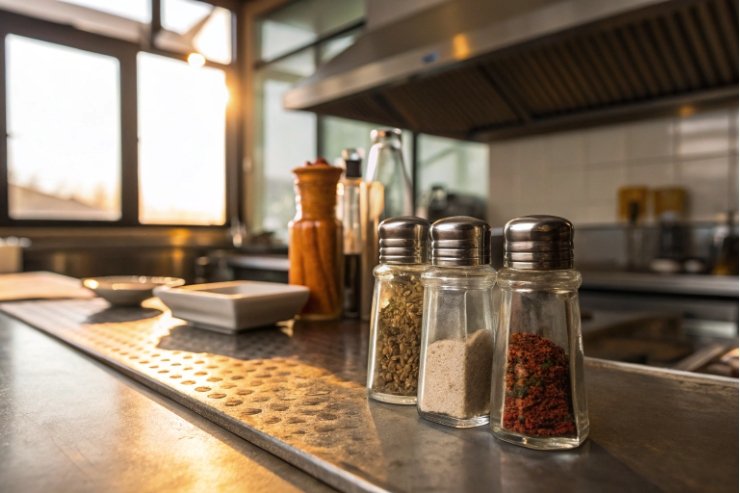
Spices lose power quietly. Aroma fades, oils cling to the wall, and color turns dull. Then customers blame the recipe, not the package.
Glass protects spice aroma, oils, and color better than most plastics because it is non-porous and highly inert. It also cleans hotter, seals well with standard closures, and recycles in a more circular way for food safety.
The real packaging problem: spices are small, but their chemistry is aggressive
Spices fail in four common ways
Spices do not “go bad” like fresh food, but they do lose value fast. In production and retail, the main enemies are oxygen, moisture, light, and surface contact. Oxygen drives oxidation of essential oils. Moisture causes clumping and microbial risk in some blends. Light triggers photo-oxidation in stored foods 1 and color shift. Surface contact matters because many aroma molecules are happy to stick to packaging surfaces.
This is where glass wins. Glass is non-porous and acts as a strong barrier, so it does not breathe. Most commodity plastics have measurable oxygen transmission rate (OTR) 2 and water-vapor permeability, so the package slowly exchanges with the environment. That exchange is slow, but spices are also slow-moving products. A few months of drift can be enough to change the aroma profile, especially for delicate items like ground cumin, paprika, curry blends, and herb leaves.
Glass also avoids a common retail issue: odor carryover. Plastic can hold smells and oils in the polymer. When consumers reuse containers, that retention can taint the next spice. With glass, cleaning usually resets the container. This matters for brands that sell refill packs or reusable jars.
Below is the simplest buyer-focused comparison. It is not a lab datasheet. It is the field reality that shows up in shelf-life and complaint rates.
| Topic | Glass bottle/jar | Typical plastic jar (PET/PP/HDPE) | What shoppers notice |
|---|---|---|---|
| Aroma retention | Very strong barrier, low sorption | Some permeability and aroma sorption | “Smells weak” after months |
| Oil staining | Low absorption | Oils can stain or cling | “Container smells forever” |
| Light protection | Strong if tinted | Depends on resin and pigments | Color fade and stale notes |
| Cleaning | Heat tolerant, less scratching | Can warp or scratch | Residue and odor carryover |
| Long-term clarity | Stable | Can haze over reuse | Hard to judge freshness |
| Recycling loop | Can recycle many times without quality loss | Often downcycled, depends on local stream | Sustainability claims scrutiny |
A spice package is a quality tool. It should protect flavor first. Everything else comes after.
To make the case clear, the next sections answer the four questions buyers ask when they decide between glass and plastic for spice lines.
This is where the decision becomes easy: pick the material that prevents flavor loss first, then design the closure and color to match the product.
Does glass resist aroma scalping and oil migration better?
A spice can be fresh at filling and still taste flat later. The brand pays for high-grade raw material, then the package steals the top notes.
Yes. Glass resists aroma scalping and oil staining far better than most plastics because it is non-porous and chemically inert. Plastics can absorb aroma molecules and essential oils, which lowers headspace aroma and can cause odor carryover.
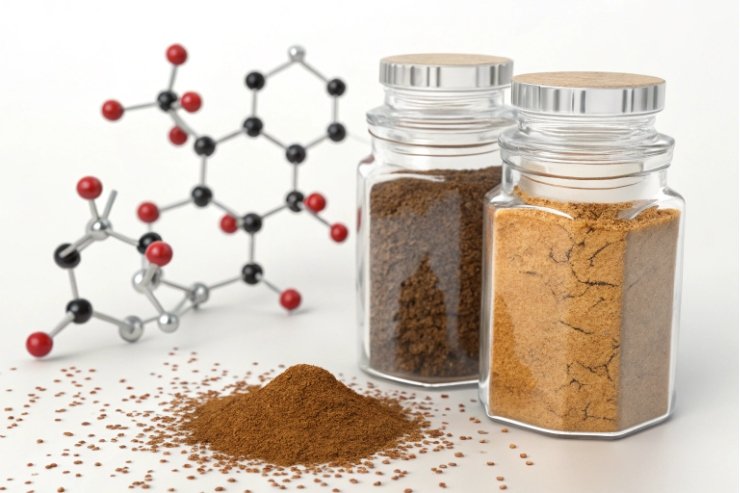
What “aroma scalping” really means in spices
Aroma scalping in food packaging 3 is not a myth. Many spice aromas are small, hydrophobic molecules. They like to dissolve into polymers or stick to polymer surfaces. That effect can be mild for some plastics and severe for others, but it exists. Over time, the headspace in the jar loses the most volatile and valuable notes. This is why a consumer opens a “new” jar and smells less than expected.
Glass does not have that same sorption behavior in normal food storage. The aroma compounds stay in the product and headspace. When the cap seal is good, the aroma stays where it belongs.
Oil migration and container “memory”
Oily spices like paprika, chili blends, curry mixes, and garlic seasonings often leave a film. On plastic, that film can become a permanent stain and a permanent smell source. That is not only cosmetic. It creates two risks:
1) the next refill can carry old aroma,
2) cleaning becomes harder, so residue stays.
On glass, oils can still coat the wall, but they do not soak in. A hot wash usually removes the film. This makes glass more compatible with refill programs and with premium spice lines that want clean sensory performance.
What buyers should specify beyond “glass vs plastic”
The package system includes the closure and liner. A weak liner can leak aroma even if the jar is glass. For premium aroma retention, buyers should focus on:
- cap liner material choice,
- torque and removal torque stability,
- leak and odor retention tests over time.
| Risk to aroma | Where it comes from | Why plastic is more sensitive | Buyer control lever |
|---|---|---|---|
| Aroma scalping | Sorption into polymer | Polymer matrix can absorb volatiles | Use glass, or use high-barrier liners |
| Oxidation staling | Oxygen ingress | Permeability and seal drift | Choose glass + good liner + torque control |
| Oil staining | Essential oils and oleoresins | Oils can diffuse into plastic | Use glass; add anti-slip label plan |
| Odor carryover | Residues in walls and scratches | Plastic “memory” and micro-scratches | Use glass; define cleaning standard |
A simple internal story helps sales teams: glass does not make spices stronger, it stops the package from stealing the strongest notes.
Which colors limit photo-oxidation of volatile spices?
A bright red paprika sells. Then it turns brown in three months near a sunny kitchen window. That is not a recipe problem. That is a light problem.
Amber and other dark tinted glass reduce UV and high-energy visible light that drive photo-oxidation. Amber is usually the safest choice for volatile spices; clear glass works only with dark storage or secondary packaging.
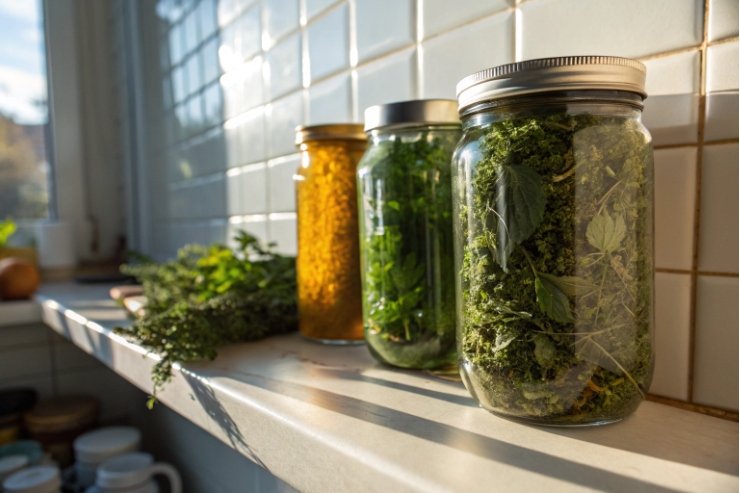
Why spices are light sensitive
Many spices contain pigments and essential oils that react under light. Light can trigger oxidation pathways that change aroma and color. This is why bright herbs and red spices fade, and why some spice blends develop “flat” notes over time even when moisture is controlled.
Light damage is not only UV. Blue light and short-wavelength visible light also carry enough energy to cause change in sensitive ingredients. So “tinted is better” is not a style choice. It is a shelf-life tool.
Color selection: protect first, then market
Amber glass for UV protection 4 is a classic choice because it blocks much of the damaging light range while still letting shoppers see the product. For some brands, clear glass is important for display, but clear glass should be paired with one of these controls:
- store away from light in retail and home,
- use a carton or label wrap that blocks light,
- reduce shelf exposure time.
Green and blue glass can help too, but the protection level depends on the exact tint and thickness. If the goal is maximum protection for volatile oils, darker is usually safer.
| Glass color | Light protection level | Best for which spices | Trade-off for merchandising |
|---|---|---|---|
| Amber / dark brown | High UV + strong blue-light reduction | Paprika, chili, herb leaves, citrus blends | Less “true color” display |
| Dark green | Medium | Some herbs, pepper blends | Protection varies by tint |
| Cobalt blue | Medium to high in some cases | Premium lines, display brands | More expensive, marketing-driven |
| Flint / clear | Low | Fast-turn spices or protected by carton | Needs dark storage discipline |
| Opaque (painted or sleeved) | Very high | Ultra-sensitive premium blends | Cannot see product level easily |
A practical way to validate light protection
A buyer can run a simple accelerated check:
- fill with a known light-sensitive spice (paprika is common),
- expose to controlled light for set hours,
- measure color shift and aroma notes,
- compare clear vs amber vs sleeve.
If the brand sells in clear glass, the label design becomes part of the solution. A wraparound label that blocks light can protect almost like tinted glass while keeping the front “window” for display. That approach often balances marketing and stability without changing the closure system.
Glass gives more color options without adding permeability risk. That is a quiet advantage when the product mix includes both sensitive herbs and less sensitive salts.
Do grinder and sifter closures fit standard glass necks reliably?
A spice jar that leaks powder or misthreads is a daily headache. The line slows, consumers complain, and returns rise. Fit is not optional.
Yes, grinder and sifter closures can fit standard glass spice neck finishes very reliably when the finish is standardized and tolerances are controlled. The key is matching the closure’s thread finish (like 43-485) and validating torque, seal, and dispensing performance.
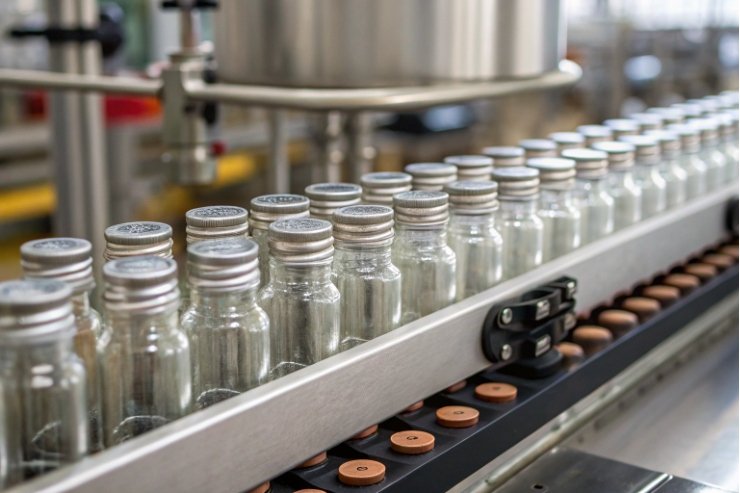
The real fit issue is not “glass vs plastic”
Closures fit neck finishes and thread sizes 5, not materials. A grinder cap designed for a 43-485 finish will work on glass or plastic if the finish spec is correct. Problems happen when:
- the bottle finish is not consistent (roundness, thread height, land width),
- the cap supplier uses a slightly different thread standard,
- the liner compression is wrong for the glass land,
- the torque window is not controlled on the line.
Glass bottles often have very stable finish geometry when the mold set and IS process are controlled. That stability helps closure fit, especially for grinders that need alignment and consistent torque.
What buyers should standardize
For spice systems, common neck finishes are often in the 38–63 mm family, with 43 mm being very common for household jars. The smartest purchasing move is to standardize on one or two neck finishes across a product family. This reduces cap SKUs and reduces fitting surprises.
| Closure type | What it needs from the neck | Common failure mode | Buyer verification test |
|---|---|---|---|
| Sifter cap | Flat, consistent land for liner seal | Powder leakage at low torque | Leak test + torque audit |
| Dual-flap (sift/pour) | Stable thread engagement | Cross-threading | Gauge finish + cap application study |
| Grinder cap | Precise alignment and stable removal torque | Loose fit, wobble, inconsistent grind | Torque retention + drop + grind performance |
| Metal cap with liner | Clean land and correct liner compression | Corrosion or liner creep | Salt/humidity exposure + seal check |
How to prove reliability before mass roll-out
A simple pre-production protocol prevents most surprises:
1) run a cap fit trial with real bottles from multiple cavities,
2) measure application torque and removal torque 6 over time,
3) run vibration and drop simulation,
4) test dispensing function after humidity exposure.
For grinder closures, also check consumer experience. A cap can pass leak tests and still feel cheap if the grind is uneven or if the cap binds. Glass neck stability helps, but the closure design and resin also matter.
When the finish is standardized, glass does not complicate closure fit. It usually makes it easier to keep the system consistent across suppliers and production sites.
How do cleanliness and recyclability favor glass in food safety?
The safest package is not only the one that seals today. It is the one that stays clean, does not hold odors, and does not add migrants over time.
Glass supports food safety because it is non-porous, heat tolerant for thorough cleaning, and inert against most spice oils. It also fits circular recycling systems better because it can be recycled repeatedly without the same quality loss common in many plastics.
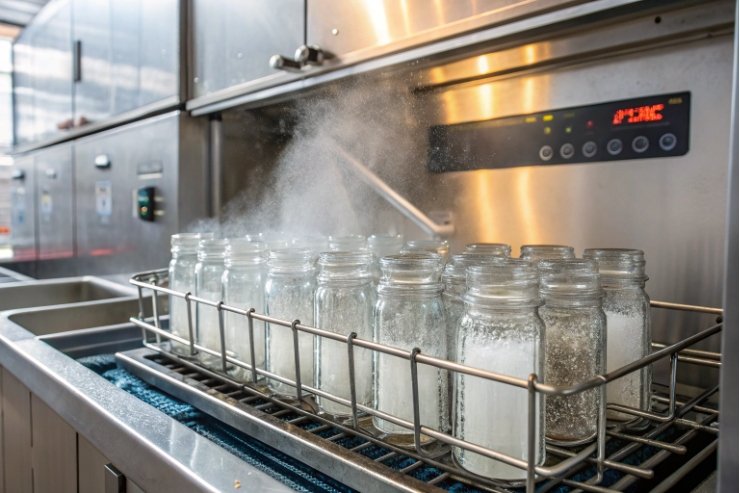
Cleanliness: what happens after the first use
In real kitchens and food plants, containers get reused. They also get handled with oily fingers and dusty powders. A smooth glass surface is easier to clean without damage. It tolerates hot water and many cleaning cycles without warping. It also resists micro-scratching compared with many plastics. Scratches matter because they trap residues and odors.
Static charge is another daily issue. Plastic can attract fine powders, which makes dispensing messy and makes the container look dirty. Glass usually has less static behavior in normal kitchen humidity. This improves consumer experience and reduces “powder halo” around the cap.
For food safety teams, the most important point is migration risk. Many plastics are safe when designed correctly, but they can still have additives, and their migration behavior depends on time, temperature, and oil content. Glass removes that variable. The jar itself is not a source of plasticizers or similar migrants.
Recyclability: circular value vs downcycling
Glass recycling systems are not perfect everywhere, but glass has one strong advantage: when it is collected and processed well, it can be endlessly recycled with no loss of quality 7. Many plastic streams are downcycled into lower-grade products, and food-contact reuse is often limited by contamination risk and sorting limitations.
This matters for spice brands that want simple sustainability claims. A glass jar with a standard cap can fit existing recycling language more cleanly, especially when labels and inks are designed for wash-off.
| Food safety concern | Why it matters for spices | Glass advantage | What buyers should still control |
|---|---|---|---|
| Residue and odor carryover | Strong aromas taint new spices | Low absorption, easy hot cleaning | Closure and liner cleaning plan |
| Scratches and harbor points | Powders cling and spoil sensory | Harder surface, less micro-scratch | Handle protection, coating choice |
| Chemical migration | Oils can increase migration in plastics | Inert container wall | Use food-grade closures and liners |
| Reuse programs | Refills need clean containers | Washable and stable | Define cleaning instructions |
| Recycling claims | Consumers expect simple messaging | Recyclable loop potential | Local collection reality and labeling |
Glass does not solve every problem. The cap and liner still need food-grade control. Labels still need safe inks. But glass removes several large variables at once, and that is why it stays the default for premium spices.
Conclusion
Glass keeps spices potent longer by blocking gas and moisture, resisting aroma and oil absorption, reducing light damage with tinted options, and supporting cleaner reuse and more circular recycling.
Footnotes
-
Background on photo-oxidation and why light exposure changes color, smell, and flavor in stored foods. (↩︎) ↩
-
Learn what oxygen transmission rate measures and why higher OTR increases oxidation risk in packaged products. (↩︎) ↩
-
Research overview of aroma scalping—how volatile compounds migrate into packaging materials and reduce perceived freshness. (↩︎) ↩
-
Explains how amber glass filters UV/blue light to slow degradation of light-sensitive oils and pigments. (↩︎) ↩
-
Quick guide to continuous-thread neck finish codes and how they determine cap compatibility. (↩︎) ↩
-
Practical guidance on setting and testing application vs removal torque to prevent leaks and cap back-off. (↩︎) ↩
-
Summary of how glass recycling works and why glass can be recycled repeatedly without quality loss. (↩︎) ↩






