

You pay for every gram of glass and every broken bottle, so that “mysterious” punt in the bottom is never just for looks.
Bottle bottoms are designed concave to turn pressure and impacts into safe compression, create a stable standing ring, protect the central base, and support carbonation, handling, and premium branding where it matters.
Once you look at a concave base as a small engineering structure instead of a styling trick, it becomes clear why sparkling wine, beer, and many premium still beverages keep this design while others stay flat.
Do concave profiles resist impacts and thermal stress better?
Shock from a drop or thermal swing tends to hit the base first. If that area fails, the whole bottle fails.
Yes. A concave base acts like a dome that pushes stress into compression around the standing ring, so bottles handle internal pressure, impacts, and thermal shock better than simple flat plates.
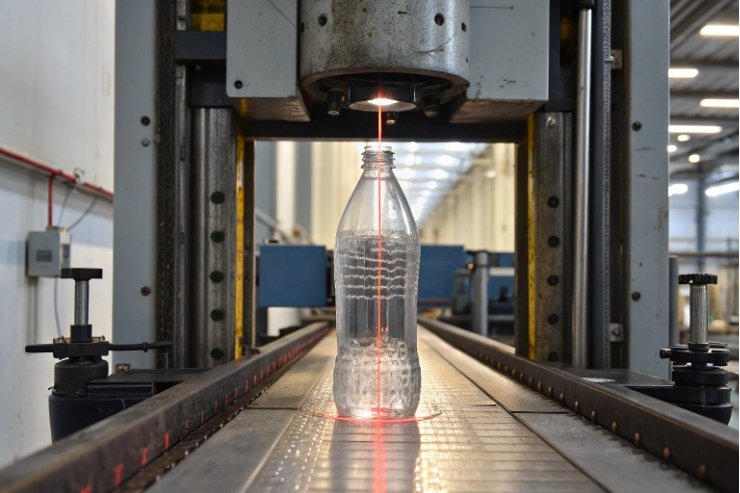
A concave base works like an upside-down dome. Glass is strong in compression but weak in tension 1. When you push on a dome, most of the stress flows into compressive paths around the curve instead of stretching a flat surface.
With carbonated products, internal pressure pushes outward and downward. On a flat base, that force tries to flex the middle out like a drum skin. That creates tensile stress in the bottom center, where micro-defects live. In a concave base, pressure tries to “flatten” the dome. The geometry turns much of that load into compression along the wall of the punt and the outer standing ring. So the risk of cracking drops.
The same logic helps with thermal shock. When a hot liquid hits a cooler bottle base, or a cold bottle goes into warm water, temperature differences try to bend the glass. A domed shape spreads that bending, instead of letting one flat spot take all the strain. The elevated center of the punt also stays a bit away from direct contact with hot surfaces, ice, or metal grates, which softens thermal spikes.
Impacts from below—on conveyors, during pallet drops, or when bottles bump on each other—hit the standing ring first. The concave shape adds extra glass thickness where the ring meets the sidewall. That thicker “shoulder” area under the liquid can take more abuse than a thin flat plate.
Concave bases also help lightweight designs. When we remove glass from the shoulder or body, we often add a bit of thickness around the punt and standing ring. This keeps strength where stress concentrates while still cutting total weight. So the concave profile is not only stronger; it is also a smart way to use less glass without losing performance.
How does the geometry stabilize bottles on uneven surfaces?
Anyone who has tried to stand a wide jar on a slightly warped shelf knows how unforgiving flat bottoms can be.
The concave base creates an outer standing ring that acts like a built-in “foot,” reducing wobble on slightly uneven glass, metal, or wooden surfaces and helping bottles track straight on conveyors.
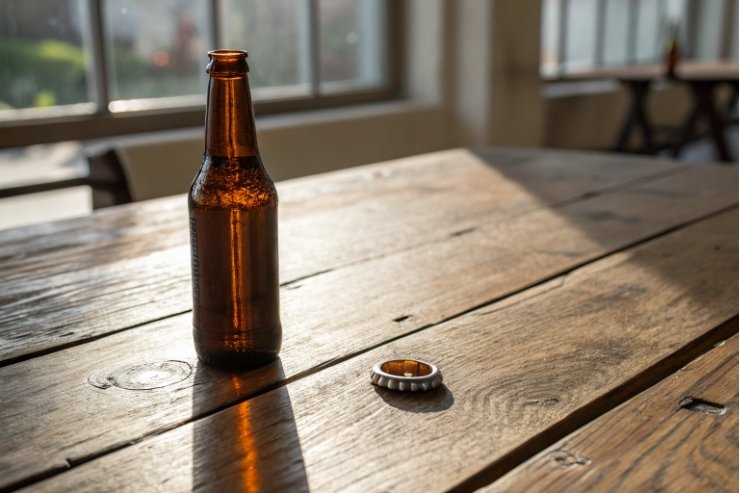
When the base is concave, the bottle does not sit on a full circle of glass. It sits on a narrow outer standing ring (base bearing surface) 2 at the outer edge. That ring gives three important benefits.
First, small defects or waves in the base center do not matter much. The contact area is the ring, not the middle. So small variations from molding, annealing, or coatings have less impact on how the bottle stands. This is one reason punts appeared early in hand-blown bottles: they hid pontil marks 3 and rough glass in the safe middle zone, away from the contact ring.
Second, a narrow ring creates a clear, stable contact line. Even if the table, crate, or conveyor is not perfectly flat, the bottle finds a stable position faster than a wide, flat base that tries to touch everywhere at once. This reduces wobble and rattling, which in turn lowers breakage and label scuffing on high-speed lines.
Third, the standing ring gives a simple reference for inspection. Base-check cameras and gauges can measure roundness and height of that ring in a repeatable way. When the ring is true, bottles stack better in cartons and pallets. That feeds into fewer leaning pallets and fewer corner bottle breaks during transport.
From a user point of view, a stable base means fewer “almost spills” at the table or bar. For large-format wine or spirits bottles, the concave base also contributes to a comfortable pouring grip. The thumb can sit naturally near or in the punt, and the standing ring gives a clear sense of where the bottle will land again without rocking.
So geometry here is quite simple: a narrow, well-defined standing ring behaves like a small, strong foot. It makes slightly imperfect world surfaces feel flatter to the bottle than they really are.
Are concave bases essential for carbonation pressures?
Sparkling wine, beer, and carbonated soft drinks all live with internal pressure. Many people think that a deep punt is always required for this. The truth is more nuanced.
Deep concave bases are not the only way to handle carbonation, but for traditional glass bottles—especially sparkling wine—they are a very efficient way to manage internal pressure and impact together.
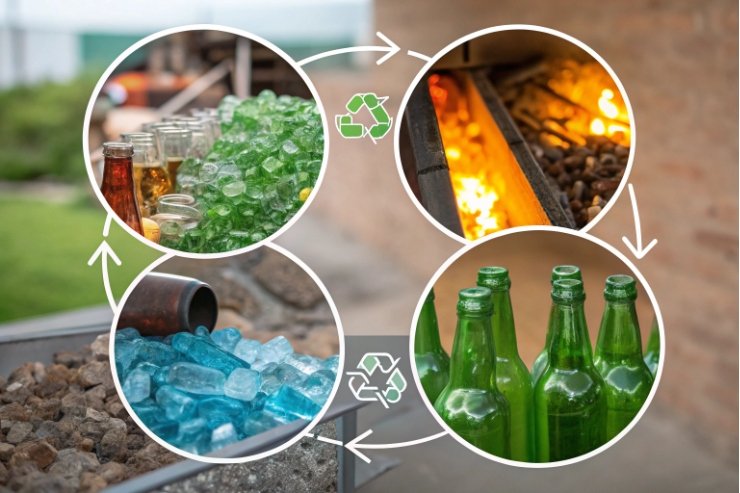
Carbonation puts constant internal pressure on the bottle, often several bar, and sometimes much more in sparkling wine and Champagne. Without the right geometry, the base is the weak spot.
A deep punt on a sparkling wine bottle:
- Forms a strong dome that spreads pressure into the sidewalls.
- Increases glass thickness around the base ring, where impact and pressure meet.
- Leaves less flat area for stress to concentrate.
This does not mean every carbonated drink needs a deep punt. Many beer and CSD bottles use shallower concave profiles with strong base radii instead of dramatic punts. Some PET bottles use petaloid bases of PET bottles 4 to handle pressure in a different way. The key is that no design leaves a large, thin, flat disc at the bottom under high internal pressure.
In practice:
- High-pressure, long-shelf-life sparkling wines use the deepest punts.
- Beers and ciders use moderate base curves plus thicker heel areas.
- Lower-pressure, short-shelf-life or pasteurized carbonated drinks can use simpler concave bases as long as internal pressure and testing support it.
Testing is what decides the final shape:
- Burst tests 5 confirm the maximum safe pressure.
- Impact tests check how the base handles knocks from below and from side contact.
- Thermal shock tests 6 confirm that hot–cold cycles do not crack the base at its most curved zones.
For many still beverages, a slight concavity is kept even when pressure is low, mainly for stability, scuff protection, and visual alignment across a bottle family. In those cases, the base is working more for handling and branding than for pressure itself, but the mechanical advantages still exist.
So concave bases are not the only solution for carbonation, yet they remain one of the simplest and most robust options for glass, especially for premium products where a flat, thin base would be both risky and visually out of place.
When should flat bases be specified instead?
Not every bottle needs a punt. Sometimes it even gets in the way of filling, labeling, or the product story.
Flat or nearly flat bases are better for low-pressure products that need maximum stability, full-volume use, easy labeling, or stackable shapes, such as many juices, sauces, wide-mouth jars, and tabletop glassware.
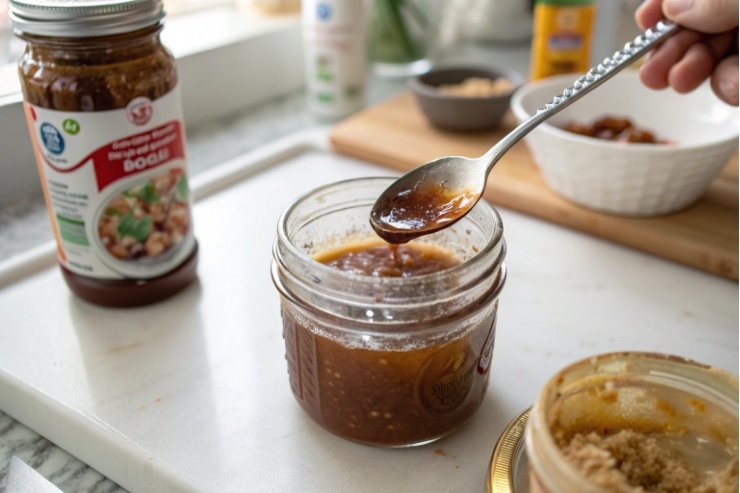
Flat bases earn their place when the design priorities shift. For example, in many food jars and some beverage containers:
- Internal pressure is low or negligible.
- The container is short and wide, so stability is already high.
- The user expects to scoop or drink close to the base.
Here, a deep punt would only trap product and frustrate the customer. A flatter base allows:
- Better product evacuation 7. Less product stays in the “corners.”
- A more useful internal shape for spoons, mixers, or utensils.
- Simpler stacking or nesting for some formats.
On high-speed filling lines for some categories, a flatter base can also help with:
- Certain puck-based handling systems, where bottles sit in carriers and the base needs to be mostly flat.
- Specialized bottom-coding or laser-marking equipment that prefers a predictable flat patch.
In some premium spirits or water designs, a flat base is actually part of the brand language: a heavy flat-bottom decanter look. In those cases, strength is maintained by:
- Extra glass thickness in the base.
- Strong radius transitions between base and sidewall.
- Careful control of internal pressure (often still or mildly carbonated only).
A practical decision guide:
| Product / use case | Base style that fits best | Why it works |
|---|---|---|
| Sparkling wine, Champagne | Deep concave punt | High pressure + tradition |
| Beer and CSD | Moderate concave base | Pressure + handling |
| Still wine (premium) | Medium punt | Branding + some strength |
| Juices, RTD teas, sauces | Shallow concave or flat | Stability + full product use |
| Jams, spreads, condiments | Flat or slightly recessed | Scooping + stacking |
| Spirits decanters, carafes | Flat heavy base | Aesthetic + low internal pressure |
So the choice is not “punt or no punt for everything.” It is “how much concavity do we need, and where does a flat base serve the product and process better?” Once the pressure, stability, and branding targets are clear, the right answer usually falls out of that discussion.
Conclusion
Concave bottle bottoms are quiet structural tools: they turn pressure, impacts, and small surface defects into safe, stable performance, while flat bases still win for low-pressure products that need full use of every last drop.
Footnotes
-
Evidence that glass resists compression far better than tension—useful for understanding dome-base mechanics. ↩︎ ↩
-
Standard bottle anatomy terms for base, push-up, and bearing ring used in packaging specs. ↩︎ ↩
-
Explains what a pontil scar is and why early bottles used concave bases to hide base marks. ↩︎ ↩
-
Research explaining why petaloid base geometry is common in carbonated PET bottles for stability and pressure performance. ↩︎ ↩
-
ISO method reference for internal pressure (burst) testing of glass containers. ↩︎ ↩
-
ISO test methods for thermal shock resistance/endurance of glass containers to validate hot–cold process windows. ↩︎ ↩
-
Practical design guidance on minimizing leftover product through better access and evacuation. ↩︎ ↩






