
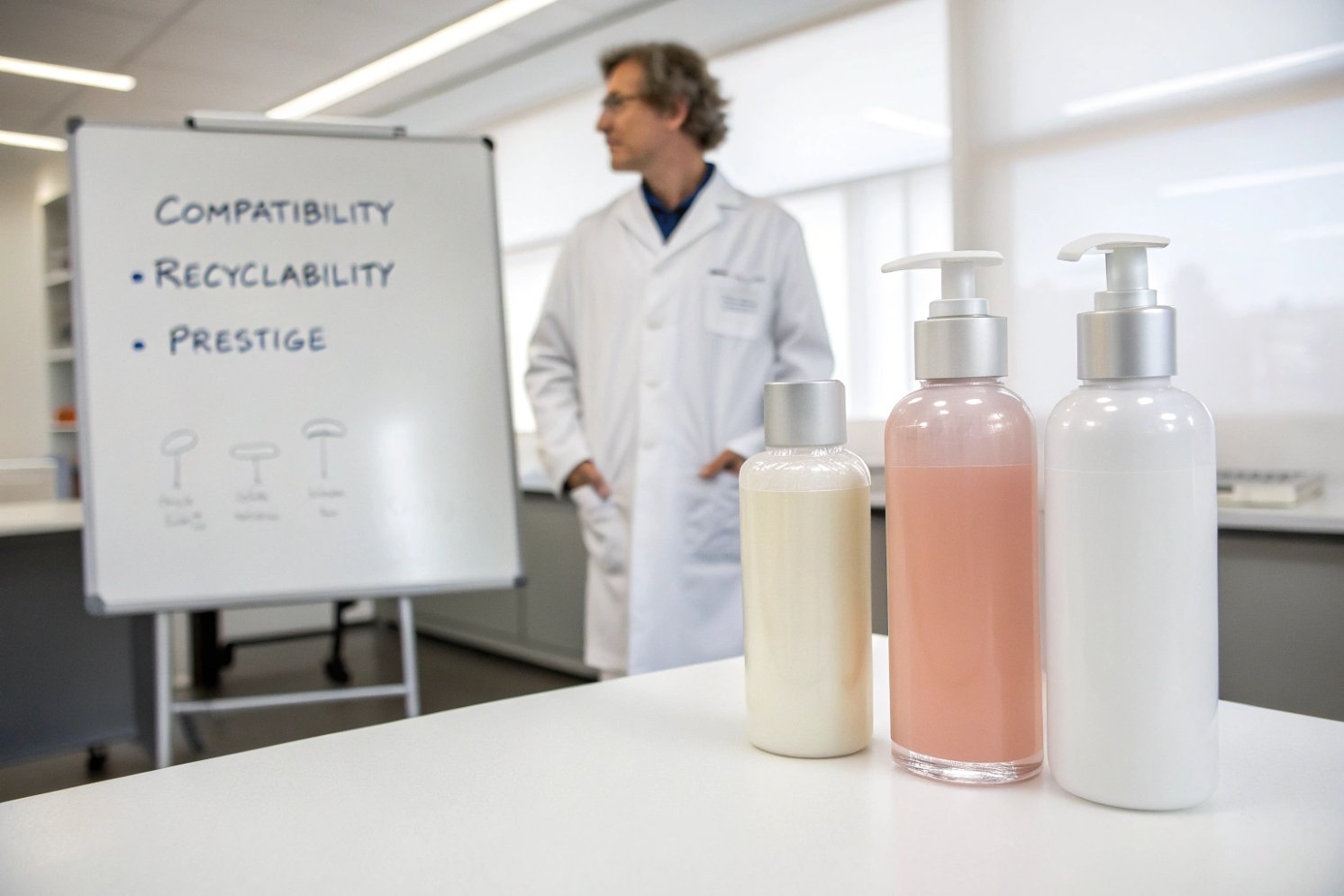
A beautiful formula can still fail if the package lets in air, light, or unwanted reactions. The worst part is the damage often shows up after launch, not during sampling.
No single material is “best” for every cosmetic. Glass wins on inertness and premium feel, aluminum wins on barrier and durability with the right liner, and cosmetic-grade plastics win on cost, impact resistance, and flexible design.
Start with the real job: protect the formula and protect the business
The “best” material is the one that protects the formula in the real world and supports the brand goal without blowing up cost and logistics. The decision is not only about the bottle or jar. It includes the cap, liner, pump, label, and secondary packaging. A glass jar with a weak liner can still leak oxygen. A plastic bottle with a strong EVOH-style barrier layer 1{#ref-3} or a good airless system 2{#ref-4} can outperform a basic glass bottle with a poor closure fit.
In sourcing meetings, the fastest way to reduce arguments is to score each material against four priorities:
1) Formula protection (oxygen, light, moisture, and ingredient interaction)
2) Shelf impact (luxury signals, weight, clarity, decoration options)
3) Sustainability (recycled content, recyclability, reuse, and system design)
4) Total landed cost (unit price plus freight, breakage, packing, and returns)
When these priorities are clear, the “best” choice becomes obvious for each SKU. Many brands do not need one single material for everything. A premium serum can live in glass while a body lotion stays in PCR plastic. A solid balm can use aluminum. Mixed materials across a product line can still look consistent when decoration and color systems are planned early.
Here is a quick baseline that helps align expectations before going deeper:
| Material | Oxygen Barrier | Light Protection | Chemical Inertness | Impact Resistance | Typical Brand Signal |
|---|---|---|---|---|---|
| Glass | Strong | Medium (strong if colored) | Excellent | Low | Premium, timeless |
| Aluminum | Strong (with good liner) | Strong | Medium (needs liner) | Medium-high | Modern, sleek |
| Cosmetic plastics (PET/PP/PE) | Medium (varies) | Low-medium (varies) | Medium (depends on resin) | High | Mass to premium (depends on finish) |
The next sections answer the four questions that usually decide the final material selection for cosmetics.
A smart material choice should feel boring after it is set. That boredom is a sign of low risk and stable supply.
Which packaging material best protects your formula from oxygen, light, and ingredient interaction?
Formulas do not fail because a package is ugly. Formulas fail because the package allows slow changes that the brand cannot control.
Glass is best for chemical inertness, aluminum is best for light and oxygen barrier when the liner is correct, and plastics can be excellent when the right resin, barrier design, and closure system are selected.
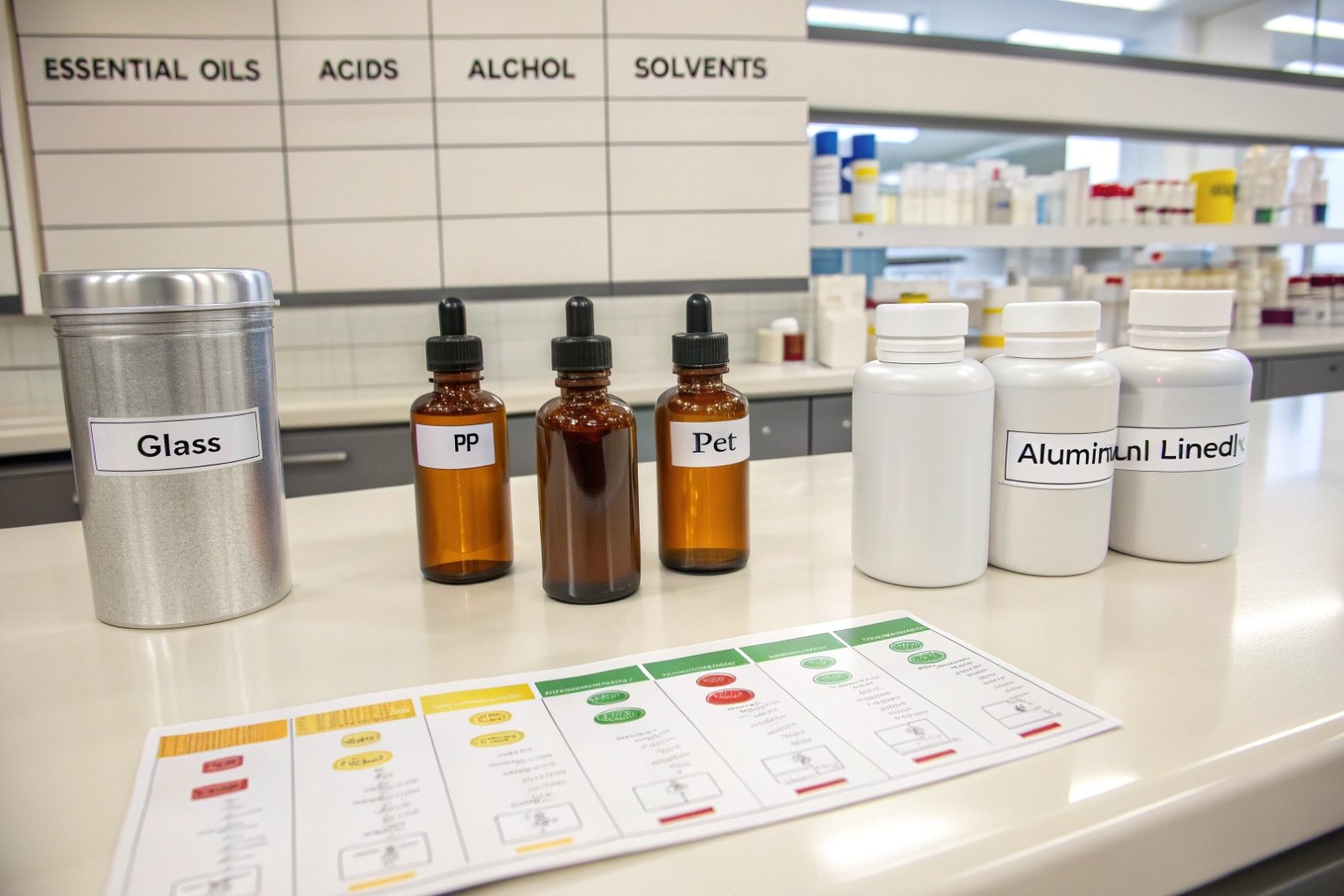
Oxygen and vapor: the invisible daily attack
Oxygen enters a package through the closure system, and sometimes through the walls. Glass has very strong barrier properties and does not “breathe” like many plastics, which is why glass is chemically inert and an excellent barrier 3{#ref-1} for many sensitive products. Aluminum also blocks oxygen well, but most cosmetic aluminum packs rely on an internal coating or liner 4{#ref-2}. Without the right liner, bare aluminum can react with some formulas, especially water-based and acidic systems. That is why liner selection is not optional. It is the core of the aluminum decision.
Plastics vary a lot. PET, PP, and PE each behave differently. Some plastics can allow more oxygen transfer than glass or metal (often described by oxygen transmission rate (OTR) 5{#ref-7}), and some can absorb fragrance oils or allow certain ingredients to migrate. This does not mean plastics are “bad.” It means resin selection must match the chemistry, and the closure system must be designed for the formula.
Light: the high-energy problem for actives
Light sensitivity is not only a “glass topic.” Any material can be paired with a light-blocking strategy:
- Colored glass (amber, deep colors) reduces UV and blue light exposure.
- Aluminum blocks light fully.
- Plastics can be colored, coated, sleeved, or boxed to control light.
The real decision is how much light protection is needed and how long the consumer will keep the product. A 30 ml serum used in 30–60 days has different needs than a 500 ml salon product that sits under bright light for months.
Ingredient interaction: where glass often wins
Glass is a strong choice when the formula is aggressive, contains sensitive actives, or must stay “clean” with minimal interaction risk. In my experience, brands that cannot afford stability surprises often use glass for flagship serums and oils. A short story comes to mind: a vitamin-C style product was originally planned in clear plastic for cost reasons. The brand later saw odor and color drift in warm storage tests. The switch to amber glass plus a tighter closure solved the risk and reduced customer complaints after launch.
Here is a practical matching guide:
| Formula risk | Common examples | Best default material | Why |
|---|---|---|---|
| High (reactive or unstable) | active serums, essential oils | Glass (often colored) | Low interaction risk, strong barrier |
| High (light-driven) | retinoids, some botanicals | Aluminum or colored glass | Strong light control |
| Medium | creams, lotions | Plastic or glass | Depends on pump and closure |
| Low | rinse-off products | Plastic | Strong durability and low cost |
Protection is not only the bottle. Pumps and liners often decide oxygen exposure more than the container wall. The next section looks at shelf impact and luxury branding, because protection alone does not sell the product.
How do glass, aluminum, and cosmetic-grade plastics compare for luxury branding and shelf impact?
Shelf impact is not decoration alone. It is the full sensory signal: weight, sound, touch, clarity, and consistency across the line.
Glass leads in luxury cues like weight and clarity, aluminum gives a modern and clean look with strong surface options, and plastics can look premium when thick-wall design, coatings, and high-quality decoration are used.
Why glass often “feels expensive”
Glass has a natural premium signal. It is heavy. It feels cool in the hand. It has strong clarity for flint glass and strong depth for colored glass. It also supports high-end decoration such as frosting, painting, hot stamping, and heavy-base designs. The sound and weight of glass matter in retail. Many buyers do not talk about that out loud, but consumers feel it.
Still, glass has trade-offs. It is fragile. It needs protective packaging. In wet environments like showers, glass can be risky. For these reasons, some brands use glass on the vanity SKUs and use plastic on the shower SKUs.
Aluminum: sleek, modern, and strong barrier aesthetics
Aluminum signals “clean and modern.” It also signals durability. The feel is light but solid. Aluminum can be brushed, anodized, printed, or sleeved. It can look minimalist or bold. For travel-friendly lines, aluminum gives a premium vibe without the shatter risk of glass.
The caution is dents and scratches. A dented aluminum bottle may still function, but shelf appearance can suffer. Also, the internal liner must be correct for the formula, and that liner can influence how the brand talks about “clean packaging.”
Plastics are the most flexible for shapes, ergonomics, and dispensing designs. Airless systems, squeeze tubes, and complex closures often rely on plastics. Premium plastic is real when:
- Wall thickness is increased for stiffness and weight
- Surface coatings add soft-touch or matte finishes
- Decoration is clean and consistent
- Color matching is controlled across lots
Many consumers still associate plastic with “cheap,” but that bias changes when the design is executed well. Premium DTC brands often use high-quality plastics because they ship better and reduce returns.
A simple shelf-impact scoring table helps:
| Material | Weight signal | Visual clarity | Decoration range | Damage appearance | Best use cases |
|---|---|---|---|---|---|
| Glass | High | High | Very wide | Breakage is harsh | vanity serums, prestige creams |
| Aluminum | Medium | Low | Wide | Dents show | travel lines, modern skincare |
| Plastic | Low-medium | Medium-high | Very wide | Scratches show | body care, airless systems |
Luxury is not only “the container.” It is also the closure feel. A smooth pump and a clean cap alignment can lift any material. The next section moves to sustainability, where many brands need a story that stands up to real questions.
What sustainability factors matter most when choosing between glass, metal, and PCR plastic packaging?
Sustainability claims can backfire when they are too simple. Consumers ask hard questions now, and retailers also push for measurable improvements.
The most important factors are recycled content, real-world recyclability in your target markets, transport emissions from weight and volume, and system design that avoids mixed materials and improves recovery.
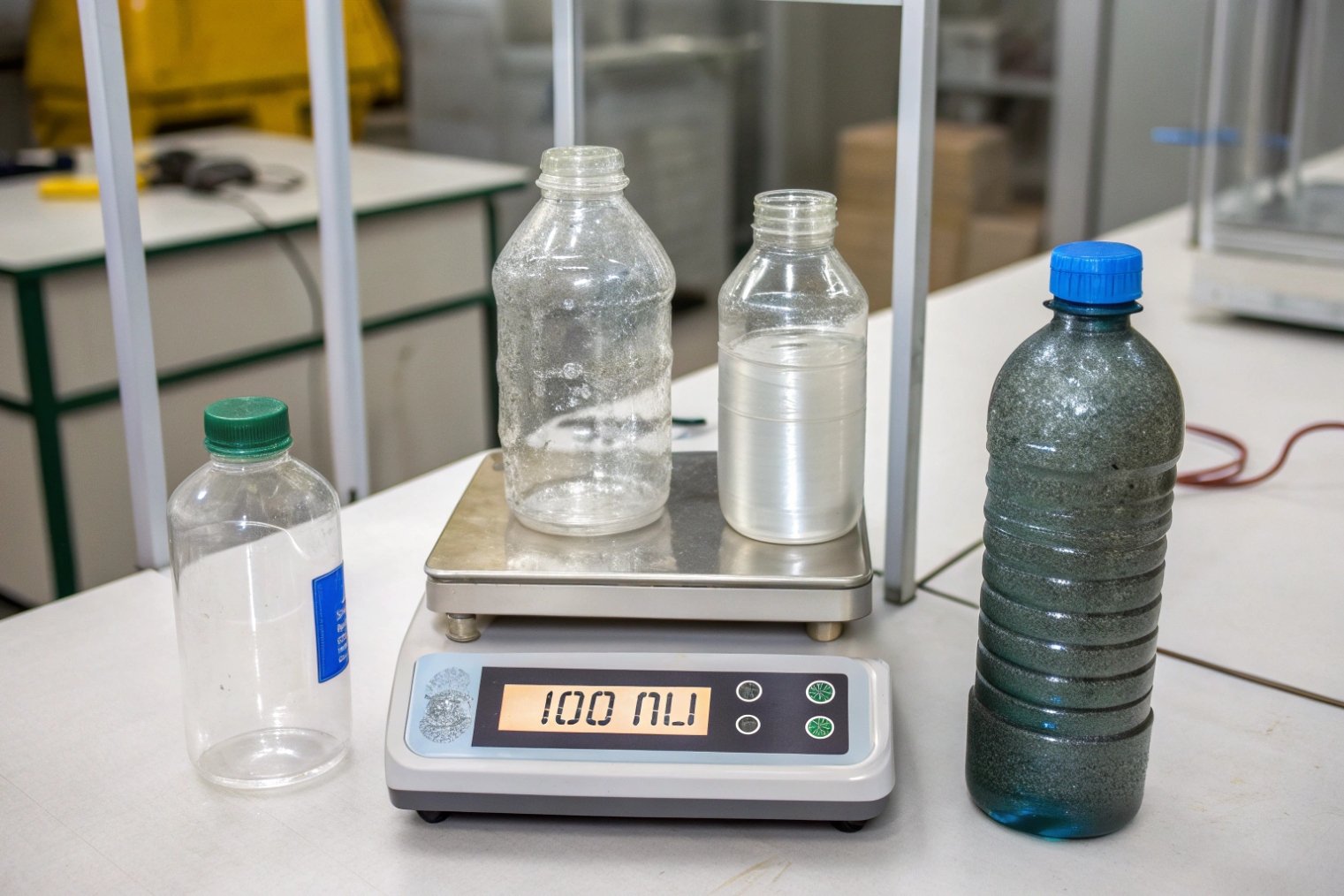
Recyclability is local, not global
A package can be “recyclable” on paper and still end up as waste in many regions. This is why target market matters. Glass is widely recyclable, but heavy glass increases transport emissions. Aluminum is highly recyclable and valuable in recycling streams, and brands often reference programs and data like the Aluminum Association recycling guidance 6{#ref-6}. Plastics can be recyclable, but only when the resin type is common and the package design does not add too many mixed materials.
PCR plastic: great tool, but design matters
Post-consumer recycled (PCR) plastic 7{#ref-5} helps reduce virgin plastic use. It can be strong for sustainability goals. The key is stable supply and consistent color. Some PCR resins show color variation. This can be managed with masterbatch color, opaque designs, or controlled PCR grades.
Reuse and refill: the long-term lever
A refill system can reduce waste, but only if consumers adopt it. Glass often works well as a refillable “outer pack” because it feels premium and durable in home use. Aluminum can also work for refills and travel. Plastics can support refills too, but the brand must plan a clear user experience.
Many pumps and sprayers combine plastic, metal springs, and multiple resins. These mixed parts are hard to recycle. A strong sustainability plan looks at the full system:
- mono-material pumps when possible
- easy-to-separate designs
- fewer materials and fewer dyes
- labels and adhesives that do not block recycling
Lightweighting is also a real strategy. A lighter glass bottle can cut emissions and cost. A thinner wall must still pass impact tests and feel premium, so engineering matters.
A decision table keeps sustainability honest:
| Factor | Glass | Aluminum | PCR Plastic |
|---|---|---|---|
| Recycled content potential | Medium (varies by supply) | High (often available) | High (depends on PCR source) |
| Recycling value | Medium | High | Low-medium |
| Transport footprint risk | Higher (heavy) | Medium | Low (light) |
| Refill suitability | Strong | Strong | Medium |
| System risk (pump/closure) | Medium | Medium | High (often multi-material) |
Sustainability is not one number. It is a set of trade-offs. The best choice is the one that matches brand goals and can be explained clearly without overclaiming.
After sustainability, the final decision often comes down to total landed cost and shipping reality.
How do you compare total landed cost, breakage risk, and shipping efficiency across plastic, metal, and glass?
Unit price is only the first number. Total landed cost includes freight, packaging, damage, labor, and returns.
Plastic usually wins on shipping efficiency and breakage risk, glass often wins on premium value but needs stronger packing and higher freight budget, and aluminum sits between them with strong durability but liner and dent risks.
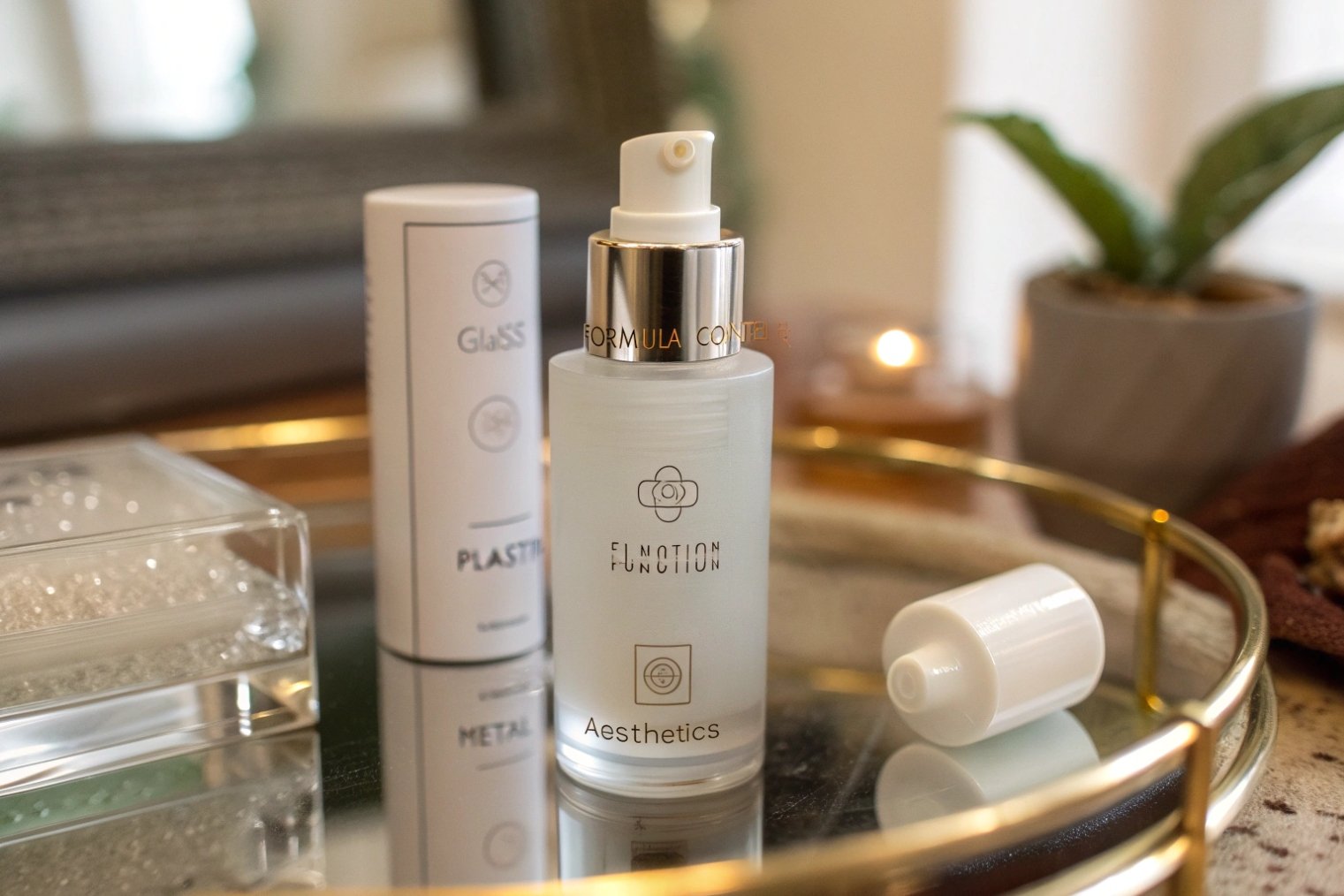
What “total landed cost” should include
Many teams compare only EXW or FOB unit prices. That creates surprises later. A better cost model includes:
- container utilization (weight and cube)
- protective packaging (dividers, cartons, pallets)
- damage rate and claims handling
- storage footprint
- labor for handling fragile goods
- e-commerce returns and reshipments
Glass is heavy and fragile. It often needs stronger cartons, thicker dividers, and better pallet control. That adds cost. It also reduces how many units fit in a shipment when weight limits are reached. Plastic is light and impact resistant, so it often ships with lower damage risk and higher cube efficiency. Aluminum is light and durable, but dents can become a “cosmetic defect” even when function is fine.
Breakage vs. denting: different types of loss
Glass can break, and breakage is a hard loss. Aluminum can dent, and dents can lead to discounting or rejects depending on brand standards. Plastics resist shatter, but they can scratch, stress crack, or deform under heat if the design is weak.
A practical comparison model for buyers
This table helps align sourcing and finance teams:
| Cost driver | Glass | Aluminum | Plastic |
|---|---|---|---|
| Freight cost sensitivity | High | Medium | Low |
| Protective packaging need | High | Medium | Low-medium |
| Damage type | Breakage | Dents/scratches | Scratches/deformation |
| E-commerce risk | Higher | Medium | Lower |
| Warehouse handling | More careful | Normal care | Easy |
| Per-unit tooling cost | Medium-high | Medium-high | Low-medium |
Testing and prevention reduce cost more than negotiation
Cost control comes from prevention:
- drop tests and vibration tests for packed goods
- torque and leak tests for closures
- temperature cycling for transport lanes
- small pilot shipments before full rollout
One common mistake is to choose glass for a DTC heavy shipping model without upgrading the packing plan. This leads to returns and poor reviews, which cost more than the price difference between materials.
A better approach is to match the channel:
- Retail shelf focus: glass can be worth it
- DTC and e-commerce: plastic or aluminum often reduces risk
- Travel and shower: plastic or aluminum improves safety
When the cost model includes damage and returns, the “best” material becomes clearer.
Conclusion
Glass protects and signals luxury, aluminum protects and travels well with the right liner, and plastics win on shipping and design flexibility. The best choice matches formula risk, brand goals, and total landed cost.
Footnotes
-
Learn how EVOH barrier layers reduce oxygen ingress in plastic packaging systems. ↩ ↩
-
See how airless packaging limits air exposure and improves dosing stability for sensitive formulas. ↩ ↩
-
Understand why glass is inert and non-porous, reducing ingredient interaction risk. ↩ ↩
-
Explains why aluminum containers often need internal linings to prevent corrosion or reactions. ↩ ↩
-
Explains oxygen transmission rate (OTR) and why plastics vary in oxygen barrier performance. ↩ ↩
-
Practical reference on aluminum recycling value and recovery pathways for sustainability planning. ↩ ↩
-
Defines post-consumer waste and how PCR content is created for packaging claims. ↩ ↩






