
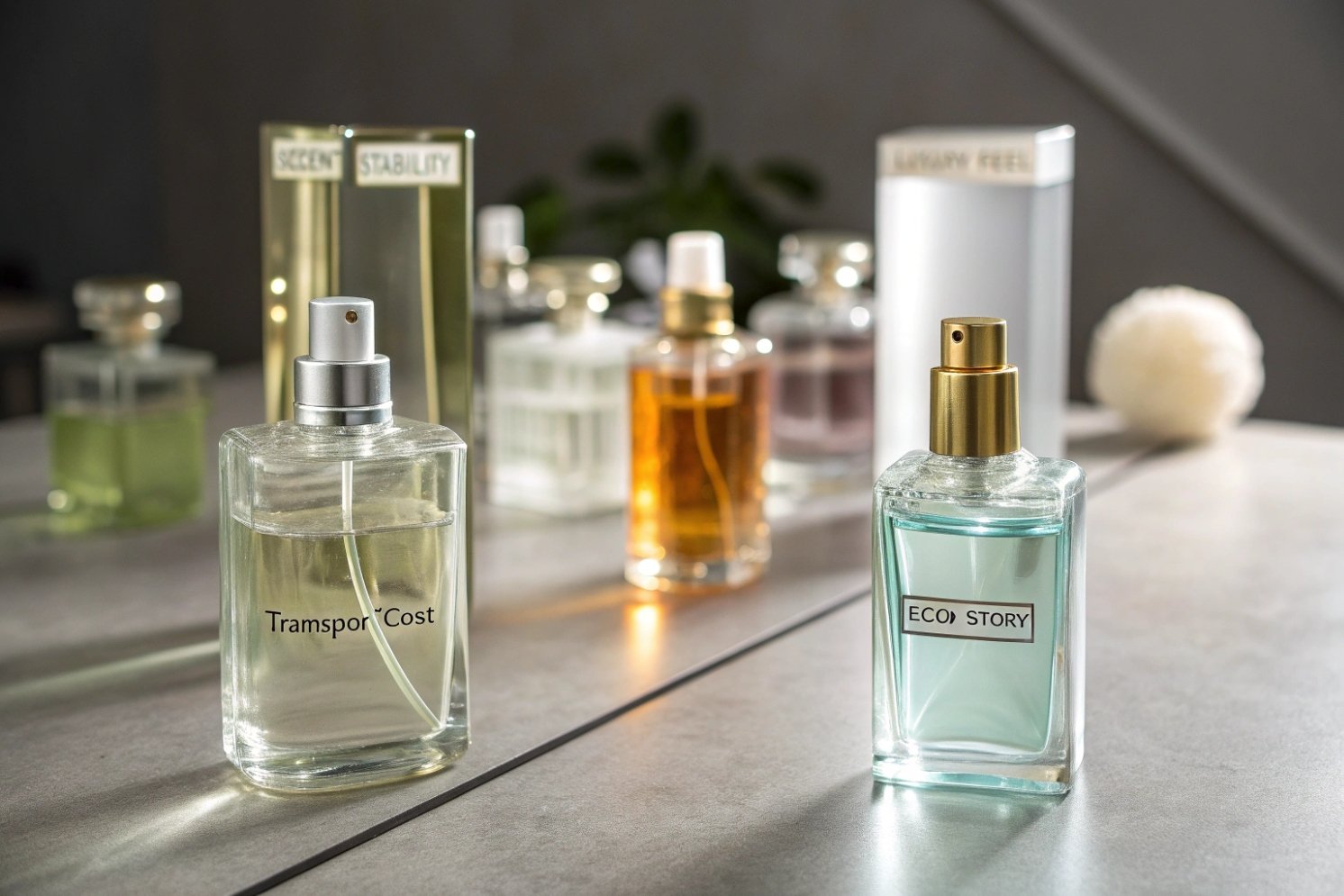
Choosing between glass and plastic perfume bottles feels simple, but this choice controls scent stability, luxury feel, transport cost, and even how “green” your brand looks.
For most full-size perfumes, glass is better because it is inert, low-permeability, and more premium. Plastic makes sense for travel minis or samples, where weight, shatter resistance, and low cost matter more than long-term scent stability.
When you match the right bottle to the right perfume, you protect the formula, reduce complaints, and support your brand story. The rest of this guide walks through chemistry, performance, logistics, and sustainability so you can choose with a clear mind, not just by habit.
Do ethanol and aroma chemicals interact with PET and HDPE over time?
Leaking scent, “flat” top notes, or a strange plastic smell are often not formula problems. They are packaging–formula compatibility problems 1 that slowly grow during storage and shipping.
Ethanol and perfume oils are broadly compatible with PET, but they can migrate into HDPE more easily and can also extract additives from some plastics, which risks slow odor change and strength loss over time.
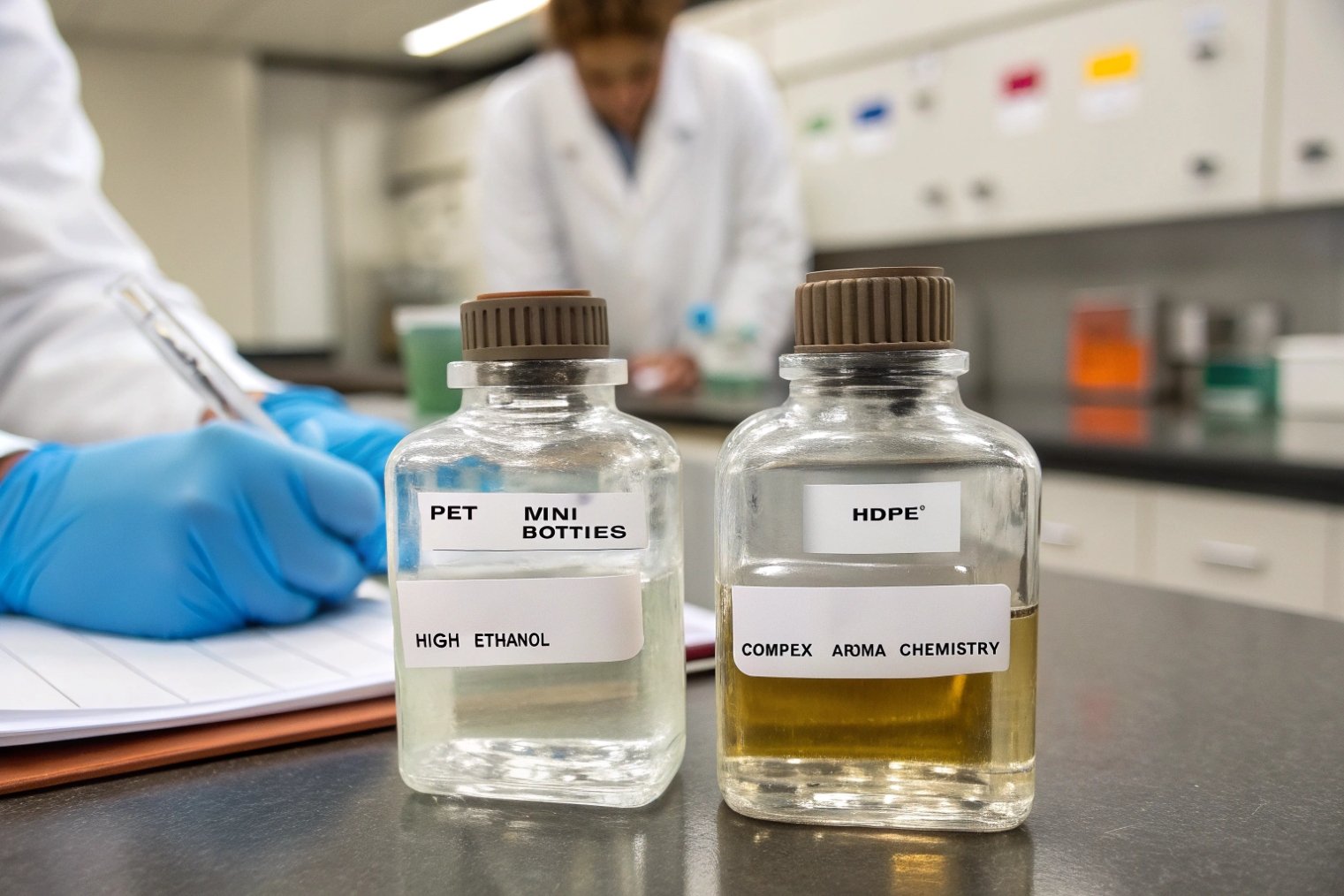
What really touches your juice
Most alcohol-based perfumes sit around 70–90% ethanol. On top of that, you have a complex mix of aroma chemicals, naturals, and tiny amounts of water. This cocktail is a strong solvent. It can:
- Swell some plastics
- Pull out small molecules from the plastic (plasticizers, stabilizers)
- Move into the plastic wall itself
Glass is different. Standard soda-lime or high-flint glass is essentially inert in this context. It does not absorb the fragrance and does not give anything back. That is why the scent you fill is the scent you smell months later.
PET vs HDPE for perfume
Among common plastics, polyethylene terephthalate (PET) 2 and high-density polyethylene (HDPE) 3 behave very differently:
| Property | PET bottle | HDPE bottle |
|---|---|---|
| Chemical compatibility | Good with ethanol, most oils | Fair; more swelling with solvents |
| Aroma absorption (“scalping”) | Moderate | Higher |
| Gas permeability | Lower | Higher |
| Typical perfume use | Travel sprays, mists | Rare for fine fragrance |
PET is the “least bad” choice if you must use plastic. It tolerates ethanol well and keeps its shape. Still, over months, some volatile notes can diffuse into the wall or out through it, so the scent can feel softer or less bright.
HDPE is more porous and more “hungry” for oils. It is great for detergents, shampoos, and many personal-care liquids, but not ideal for fine fragrance if you care about exact top-note fidelity.
Practical guidelines
For long-term storage, large bottles, or complex niche perfumes, glass is the safe chemistry choice. For short-term uses like discovery sets, body mists, or travel refills under a few months, PET can be acceptable if you:
- Test the exact formula in the exact plastic
- Store away from heat
- Accept that the scent may drift faster than in glass
This balance between chemistry and real-world use is the first filter before you even think about design.
How do barrier, UV protection, and odor resistance compare between glass and plastics?
Even if a plastic does not “react” with your formula, it can still breathe. Oxygen, small volatiles, and light can slide through or around the pack and slowly rewrite your fragrance.
Glass offers the strongest barrier against gas and vapor, plus better UV options, and it does not absorb odor. Plastics, even PET, allow more oxygen and perfume volatiles to pass, and some resins slowly “steal” aroma from the juice.
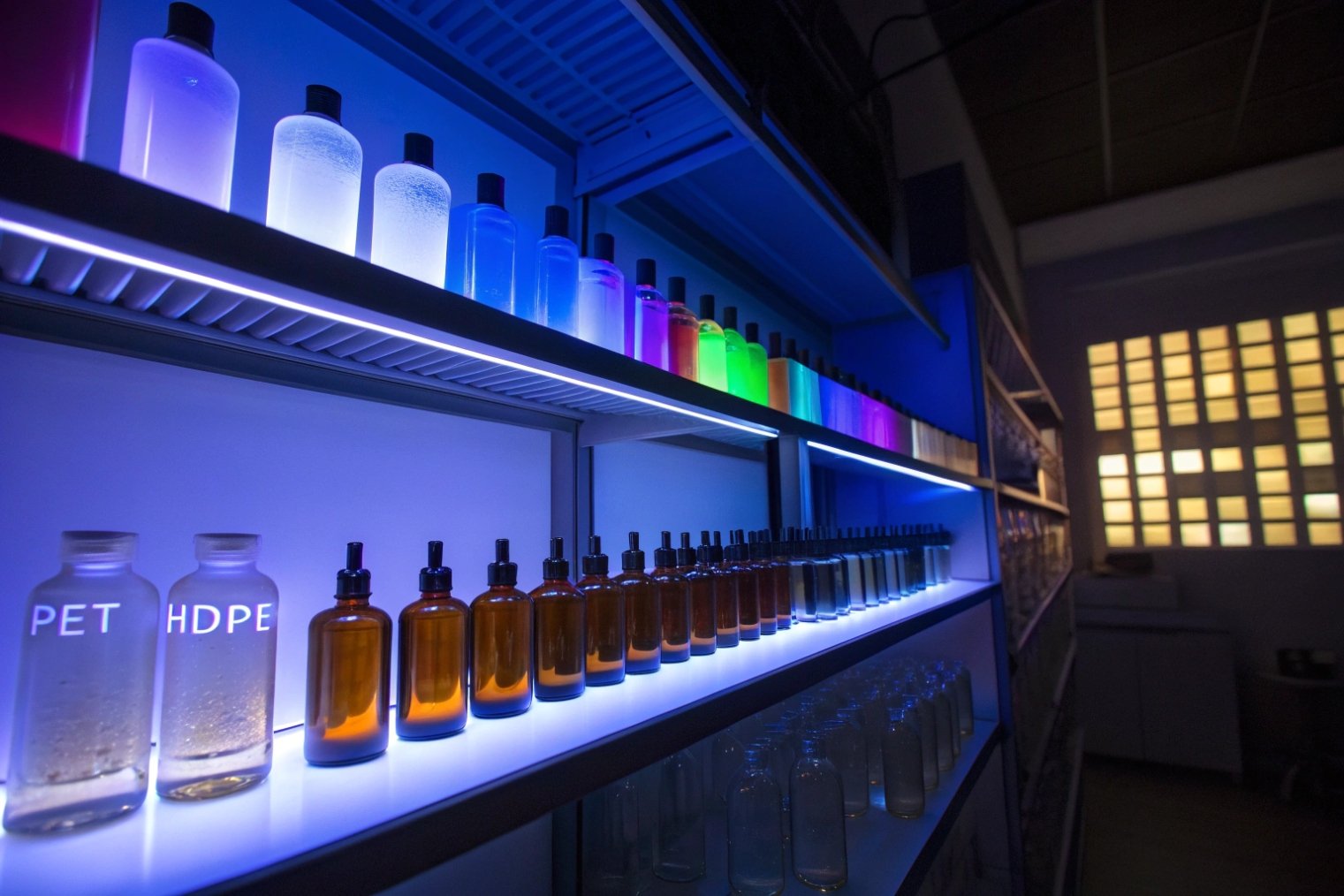
Barrier: keeping oxygen out and perfume in
Barrier performance answers two questions:
- How fast does oxygen get in?
- How fast do perfume volatiles leak out?
On these two points:
- Glass has extremely low oxygen and vapor permeability
- PET has a decent barrier, much better than HDPE (often discussed using oxygen transmission rate (OTR) 4)
- HDPE has a relatively open structure and lets more gases move
This is why vintage fragrances in intact glass can smell surprisingly fresh, while old body sprays in plastic often feel “thin” and off-balance.
UV and light protection
Light, especially UV and high-energy blue light, breaks down many aroma molecules through photodegradation reactions 5. You see this as:
- Color changes in the juice
- Loss of bright top notes
- Formation of off-odors
Glass gives you several tools:
| Glass type | Light protection level | Typical use |
|---|---|---|
| Clear flint | Very low UV protection | Display-driven, stable formulas |
| Amber / brown | High UV and blue light blocking | Essential oils, naturals, actives |
| Coated / frosted | Medium to high (depends on coating) | Design + functional protection |
Plastic can include UV absorbers or tinted masterbatch, but this is always a trade-off with cost, haze, and sometimes recyclability. For long-lived perfumes or very light-sensitive blends, glass still wins.
Odor resistance and “scalping”
Odor scalping is when the scent moves from the liquid into the packaging. With plastic:
- Some top notes lodge into the wall and do not come back
- The inside of a used bottle smells strong even when “empty”
- Refills into the same plastic pack can pick up a ghost of the old scent
Glass is non-porous. Rinse well, wash, and you can remove almost all smell, especially from smooth high-flint containers. This is important for refill systems and testers.
In short, if you want maximum preservation of the original accord and color, and you expect the product to sit in a warehouse or on a shelf for months, glass is the more forgiving material.
What are the implications for travel weight, drop resistance, and cost?
At the lab bench, glass wins easily. On a suitcase scale or a pallet, the story changes. Weight, breakage, and freight cost are where plastic really fights back.
Glass is heavier and more fragile, so it raises freight cost and drop-breakage risk but feels more luxurious. Plastics are much lighter and shatter-resistant, so they are better for travel, mailing, and low-budget launches.
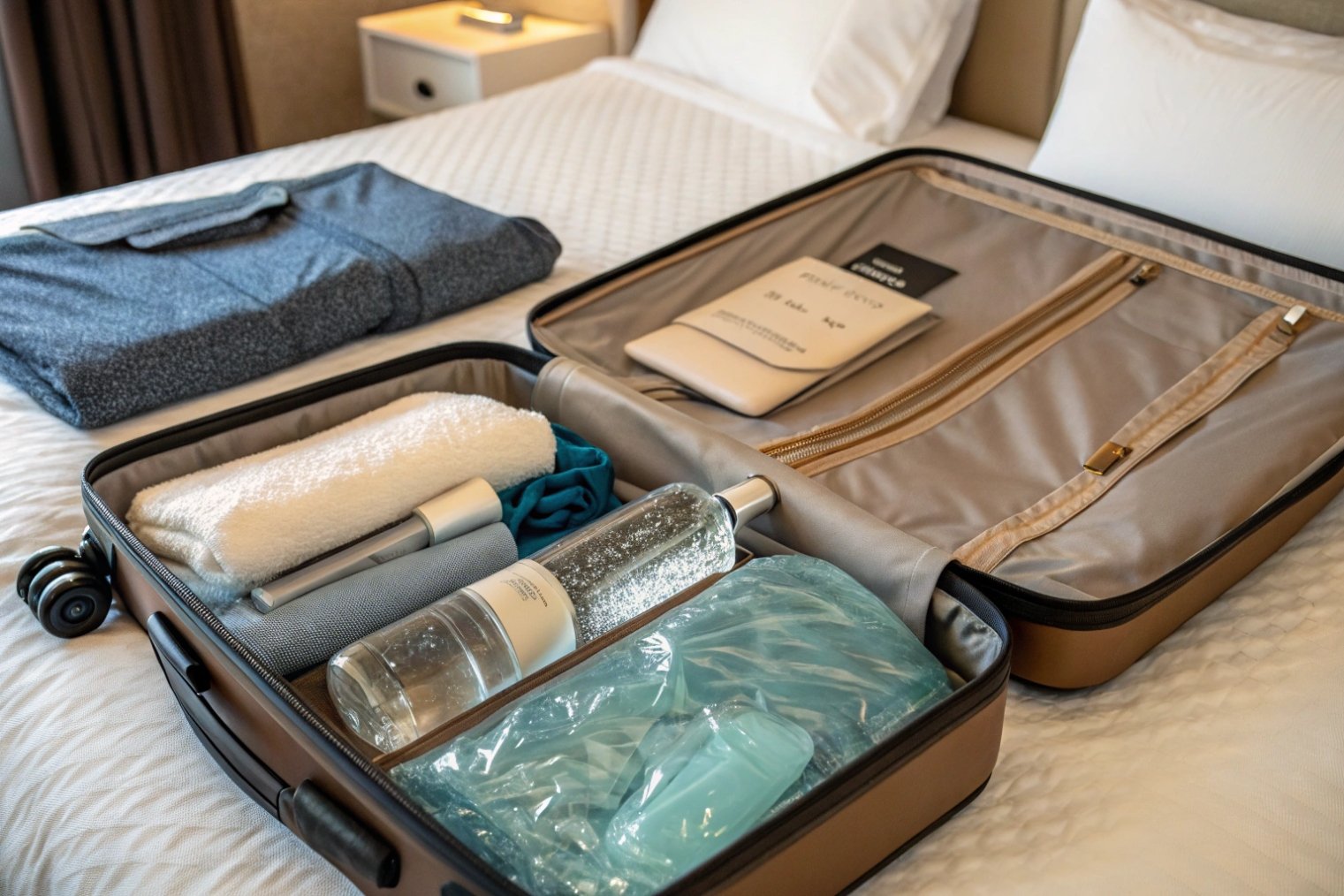
Weight and freight
Glass has a high density. That gives a nice hand-feel but also higher:
- Shipping weight per unit
- Fuel and transport emissions per unit
- Cost for air freight and small parcel delivery
Plastic bottles, especially PET, are very light. For big retailers or DTC brands sending thousands of parcels a month, the savings in shipping and packaging (less protective padding) add up fast.
Here is a rough comparison for a typical 50 ml format:
| Format | Approx. empty weight | Handling notes |
|---|---|---|
| 50 ml thick-base glass | 150–220 g | Premium feel, heavy for travel |
| 50 ml standard glass | 90–140 g | Common fine fragrance |
| 50 ml PET spray bottle | 15–25 g | Lightweight, travel friendly |
These are broad ranges, but they show why airlines and online brands often lean on plastic for certain lines.
Drop resistance and safety
Glass can chip, crack, or shatter on impact, especially on tile or concrete. A thick base helps, but it does not make glass unbreakable. If you ship DTC, running ISTA 3A small-parcel testing 6 early helps catch weak points in packs, pumps, and dunnage before scale.
For:
- Retail testers
- Bathroom use with kids
- Gym bags and handbags
- Crowded travel situations
plastic reduces the risk of sharp shards and product loss. PET usually dents or creases rather than breaks.
Cost and price positioning
Glass tools (molds) and decoration lines cost more to set up. Unit cost per bottle is also higher than a basic plastic pack, especially for heavy, custom shapes.
However, the bottle is only part of the story. Glass can support a higher retail price because it:
- Signals luxury better
- Photographs better for online stores
- Feels more “worth it” in the hand
For entry-level mists, body sprays, and mass market flankers, plastic can protect margins at low price points. For hero SKUs and long-term signature lines, glass usually pays back through higher perceived value and better shelf life.
Which option aligns with recyclability goals and luxury positioning?
Both glass and plastic can claim “recyclable” on paper. In real life, collection systems, sorting, and consumer behavior decide which material actually gets a second life.
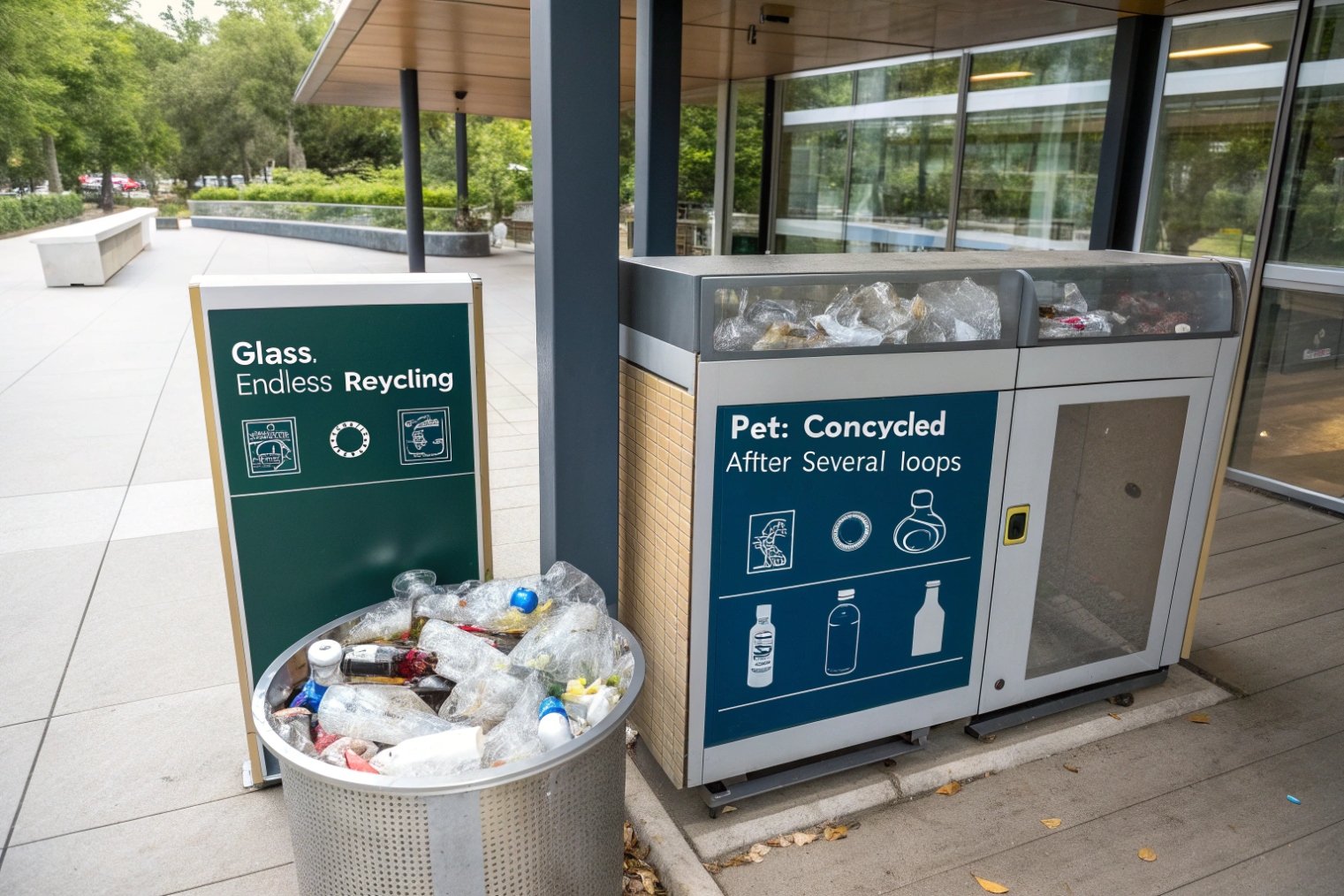
Glass is endlessly recyclable and aligns well with luxury and refill models, but it is heavy. PET is widely collected and light, but quality drops each cycle. For high-end positioning with serious eco claims, glass plus smart design is usually the stronger story.
Recyclability in the real world
Glass:
- Can be endlessly recyclable glass 7 with little loss in quality
- Handles high cullet (recycled glass) content without harming the look of amber or tinted bottles
- Needs pumps, caps, and collars removed or separated, since these are often mixed-material pieces
PET:
- Has strong recycling streams in many countries
- Usually becomes lower-value products (fibers, trays) after a few cycles
- Needs clean, clear, label-friendly designs to be recycled at best quality
Multi-layer barrier plastics and heavy coatings often complicate sorting and reprocessing. This is one reason many premium brands move back toward “simple” glass, paired with improved pumps or refill systems.
Refill, reuse, and brand story
Refill and reuse are where glass really shines:
- A solid glass bottle can survive many refill cycles
- You can pair it with lightweight plastic or pouch refills
- Consumers enjoy the ritual of keeping a beautiful bottle on the dresser
For a brand, this means:
- Higher one-time packaging cost
- Lower packaging waste per ml over the product life
- A stronger emotional bond with the object
Plastic can be refilled too, but scuffs, odor retention, and a less “timeless” feel can reduce the appeal of long-term reuse.
Luxury cues vs mass cues
Here is how the two materials line up on image and positioning:
| Aspect | Glass perfume bottle | Plastic perfume bottle |
|---|---|---|
| Luxury perception | High | Low to medium |
| Typical price tier | Mid to premium / niche | Entry, mass, travel, body mists |
| Decoration options | Silkscreen, hot foil, frosting, plating | Simple printing, shrink sleeves |
| Refill potential | Very strong | Limited by wear and odor |
Silkscreen, hot stamping, frosting, and electroplating all sit more naturally on glass. They look sharper and last longer. On plastic, the same effects can yellow, scratch, or peel faster.
If your long-term goal is a strong, premium brand with a credible sustainability story, a glass primary pack with:
- High cullet content
- Refillable architecture
- Thoughtful, low-mixed-material pumps and caps
usually gives the clearest message to both regulators and consumers.
Conclusion
For fine fragrance, glass is still the best default: it protects your formula, supports a luxury story, and fits refill and recyclability goals, while plastic holds a clear role for travel, minis, and budget lines.
Footnotes
-
Learn how compatibility testing reveals scent drift, leaching risk, and stress cracking before launch. ↩︎ ↩
-
Quick overview of PET properties and why it’s commonly chosen for lightweight, solvent-tolerant packaging. ↩︎ ↩
-
Understand HDPE’s structure and why it’s more permeable and aroma-absorbing for fragrances. ↩︎ ↩
-
Explains OTR so you can compare how fast oxygen can pass through different packaging materials. ↩︎ ↩
-
Background on light-driven breakdown pathways that cause fading, off-odors, and top-note loss. ↩︎ ↩
-
See a common DTC shipping test standard used to predict damage in drops, vibration, and handling. ↩︎ ↩
-
Learn why glass can be recycled repeatedly and how to prepare containers for better recycling outcomes. ↩︎ ↩






