

Broken bottles, hazy glass, and leaking caps usually start with one mistake: the wrong bottle design for the fill process.
Hot-fill bottles are built for heat, thermal shock, and cooling vacuum. Cold-fill bottles are built for speed, lighter weight, and stable sealing without heat-driven stress.
Hot-fill and cold-fill look similar on a shelf, but the physics behind them are not the same. Hot-fill puts the bottle under thermal shock 1 first, then mechanical stress. The product enters hot, the glass expands, and then the system cools down. That cooling creates a vacuum inside the bottle, so the bottle and closure must handle inward load. Cold-fill flips the priority. The glass sees much less heat stress, so the bottle can be lighter and more decorative. But the filling environment, oxygen control, and sealing consistency become more important because the process does not use heat inside the package to help.
What changes in the bottle design
Hot-fill bottles usually use more conservative geometry. The glass distribution is less “art-shaped” and more “stress-shaped.” Sharp corners, sudden thickness shifts, and thin shoulders are risk points under heat. Cold-fill bottles can use more shape freedom because temperature gradients are smaller.
What changes in the product strategy
Hot-fill is often chosen for shelf-stable acidic drinks, juices, teas, and sauces. It uses heat plus a hold and cap routine to reduce microbes. Cold-fill is often chosen for carbonated drinks or delicate flavors. It protects taste and CO₂, but it leans on filtration, aseptic control, preservatives, or cold chain.
| Topic | Hot-fill glass bottle | Cold-fill glass bottle | What the team must lock down |
|---|---|---|---|
| Fill temperature | Hot (often 85–95°C) | Ambient or chilled | True process window and worst-case ΔT |
| Main stress | Thermal shock + cooling vacuum | Handling impact + sealing consistency | Bottle geometry, line handling, closure match |
| Shape freedom | More conservative | More freedom | Brand design vs breakage risk |
| Typical beverages | Acidic shelf-stable | Carbonated, heat-sensitive | CO₂, oxygen, flavor stability targets |
| Cost drivers | Thicker glass + energy + cooling | Aseptic control + oxygen control | Total system cost, not just bottle price |
Hot-fill vs cold-fill is not a marketing label. It is a load case. When the load case is clear, the bottle spec becomes easier. When the load case is vague, the project pays later in breakage, leaks, haze, and short shelf life.
If this feels like a lot, it is. The good news is that every difference can be turned into a simple checklist and a short test plan.
Do ΔT, vacuum panels, and closure specs change by process?
A bottle can pass a drop test and still crack on the line, or it can survive heat but leak after cooling. Both failures look the same to the customer.
Yes. Hot-fill needs higher ΔT margin, vacuum-resisting geometry, and closures that seal through heat and cooling. Cold-fill focuses on consistent torque, CO₂ control, and seal repeatability at high speeds.
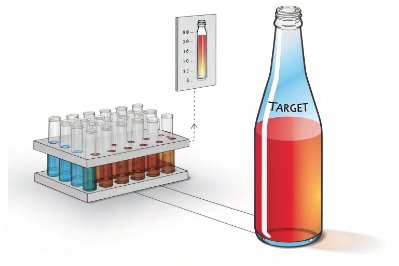
ΔT is the most direct divider between hot-fill and cold-fill. Hot-fill creates a fast temperature gradient across the glass wall. The inner surface sees hot liquid first, and the outer surface may be cooler air or cooling spray. That gradient creates stress. So the bottle needs a higher thermal-shock safety margin. This is why hot-fill bottles often avoid extreme thin walls and avoid sudden thickness transitions. In validation, teams often reference a thermal-shock resistance test method 2 to define pass/fail criteria consistently.
Vacuum is the second divider. When hot product cools, its volume contracts. That creates negative pressure (vacuum) 3 inside the bottle. In PET, vacuum panels are common. In glass, the “vacuum panel” idea becomes a geometry and strength problem. The bottle must resist inward load without distortion that breaks the seal or creates stress at the shoulder and heel. The design often uses a stronger shoulder curve, a stable base, and controlled wall thickness around the label area.
Closure specs change as well. A hot-fill closure must seal when the neck finish is warm, then keep sealing after cooling shrink and vacuum. Liner choice matters. Some liners soften with heat and then relax, which can reduce long-term compression. Thread finish accuracy matters more because any small mismatch can become a leak after the bottle cools.
| Spec area | Hot-fill target behavior | Cold-fill target behavior | Common failure mode |
|---|---|---|---|
| ΔT resistance | Survive process temperature swings | Lower ΔT requirement | Thermal crack at shoulder or heel |
| Internal pressure | Vacuum after cooling | Often neutral or positive (CO₂) | Cap loosening or panel-like stress |
| Closure liner | Stable after heat cycles | Focus on gas barrier and torque | Liner set, micro-leaks, CO₂ loss |
| Neck finish | Holds seal through expansion and contraction | Holds seal at high-speed capping | Skips, cross-thread, torque drift |
A useful way to think about it is simple: hot-fill bottles fight temperature and vacuum first, then handling. Cold-fill bottles fight sealing variation and handling first, then long storage risks like oxygen pickup or CO₂ loss.
How do line speeds and cooling profiles differ?
A process can look perfect in a meeting, then fall apart at scale when the line speed climbs. Heat and time do not negotiate.
Hot-fill lines usually run slower because they need controlled heating, hold time, and staged cooling. Cold-fill lines can run faster, but they need tighter control of hygiene, oxygen, and consistent capping.
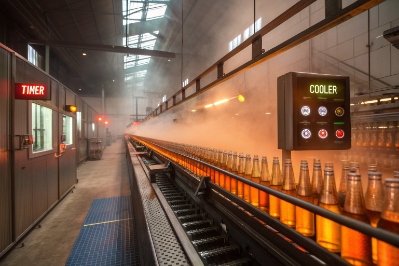
Hot-fill has built-in time steps. The product is heated, the bottle may be pre-warmed, filling happens at a defined temperature, and then there is often a hold period after capping. That hold time helps sterilize the headspace and closure area. After that, cooling must be controlled. Cooling too fast can spike thermal stress and cause cracks. Cooling too slow can hurt throughput and can also harm product quality in some drinks. So the cooling profile becomes a core part of the line design.
Cold-fill can be much faster because it does not require the same cooling tunnel behavior. But it trades time for control. If the process aims for aseptic or near-aseptic filling 4, the environment, filtration, and container sanitation become critical. That control can be costly. It can also be sensitive to downtime. A short stop can change hygiene risk and CO₂ or oxygen targets.
Cooling profile differences also change label and decoration choices. Hot-fill often needs the bottle to pass through hot and wet zones. That can stress inks, sleeves, and adhesives. Cold-fill may avoid those extremes, but it can face condensation and wet-label risks if filling is chilled.
| Line factor | Hot-fill reality | Cold-fill reality | What to document early |
|---|---|---|---|
| Typical pacing | Limited by hold and cooling | Limited by hygiene and capping | True line OEE targets |
| Temperature control | Tight product temp window | Stable chilled/ambient control | Product temp at filler and at capper |
| Cooling | Staged cooling to reduce stress | Often minimal cooling | Cooling curve vs breakage rate |
| Changeovers | Heat systems add inertia | Hygiene systems add validation | Changeover time and cleaning SOP |
From a practical view, hot-fill lines are “thermal systems.” Cold-fill lines are “control systems.” The bottle spec must match that reality. If the plan is to push hot-fill speeds without upgrading cooling control, breakage shows up fast. If the plan is to push cold-fill speeds without tightening hygiene and capping control, leaks and shelf life failures show up later.
Which coatings survive hot-fill without haze?
A bottle can be strong and still look cheap if it turns cloudy. Haze is a quiet brand killer because it shows up after repeated use.
Coatings and decorations must survive heat, detergent, and repeated wet cycles. Hot-fill-friendly options include high-temperature ceramic inks and properly cured UV systems, while some soft coatings and weak adhesives can haze or peel under heat and wash cycles.
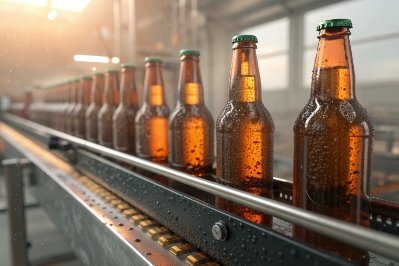
“Haze” usually comes from three sources: surface micro-etching, coating degradation, or residue buildup. Hot-fill raises the odds of all three because heat accelerates chemical reactions and softens some polymers. A coating that looks fine at room temperature can turn slightly milky after hot water exposure or after repeated dishwashing. A label adhesive can migrate and trap detergent film, which reads as haze.
For hot-fill bottles, decoration choices should be treated like functional parts, not just branding. Ceramic inks, applied and fired correctly, tend to hold up well because the decoration becomes part of the glass surface. Some UV coatings can also perform well when curing is correct and the chemistry is chosen for heat and wet resistance. But not every UV coating is equal. Some systems are made for cosmetics at room temperature and can soften under heat.
A sleeve can protect against impact and also protect decoration, but sleeves add their own heat limits. If a sleeve shrinks or warps in the hot zone, it can create wrinkles and trapped moisture, which can lead to a dull look.
| Decoration option | Hot-fill tolerance | Common haze risk | Best use case |
|---|---|---|---|
| Ceramic screen printing | High when properly fired | Low haze risk, high durability | Premium long-life bottles |
| UV coating (high-spec) | Medium to high with correct cure | Clouding if under-cured | Branding + mild thermal cycles |
| Organic inks without firing | Low to medium | Softening, staining, wash wear | Cold-fill and short-life use |
| Paper label + standard adhesive | Low for hot zones | Adhesive residue, detergent film | Cold-fill, ambient use |
| Shrink sleeve | Medium if spec matches heat | Wrinkle, trapped moisture | Impact protection + design freedom |
A simple rule helps: if the bottle must survive hot-fill and repeated washing, choose systems that are proven in heat and caustic exposure, and demand cure and adhesion data. If the bottle is cold-fill and single-use, the decoration can be lighter and cheaper, but it still needs wet handling tolerance.
What QA validates seal integrity and shelf life?
A leak is obvious. A slow leak is worse because it reaches the customer. Shelf life failures often hide until a retailer returns a pallet.
Seal integrity and shelf life need both mechanical QA and product QA: torque and thread checks, vacuum/pressure hold tests, leak detection, and accelerated aging that tracks oxygen, CO₂, flavor, and microbial stability.

Seal integrity is a system result. It is the bottle finish, the cap, the liner, the capping head, and the process temperature. So QA must check the full stack, not just parts. For hot-fill, QA should include checks after cooling because vacuum and contraction can change the seal load. A cap that feels tight when warm can relax after the liner takes a compression set. For carbonated cold-fill, counter-pressure filling 5 and CO₂ retention matter more.
Mechanical QA starts with basics: finish dimensions, roundness, and surface defects at the sealing land. Then it moves to torque application and torque retention 6. A tight torque window is not the goal by itself. The goal is repeatable liner compression and repeatable leak performance. For hot-fill, vacuum hold and hot-to-cold cycling should be part of routine checks. For cold-fill, QA should pay close attention to capping consistency at high speed and to oxygen pickup 7 because that directly impacts shelf life and taste.
Shelf life QA should connect packaging performance to product stability. That means measuring oxygen pickup, CO₂ loss (when relevant), sensory drift, and microbial risk. Accelerated aging is useful, but it must match real failure modes. Heat aging can exaggerate some issues and miss others, so it should be paired with real-time samples.
| QA category | Hot-fill focus | Cold-fill focus | Typical acceptance signal |
|---|---|---|---|
| Dimensional QC | Neck finish and glass stress risk points | Neck finish for high-speed capping | Cp/Cpk on key finish dimensions |
| Torque & retention | Torque after cooling and after aging | Torque at speed and after handling | Torque window + retention curve |
| Leak testing | Vacuum hold, inverted leak, cycling | Pressure hold for CO₂, inverted leak | Pass rate at defined vacuum/pressure |
| Aging | Thermal cycling + storage | CO₂/oxygen + storage | Stable taste and spec compliance |
| Shelf life | Micro stability for ambient | Flavor and gas stability | Defined end-of-life thresholds |
In practice, a strong QA plan uses a small set of repeatable tests done often, plus a deeper validation plan done at launch and after changes. When the closure supplier changes, or when the line speed changes, the validation must rerun. That discipline is what keeps “hot-fill vs cold-fill” from turning into a costly surprise.
Conclusion
Hot-fill designs manage heat and cooling vacuum. Cold-fill designs manage speed, sealing consistency, and gas control. The right choice comes from load case, coating fit, and QA proof.
Footnotes
-
Explains thermal shock and why rapid temperature changes crack brittle materials. ↩︎ ↩
-
Defines ASTM C149 test method for assessing glass container thermal-shock resistance in packaging QA. ↩︎ ↩
-
Clarifies how vacuum (negative pressure) forms and loads containers during cooling. ↩︎ ↩
-
Overview of aseptic processing principles and why sterile environments matter for cold-fill shelf stability. ↩︎ ↩
-
Explains isobaric processes used in counter-pressure filling for carbonated beverages. ↩︎ ↩
-
Basics of torque and why controlled tightening affects seal integrity and leak performance. ↩︎ ↩
-
Explains dissolved oxygen and its impact on flavor stability in packaged beverages. ↩︎ ↩






