
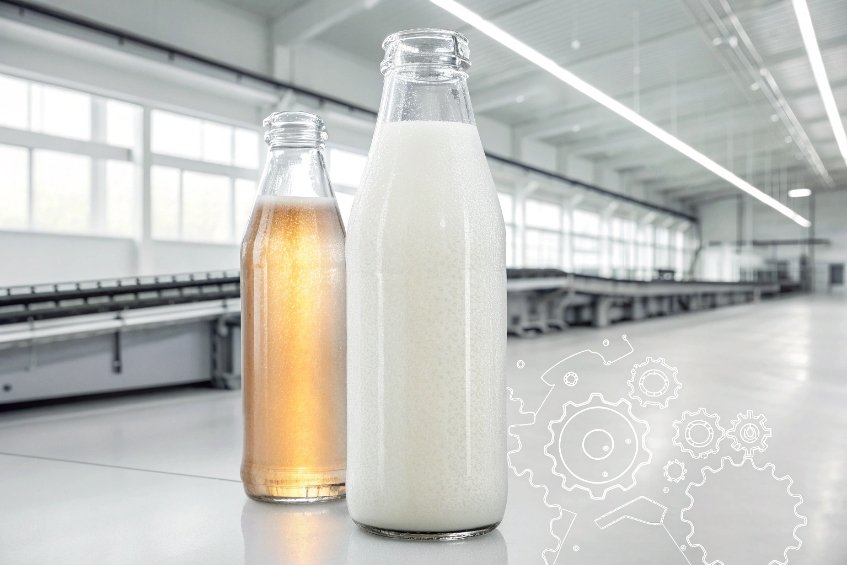
Many buyers see “hot-end” and “cold-end” in specs but do not know what they really change on the bottle. This gap often leads to broken ware, label issues, and line problems.
Hot-end coating is an inorganic oxide layer formed on very hot glass to protect its strength and give a base for labels and cold-end coating, while cold-end coating is an organic film that mainly adds slip and scuff resistance during conveying and packing.
In real projects, the question is not “which one is better”, but “how do they work together”. When the two layers are balanced, your line runs smoother, breakage drops, and labels behave the way you expect. When they are out of balance, everything from COF values to gloss and decoration starts to fight each other.
What is the real difference between hot-end and cold-end coating?
Many people think hot-end and cold-end are just “two types of spray”. That sounds simple, but it hides the real physics and chemistry that decide bottle strength and handling.
Hot-end coating is a thin, inorganic oxide layer bonded to the hot glass, while cold-end coating is a thicker organic/polymer film applied on warm, dry ware at the lehr exit to give lubricity and scuff resistance. For a practical overview of how these layers behave on container glass, see Glass Surface Treatments: Commercial Processes Used in Container Glass 1.
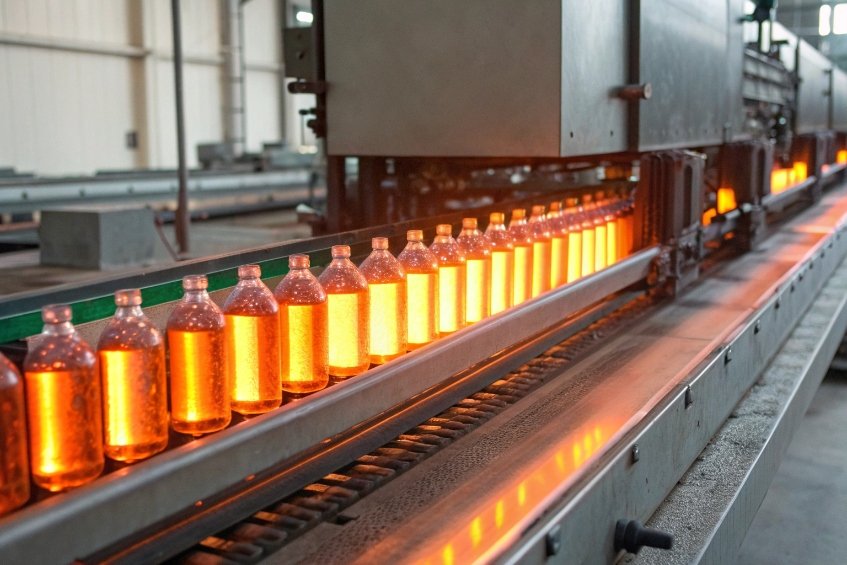
How hot-end and cold-end happen on the line
Hot-end and cold-end differ in timing, temperature and material type.
Process and material comparison
| Item | Hot-end coating | Cold-end coating |
|---|---|---|
| Location on line | Near IS machine, before annealing lehr | At lehr exit on warm, dry bottles |
| Typical glass temp | ~450–600 °C | ~80–150 °C |
| Chemistry | Inorganic oxides (SnO₂, FTO, TiO₂) | Organic/polymer (PE wax, stearate, siloxane) |
| Layer thickness | Nanometers | Much thicker film (µg–mg per bottle) |
| Bond to glass | Chemical bonding to surface | Mechanical / physical adhesion |
| Main function | Protect intrinsic strength, anchor layers | Slip, scratch and scuff resistance |
| Heat / caustic resistance | Very high | Limited, may wash off or degrade |
The hot-end layer forms when a tin or titanium compound in vapor form meets very hot glass. It decomposes and oxidizes on the surface. The result is a transparent oxide film that is almost part of the glass network—often described in industry as a hot end container glass coating 2. This layer survives annealing, decoration firing, and even strong caustic washing.
Cold-end coating happens later. Bottles leave the lehr at a much lower temperature. A fine spray of water-based polymer emulsion hits the surface. Water flashes off. A thin organic film remains. This film is soft compared with the oxide. It changes how bottles slide against each other and against conveyor parts. It protects against new scars instead of repairing old ones.
Hot-end is about preserving the strength that the forming process already created. Cold-end is about surviving the logistics that follow.
How does hot-end Sn/TEO improve durability and labelability?
Some buyers only look at cold-end COF numbers and ignore the hot-end spec. This often leads to hidden strength loss and label problems later.
A well-controlled SnO₂/TEO hot-end layer raises scratch tolerance, keeps impact strength closer to the original glass value, and gives a better anchoring surface for both cold-end polymers and later inks, varnishes, and labels.
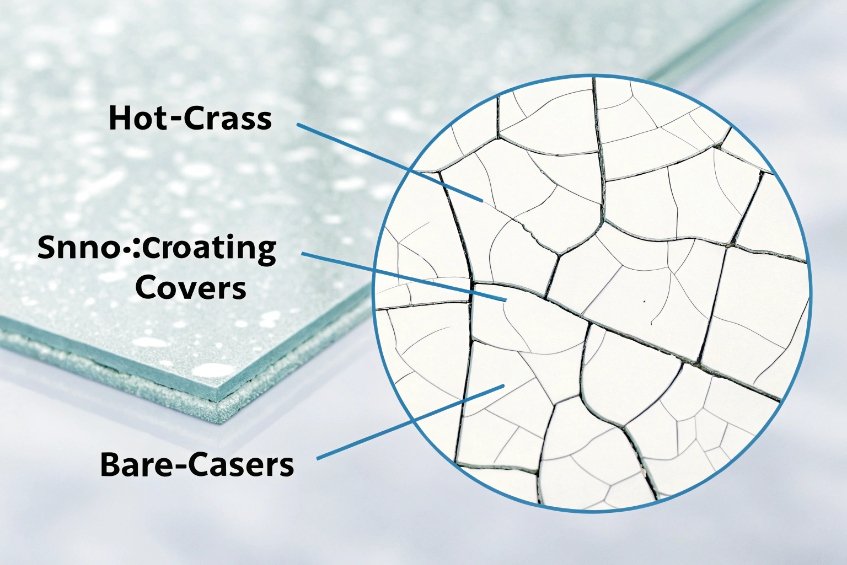
What the hot-end layer really does on the glass
Hot-end coating works at the flaw level on the surface and at the interface level for later layers.
Effect on strength and durability
| Property | Uncoated glass | With good Sn/TEO hot-end layer |
|---|---|---|
| Surface flaw growth | Faster under contact / impact | Slower, flaws better shielded |
| Scratch tolerance | Low | Higher, more abuse before damage |
| Impact strength retention | Drops during handling | Stays closer to “as-formed” value |
| Resistance to caustic wash | Normal | Improved, base layer remains |
| Stability during decoration | Risk of further damage | Base layer survives firing cycles |
On a fresh bottle, microscopic surface flaws drive breakage. When cold bottles bang together or slide under load, these flaws can open. A dense oxide layer like SnO₂ or TiO₂ wraps the surface and helps to blunt and bridge many of these small defects. So, scratch depth from the same mechanical contact is lower. This means fewer critical flaws and higher retained strength.
On labelability and decoration, hot-end coating acts as a “primer” that stays put under heat. Many modern inks, varnishes, ceramic coatings, and metallic effects need a stable, slightly modified surface chemistry to grip. The Sn/TEO layer offers more consistent bonding sites than bare soda-lime glass. It also survives:
- Annealing,
- Screen-printing and firing,
- Hot foil or luster decoration,
- Strong returnable-bottle washers.
Because this layer is only a few tens of nanometers thick, it does not change the bottle’s color or clarity. It simply moves the real surface that inks and labels “see” from glass to tin oxide. This is why hot-end quality is usually checked by XRF, ellipsometry, or special stain tests rather than visual inspection only.
Do cold-end polymer coatings mainly add slip and scratch resistance?
It is tempting to see cold-end coating as just a “lubricant”. In practice, its role is broader and more sensitive to your downstream process.
Cold-end polymer coatings mainly reduce surface friction to avoid scuffs and pressure checks during conveying and packing, but they also influence scratch visibility, gloss, wet handling, and even label adhesion and overprint behavior.
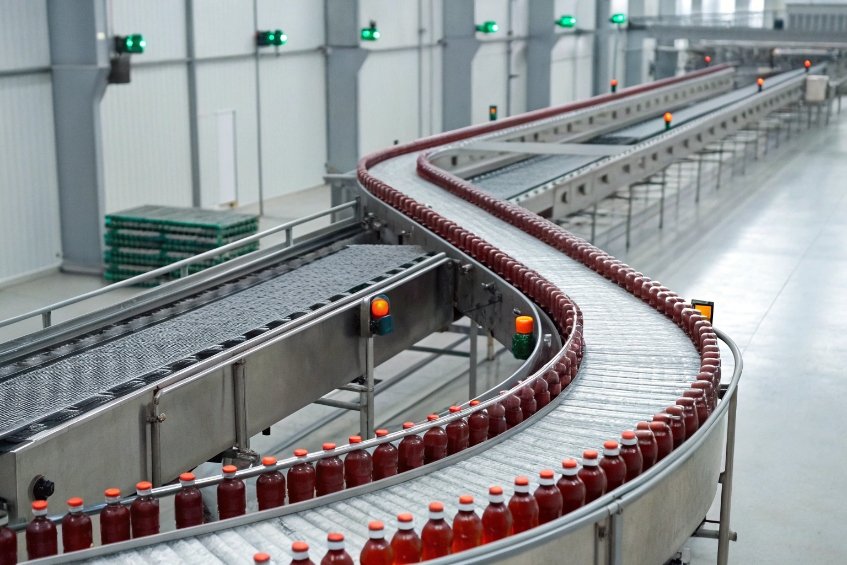
What cold-end really changes on the line and in the box
Cold-end is the layer that your line operators feel when they touch the bottle. It sits on top of the hot-end oxide and interacts with everything: rails, dividers, labels, and even consumers’ hands.
Functions of cold-end coating
| Function | How cold-end polymers help |
|---|---|
| Slip / friction | Lower dry COF for smooth conveying |
| Scuff resistance | Reduce glass-to-glass scratching |
| Scratch visibility | Mask minor scuffs, control gloss |
| Wet line performance | Maintain some slip when moist or cold |
| Label adhesion | Provide controlled surface for label glues |
| Stack / pack behavior | Reduce pressure marks inside cases |
Typical chemistries include polyethylene (PE) wax emulsions, fatty acid (stearate) films, and organosiloxane systems. For a concrete example of a commercial cold-end product and its operating window, see Tegoglas® 702 cold-end container glass coating 3. For advanced “one-coat” approaches, the EU project overview of a polysiloxane chemistry coating system for glass containers 4 is a useful reference.
However, more slip is not always better. Over-slick bottles can cause:
- Poor label wrap due to low friction under the glue,
- Bottles sliding out of guides or accumulation tables,
- Unstable stacks on pallets.
Under-slick bottles, on the other hand, scuff easily and jam in high-speed conveyors. So the job is to tune the cold-end level and chemistry so it works with your actual line, your label system, and your transport chain. The best combination often comes from trials where COF, scuff, and label tests run together, not in isolation.
Which test metrics distinguish hot-end vs cold-end performance?
People often ask for “coating specs” but only look at one number, such as COF. This hides many important differences between hot-end and cold-end.
Hot-end performance is best distinguished by oxide weight, coverage, and strength retention, while cold-end performance is mainly seen in COF, scuff resistance, gloss, and film durability under washing or abrasion tests.
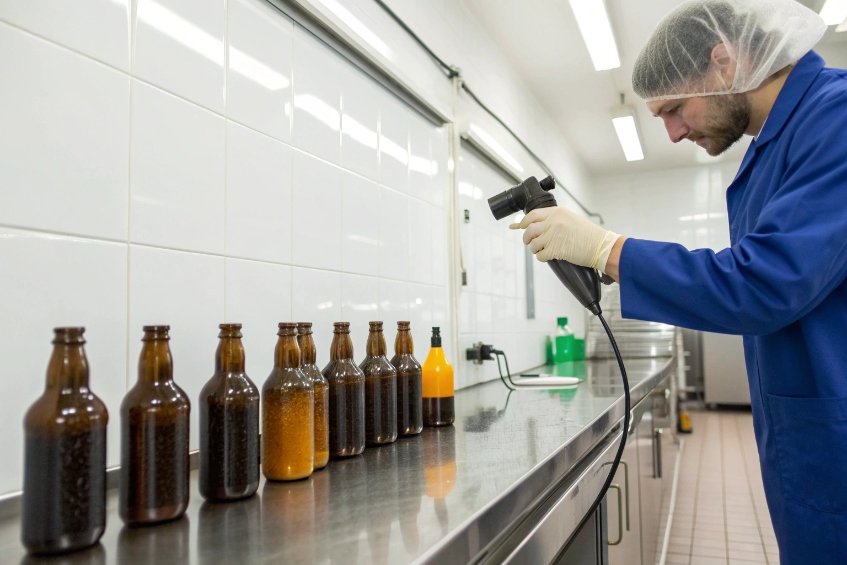
Key metrics and what they really mean
Each layer has its own preferred control metrics. Together they give a full picture.
Metrics overview
| Layer | Main metrics | What they tell you |
|---|---|---|
| Hot-end | Oxide weight / thickness | Deposition level and uniformity |
| Coverage / stain tests | Patchiness and missed areas | |
| Strength tests (impact, burst) | Retained mechanical performance | |
| Cold-end | COF (static / dynamic) | Slip during conveying and packing |
| Scuff / abrasion rating | Resistance to visible scratches | |
| Gloss / haze | Optical uniformity and film continuity | |
| Wash / solvent durability | Film life in washers and handling |
Hot-end tests
Hot-end coatings are often measured in:
- Areal density (e.g., mg/m² SnO₂ or TiO₂) using X-ray fluorescence (XRF) spectrometry 5,
- Thickness (nanometers) using optical tools,
- Special chemical stains that react to tin or titanium and show coverage.
These numbers help to see if the oxide layer is thick and uniform enough. Mechanical tests like pendulum impact, internal pressure burst, or edge compression then show whether the bottle keeps its strength after simulated handling. If strength drops too much, hot-end is often one of the first suspects.
Cold-end tests
Cold-end is controlled more by functional surface tests:
- COF (Coefficient of Friction): often aligned to methods like ASTM D1894 coefficient of friction 6, measured dry and sometimes wet, between two bottles or between bottle and a standard surface.
- Scuff tests: bottles run in controlled abrasion equipment and later rated for scuff level.
- Gloss: checked at standard angles to see if film is even or patchy.
- Durability: bottles washed or wiped with solvents to see how quickly the film disappears.
In practice, COF and scuff are the quickest indicators. When COF drifts up, you see jams and scuffs. When COF drifts too low, you see label slip and unstable packages. Gloss can reveal uneven spray patterns, streaks, or partial coverage that operators may miss by eye.
Combining these metrics with visual inspection gives the best early warning before the market feels the problem.
How should process sequencing change for decorated or printed bottles?
When bottles carry heavy decoration or complex labelling, the order of hot-end, cold-end, printing, and any over-varnish becomes critical.
For decorated or printed bottles, hot-end coating must stay as the first layer on hot glass, but cold-end level, chemistry, and even the decision to apply it before or after decoration firing needs adjustment to match ink systems, label glues, and firing conditions.
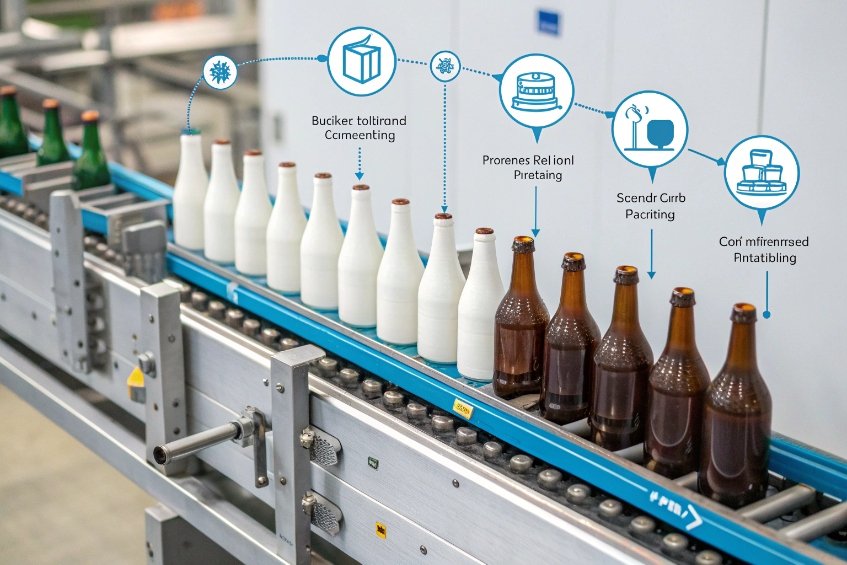
Matching coatings with decoration and labelling
Decoration adds more “layers” on the bottle. Every layer interacts with the coating stack.
Typical sequencing options
| Step | Standard bottles | Heavily decorated / printed bottles |
|---|---|---|
| Forming + hot-end | Yes | Yes (same position, carefully controlled) |
| Annealing lehr | Yes | Yes |
| Cold-end application | At lehr exit | Sometimes reduced, shifted, or customized |
| Screen / digital printing | Usually after cold-end | May require washing or low cold-end first |
| Decoration firing | Not always present | Often present, can remove cold-end |
| Second cold-end or treatment | Rare | Sometimes applied after decoration |
| Labelling / packing | After cold-end | After decoration and final surface prep |
Some practical rules that help in projects:
-
Always keep hot-end as the first surface modifier.
It should see the glass at high temperature and stay through all later steps. It is your strength anchor and your main adhesion base. -
Check ink and varnish compatibility with cold-end.
Some printing systems do not like waxy or silicone-rich surfaces. In these cases you may:- Use a lighter cold-end dose,
- Choose a more ink-friendly polymer,
- Or wash / flame-treat the print area before decoration.
-
Account for decoration firing.
High firing temperatures can remove or change cold-end films. After firing, the bottle might behave almost like “hot-end only”. If your logistics chain still needs slip, a second low-level cold-end or another surface treatment after decoration may be needed. -
Adapt for high-coverage labels and sleeves.
For full-body sleeves or large paper labels, COF must work with the label feed and glue. Very low COF can let labels travel under tension and wrinkle. A moderate COF with good wet behavior is often better than the absolute lowest possible value. -
Test the whole sequence, not just one step.
For new decorated bottles, line trials should include:- Coating variations (hot-end level, cold-end chemistry),
- Decoration process,
- Final labelling and packing.
This reveals real-world conflicts, such as perfect COF numbers that still give poor label pick-up or scuff in the carton.
When decoration teams and coating teams talk early, many problems disappear. The bottle then behaves like one integrated system instead of a stack of unrelated layers.
Conclusion
Hot-end and cold-end coatings are not rivals. They are a layered system. When they are tuned together with tests and process order, your bottles stay stronger, run smoother, and carry decoration and labels with far fewer surprises.
Footnotes
-
Container-glass lecture notes explaining hot-end vs cold-end functions and why the stack improves retained strength. ↩ ↩
-
Practical description of hot-end coating purpose (abrasion reduction, strength retention) on container lines. ↩ ↩
-
Example cold-end product page showing temperature window and label-glue compatibility considerations. ↩ ↩
-
EU project summary describing waterborne polysiloxane coatings applied at the cold end for glass containers. ↩ ↩
-
XRF overview explaining how coating thickness/areal density can be measured non-destructively. ↩ ↩
-
Official ASTM reference for static/kinetic COF test method often used to standardize friction discussions. ↩ ↩






