
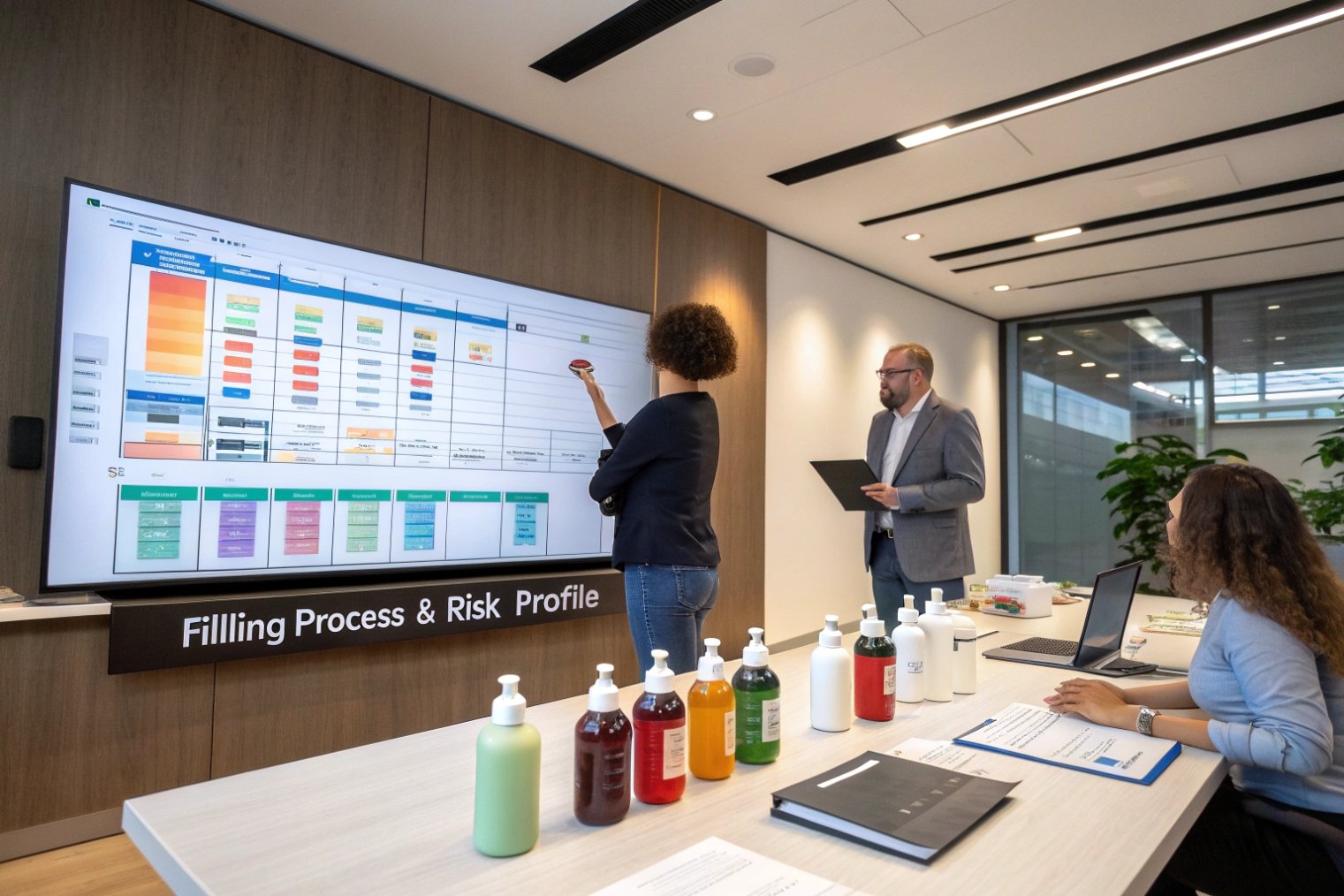
People often ask this question only when a project is already running late: “Should this bottle or cookware be borosilicate or just ordinary glass?” At that point, the choice means real money and real risk.
Borosilicate glass adds boron trioxide to a higher-silica network, which gives lower thermal expansion, higher chemical durability, different optics, and a higher softening point than ordinary soda-lime glass, so it behaves very differently in production and in use.
In my own projects, the key is not “Which glass is better?” but “Where does borosilicate’s extra heat, chemical, and stability performance justify its higher forming temperature, slower lines, and higher cost?”. To answer that, I usually break it down into melt behavior, optics, caustic durability, and the food-contact standards behind both materials.
How do softening point and viscosity differences change production speed?
When people see “borosilicate” on a spec sheet, they sometimes imagine “just another glass recipe”. On the furnace side, it is not that simple. The higher softening point changes energy use, line speed, and even which factory can run the job.
Borosilicate softens and works at much higher temperatures than soda-lime, so the melt is more viscous at a given temperature, the forming window is narrower, and real-world production usually runs slower and costs more per piece.
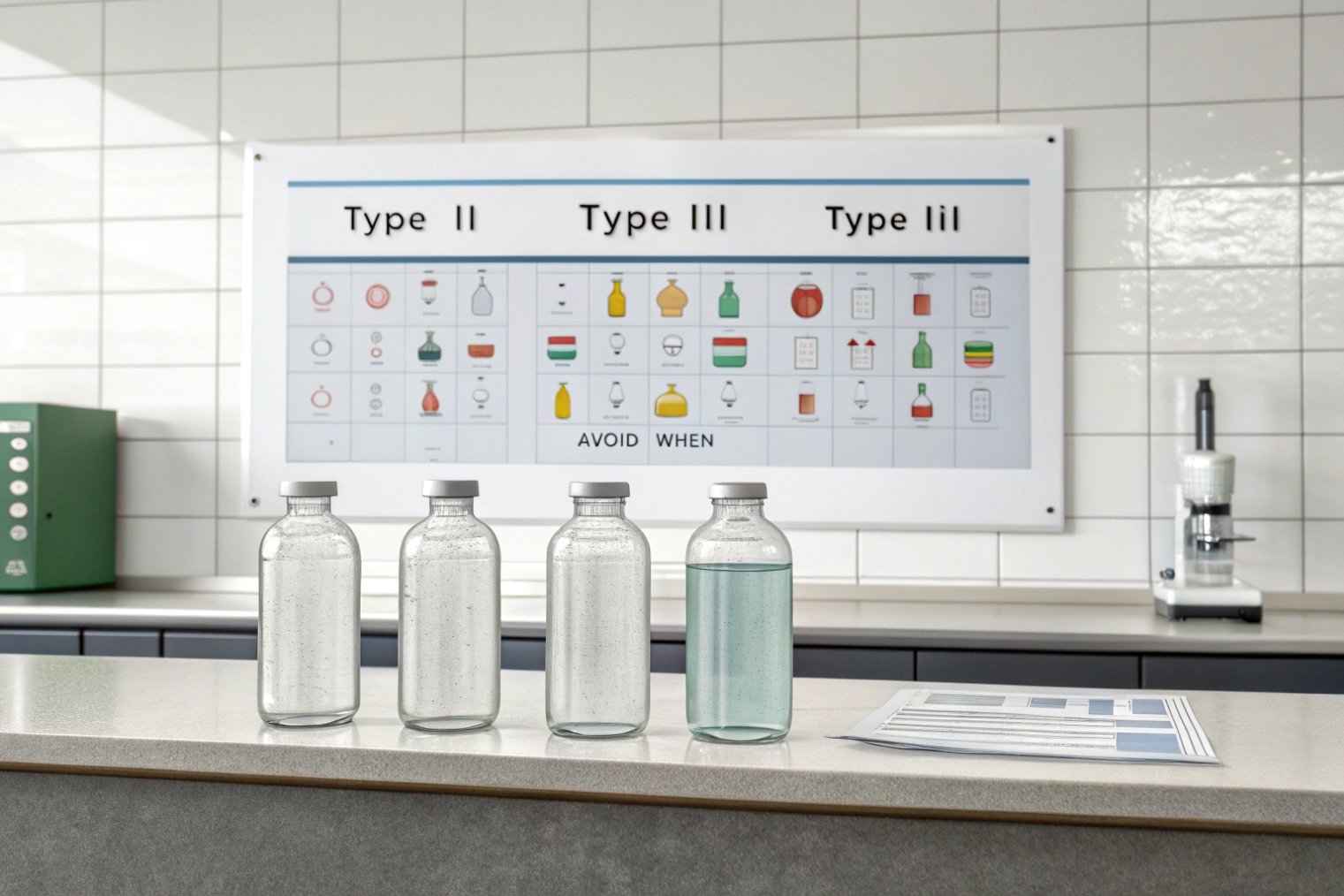
Typical softening and working temperatures
Borosilicate and soda-lime are both silica-based, but the boron and alkali balance move their viscosity curves apart.
For common 3.3 borosilicate (lab / cookware grade) and standard container soda-lime glass 1, you see numbers like these: :contentReference[oaicite:0]{index=0}
| Property | Borosilicate 3.3 (e.g. PYREX® 7740 borosilicate glass 2) | Typical soda-lime container glass |
|---|---|---|
| Linear CTE (20–300 °C) | ~3.3×10⁻⁶ K⁻¹ | ~8–9×10⁻⁶ K⁻¹ |
| Softening point (10⁷·⁶ Poise) | ~820–825 °C | ~720–730 °C |
| Working point (10⁴ Poise) | ~1250–1260 °C | ~900–1000 °C (typical range) |
| Density | ~2.23 g/cm³ | ~2.5 g/cm³ |
Because the working point is about 250–300 °C higher, a borosilicate furnace needs more energy, different refractories, and more robust control. At a “normal” soda-lime forming temperature, borosilicate would still be too stiff to press or blow fast enough.
So even if the forming technology is similar (IS machines, press-and-blow, etc.), borosilicate lines often run:
- At higher melt temperatures.
- With tighter process windows on viscosity.
- At slower cycle times for the same part complexity.
For standard beverage or condiment bottles, that extra burden usually does not pay back. For labware, sight glasses, or high-heat cookware, the performance justifies the line conditions.
Practical impact on speed, molds, and consistency
From a production point of view, the higher softening point and viscosity show up in several ways:
| Aspect | Borosilicate 3.3 | Soda-lime container glass |
|---|---|---|
| Start-up and changeover | Slower heat-up and cool-down | Faster, more familiar |
| Cycle time per cavity | Often longer for complex shapes | Optimized for very high speeds |
| Mold wear | More thermal load, sometimes faster wear | Lower temperature stress |
| Dimensional variability | Good stability once tuned, but narrow window | Mature process know-how everywhere |
| Global capacity | Fewer dedicated furnaces | Very large installed capacity |
In real life, this means:
- Fewer factories can actually run true borosilicate for containers at scale.
- Minimum order quantities and lead times are often higher.
- Light-weighting is possible thanks to higher strength and lower density, but gains are modest compared with the production penalty.
So when a brand asks for “borosilicate bottles for everything”, my first reaction is to map the filling and heat profile. If the line never sees hot-fill, retort, or high-heat storage, soda-lime normally makes more economic sense.
Does borosilicate glass offer clearer optics or a different tint?
Designers often assume “borosilicate = clearer and more premium”. Sometimes this is true, but the story is more about composition, iron content, and refractive index than the word “boro” on its own.
Borosilicate usually has a slightly lower refractive index and dispersion than soda-lime and is often produced in very clear, low-iron versions, so it tends to look optically clean and neutral, but it is not always “brighter” or more brilliant than high-grade soda-lime.
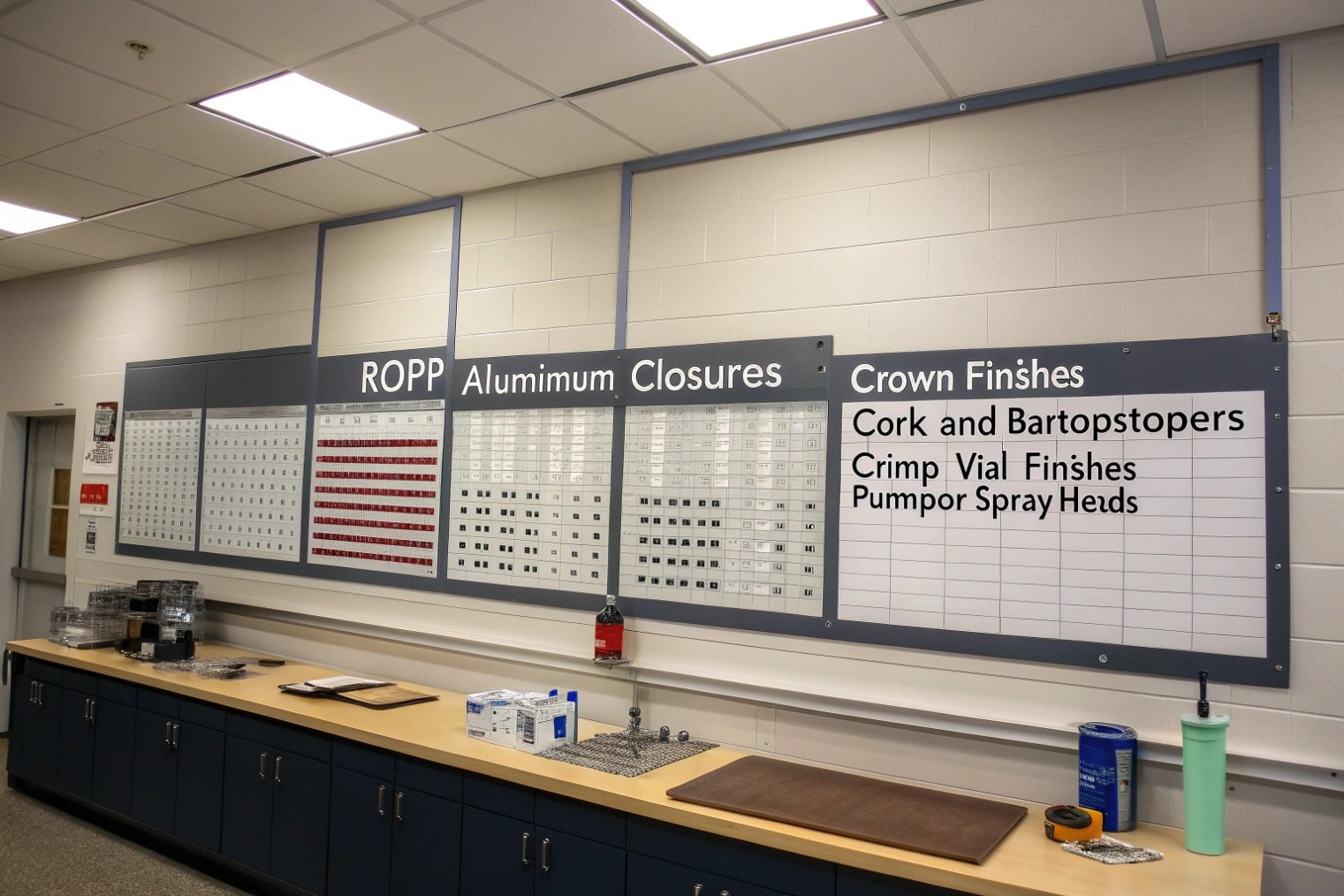
Optical basics: refractive index and brilliance
If we compare typical refractive index 3 values: :contentReference[oaicite:1]{index=1}
- Borosilicate 3.3 refractive index (nᴅ): ~1.47
- Soda-lime container glass refractive index (nᴅ): ~1.51–1.52
Lower refractive index means:
- Slightly lower “sparkle” and edge brilliance than soda-lime.
- Slightly lower chromatic dispersion.
For packaging, this is a small visual difference, but if someone expects “crystal-like” brilliance from borosilicate, they may be surprised. Lead glass and some high-index soda-lime “crystal” formulas are much more brilliant than standard borosilicate. :contentReference[oaicite:2]{index=2}
Tint, UV behavior, and real-world appearance
The main visible difference in day-to-day packaging comes from tint and impurities:
| Feature | Borosilicate 3.3 | Standard soda-lime container glass |
|---|---|---|
| Typical base tint | Very clear, faint gray/blue at most | Clear, or green / amber from iron oxides |
| Iron content | Often very low for lab / optics | Higher; green/brown from Fe₂O₃ |
| UV transmission | Often higher | Often lower (iron absorbs UV) |
| Custom colors | Possible but less common commercially | Very common (green, amber, blue, etc.) |
Many borosilicate melts are designed for optical clarity or lab use, so raw materials are cleaner and iron is low. The result is a very neutral, “pure” look that works well for high-end cosmetics, concentrates, or minimalist beverage designs.
Soda-lime, on the other hand, is incredibly flexible:
- Standard flint: a slight green tint from iron, common in low-cost bottles. :contentReference[oaicite:3]{index=3}
- Extra-flint / low-iron soda-lime: can be extremely clear, often matching or beating borosilicate in visual clarity.
- Amber and green: used on purpose to block UV and give a strong brand color.
So if a brief says “maximum clarity and lab-like look”, borosilicate is a safe direction. If the brief says “brilliant, high-sparkle, or strong brand color”, a tuned soda-lime formula may be more effective.
How does durability hold up in caustic wash cycles?
The question about caustic washing usually comes from returnable bottles, commercial dishwashers, or very aggressive CIP regimes. Here, the difference between soda-lime and borosilicate is real, but it has limits.
Borosilicate resists chemical attack much better than soda-lime in neutral, acidic, and moderately alkaline media, so it keeps its surface and gloss longer in many wash cycles, but hot concentrated caustic will still attack both glass types over time.
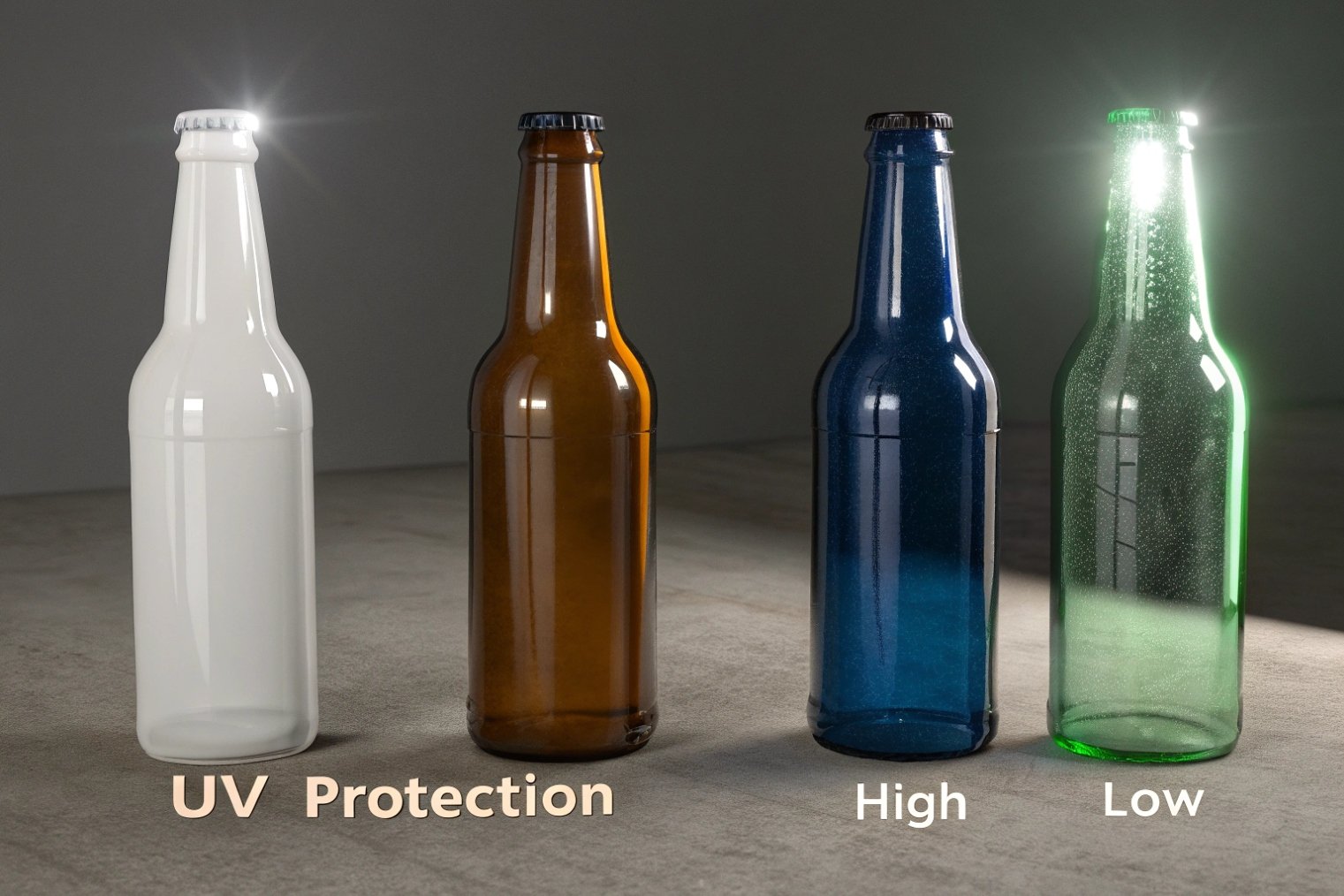
What caustic does to glass
Both soda-lime and borosilicate are strong against most acids and many solvents. The real enemy for them is strong alkali at elevated temperature, like hot concentrated hydroxide solutions 4 used in bottle washers.
- Soda-lime glass is known to be attacked by concentrated hydroxide solutions. :contentReference[oaicite:4]{index=4}
- Borosilicate, thanks to its boron and higher silica content, has a much higher general chemical durability; in mixed pH tests around 6 and 10 at 134 °C, its degradation can be an order of magnitude lower than soda-lime. :contentReference[oaicite:5]{index=5}
- However, hot concentrated NaOH will still slowly etch borosilicate, creating a dull, wavy surface if exposure is long enough. :contentReference[oaicite:6]{index=6}
In practice, caustic wash conditions for returnable bottles or industrial dishwashers are controlled (concentration, time, and temperature). Under those conditions, borosilicate usually holds its gloss and transparency better over many cycles, while soda-lime can show faster bloom, haze, and micro-roughness.
How this plays out in packaging and equipment
Here is a simple way to think about caustic durability:
| Scenario | Borosilicate performance | Soda-lime performance |
|---|---|---|
| Standard commercial dishwashers | Very good; minimal haze over many cycles | Acceptable, but haze/scuffing grows faster |
| Brewery / RGB bottle washers | Better surface retention, but rare in use | Industry standard, but needs additives |
| CIP on process sight glasses | Preferred where chemistry is aggressive | Used when cost is critical |
| Long exposure to hot concentrated NaOH | Both are attacked over time | Both need exposure limits |
For returnable beverage bottles, the industry still relies heavily on soda-lime because:
- The cost per unit is much lower.
- Lines and additives are optimized around this material. :contentReference[oaicite:7]{index=7}
Borosilicate makes more sense in:
- Lab and pharma environments with frequent autoclave or harsh cleaning.
- High-end foodservice pieces that go through tough dishwashing cycles but are not drop-tested the way RGB bottles are.
- Process sight glasses exposed to hot media, steam, and cleaning agents where surface integrity is critical.
One more nuance: tempered soda-lime can have better impact resistance than non-tempered borosilicate. So the best choice under harsh washing plus high mechanical abuse is not always borosilicate; it depends on which failure mode is dominant.
Which standards classify borosilicate and soda-lime glass for food contact?
Buyers often feel that “borosilicate must have a special food-grade certification”. In reality, both ordinary soda-lime and borosilicate are covered by the same food-contact frameworks; what changes is the way technical standards label them by type and hydrolytic resistance.
For food contact, regulators treat glass (both soda-lime and borosilicate) as inherently safe and mostly focus on heavy-metal migration and added coatings, while technical standards and pharmacopoeias classify soda-lime as Type III glass and borosilicate as Type I glass based on hydrolytic resistance.
Regulatory view: FDA, EFSA and general food-contact rules
Globally, the main regulators see glass as a “gold standard” for food contact because it is almost chemically inert.
United States – FDA
- Glass (both soda-lime and borosilicate) is treated as “Generally Recognized as Safe” (GRAS) under 21 CFR 182.1, based on its long history of safe use. :contentReference[oaicite:8]{index=8}
- The FDA’s main concern is not the base glass matrix but potential migration of additives and heavy metals from decorations, coatings, or closures (for example, lead or cadmium in pigments). Limits are set in 21 CFR 109.16.
- Food-contact substances like coatings, frits, or sealants are handled through the Food Contact Substance (FCS) notification system 5 and other 21 CFR 174–179 regulations. :contentReference[oaicite:9]{index=9}
European Union – EFSA / European Commission
- Glass falls under Framework Regulation (EC) No 1935/2004 6, which requires that any food-contact material must not endanger health, change food composition, or worsen taste/odor. :contentReference[oaicite:10]{index=10}
- There is no specific EU “positive list” regulation for glass (unlike plastics). The system relies on the general framework plus national rules and good manufacturing practice Regulation (EC) 2023/2006.
- Again, the main focus is on preventing harmful migration from additives, colors, or decorations, not from the glass network itself.
In short, for food packaging, both ordinary soda-lime container glass and borosilicate can be fully compliant. The difference is how technical standards and pharmacopoeias classify them by type.
Technical and pharma standards: Type I vs Type III
Many buyers first meet “Type I / Type III” language in pharma or high-end cosmetic packaging. That language comes from pharmacopeial and ASTM glass standards:
- Type I glass: “neutral” borosilicate glass with the highest hydrolytic resistance.
- Type II glass: surface-treated soda-lime glass with improved hydrolytic resistance.
- Type III glass: standard soda-lime glass with moderate hydrolytic resistance. :contentReference[oaicite:11]{index=11}
These types are defined in:
- USP <660> Containers—Glass 7 and related chapters, which historically equate Type I with borosilicate and Type III with soda-lime silica, and classify them by hydrolytic resistance tests. :contentReference[oaicite:12]{index=12}
- Parallel sections in the European Pharmacopoeia (EP 3.2.1 Glass containers for pharmaceutical use).
For food and beverage packaging, a useful mental model is:
| Use case | Typical glass type | Notes |
|---|---|---|
| Standard jars and bottles | Type III soda-lime | Basis for most FDA / EFSA assumptions |
| Premium, sensitive food products | Type III or Type I, case by case | Type I where chemistry or process is harsh |
| Injectables and injectible-adjacent food uses | Type I borosilicate | Driven by pharma-grade requirements |
So when a spec sheet says “Type I borosilicate” or “Type III soda-lime” on a food-contact bottle, it is borrowing language from pharma standards to express hydrolytic resistance and quality level, rather than pointing to a separate “food-safe” law.
Conclusion
Borosilicate and ordinary soda-lime glass share the same basic safety frameworks, but their melt behavior, optics, and chemical durability are different enough that the right choice depends on how hot, how harsh, and how premium the real application will be.
Footnotes
-
Quick overview of soda-lime glass composition and why it dominates bottles, jars, and windows. ↩ ↩
-
Corning’s 7740 datasheet lists CTE, density, viscosity points, and refractive index for this borosilicate. ↩ ↩
-
Definition of refractive index and how it relates to light bending and perceived “brilliance.” ↩ ↩
-
Compatibility note explaining how hot concentrated hydroxide can attack common lab glasses, including borosilicate. ↩ ↩
-
FDA overview of the Food Contact Substance notification/review process and what “effective” FCNs mean. ↩ ↩
-
Official EU text for Regulation (EC) No 1935/2004 governing materials intended to come into contact with food. ↩ ↩
-
USP briefing on glass container classification (Type I/II/III) and the hydrolytic resistance tests behind it. ↩ ↩






