
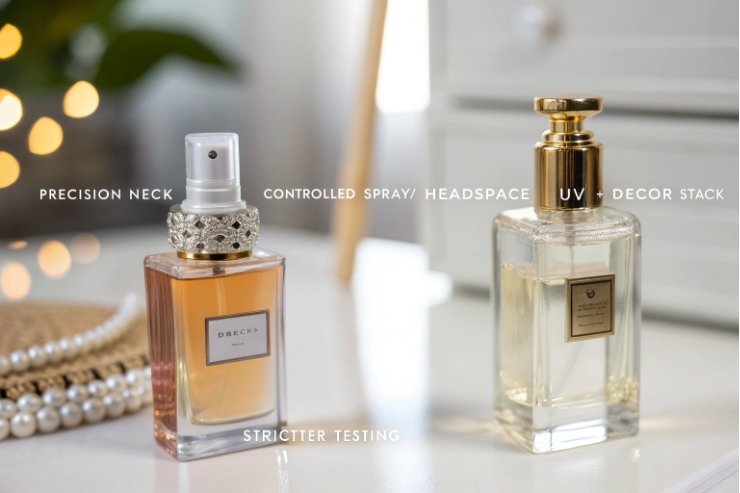
Most people think “a bottle is a bottle,” but in fragrance that idea is risky. Perfume packaging behaves more like a small dispensing device than a simple liquid container.
Perfume bottles differ from ordinary bottles in four key ways: precision necks for pumps, controlled spray and headspace, more demanding UV/décor systems, and stricter testing to protect a volatile, alcohol-rich formula.
When you design around those four areas, the bottle stops being “just glass.” It becomes part of the formula’s protection system and part of the luxury experience—while still running smoothly on real production lines.
Do tighter neck/finish tolerances support crimp and screw pumps?
Perfume bottles live a harder life than most packages: handbags, suitcases, hot shelves, and frequent handling. A loose neck or weak pump can leak, evaporate, or look crooked—fast.
Yes. Perfume bottles need much tighter neck and finish tolerances than ordinary bottles, so crimp and screw pumps seal cleanly, sit straight, and keep volatile fragrance from leaking or evaporating.
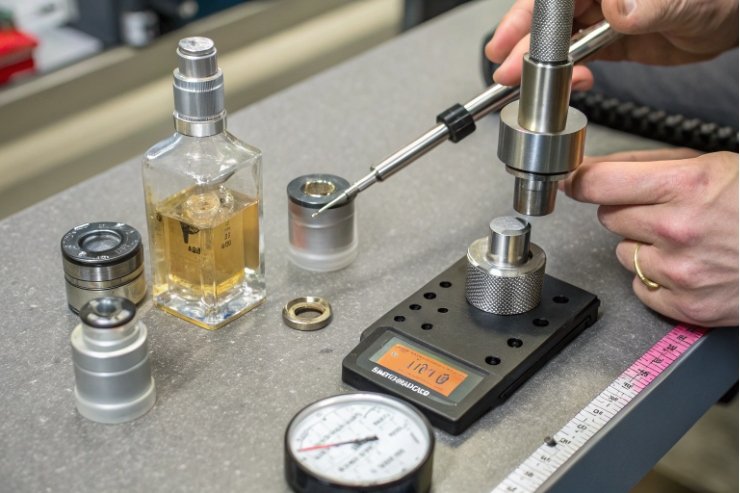
Why perfume necks are “precision parts”
In food and beverage, caps and liners can often flex to compensate for small glass variation. Perfume pumps are less forgiving.
Many fine-fragrance components are built around standardized neck finishes such as the 15 mm FEA finish 1.
- The crimp ferrule or screw collar grips a narrow finish zone.
- The gasket needs controlled compression—guided by sealing elastomer properties 2—to seal alcohol and oils.
- The visible collar must sit level for a premium look.
So the finish must hit:
- Tight OD/ID tolerances
- Correct finish height (for collar fit and dip-tube reach)
- Smooth sealing surfaces (to avoid micro-channels for vapor)
A small deviation that might not matter on a sauce bottle can cause tilt, leaks, or weak spray on a perfume bottle.
Crimp vs screw vs “ordinary” closures
| Feature | Crimp spray (typical EDP/EDT) | Screw spray / pump | Ordinary closure (food/household) |
|---|---|---|---|
| Neck style | Plain ring for crimp ferrule | Threaded finish | Thread, lug, snap |
| Tolerance requirement | Very tight | Tight | Moderate |
| Seal mechanism | Ferrule compresses gasket | Torque compresses gasket | Liner/wad/simple plug |
| Visual expectation | Collar concentric, no tilt | Straight actuator + clean thread | Less critical |
| Leak/vapor tolerance | Very low | Very low | Product-dependent |
Crimp is usually the most demanding: during the crimping process 3, too large and the ferrule can’t fold tightly; too small and glass cracking risk increases.
How do atomizer output and headspace control evaporation?
In fragrance, how the liquid leaves the bottle (mist quality) matters as much as how it smells. At the same time, you want that liquid to stay stable for years between sprays.
Atomizer output and headspace are tuned together: output defines the spray experience, while headspace helps control evaporation and pressure behavior in a volatile, alcohol-based system.
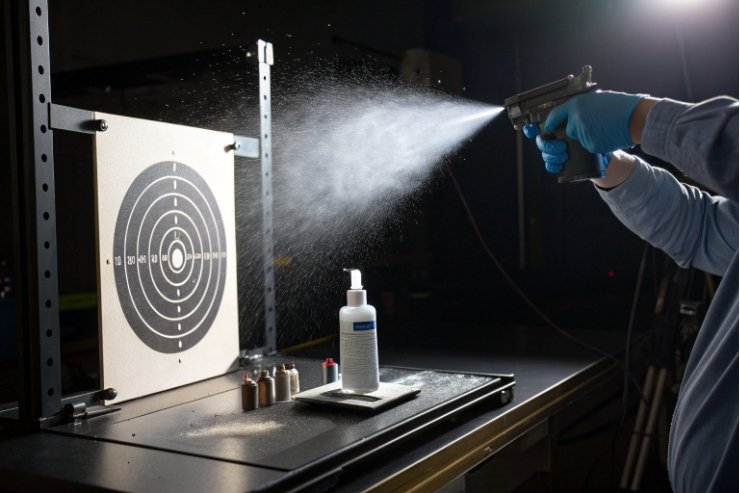
Output: dose and droplet control
Ordinary bottles are optimized for pouring or squeezing. Perfume is optimized for mist:
- Dose per actuation (mg/stroke)
- Droplet size and “softness”
- Spray cone shape and coverage
To support consistent output, the pack system needs:
- A clean dip-tube path and correct internal geometry
- Enough internal height for the pump body
- Ergonomic handling (one-hand spray stability)
Headspace: the invisible “safety zone”
Headspace is the air gap above the liquid—the empty volume left on top of the product 4. In perfume it matters because the formula is typically:
- Alcohol-rich (high volatility, often tied to ethanol’s volatility and physical properties 5)
- Sensitive to oxygen and temperature swings
Headspace must balance:
- Thermal expansion room (hot transport/storage)
- Vapor room without pushing liquid past the seal
- Mechanical room for pump function
| Design choice | Practical effect |
|---|---|
| Smaller headspace | Lower oxygen volume, but higher pressure/leak risk in heat |
| Larger headspace | Easier expansion behavior, but more vapor volume to seal long-term |
This is why perfume bottles behave like a tuned system, not just a container.
Are UV barriers and décor stacks more demanding?
Perfume isn’t only fighting leakage—it’s also fighting light, oxygen, and material interactions. In fragrance, decoration can become part of product protection.
Yes. Perfume bottles often use higher UV protection and more complex décor stacks than ordinary bottles, and those layers must be chosen so they don’t react with the fragrance or weaken performance.
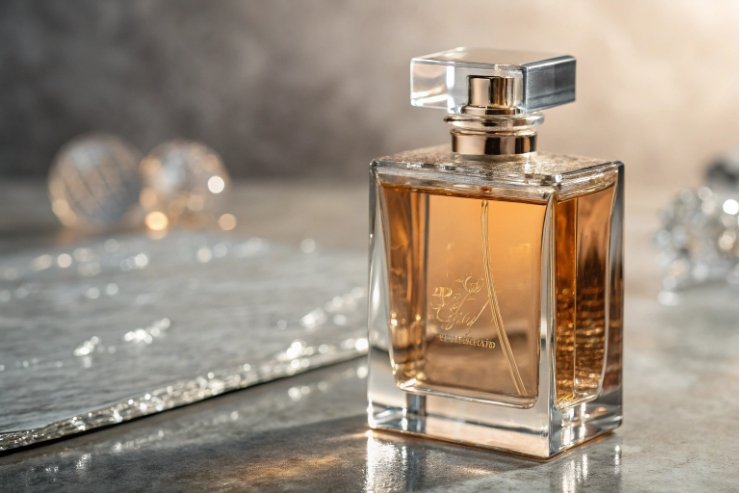
Light management for volatile formulas
Light (especially UV radiation exposure 6) can:
- Shift juice color
- Oxidize sensitive aroma molecules
- Create off-notes over time
Common approaches:
- Tinted glass (smoked, amber, colored)
- UV-blocking lacquers or coatings
- Partial/full metallization (often as an outer layer)
Compared with many “ordinary” bottles (label + maybe one print), perfume packs can include multiple layers—and each layer has to survive handling and remain compatible with alcohol.
| Layer (from glass outward) | Purpose |
|---|---|
| Glass (clear or tinted) | Structure + base color |
| Primer / lacquer | Adhesion + color/UV barrier |
| Screen print / decal | Logos and text |
| Hot-stamped foil 7 | Metallic accents |
| Protective topcoat | Rub/scratch resistance |
More layers usually means more cost and more recycling complexity—so many brands now try to do “fewer layers, smarter,” combining protection and aesthetics where possible.
Which tests verify long-term scent integrity and sealing?
A basic bottle might pass a quick leak check and ship. Perfume packaging must stay stable through years of storage, travel, and daily use.
Perfume bottles go through compatibility, leak/evaporation, aging, and performance tests that simulate years of use in a short time—because small losses or reactions can change the fragrance experience.
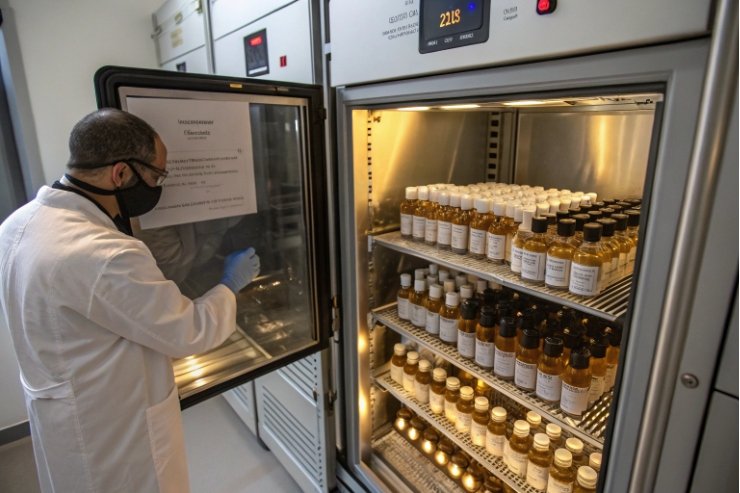
Core test categories
-
Compatibility / aging
- Elevated temperature storage
- Hot/cold cycles
- Checks for color shift, haze, odor change, coating interaction, gasket migration
-
Leak + evaporation
- Upright / inverted / sideways storage
- Temperature variation
- Weight-loss tracking to detect slow vapor escape
-
Spray performance
- Output per stroke (fresh vs aged)
- Spray cone/pattern consistency
- Actuation force and “feel” stability
-
Décor durability
- Rub/scratch resistance
- Light exposure for fade/yellowing
- Adhesion checks for print/foil/topcoat
A practical summary:
| Test type | What it protects |
|---|---|
| Compatibility / aging | Scent integrity + pack-material stability |
| Leak + evaporation | Seal integrity + long-term retention |
| Spray performance | User experience + dosing consistency |
| Décor durability | Shelf-life appearance + luxury perception |
This testing depth is one of the clearest differences between perfume bottles and ordinary bottles.
Conclusion
Perfume bottles are precision, multi-part dispensing systems designed to protect a volatile formula and deliver a controlled mist for years. Ordinary bottles are usually optimized to hold and pour with far less demand on finish precision, decoration chemistry, and long-term validation.
Footnotes
-
Background on FEA neck-finish standards widely used for fragrance pumps and crimp/screw systems. ↩ ↩
-
Seal material basics and compatibility guidance for gaskets and O-rings in alcohol-rich applications. ↩ ↩
-
Overview of perfume bottle crimping, common sealing issues, and why correct crimping prevents leaks and evaporation. ↩ ↩
-
Practical principles for sizing headspace to manage expansion, pressure, and product protection in closed bottles. ↩ ↩
-
Reference data on ethanol’s volatility and physical properties—useful for understanding evaporation and storage behavior. ↩ ↩
-
Industry insight on how UV radiation and oxygen can degrade fragrances and shorten shelf life. ↩ ↩
-
Explains hot foil stamping with heat/pressure and why it’s common for premium cosmetic packaging effects. ↩ ↩






