
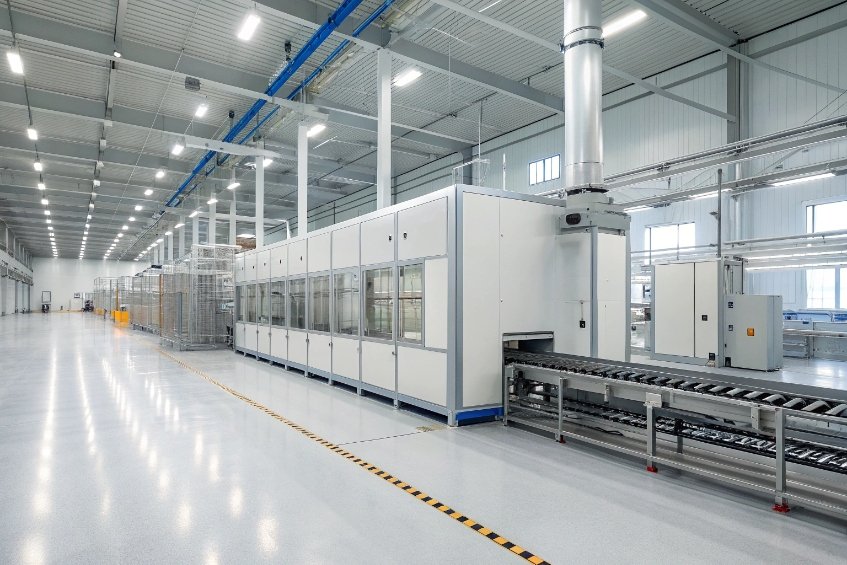
Many teams focus on “which coating to use” but forget that the real success comes from the workflow. When the workflow is wrong, even the best chemistry turns patchy, streaky, or unstable.
Glass bottle coating treatment follows a controlled sequence: clean and stabilize the ware, apply hot-end oxide on hot glass, anneal without disturbing the layer, prepare and spray cold-end polymer with correct viscosity and flow, then cure and verify the finished surface through COF, gloss, and film-weight checks.
A strong coating system depends on stable temperatures, clean surfaces, balanced spray conditions, and clear SOPs. When every step is documented, the line runs with fewer stops, and final bottles stay consistent across shifts and batches.
What steps are required for glass bottle surface coating treatment?
Many people see coating as “hot-end plus cold-end”. In reality, it is a chain of preparation, temperature control, chemistry control, and downstream verification.
Hot-end oxide coating 1 is applied on hot glass right after forming, and cold-end polymer is applied at the lehr exit on warm, dry ware. Both must be supported by stable cleaning, airflow, nozzle setup, and drying.
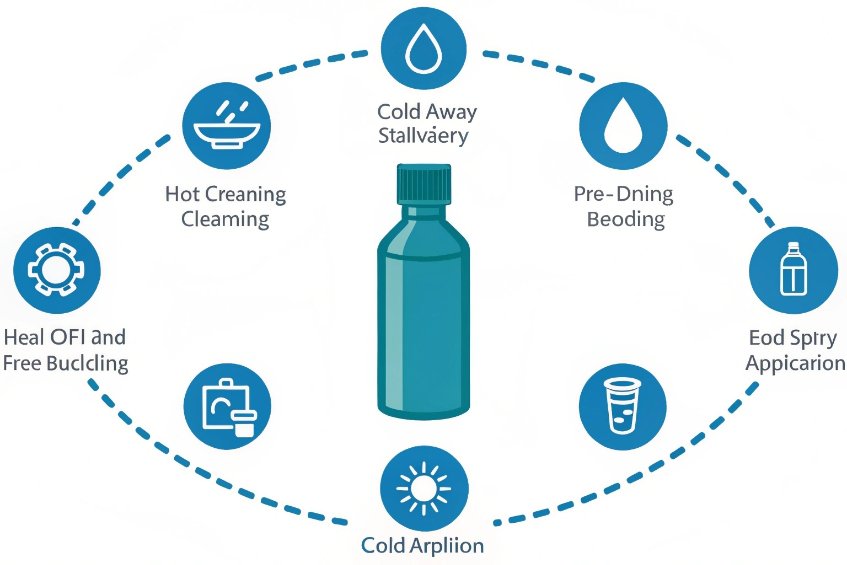
A complete coating workflow from IS machine to packing
Below is a structured view of the process and why each step matters.
Full process sequence
| Stage | Key tasks | Purpose |
|---|---|---|
| Take-away stabilization | Align spacing, remove loose cullet with air knives | Prevent early scratches |
| Hot surface cleaning | Ionized air, controlled drafts | Keep hot glass clean for oxide bonding |
| Hot-end coating | Apply SnO₂ / TiO₂ via vapor chemical vapor deposition (CVD) 2 at 450–600 °C | Create durable oxide base layer |
| Oxide bonding | Control airflow, avoid condensation | Achieve uniform coverage |
| Annealing | Verified soak and controlled cooling in an annealing lehr 3 | Relieve stress without disturbing oxide |
| Pre-cold-end drying | Bottle at correct temp, remove moisture | Ensure polymer wetting and adhesion |
| Cold-end chemistry prep | Set concentration, pH, temperature; filter & agitate | Stable and predictable spray behavior |
| Spray booth setup | Nozzle angles, pressures, pitch, bottle rotation | Achieve full 360° coverage |
| Cold-end application | Fine atomization, controlled humidity and exhaust | Even film laydown |
| Flash-off / conditioning | Gentle drying without blocking | Stable final surface |
| In-line QA | Gloss, COF, film weight, backlit inspection | Confirm uniformity and performance |
| Downstream tests | Label/print trials, pack tests, washer simulations | Verify compatibility |
Each step supports the next. When one fails, the next becomes unstable. This is why coating lines rely on standard work and constant checks.
What cleaning methods are recommended before coating?
A clean surface is the start of every stable coating. Dirt, steam, cullet dust, or moisture can make even good chemistry bead up or streak.
The best practice is to combine alkaline washing, DI rinsing, and ionized air blow-off 4 so the surface is free from debris and static.
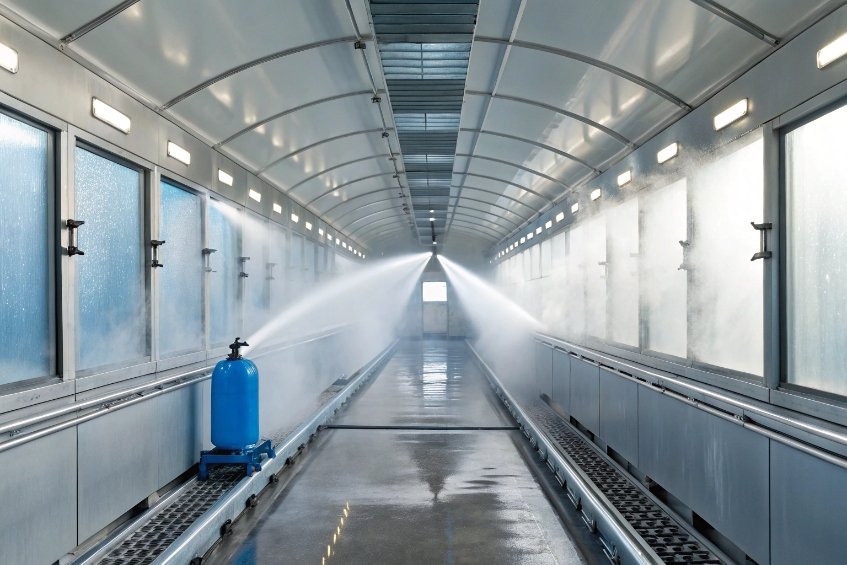
Why cleaning matters and how to run it
Cleaning supports both adhesion and uniformity. Below is a deeper look at each method.
Cleaning methods and when to use them
| Method | Use case | Effect on coating quality |
|---|---|---|
| Alkaline wash | Pre-decoration, heavy contamination | Removes oils, dust, mold-release residues |
| DI water rinse | After alkaline, or before high-clarity coating | Leaves no minerals or spotting |
| Ionized air blow-off | On hot or warm ware, before coating steps | Removes dust and neutralizes static |
| Air knives | At IS take-away or pre-booth | Pushes off loose cullet and hot glass dust |
| Pre-dry heating | Before cold-end | Prevents beading and patchy wetting |
Alkaline wash is common in special decoration projects but not always used in standard beverage lines. DI rinse prevents spots in cosmetic or premium segments. Ionized air is almost universal because it works on both hot and warm surfaces without adding moisture.
A stable temperature is also part of “cleaning”. If the bottle is wet or too cold, the coating breaks into droplets. This leads to streaks, dry patches, and uneven gloss.
How to set viscosity, solids, and flow rate for consistent cold-end laydown?
People often try to “fix” cold-end by adjusting spray pressure alone. This rarely works. The right approach is to stabilize viscosity, solids, and flow so every nozzle applies the same amount of polymer.
Viscosity and solids decide wetting and film build. Flow rate and atomizing air decide coverage and droplet size—especially when the coating is a water-based polyethylene emulsion 5.
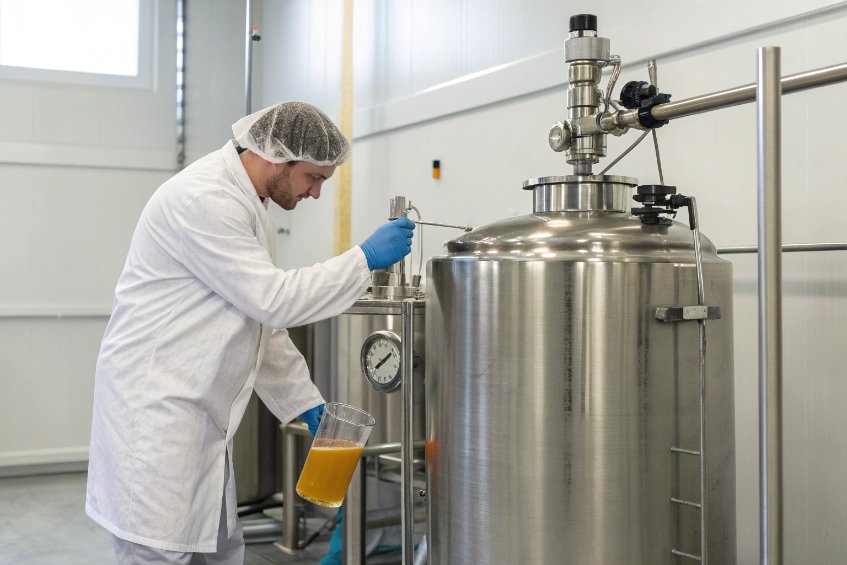
How to control chemistry and spray conditions
To keep laydown consistent, each part of the system needs clear limits.
Key cold-end control points
| Parameter | Typical control | Why it matters |
|---|---|---|
| Solids % | From supplier spec, checked daily | Defines actual protective film thickness |
| Viscosity | Measured by cup; adjusted with DI water | Controls atomization, wetting, and uniformity |
| pH | Within supplier range | Keeps emulsion stable and prevents separation |
| Temperature | Usually 20–30 °C | Affects viscosity and spray pattern |
| Flow rate | Controlled by metering pump | Sets grams of coating per bottle |
| Atomizing air | Balanced with fluid pressure | Controls droplet size and shoulder/heel coverage |
| Nozzle geometry | Fan width, angle, standoff distance | Ensures 360° film coverage |
Typical viscosity for cold-end emulsions falls in the range recommended by the supplier. If viscosity drifts too low, the spray becomes watery and streaky. If it drifts too high, droplets become large and uneven.
Flow rate is often set by bottle size and line speed. Larger bottles or high-speed lines require wider fans and higher flow to maintain coverage.
Regular flushing, filtration, and line agitation prevent nozzle clogging and separation, which is a major source of uneven gloss and COF drift.
Which curing profiles (UV/IR/thermal) lock in hardness and gloss?
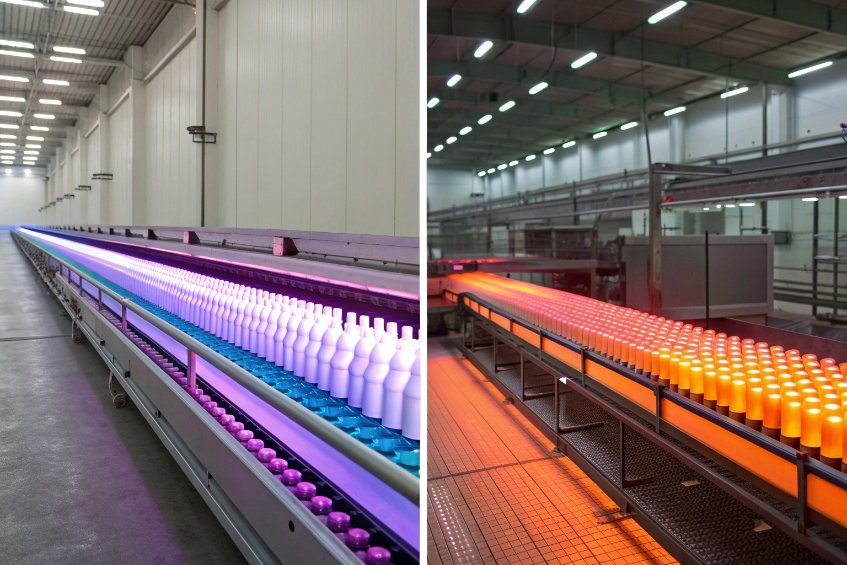
Cold-end coating is often air-dried, but many premium or specialty coatings use UV, IR, or thermal curing to lock in hardness, adhesion, and gloss.
UV and IR systems cure fast and give high clarity. Thermal profiles give the most robust layer for returnable or industrial bottles.
How curing builds final surface properties
Curing fixes polymer crosslinks and removes moisture. The profile depends on the coating type.
Curing methods comparison
| Method | Best for | Features |
|---|---|---|
| Air / thermal | Standard cold-end emulsions | Slow but stable; preserves slip |
| IR | Decorative coatings, organosiloxane films | Fast heating, good leveling, strong gloss |
| UV | Specialty clear coats, premium cosmetics | High hardness, high optical clarity, very fast cure |
| Oven bake | Thick films or combined systems | Deep curing for heavy-duty use |
For premium segments—perfume bottles, cosmetic jars, or specialty spirits—UV and IR profiles give higher gloss and better scratch resistance. These systems often include:
- UV lamp intensity spec
- IR emitter distance
- Thermal soak time
- Maximum allowed bottle skin temperature
When these values drift, gloss becomes inconsistent and hardness drops. So they must be part of the daily check sheet.
What documentation belongs in SOPs, AQLs, and PPAP packets?
The coating line must be controlled by clear documents so that every shift repeats the same process. Missing documents create drift and unstable COF, gloss, and bonding.
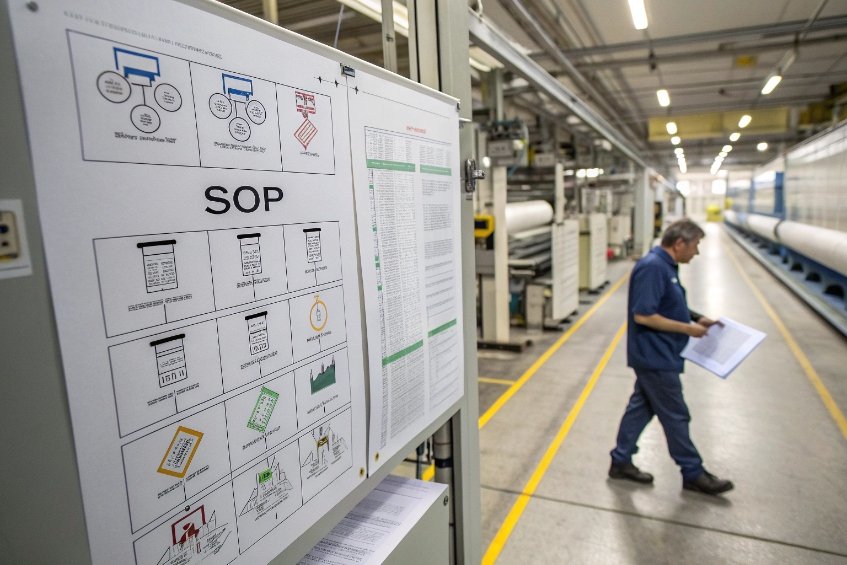
SOPs define how to run each step. AQLs define acceptance limits. PPAP packets show that the line can repeatedly produce stable coated bottles.
What each document type should include
A complete package keeps production, quality, and customers aligned.
Document requirements
| Document type | Content required | Purpose |
|---|---|---|
| SOPs | Equipment setup, temperatures, pressures, nozzle maps, chemistry specs, cleaning cycles, safety steps | Define standard daily operations |
| AQLs | Visual defects list, COF range, gloss range, film weight limits, coverage checks, label/print tests | Set acceptance limits for QC |
| PPAP | Process flow, PFMEA, control plan, capability data (COF, gloss, thickness), sample set, material certs | Prove repeatability for new products |
SOP examples
- Hot-end lance position map
- Cold-end viscosity chart
- Nozzle angle and bottle pitch table
- Daily line flush and filter change plan
- Booth humidity and exhaust settings
AQL examples
- Allowed streak level
- COF window (e.g., 0.08–0.14 dry) measured using ASTM D1894 coefficient of friction 6
- Gloss minimum
- Required film-weight consistency
PPAP examples
- Coating material certificates (polymer, Sn compounds)
- XRF oxide thickness results
- COF capability (Cp/Cpk)
- Gloss capability
- Stress or impact retention tests
- Cross-hatch adhesion evidence aligned to ASTM D3359 tape testing 7
When these documents are complete, customers feel confident, audits pass smoothly, and product launches avoid rework.
Conclusion
A stable coating line comes from clean surfaces, balanced chemistry, precise spray setup, and clear documents. When each step is controlled, coated bottles stay strong, smooth, and consistent.
Footnotes
-
Explains hot-end/cold-end surface treatments and why oxide layers improve abrasion resistance. ↩ ↩
-
Defines CVD and how vapor reactions form thin films on hot surfaces. ↩ ↩
-
Shows how annealing lehrs control glass stress and cooling profiles. ↩ ↩
-
Details ionized air tools for removing dust and neutralizing static before coating. ↩ ↩
-
Example of PE emulsion cold-end coating chemistry and application notes. ↩ ↩
-
Standard method reference for measuring coefficient of friction for films and coatings. ↩ ↩
-
Standard tape-test reference for rating coating adhesion using cross-hatch cuts. ↩ ↩






