
When a storage tank handles aggressive chemicals or drinking water, corrosion is not just a maintenance issue, it is a contamination and downtime problem.
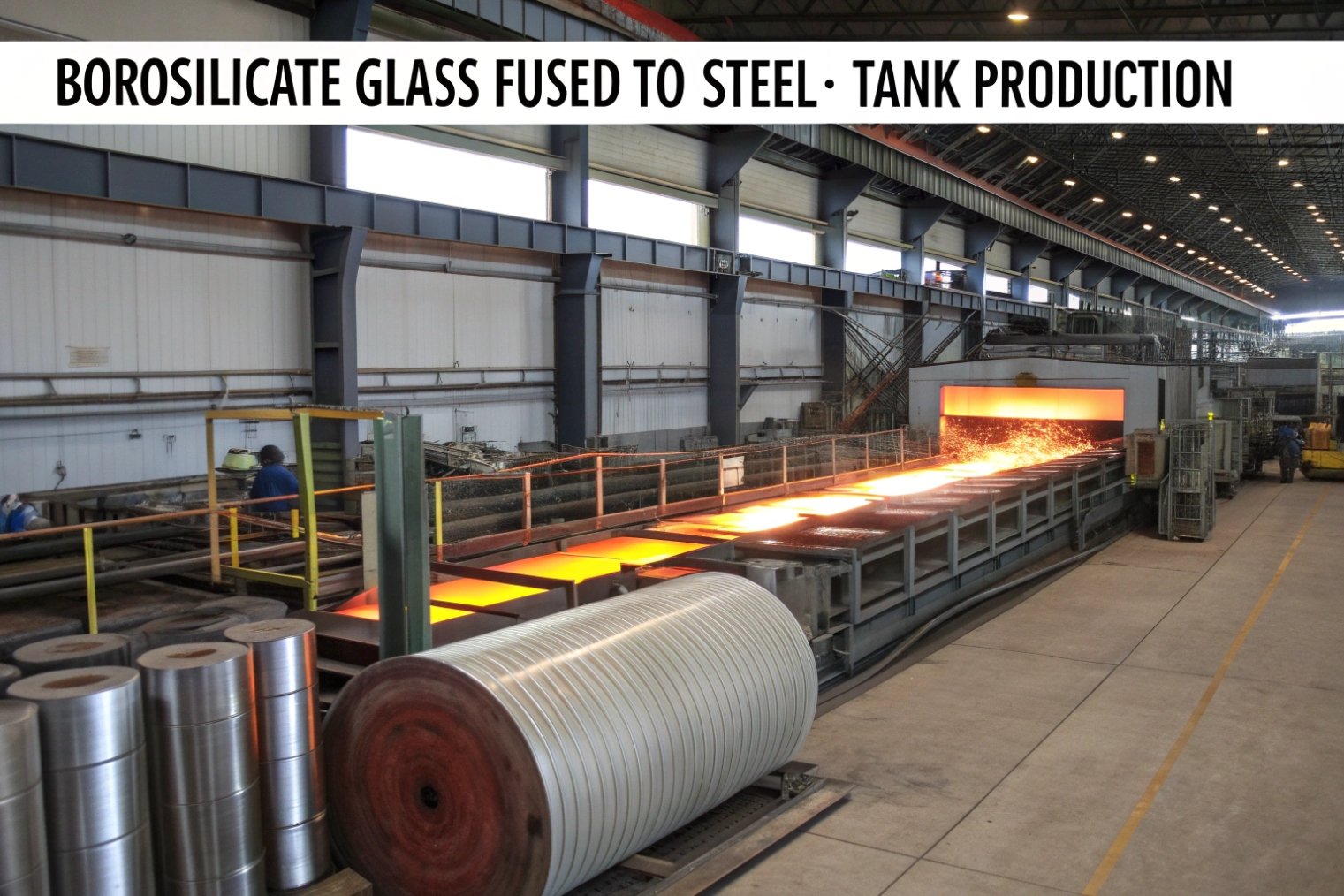
Borosilicate storage tanks are usually glass-fused-to-steel systems: steel panels are fabricated, coated with borosilicate enamel, fired, inspected, then bolted together on site with gaskets, supports, and nozzles designed to handle chemical, structural, and installation loads.
Once we break the process into clear stages—panel manufacture, field assembly, standards, testing, and installation details—it becomes easier to specify the right tank and to understand where failures most often start.
How are large sections formed, annealed, and joined safely?
Borosilicate tanks rarely use thick solid glass shells; instead they rely on steel for strength and a borosilicate enamel skin for corrosion resistance.
Manufacturers form steel shells and heads, prepare the steel, apply enamel frit as a slurry, fire it at high temperature to fuse glass to steel, then ship finished panels that are bolted and sealed together in the field.
From frit to glass-fused panels
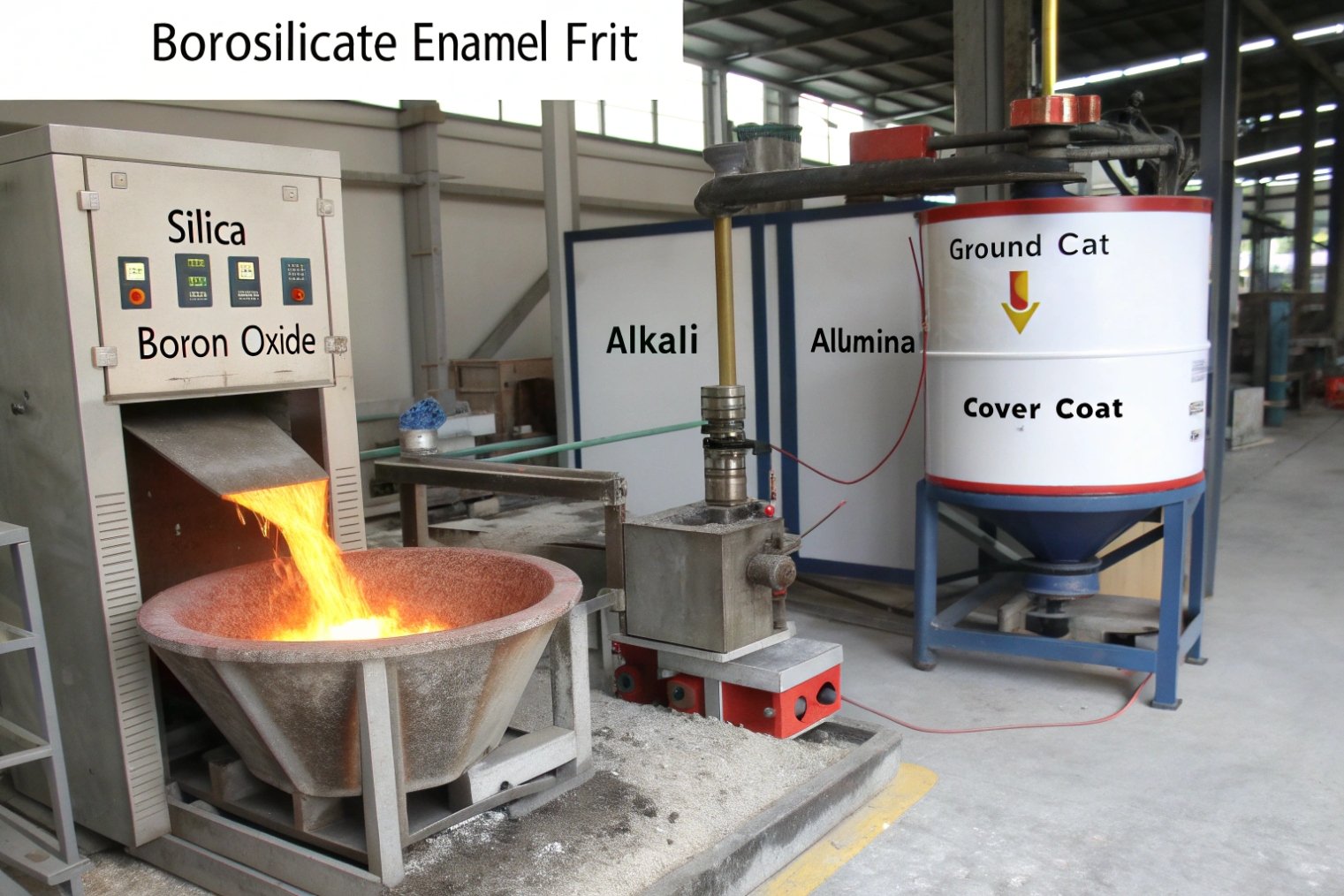
Most “borosilicate tanks” in industry are glass-fused-to-steel or glass-lined tanks (often grouped under industrial porcelain enamel 1). The glass part starts as a carefully formulated enamel:
- Raw materials (silica, boron oxide, alkali, alumina, opacifiers) are melted into glass.
- The melt is quenched to form frit (brittle glass chips).
- Frit is milled with clay, water, and additives into an aqueous slurry.
On the steel side, the shop:
- Cuts, rolls, or presses curved shell panels, roof segments, and sometimes floor plates.
- Forms nozzle collars, manway rings, and structural stiffeners.
- Grit blasts surfaces to a near-white metal finish and conditions edges so enamel will not spall.
Because nothing can be welded after enameling, all attachments that need welds (nozzle collars, ladders supports, stiffeners) are added before glass coating.
A typical glass-coating sequence is:
- Apply a ground coat (bonding layer) as a wet spray or dip.
- Dry, then fire in a furnace around 830–850 °C so the glass fuses to the steel.
- Apply one or more cover coats for color, thickness, and chemical resistance.
- Fire again if using multi-fire systems.
- Measure dry film thickness and perform spark tests between coats.
In practical terms, this fired glass layer is a form of vitreous enamel 2 engineered to bond to enameling-grade steel.
Annealing, stress control, and panel handling
The same firing step that melts enamel also acts as a stress cycle for the steel–glass composite. During heat-up, steel and glass expand together; during cool-down, they contract at different rates. The enamel formulation is tuned to match the steel’s expansion closely enough that:
- The glass is in slight compression at service temperature.
- No broad cracks or fish-scales appear during cool-down.
Furnace cycles are set so:
- Panels heat uniformly (to avoid local over-fire and devitrification).
- Cooling is controlled through the critical range where steel and enamel expansion differ most.
After firing, panels cool to room temperature in still or conditioned air. Handling rules become strict:
- No hammering, no sharp impacts on edges.
- Soft slings and padded lifting points.
- No flame cutting or welding, which would destroy the enamel bond.
Safe joining in the field
On site, installers build the tank ring by ring:
- Prepare and level the foundation.
- Place a starter ring of panels, bolted with stainless fasteners through pre-punched holes.
- Add sealant and gaskets at lap joints so liquid never reaches bare steel.
- Jack or scaffold successive rings into place.
Key safety points:
- Bolts are tightened in controlled patterns and torques to avoid pulling enamel faces together too hard.
- Edge protection and correct gasket compression prevent enamel chipping at panel overlaps.
- All nozzles and manways are already glass-lined; pipework connects through flanges or flexible couplings with no field welding on the shell.
In short, large “glass tanks” are really steel structures with a thin borosilicate armor. If forming, firing, and joining respect the different behaviors of steel and glass, the result is a strong, chemically inert shell that can last decades.
| Step | Main risk if done poorly | Typical control |
|---|---|---|
| Steel fabrication | Distortion, sharp edges, porosity | Welding procedures, edge grinding, NDT |
| Grit blasting and cleaning | Contamination, poor adhesion | Specified profile, dust and oil control |
| Enamel application | Thin spots, runs, trapped air | Viscosity control, spray technique |
| Firing and cool-down | Cracks, fish-scales, devit | Defined furnace curve, QC panels |
| Field bolting and sealing | Chips, leaks, coating damage | Correct gaskets, torque control, training |
Which standards govern chemical resistance and pressure ratings?
A borosilicate lining that looks perfect can still fail if it does not match the liquid or if the steel design ignores wind, seismic, or pressure loads.
Glass-fused tanks sit under two main groups of standards: enamel standards that define chemical resistance and coating quality, and tank design codes that define geometry, shell thickness, and allowable loads.
Enamel quality and chemical resistance
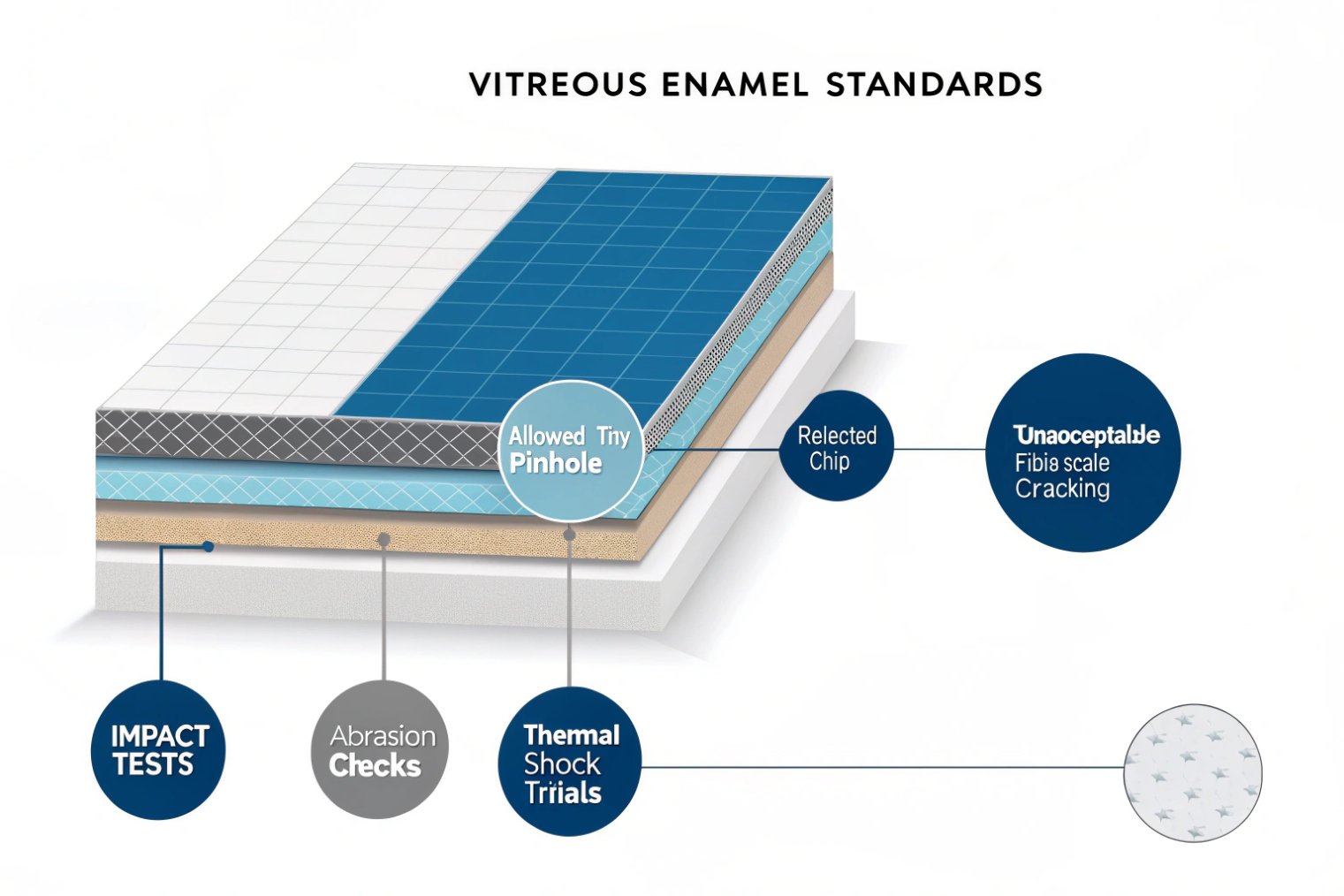
For glass-coated tanks, enamel performance is usually tied to vitreous and porcelain enamel standards. These cover:
- Coating thickness ranges (internal and external).
- Defect limits (pinholes, fish-scales, chips).
- Chemical resistance tests (for example, ISO 28706 chemical corrosion test methods 3) in acids, neutral solutions, alkalis, and vapors.
- Impact, abrasion, and thermal shock resistance of the enamel layer.
Specialized standards for bolted glass-fused tanks describe:
- Panel steel requirements and minimum thickness.
- Enamel quality classes for different duties (clean water vs industrial wastewater vs aggressive chemicals).
- Test methods for resistance to chemical attack and temperature swings.
In chemical service, owners often add their own acceptance criteria, such as:
- Maximum allowable weight loss in a specific chemical at a given temperature.
- Maximum acceptable pH range and chloride level.
- Limits on enamel color change or surface roughening after exposure.
For critical processes, some projects require coupon testing: pieces of coated steel are exposed to the exact process fluid before the tank design is finalized.
Structural design and pressure rating frameworks
Most glass-fused tanks are atmospheric or low-pressure vessels. The steel shell carries:
- Hydrostatic head from the stored liquid.
- Wind load on the shell and roof.
- Seismic loads where applicable.
Designers often work to:
- A bolted tank structural code (for example, codes similar in scope to the AWWA D103 factory-coated bolted steel tank standard 4 for water).
- A glass-lined tank design standard that links structural loads to enamel requirements.
- General structural steel standards and seismic design codes where local rules demand it.
For true pressure vessels (for example, some glass-lined reactors rather than large bolted tanks), the steel part of the vessel is usually designed to pressure vessel codes such as the ASME Boiler and Pressure Vessel Code 5, and the glass lining is qualified separately by the manufacturer.
Typical specification mapping looks like this:
| Design question | Common reference types |
|---|---|
| Shell buckling, hoop stress, roof loads | Steel tank / bolted tank design codes |
| Enamel thickness, pinhole and impact limits | Vitreous enamel coating standards |
| Chemical resistance of lining | Enamel corrosion test standards + project-specific tests |
| Thermal shock and temperature limits | Enamel thermal shock test standards |
When you combine these, you get a tank that has both a defined structural safety margin and a proven enamel envelope for the target liquid and temperature.
What NDT and hydrostatic tests verify structural integrity?
A tank may meet drawings and coating specs on paper, but hidden coating holidays, bad welds on structural parts, or weak joints still cause leaks or under-film corrosion.
Producers use non-destructive testing on both steel and enamel—visual, spark testing, thickness and adhesion checks—then prove the assembled tank with a hydrostatic fill and leak inspection before handover.
Checking the enamel layer
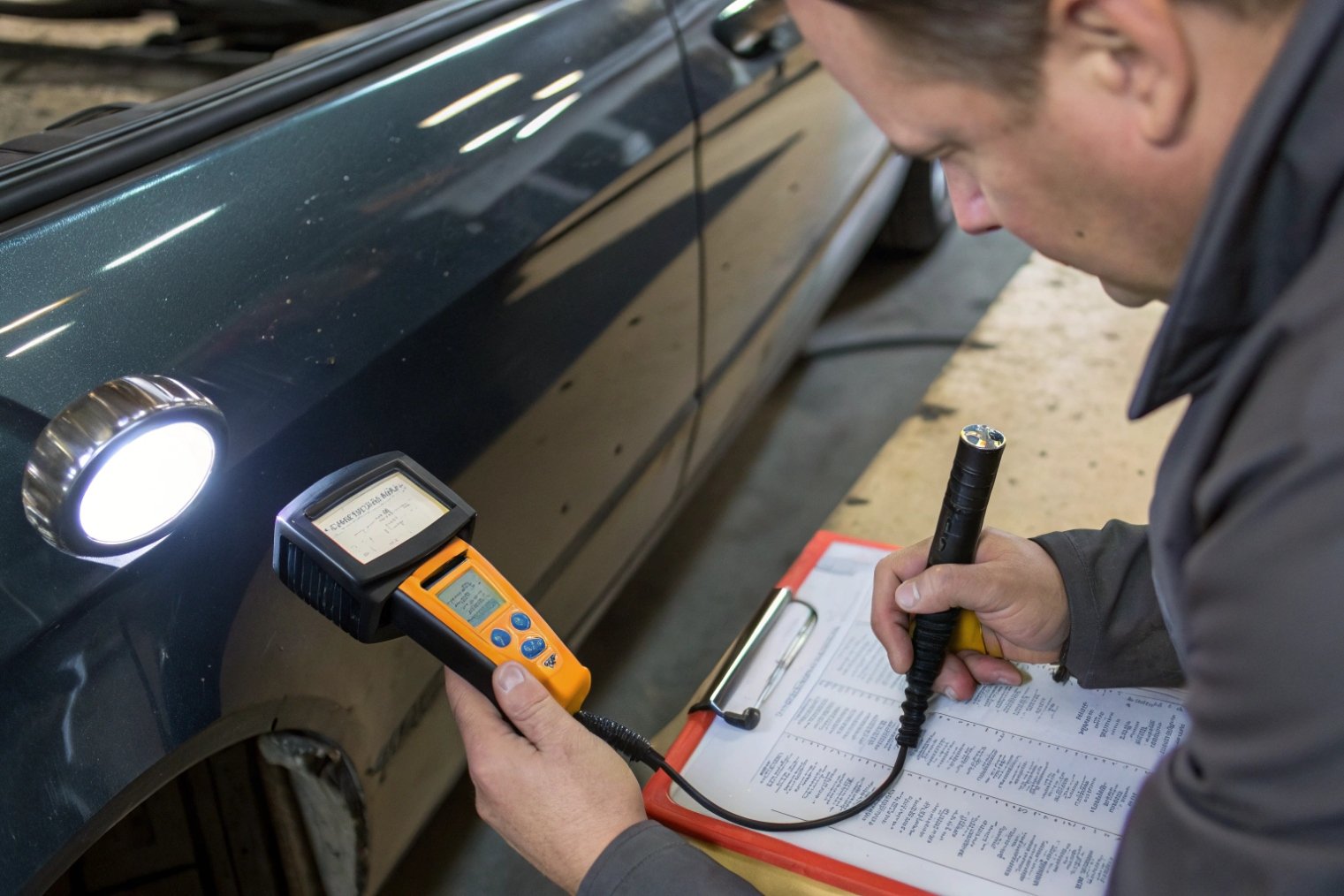
In the factory, every glass-coated panel goes through a set of coating tests:
- Visual inspection for chips, craters, pinholes, inclusions, or devitrified patches.
- Dry film thickness checks on internal and external faces, ensuring both fall within the specified band.
- Low-voltage discontinuity checks (see holiday (spark) testing 6) to find pinholes or thin spots that would let liquid reach the steel.
- Impact and abrasion tests on representative samples, not every panel, to confirm enamel toughness.
Panels that fail get repaired with compatible enamel or rejected, depending on defect type and location. Repairs are re-spark-tested; no bare steel is allowed on wet surfaces.
NDT on steel and structural details
For welded components like stiffeners, roof structures, or welded floors (in hybrid designs), standard steel NDT tools apply:
- Ultrasonic testing (UT) for wall thickness and weld soundness.
- Magnetic particle or dye penetrant testing on critical welds and attachments.
- Dimension and plumb checks after shell erection to confirm geometry under self-weight.
In bolted tanks, attention shifts to:
- Bolt preload checks (torque or tension) to ensure joints stay tight without crushing enamel.
- Gasket continuity and fit at lap joints and around nozzles.
- Local inspection where bolts or tools may have chipped enamel during assembly.
Any enamel damage found in the field is repaired using manufacturer-approved repair systems and then re-tested with a low-voltage holiday test.
Hydrostatic testing and leak checks
Before a tank goes into service, a hydrostatic test validates both structure and sealing:
- Fill the tank with water in stages, watching shell shape and settlement.
- Often hold at or near design liquid level (or slightly above) for a set time.
- Inspect shell, floor, joints, and nozzles for drips, sweating, or deformation.
- Check anchor bolts and foundation for unexpected movement.
For buried or critical floors, vacuum box testing of welds (on welded steel floors) may be added before any enamel or lining is applied.
A simple overview of test coverage:
| Test type | Main target issues |
|---|---|
| Visual + spark test | Pinholes, chips, thin enamel |
| Thickness measurement | Under- or over-thick coatings |
| UT / MT / PT (steel) | Weld defects, wall loss |
| Bolt preload checks | Loose joints, uneven gasket compression |
| Hydrostatic test | Leaks, deformation, differential settlement |
When these tests are treated as a linked system rather than a formality, early correction of defects keeps long-term maintenance low and protects both steel and enamel from early failure.
How do supports, linings, and ports affect installation success?
Even a perfect tank can fail early if it sits on a poor foundation, carries wrong nozzle loads, or uses the wrong gaskets for the stored chemical.
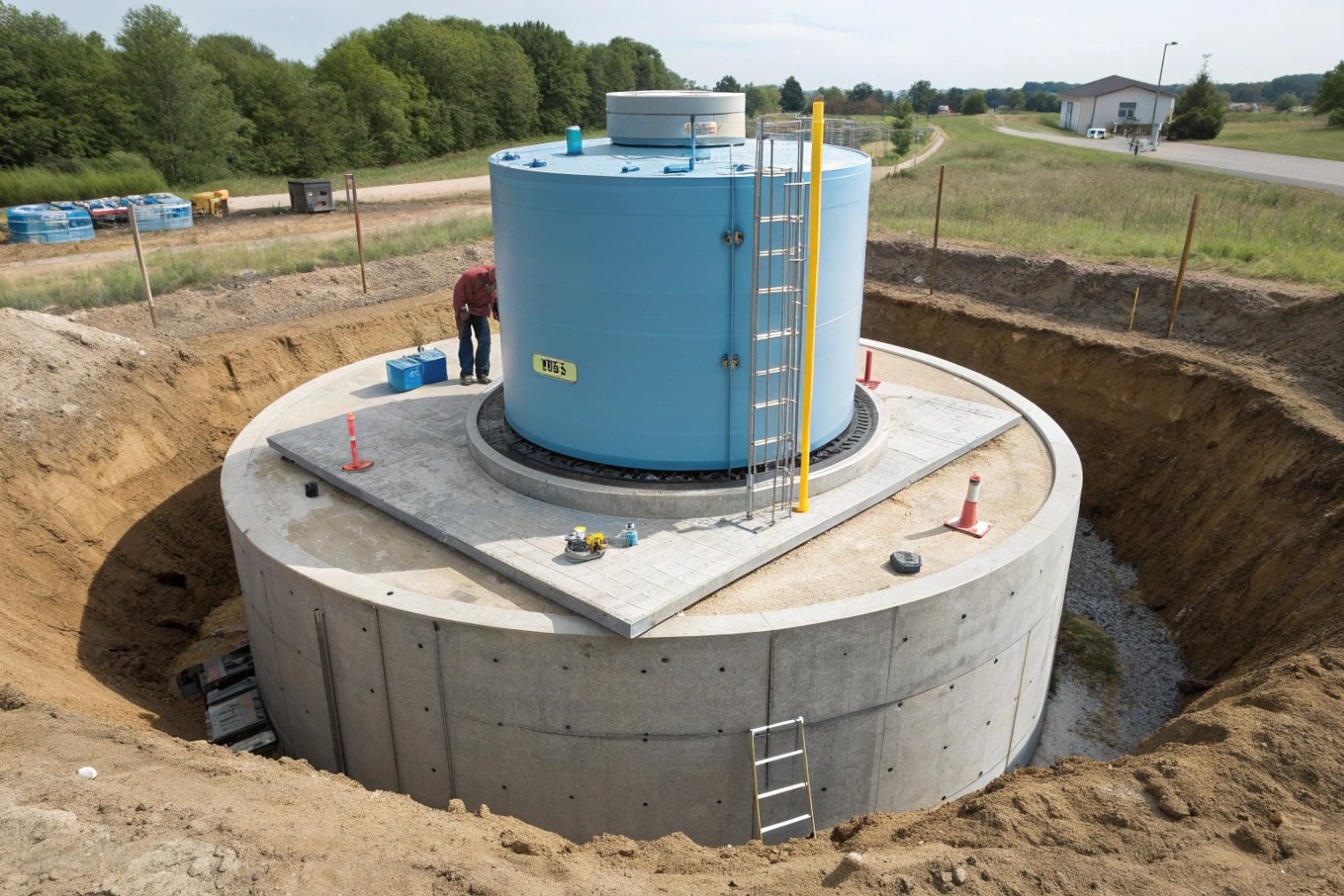
Installation success depends on a sound foundation, correct external supports, compatible gaskets and sealants, and well-designed nozzles and manways that respect glass edges and allow for thermal movement.
Foundations and external supports
Glass-fused tanks are rigid shells; enamel does not tolerate large local bending or edge chips. The foundation must:
- Provide even support (ring beam or full slab) with tight level tolerances.
- Limit differential settlement so shell rings are not twisted.
- Resist overturning from wind and seismic loads via anchors or ring beams.
External appurtenances—stairs, platforms, mixers supports—need their own logic:
- Vertical loads and wind from access structures should go into steel frames, not directly into enamelled shell through hard clamps.
- Where shell brackets exist, they must be welded and enamelled in the factory, not added later.
- Wind girders or stiffening rings may be needed on tall, slender tanks.
Gaskets, sealants, and internal linings
At lap joints and nozzles, gaskets and sealants keep liquid from reaching the steel. Poor material choice or application can ruin a good tank.
Key choices:
- Gasket material: EPDM, NBR, FKM, PTFE, or others matched to chemical, temperature, and approval requirements (for example, potable water). A quick check against a chemical compatibility database 7 helps prevent obvious mis-matches.
- Sealant placement: applied in controlled beads to avoid voids or squeezing into the tank interior.
- Torque control: enough to compress gaskets, not so much that enamel chips at bolt holes.
Some projects add secondary linings or top coats for special duties, such as:
- Extra chemical-resistant polymer linings in sumps or high-abrasion zones.
- Sacrificial coatings in headspaces where condensation may carry corrosives.
These layers must be compatible with enamel and should not trap corrosive liquids at the steel interface.
Ports, nozzles, and integrating pipework
Nozzles, manways, and ports are frequent trouble spots if they are not designed with enamel in mind.
Good practice includes:
- Designing nozzles with flanged connections that spread loads and keep gasket compression stable.
- Making all welds and swaged openings before enameling, so glass covers any exposed steel.
- Using flexible joints or expansion loops in piping to avoid transmitting thermal or settlement loads into the nozzles.
- Adding internal sleeves or dip pipes in compatible materials (glass, PTFE, suitable alloys) where process streams are hot or aggressive.
For mixers, aerators, or internal pipework:
- Supports must tie back to steel, not to the enamel alone.
- Vibration paths should bypass the shell where possible.
- Clearances around internal fixtures must avoid contact with glass surfaces during operation.
In practice, the most reliable installations are those where tank supplier, civil engineer, and mechanical contractor agree early on: foundation tolerances, pipe load limits on nozzles, gasket specifications, and any special internal linings. This reduces the “mystery cracks and leaks” that otherwise show up in the first year of operation.
| Installation choice | If done wrong | If done right |
|---|---|---|
| Foundation level and stiffness | Shell distortion, enamel cracking | Stable shell, uniform compression |
| Gasket and sealant selection | Leaks, under-film corrosion | Tight, durable joints |
| Nozzle load management | Cracked enamel, flange leaks | Long-life connections with flexibility |
| Support of external equipment | Local shell overstress | Loads carried by frames and anchors |
Conclusion
Borosilicate tanks work best when glass and steel are treated as a single system: engineered panels, qualified coatings, thorough testing, and careful foundations and nozzle details all working together to keep aggressive liquids safely contained for decades.
Footnotes
-
Overview of industrial porcelain enamel and why glass-fused coatings protect steel in tanks. ↩ ↩
-
Explains vitreous enamel fundamentals, firing temperatures, and why enamel is chemically resistant. ↩ ↩
-
Shows ISO 28706 test methods used to classify enamel resistance to acids, alkalis, and vapors. ↩ ↩
-
Details AWWA D103 requirements for design, inspection, and testing of factory-coated bolted steel water tanks. ↩ ↩
-
Reference page for the ASME Boiler and Pressure Vessel Code used to design and certify pressure vessels. ↩ ↩
-
Practical primer on coating discontinuity “holiday” detection and why spark testing matters for corrosion protection. ↩ ↩
-
Search tool to compare chemical resistance of gasket and lining materials like EPDM, FKM, and PTFE. ↩ ↩






