
Wine size feels simple until you talk to buyers, sommeliers, and logistics. Then it turns into a real strategy choice.
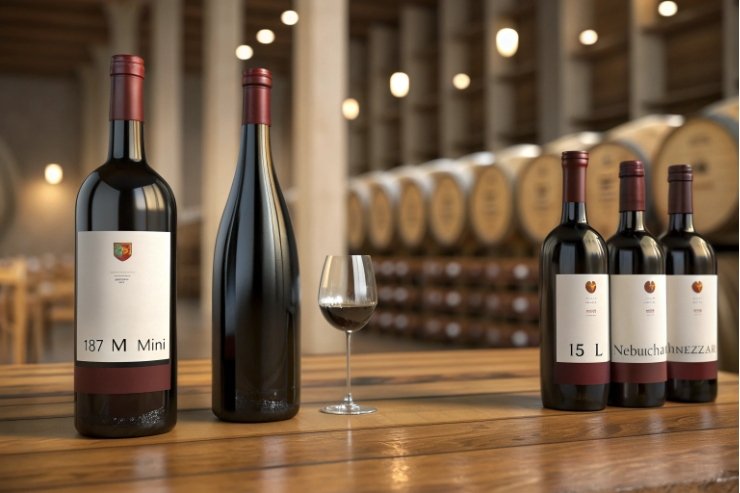
Wine bottles run from 187 ml minis to huge 15 L showpieces, but formats like 187 ml, 375 ml, 750 ml, and 1.5 L dominate because they balance drinking occasions, regulations, shipping costs, and brand positioning.
Once we match basic volumes to real drinking occasions, the next step is to check local rules, case weights, and how customers will see the bottle in the hand, on the shelf, and at the table. A simple wine bottle sizes chart with common names 1 is often the fastest way to align marketing, menus, and packaging specs.
Let’s go format by format.
Which formats—187 ml, 375 ml, 750 ml, 1.5 L—fit retail and on-trade best?
Choosing “standard size only” seems easy. Then you look at by-the-glass menus, mini gift packs, and banqueting service.
187 ml, 375 ml, 750 ml, and 1.5 L each serve different jobs: minis for single serves, halves for discovery, 750 ml as the core retail workhorse, and magnums for shared occasions and premium on-trade theatre.
Match each key size to a specific channel and use case
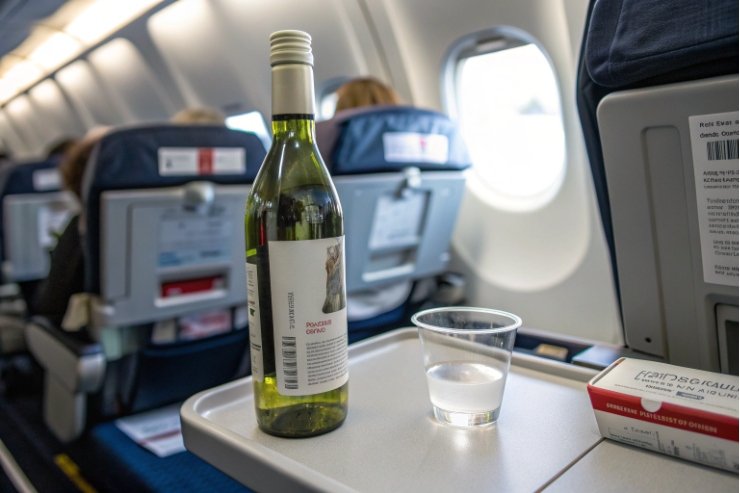
In practice, these four sizes sit at the heart of most programs. The 187 ml “split” (or piccolo) is roughly one glass. It shines in airlines, hotel minibars, rail service, and tasting flights. It solves portion control, gives easy cost-per-serve, and cuts wastage from opened bottles. On shelves, it works for ready-to-drink moments like picnics or convenience stores, though the glass cost per liter is higher.
The 375 ml half bottle offers two good glasses. Retail buyers use it for trial and for higher-priced wines that might feel “too expensive” at 750 ml. Restaurants place halves on lists for solo diners and for guests who want to pair two wines in one meal without over-ordering. For the winery, this format often carries a higher margin per liter, but lower absolute revenue per unit, so it suits limited runs or styles that benefit from quick turnover.
The 750 ml bottle remains the global standard. Around five glasses. It fits most racks, shippers, and consumer habits. Supermarkets, wine shops, and online channels all expect this format as the default. On-trade, it is the main unit for full-bottle sales and for by-the-glass programs when using Coravin wine-by-the-glass systems 2 or other preservation methods. From a glass perspective, this is also where the widest shape and color range exists, from Bordeaux and Burgundy forms to flutes and specialty designs.
The 1.5 L magnum equals two standard bottles. In retail, magnums signal special occasions: holidays, weddings, gifting. They often sit on end-caps or “feature” tables. In restaurants and hotels, magnums create strong table theatre. They encourage groups to trade up, especially for sparkling and rosé in warm seasons. Many producers also use magnums for age-worthy reds and vintage Champagne because the wine-to-oxygen ratio supports slower, more graceful development.
If your program needs the broader naming ladder (double magnums, jeroboams, and beyond), the WSET guide to wine bottle shapes and sizes 3 is a handy reference.
| Size | Volume | Typical channel focus | Role in the range |
|---|---|---|---|
| 187 ml | Single glass | Airlines, minibars, convenience, events | Portion control, impulse, “try me” |
| 375 ml | 2–3 glasses | Retail premium, restaurants, room service | Discovery, solo diners, higher price per L |
| 750 ml | ~5 glasses | All retail + core on-trade | Main sales volume, broadest SKU range |
| 1.5 L | 10 glasses | Premium retail, parties, restaurants | Sharing, celebration, visual impact |
When building a range, we usually anchor on 750 ml, then add 187 ml where single serve matters, 375 ml for discovery or high-ticket wines, and 1.5 L for seasonal pushes and brand statements.
Do 500/700/750 ml rules vary by region and category?
Everything looks fine in the cellar until export paperwork appears. Then small volume differences can block or delay market entry.
Yes, volume rules do vary by region and category. Still wines usually standardize on 750 ml, while some dessert wines use 500 ml and many spirits use 700 ml in Europe, so producers must match formats to each target market’s norms and legal ranges.

Align formats with local regulations and consumer expectations
For still wine, 750 ml is the dominant legal and cultural standard in most major markets. Retail shelves, shipping cartons, and wine racks all assume this volume. Moving a still table wine into 700 ml simply to “stand out” can confuse duty calculations, pricing, and even retailer acceptance, especially in markets that treat 750 ml as the expected norm.
In the EU, packaging teams often start with the official list of permitted nominal quantities in Directive 2007/45/EC standards of fill for still wine 4. In the U.S., label teams commonly reference TTB net contents guidance and approved metric sizes 5 so the bottle size and label statement stay compliant.
The 500 ml “Jennie” sits in a different space. It is widely used for dessert wines, sweet styles, and some fortified categories. Here, the smaller volume makes sense: higher sweetness or alcohol, smaller pours, more occasional consumption. A 500 ml Sauternes, ice wine, or late-harvest feels generous yet not overwhelming. In many regions, this size is understood as a signal of concentration and specialty, not a trick.
The 700 ml format is much more common in spirits than in wine, especially across the EU and many other territories. Some countries historically tied excise structures to 700 ml spirits bottles. As a result, retail and logistics know that format very well. For wine, though, 700 ml remains unusual and can feel off-spec to buyers who manage large, standardized shelves.
For export programs, the safest approach is simple: standardize still wines at 750 ml, use 500 ml for sweet and specialty products where that format already has a tradition, keep 375 ml as a secondary “premium trial” option, and reserve 700 ml for spirits unless a clear local wine exception exists.
There are also internal logistics rules to consider. Some deposit systems and recycling schemes classify bottles by volume classes. The fee structure may assume 0.75 L as the standard still wine unit. Off-size bottles can attract different deposit rates or complicate returns. When we work with brands on cross-border ranges, we map these details early, so tooling and molds match long-term plans.
| Category | Most common volume(s) | “Special” volumes and uses |
|---|---|---|
| Still table wine | 750 ml | 375 ml (halves), 1.5 L+ (large format) |
| Dessert wine | 375 ml, 500 ml | 750 ml for higher-volume segments |
| Fortified wine | 750 ml | 500 ml specialty, 1.5 L for gifting |
| Spirits | 700 ml (EU) / 750 ml (US) | 50 ml minis, 1 L for travel retail |
The key rule: never let a “creative” size break compliance, confuse the tax code, or block your wine from sitting easily on standard shelves in each target country.
How do size and glass weight affect shipping and pricing?
Bottle weight and size do not only change the feel in the hand. They control pallet weight, freight cost, and often the final shelf price.
Larger formats and heavier glass increase freight and packaging cost per case but can support higher shelf prices and premium positioning; lighter bottles cut shipping costs and emissions but feel less “luxury” if the design is not careful.
Balance perceived quality against logistics and margin
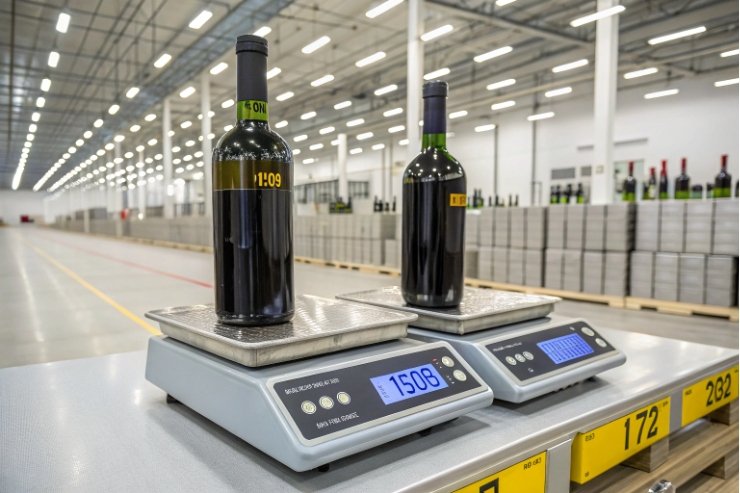
For 750 ml wine, glass weight can vary a lot. A lightweight bottle might be 350–420 g. A “icon” heavy bottle can reach 800–900 g or more. When multiplied by 12 bottles per case and many pallets per container, this difference is significant.
Heavier glass means fewer cases per weight-limited shipment, higher freight cost per liter, and often higher breakage risk if the extra mass meets rough handling. Importers and large retailers now track these metrics closely, especially in markets with strong sustainability pressure. Many have aligned around the SWR Bottle Weight Accord target for 750 ml still wine 6 for core ranges.
On the other hand, heavy glass still sends a premium signal to many customers, especially in red wines and sparkling categories. It feels substantial, and the thick punt and walls suggest care and expense. For flagship cuvées, limited editions, and gift lines, buyers often accept higher shipping cost because they can price the product accordingly.
Large formats like magnums amplify this. A 1.5 L bottle uses more glass per liter than two standard bottles, and the volume itself takes more space in shippers. The landed cost per liter rises. But the perceived value per bottle also jumps, especially when the product appears on a table or in a gift context. In many cases, the gross margin per unit remains attractive even with higher freight.
From a supply perspective, we often propose a tiered approach:
- Core volume wines in lightweight 750 ml to optimize freight and price points
- Premium and age-worthy wines in mid-weight or heavy 750 ml where story and feel matter
- High-impact limited editions in magnums or larger, planned with full cost and price strategy
| Factor | Lightweight 750 ml | Heavy 750 ml / Magnum |
|---|---|---|
| Glass cost per bottle | Lower | Higher |
| Freight cost per liter | Lower | Higher |
| Pallet load (cases) | More within weight limit | Fewer within same limit |
| Breakage risk | Lower mass, often lower | Higher risk if mishandled |
| Perceived quality | Modern, eco-conscious | Traditional premium, “luxury” |
| Typical use | Everyday, large retail runs | Premium, gifting, on-trade showpieces |
When building a new range, checking full landed cost per liter for each size and weight early helps avoid surprises later, especially when shipping across oceans or into high-tax markets.
When should limited editions use magnums or minis for impact?
Special releases live or die on impact and memorability. The liquid can be great, but the bottle must make people stop and pay attention.
Limited editions should use magnums when you want celebration, age potential, and visual theatre, and minis when you want sampling, gifting, and wide trial without deep discounts. Both formats reshape perceived value and occasion.
Design magnums for celebration and long-term value
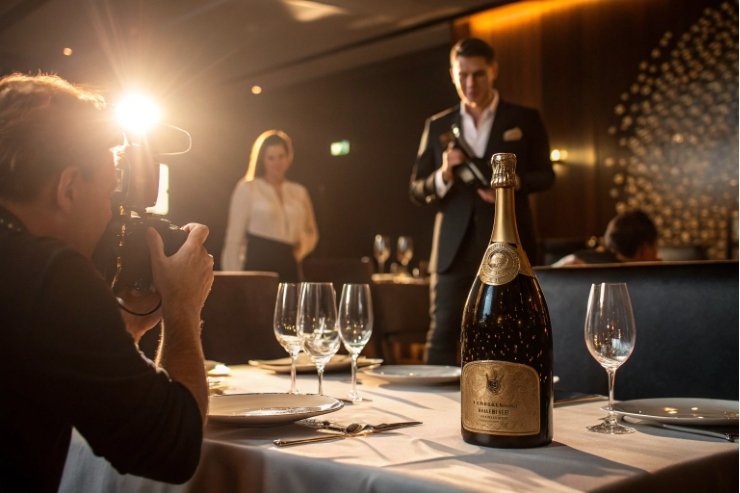
Magnums naturally say “party”, “special”, and “collectible”. Two standard bottles in one large format changes how people behave. They open magnums for birthdays, weddings, festivals, and big restaurant tables. The bottle becomes part of the photos and memories.
For age-worthy reds and traditional-method sparkling wines, magnums also offer technical benefits. A useful way to explain this to buyers is that magnums slow oxidation and support gentler aging 7. Collectors know this and often chase magnums for top vintages. So limited edition magnum runs can carry higher price tags and stronger long-term demand.
In practice, magnums work best when:
- The wine style suits sharing (sparkling, rosé, medium- to full-bodied reds)
- You can allocate clear events or seasons (New Year, holidays, brand anniversaries)
- The design highlights the scale, with bold labels or embossing that show across a room
Because glass and logistics cost more, magnums perform best in higher price tiers where the added emotional impact outweighs the extra cost per liter. For entry-level wines, this can be harder to justify.
Use minis to drive trial, gifting, and flexible pricing
Minis (often 187 ml, sometimes 200 ml) play a different role. They make premium wines more accessible. A customer who hesitates to pay for a full 750 ml of an unknown brand might happily buy a mini to test at home. This supports line extensions, new grape varieties, and experimental blends.
For gifting, assortments of minis create strong value perception. A set of four or six small bottles feels like a curated tasting journey. Here, the packaging around the minis also matters: trays, cut-outs, and print that tell a story.
On-trade, minis reduce open-bottle wastage for by-the-glass service in spaces with lower wine turnover, like hotel minibars, room service, and some casual outlets. The operator gains easy portion control and simpler stock rotation.
The cost per liter for minis is higher, because each tiny bottle still needs a closure, label, and packing. But the absolute price per unit remains low, which lowers the barrier for purchase. This trade-off often makes sense for limited editions, especially when the goal is to put the wine into as many hands as possible.
| Format | Best suited for | Limited-edition role |
|---|---|---|
| Magnum | Celebrations, cellaring, fine dining | “Hero” bottle, collector’s item, table showpiece |
| Standard | Everyday and premium retail | Core release, main sales driver |
| Mini | Sampling, gifting, travel, minibars | Discovery tool, gift set element |
When planning a limited edition, one simple framework helps: use magnums to make a statement and reward loyal fans, use minis to invite new drinkers into the brand, and use the standard 750 ml to carry the main volume and revenue in between.
Conclusion
Wine bottle size is not just tradition. It shapes how people discover, buy, ship, store, and celebrate with your wines, from minis for trial to magnums for memory.
Footnotes
-
Quick reference for bottle volumes and names to plan SKUs, menus, and case packs. ↩︎ ↩
-
Explains restaurant by-the-glass preservation options that influence which bottle sizes sell best. ↩︎ ↩
-
Helpful overview of standard and large-format names, sizes, and common use contexts. ↩︎ ↩
-
Official EU list of permitted nominal quantities that helps avoid compliance surprises in export. ↩︎ ↩
-
U.S. guidance for compliant net contents statements and common approved container sizes. ↩︎ ↩
-
Industry target for lightweight 750 ml bottles that supports lower freight cost and emissions. ↩︎ ↩
-
Clear explanation of why magnums can age more gently and why pros use them for impact. ↩︎ ↩






