
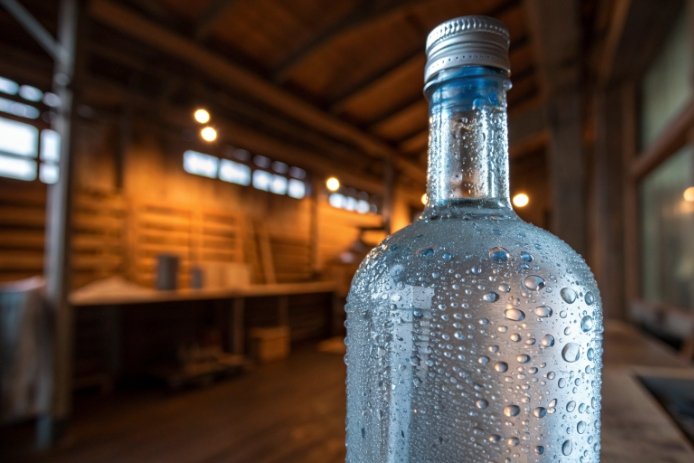
Winter logistics are a brutal test for glass packaging—because the real danger isn’t just the freezing cold, it’s the rapid transition to warmth.
When glass bottles move from freezing transport to room temperature, they face (1) thermal gradients that can trigger cracks in vulnerable designs and (2) fast condensation that can destroy labels and weaken cartons. Controlled acclimation is the most effective prevention.
The Silent Shock: An Overview of Cold-Chain Risks
The thermal ambush
A shipment of premium flint bottles may arrive after days or weeks at -20°C. When that pallet enters a 20°C warehouse, it experiences a major temperature swing. The problem isn’t the number alone—it’s the rate and unevenness of warming across thick and thin glass zones.
The two-front war: stress and moisture
Two enemies appear at once:
1) Thermal gradients
Glass warms slowly and unevenly due to low thermal conductivity 1. Thick zones lag behind thin zones. That mismatch can create stress hotspots at the heel, base corner, and shoulder transitions.
2) Condensation
A cold bottle surface pulls water from warm air immediately if the surface temperature is below the warehouse dew point 2. “Sweating” can soak labels, cartons, and dividers for hours—long enough to cause real damage.
Which SKUs are most vulnerable?
Not all bottles behave the same. Thick-bottom premium designs and sharp-geometry bottles are typically more sensitive than standard round beverage bottles.
| Risk Factor | Mechanism | Immediate Threat | Downstream Threat |
|---|---|---|---|
| Heavy sections (thick base / deep push-up) | uneven warming | heel/base checks | delayed fractures |
| Sharp geometry (corners, tight radii) | stress concentration | corner cracks | higher breakage in handling |
| High humidity warehouse | dew point + sweating | label lift/wrinkle | mold, carton failure |
| Secondary packaging (corrugated) | water absorption | box crush | pallet instability |
| Filled products | liquid expansion on warm-up | seal failure | leakage/oxidation |
Can Rapid Warming Create Thermal Stress and Cracks?
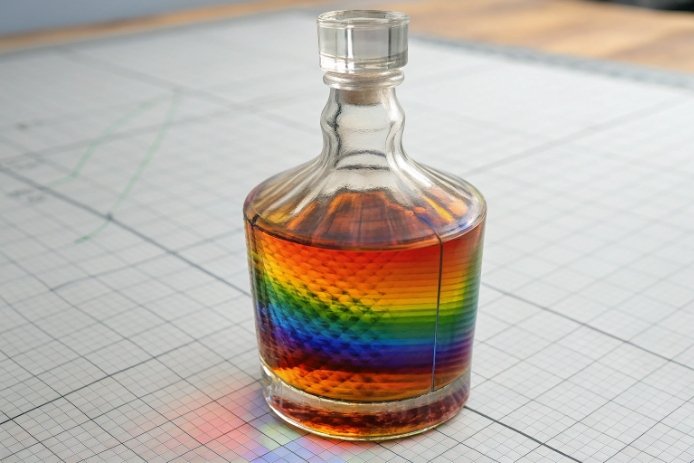
Yes. Rapid warming creates a temperature gradient: the surface warms first while the glass mass (especially thick zones) stays cold. That mismatch can create tensile stress in vulnerable regions—particularly on thick-bottom bottles, square bottles, and bottles with existing scuffs or scratches.
Why thick-bottom bottles are high risk
Heavy bases have high thermal inertia 3:
-
Thin sidewalls warm quickly
-
Thick bases warm slowly
-
The heel transition becomes a “stress hinge” where strain concentrates
Geometry raises risk
-
Square/rectangular bottles: corners act as stress concentrators 4
-
Tight radii / abrupt thickness steps: amplify local stress
-
Existing scuffs: provide crack starters
| Glass Geometry | Thermal Inertia | Risk Level | Typical Failure Pattern |
|---|---|---|---|
| Thin round bottle | Low | Low | generally stable |
| Heavy base / deep push-up | High | High | heel/base checks |
| Square bottle | Medium | Medium–High | corner-origin splits |
| Uneven wall distribution | Varied | High | one-side cracking |
How Does Condensation Affect Labels and Packaging?
Condensation forms when the bottle surface is below the air’s dew point. The resulting “sweating” can cause labels to wrinkle or lift and can reduce corrugated strength dramatically—leading to divider collapse, scuffing, and pallet instability.

What condensation does in real operations
-
Labels: edge lift, bubbles, “swimming,” staining on premium papers
-
Decoration: haze, spotting, tarnish risk on metallic effects if protective layers are compromised
-
Corrugated/dividers: moisture reduces stacking strength, increasing carton crush risk
| Component | Reaction to Condensation | Consequence |
|---|---|---|
| Paper label | absorbs moisture, swells | wrinkling, bubbling, discoloration |
| PSA adhesive | loses shear strength 5 when wet/hot | label lift, sliding |
| Wet glue | water reactivates/weakens bond | delamination, label drop |
| Corrugated | fiber saturation | crush, collapse, pallet lean |
| Metallic effects | moisture exposure at edges | dulling/spotting if barrier is weak |
How Do Cold-to-Warm Transitions Impact Closures?
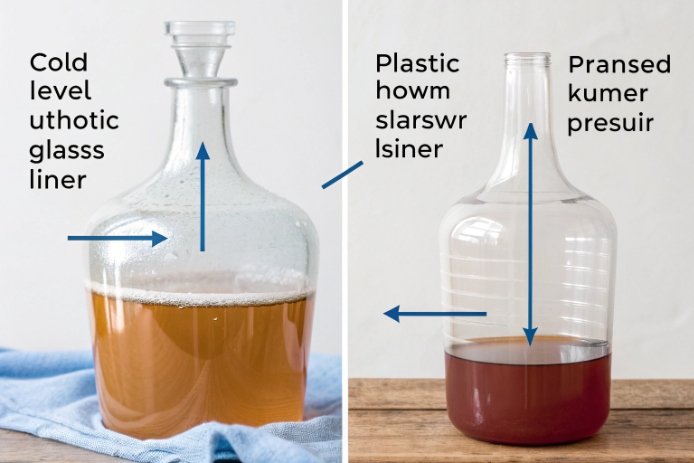
Yes. Cold can stiffen and shrink gasket materials while warming expands contents and can increase internal pressure. The combination can create a short “vulnerability window” where micro-leaks are more likely—especially if torque margin is low or liners have poor recovery.
What typically happens (filled products)
1) Cold phase: gasket/liner stiffens; small gaps can form on marginal seals
2) Warm-up: liquid expands; pressure increases (especially with low headspace 6)
3) Leak path: pressure finds the weakest spot—often the land/liner interface
Common symptoms to watch for
-
sticky necks (micro-leaks, not always visible drips)
-
loss of vacuum in food packs
-
lower-than-expected removal torque 7 after warm-up
-
cap back-off witness marks after vibration + cycling
What Handling Steps Prevent Winter Damage?
Prevention is mostly operational discipline: staged acclimation, airflow management, and “don’t inspect too early.”
1) Use staged acclimation (buffer zone)
-
Move pallets into an intermediate area first (cool staging is better than a sudden jump)
-
Avoid directing heaters at cold pallets
-
For thick-bottom or premium bottles, prioritize slower warming
2) Manage condensation aggressively
-
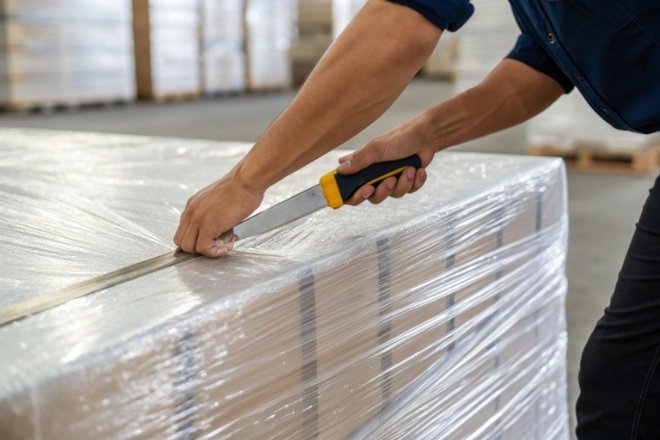
Slit stretch wrap to let pallets “breathe” (don’t fully strip immediately if the warehouse is humid)
-
Add fans/air circulation to speed evaporation 8
-
Leave gaps between pallets for airflow
-
Use dehumidification 9 if the staging area runs humid (lower dew point = less sweating)
3) Delay QC until temperatures stabilize
-
Don’t judge stability at “2 hours in.” Thick zones can stay cold much longer.
-
For sealed packs: measure removal torque and run leak checks 10 after equilibrium, not while components are still cold/stiff.
| Step | Action | Purpose | Critical Note |
|---|---|---|---|
| Unloading | move to buffer area | reduce thermal gradient | avoid direct heat blast |
| Wrap control | slit wrap + airflow | evaporate condensation | prevent carton soaking |
| Spacing | leave pallet gaps | improve warming uniformity | reduces sweating duration |
| Wait | hold until stable | reach thermal equilibrium | don’t process cold glass |
| QC | torque + leak + carton check | catch risk before line | verify bottoms are dry |
Quick “Winter Arrival” Checklist
- ☐ Pallets staged away from direct heaters and doors
- ☐ Stretch wrap slit for breathing + fans running
- ☐ Pallets spaced for airflow; humidity controlled if possible
- ☐ Carton bottoms checked for moisture before high-rack storage
- ☐ No filling, decorating, or aggressive handling until bottles stabilize
- ☐ Post-acclimation QC: torque audit + leak check (if filled) + scuff/crack scan (heel/shoulder)
Conclusion
Winter transitions are a battle against thermal gradients and condensation. A controlled acclimation process—paired with airflow, humidity management, and post-stabilization QC—protects both the glass and the packaging system that sells it.
Footnotes
-
A measure of a material’s ability to conduct heat, which is notably low in glass packaging. ↩ ↩
-
The temperature at which air becomes saturated with water vapor, causing condensation on cold surfaces. ↩ ↩
-
The degree of slowness with which the temperature of a body approaches that of its surroundings. ↩ ↩
-
Locations in an object where stress is concentrated, often leading to fracture under load. ↩ ↩
-
The ability of an adhesive to resist forces that cause the label to slide or lift. ↩ ↩
-
The volume left at the top of a filled bottle to allow for product expansion. ↩ ↩
-
The rotational force required to unscrew a cap, indicating the integrity of the seal. ↩ ↩
-
The process of turning liquid water into vapor, essential for drying condensation on bottles. ↩ ↩
-
The mechanical removal of moisture from the air to prevent sweating on cold glass. ↩ ↩
-
Verification methods to ensure package integrity and prevent product loss after thermal changes. ↩ ↩






