
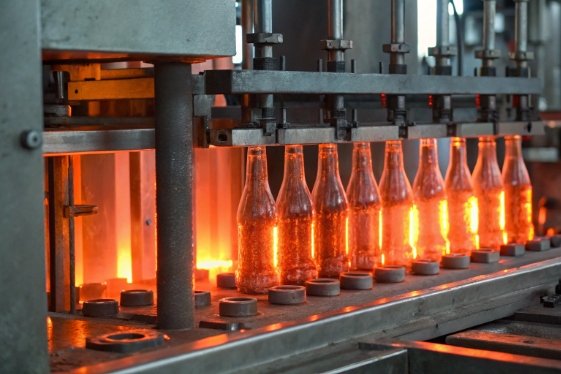
Inconsistent mold temperatures lead to a kaleidoscope of defects, from shattered bottoms to warped necks, costing factories thousands in downtime. Is your cooling strategy precise enough to handle the heat?
You must prioritize the thermal equilibrium between the molten glass heat input and the mold’s cooling capacity. Critical focus areas include maintaining specific temperature ranges (typically 400°C–500°C), optimizing cooling wind velocity, and ensuring consistent lubrication to prevent sticking, thermal checks, and dimensional instability.
Dive Deeper: The Mold as a Heat Exchanger
At FuSenglass, we teach our engineers to view the mold not just as a shaping tool, but as a high-performance heat exchanger 1. The fundamental challenge of glass forming is energy management. We drop a gob of glass at roughly 1,100°C into a cast iron or bronze alloy mold. Within seconds, we must extract enough heat to solidify the container so it can support its own weight (around 700°C), but not so much that we induce thermal shock fractures.
This process requires a delicate "Heat Balance." Every cycle pumps energy into the metal; every blast of cooling air removes it. If you pay attention to only the shape and ignore the thermodynamics, you lose control of the process.
The Physics of Heat Transfer
The heat moves in a specific chain:
-
Glass to Mold Interface: Heat transfers via conduction 2. This depends heavily on the "swab" (lubricant) layer and the contact pressure.
-
Through the Mold Wall: The thermal conductivity of the mold material (Iron vs. Bronze) dictates how fast heat moves to the cooling channels.
-
Mold to Cooling Air: Convection 3 removes the heat from the mold exterior or internal channels into the factory exhaust.
If any link in this chain is broken—e.g., dirty molds insulating the interface, or blocked air vents reducing convection—the mold temperature creates a "runaway" effect. A mold that runs 20°C too hot acts completely differently than one running at target, changing the friction coefficient of the glass flow and altering the final bottle distribution.
Heat Balance Inputs and Outputs
| Factor | Type | Influence on Mold Temperature |
|---|---|---|
| Gob Temperature | Input (+) | Hotter glass pumps more energy into the mold. |
| Machine Speed | Input (+) | Faster cycles = less time for mold to cool between gobs = Heat buildup. |
| Cooling Wind | Output (-) | The primary control lever. Volume and duration of air blast. |
| Ambient Air | Output (-) | Seasonal changes (Summer vs. Winter) affect cooling efficiency. |
| Radiation | Output (-) | Heat lost to the surrounding environment (minor compared to wind). |
How does mold temperature affect key quality issues like wall thickness uniformity, seams, and surface defects?
A mold that fluctuates in temperature produces bottles that fluctuate in dimensions. When customers report "wavy" glass or inconsistent filling levels, the root cause is often the thermal friction inside the mold.
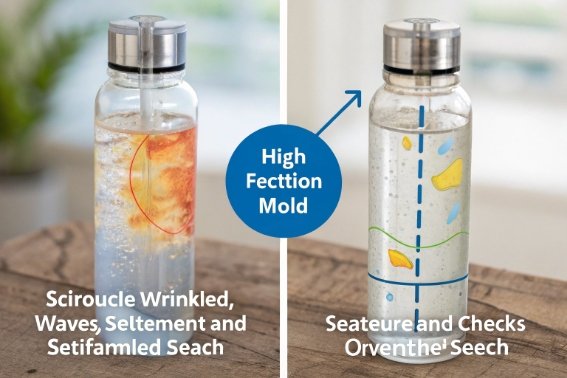
Mold temperature directly dictates the glass’s viscosity at the contact surface; a cold mold stops flow causing thick walls and wrinkles, while a hot mold allows over-stretching causing thin spots and fins at the seams.
The Friction of Flow
Glass forming is essentially fluid dynamics. When the hot gob hits the mold, a "skin" forms immediately. The thickness and friction of this skin depend on the mold temperature.
-
Scenario A: The Cold Mold (< 380°C)
When the glass touches a cold mold, the skin chills instantly and becomes rigid. It refuses to slide. This leads to:
-
Loading Marks/Wrinkles: The glass folds over itself rather than flowing smooth.
-
Thick/Heavy Sections: The glass grabs the mold wall early and stays there, leading to a thick upper body and a thin bottom (as the rest of the glass keeps moving).
-
Orange Peel: A microscopic rippling of the surface, making the glass look dull rather than glossy.
-
-
Scenario B: The Hot Mold (> 520°C)
When the mold is too hot, the glass doesn’t form a skin. It remains sticky and fluid.
-
Sticking: The glass physically fuses to the metal, causing catastrophic "tear outs" when the mold opens.
-
Fins/Flash: The glass is so fluid it pushes into the tiny gaps where the mold halves meet, creating sharp fins at the seams.
-
Lean/Deformation: The bottle exits the mold too soft and bends under its own weight.
-
Defect Correlation Matrix
| Defect Name | Appearance | Thermal Cause | Mechanism |
|---|---|---|---|
| Settle Wave | Ripple in the wall | Mold too cold | Glass freezes before fully settling in the blank. |
| Checks (Surface) | Fine hairline cracks | Mold too cold | Thermal shock 4: surface contracts faster than core. |
| Washboards | Wavy uneven surface | Uneven Temp | Vibrating flow due to variable friction. |
| Seam Flash | Sharp glass ridge | Mold too hot | Glass viscosity too low; flows into mold joint. |
| Blisters | Bubbles in skin | Mold too hot | Localized re-boiling or reaction with swab oil. |
What mold temperature ranges and cooling strategies are typical for different bottle types (food jars vs. spirits vs. cosmetics)?
One thermal setting does not fit all. A heavy pharmaceutical jar requires a completely different heat extraction strategy than a lightweight, high-speed beer bottle.
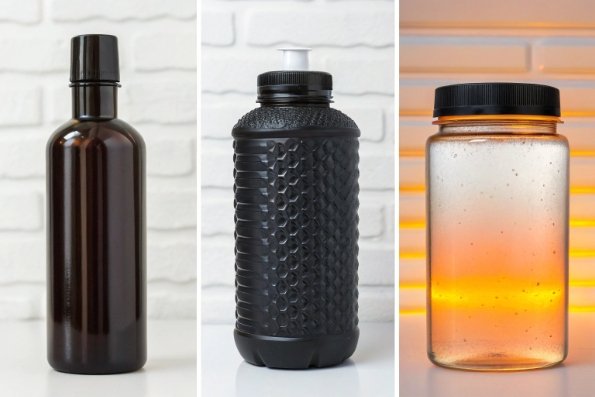
Heavy-weight containers like food jars require aggressive cooling strategies to manage high heat loads (running molds at 400°C–450°C), while cosmetic bottles often run hotter (480°C–520°C) to maximize surface gloss and smoothness.
Tailoring the Thermal Strategy
The mass of the glass determines the "Heat Load." A 500g jar brings twice the heat energy of a 250g bottle. If you run them on the same machine settings, the jar mold will overheat and melt, while the bottle mold will freeze.
1. The Cosmetic Strategy (High Gloss, Low Speed)
For high-end perfume or spirits, appearance is everything. We want the glass to retain heat as long as possible to smooth out imperfections (fire polish effect).
-
Target Temp: High (480°C–520°C).
-
Cooling: Gentle. We often use "Stack Cooling" (natural draft) or very low-pressure forced air.
-
Risk: The bottle is very soft upon exit; requires careful handling to prevent deformation.
2. The High-Speed Beverage Strategy (Beer/Soda)
Here, speed is money. We need to freeze the glass instantly to eject it and start the next cycle.
-
Target Temp: Moderate/Low (420°C–460°C).
-
Cooling: Aggressive "Vertiflow" (axial) cooling. High-velocity air blasts directly through the mold shell.
-
Risk: Checks (cracks) from thermal shock if cooling is too uneven.
3. The Heavy Jar/Pharmaceutical Strategy
Thick walls hold heat like a battery. The challenge is getting the heat out of the thick bottom.
-
Target Temp: Low (400°C–450°C).
-
Cooling: Focused. We use separate cooling controls for the mold body and the mold bottom plate. The bottom plate runs coldest to freeze the heavy base.
Operational Parameters by Category
| Category | Glass Weight | Cycle Speed | Cooling Priority | Typical Mold Temp |
|---|---|---|---|---|
| Cosmetics | Medium | Slow (20-40 BPM) | Surface Quality | Hot (500°C) |
| Beer/Soda | Light | Fast (>100 BPM) | Shape Stability | Medium (440°C) |
| Food Jars | Heavy | Medium (50-80 BPM) | Heat Removal | Cool (420°C) |
| Pharma | Light/Med | Fast | Dimension/Bore | Precise (450°C) |
How can unstable mold temperature increase thermal stress and lead to post-production cracking or high breakage rates?
Breakage in the warehouse or on the client’s filling line is often a delayed reaction to thermal stress induced hours earlier in the mold.
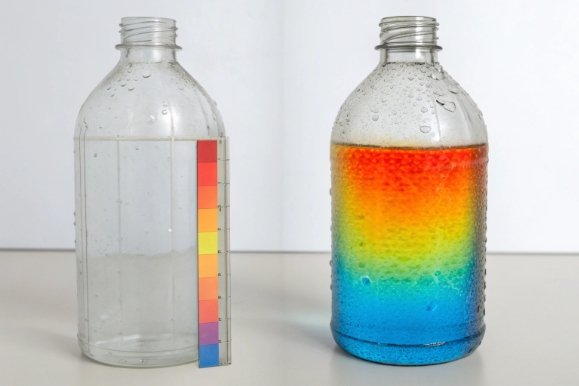
Unstable mold temperatures create uneven cooling rates across the bottle surface, locking in complex residual stress gradients that the annealing lehr cannot fully remove, resulting in "delayed breakage" or hypersensitivity to thermal shock.
The Mechanism of Locked-In Stress
Glass is a material of memory. It remembers how it was cooled.
-
Uniform Cooling: If the mold is a consistent 450°C, the glass cools evenly. The annealing lehr 5 (oven) can easily relieve the minor stresses remaining.
-
The "Cold Spot" Problem: If a cooling vent is clogged, one side of the mold might be 500°C while the other is 400°C. The glass touching the 400°C side freezes instantly (contracting). The glass on the 500°C side stays soft.
-
As the soft side eventually cools, it pulls against the already-rigid cold side.
-
This creates a permanent Tension Zone.
-
Why the Lehr Can’t Fix Everything
Many assume, "The annealing lehr fixes stress." This is only partially true. The lehr removes global stress. It struggles to remove deep, localized stress caused by extreme mold temperature variance.
If a bottle leaves the mold with a "checked" bottom (micro-cracks from cold mold contact), no amount of annealing will heal that crack. It is a physical separation, not just a stress force. Furthermore, if the temperature variance causes "wedged" walls (thick/thin), the thin side will cool faster in the lehr than the thick side, re-introducing stress during the annealing process.
Consequences for the Buyer
| Stress Type | Cause | Result on Filling Line |
|---|---|---|
| Thermal Shock Failure | Cold Mold (Checks) | Bottom falls out during hot filling 6 or pasteurization. |
| Impact Failure | Uneven Stress Profile | Bottle shatters with minor side impact on conveyors. |
| Pressure Failure | Thin wall (Hot Mold) | Bottle bursts under carbonation or vacuum pressure. |
| Delayed Breakage | Complex Stress Map | Spontaneous breakage in warehouse storage. |
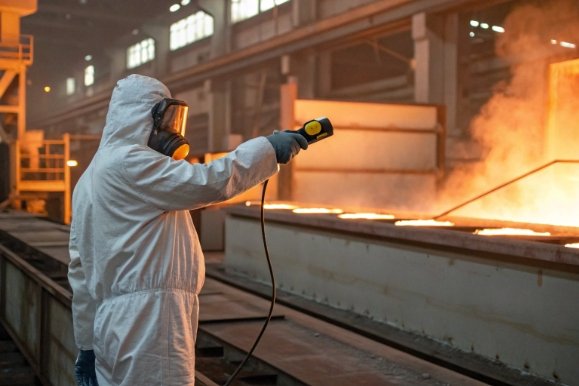
What monitoring and maintenance practices keep mold temperature consistent (cooling air control, thermocouples, lubrication, and mold wear checks)?
Consistency is not achieved by luck; it is achieved by rigorous maintenance and real-time monitoring of the cooling infrastructure.
Effective control requires a regimen of airflow management (cleaning vents and checking dampers), standardized swabbing intervals to maintain the thermal interface, and regular mold audits to detect "growth" or wear that alters heat transfer.
1. Airflow Management (The Lungs of the Process)
The cooling wind is the primary variable.
-
Dampers: These valves control how much air hits the mold. They must be calibrated. A "50%" setting on Section 1 must mean the same airflow as "50%" on Section 2.
-
Vent Cleaning: Glass production is dirty (oil smoke, dust). The cooling holes in the mold hangers clog up. A clogged vent creates a hot spot.
- Protocol: Regular wire-brushing of cooling channels.
2. Swabbing (The Thermal Interface)
Swabbing is the application of graphite lubricant 7.
-
The Error: Operators often swab "when they feel like it."
-
The Result: Fresh swab insulates the mold (hotter glass). As it burns off, the mold cools and friction increases.
-
The Fix: Automatic Swabbing Systems. These robotic arms apply a micro-dose of lubricant at exact intervals (e.g., every 15 minutes), keeping the thermal barrier constant.
3. Temperature Monitoring Tools
-
Handheld Pyrometers: The standard tool. Operators should spot-check molds every hour.
-
In-Mold Thermocouples: The gold standard. Sensors embedded in the mold metal provide continuous real-time data to the control room, allowing for automatic damper adjustments (Closed Loop Control 8).
Maintenance Checklist
| Action | Frequency | Purpose | Impact on Temp |
|---|---|---|---|
| Measure Mold Temp | Hourly | Verify process stability | Immediate detection of drift. |
| Clean Cooling Vents | Daily/Weekly | Restore airflow | Removes hot spots. |
| Check Dampers | Monthly | Calibrate airflow | Ensures Section-to-Section consistency. |
| Inspect Mold Wear | Per Job Change | Check metal thickness | Worn molds cool unevenly. |
| Audit Swab Cycle | Per Shift | Standardization | Prevents thermal spikes from over-swabbing. |
Conclusion
Controlling mold temperature is the unsung hero of glass bottle manufacturing. It is the invisible hand that determines whether a bottle will be a pristine vessel or a rejected liability. By treating the mold as a precise thermal instrument—balancing input heat with output cooling and rigorously maintaining the airflow systems—manufacturers can guarantee the structural integrity and aesthetic quality that B2B buyers demand.
Footnotes
-
A device designed to transfer heat between two or more fluids or mediums. ↩
-
The transfer of heat energy through direct contact between molecules. ↩
-
Heat transfer through the movement of fluids, such as cooling air blowing over a hot mold. ↩
-
Structural failure of glass caused by rapid temperature changes, creating stress. ↩
-
A long oven used to slowly cool glass containers to relieve internal stress. ↩
-
A packaging method using hot liquid to sterilize the container, requiring thermal durability. ↩
-
Essential substances used to reduce friction between the glass and the mold surface. ↩
-
A system that automatically adjusts control inputs (like cooling air) based on measured output. ↩






