If a honey or jam fails on shelf, customers blame the brand, not the jar, cap, or vacuum line behind it.
Honey and jam jars use soda-lime glass from sand, soda ash, limestone, and cullet; hot-fill uses heat-resistant designs plus lug caps with matched liners, and vacuum and seal tests confirm that light, oxygen, and microbes stay out.
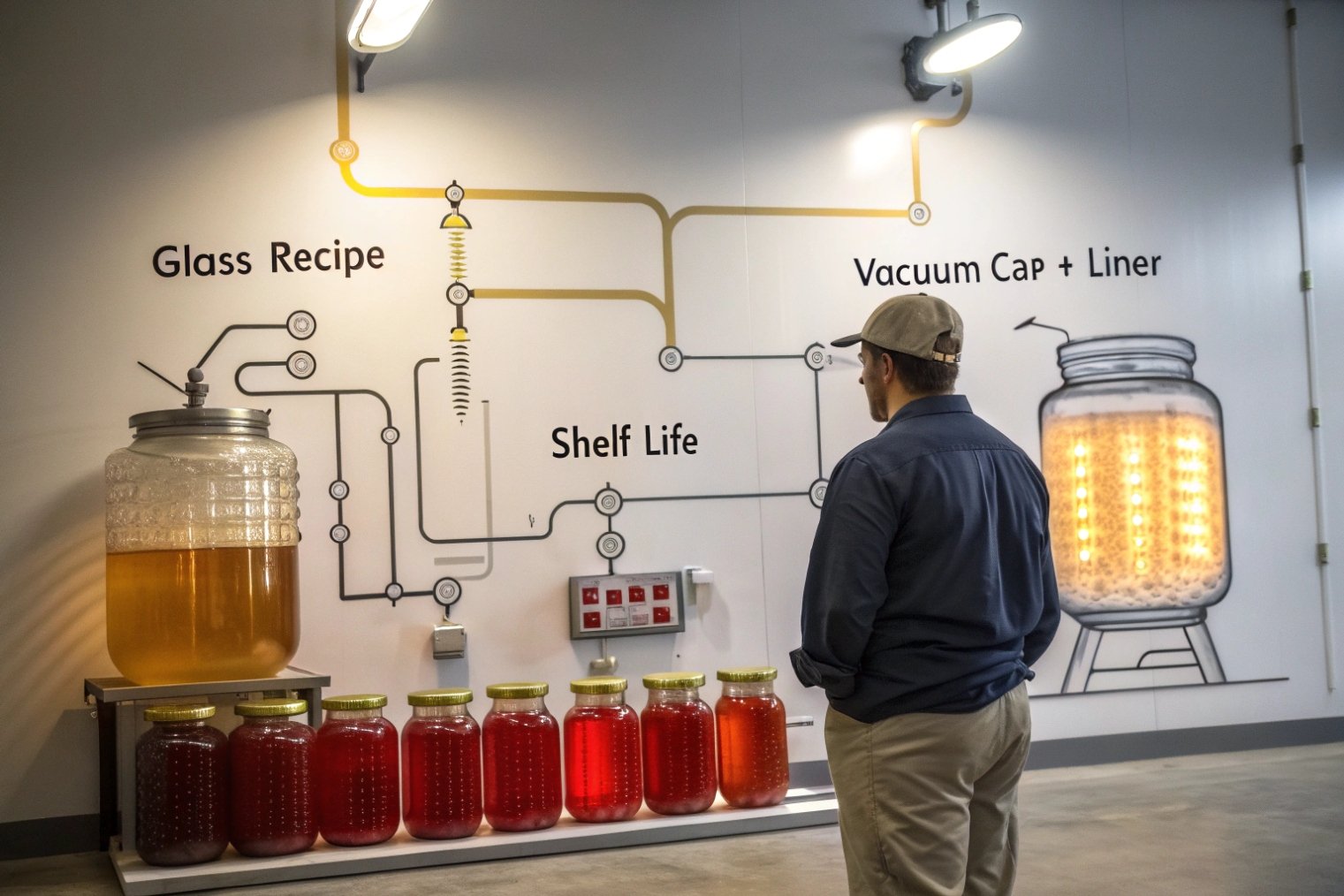
Good container glass 1 and the right closure system work together. If the recipe, the heat treatment, the liner, or the vacuum control is wrong, the product suffers, no matter how beautiful the jar looks.
What raw materials actually go into honey and jam jars?
Before we talk caps and tests, we need to know what is actually in the glass that holds your honey and jam.
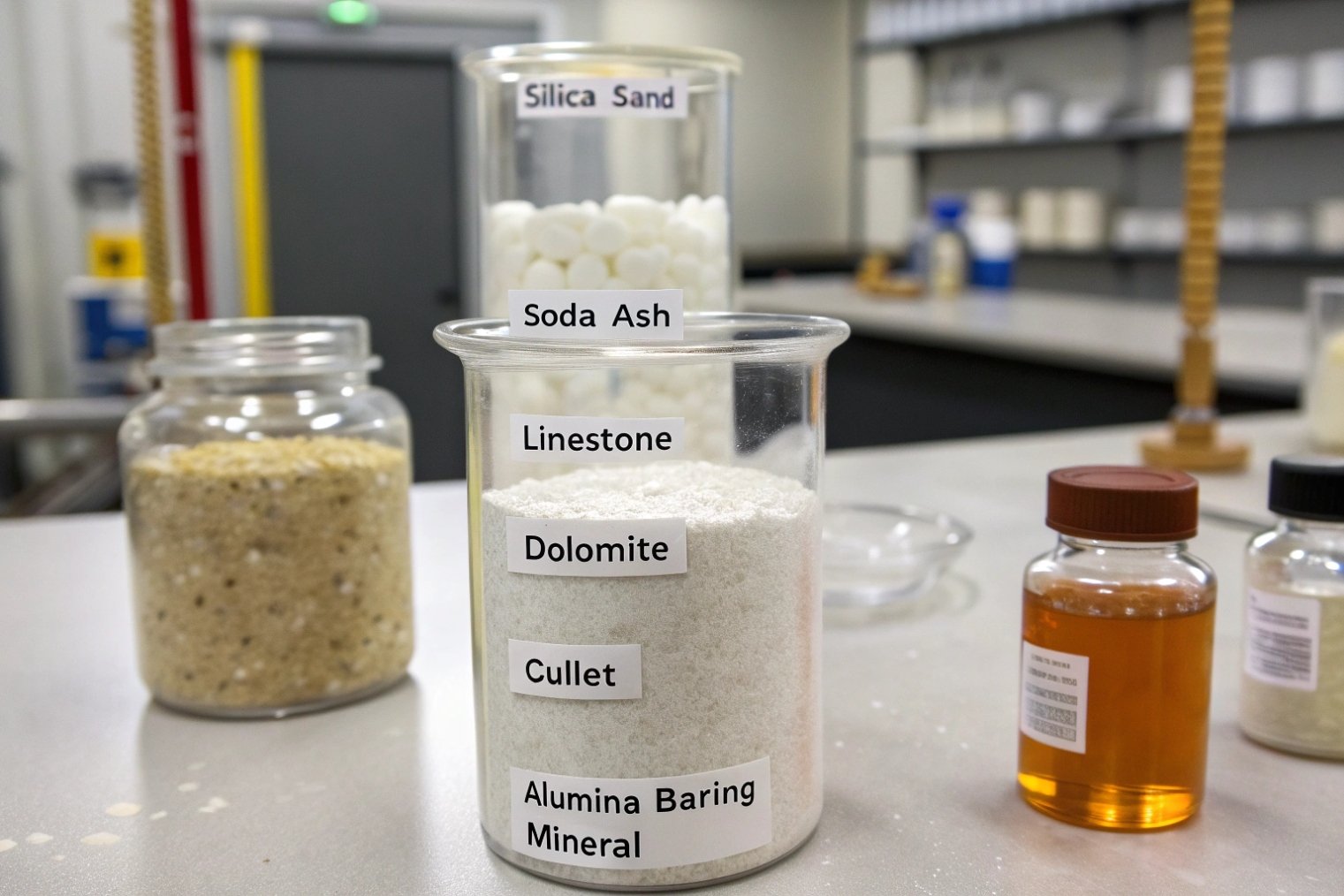
Most honey and jam jars are soda-lime glass made from silica sand, soda ash, limestone, dolomite, cullet, small alumina sources, fining agents, and tiny amounts of colorants or decolorizers.
Core soda–lime recipe for food jars
For honey and jam, the industry standard is food-grade soda–lime silica glass—often simply called soda–lime glass 2. The typical batch includes:
| Raw material | Main component | Role in the jar glass |
|---|---|---|
| Silica sand | SiO₂ | Builds the glass network and basic strength |
| Soda ash | Na₂CO₃ | Supplies Na₂O, lowers melting temperature, improves flow |
| Limestone | CaCO₃ | Adds CaO, improves durability and resistance to water attack |
| Dolomite | CaMg(CO₃)₂ | Supplies CaO and MgO, tunes viscosity and durability |
| Cullet (recycled) | Glass mix | Lowers energy use, stabilizes composition, improves melting |
In practice, Na₂O is sourced from soda ash (sodium carbonate) 3. Many container recipes also use dolomite 4 to bring in both CaO and MgO in a cost-effective way. Using cullet (recycled glass) 5 is also critical because it lowers melting energy and helps stabilize day-to-day furnace composition.
On top of this, manufacturers add alumina sources (feldspar, kaolin, bauxite) to bring in a small amount of Al₂O₃. This improves:
- Resistance to scratching on filling and conveyors.
- Stability under repeated hot-fill and washing cycles.
Fining, redox, and color control
The melt also includes smaller “helper” ingredients:
- Fining agents such as sodium sulfate (salt cake) and a little carbon help bubbles rise and escape.
- Redox modifiers (nitrates as oxidizers, carbon as reducer) control the furnace atmosphere and the iron state, which affects color.
- Colorants and decolorizers fine-tune appearance:
- For clear flint jars, small selenium and cobalt additions balance iron’s natural green tint.
- For amber jars, iron with sulfur–carbon redox creates a brown glass that also blocks light.
So even though the label just says “glass”, the jar is a carefully tuned material designed to be clear or protective, strong enough for hot-fill, and compatible with food-contact rules.
Which glass types withstand hot-fill and pasteurization best?
When you fill hot jam or run jars through pasteurization, the glass sees both heat and stress from capping and cooling.
Well-designed soda-lime container glass is the standard for hot-fill and pasteurized honey and jams; high borosilicate is technically stronger in thermal shock but usually not needed or economical for jars.
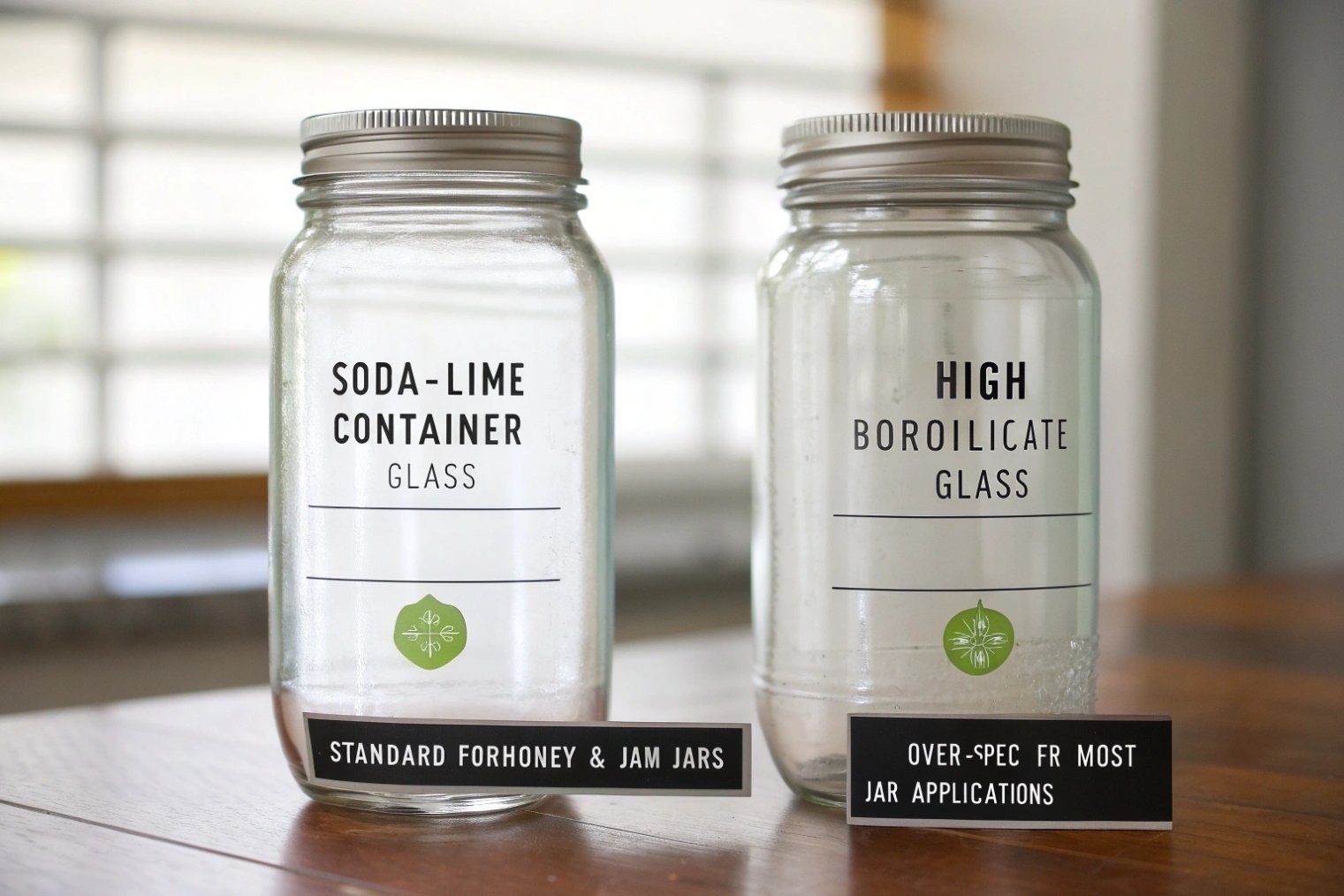
Soda-lime container glass in real hot-fill lines
Food jars for honey and jams are almost always annealed soda-lime container glass. They are designed for:
- Typical hot-fill temperatures for jam and preserves.
- Controlled cooling tunnels or air/ water sprays.
- Short thermal cycles in pasteurizers.
The keys are not just the chemistry, but also:
- Uniform wall thickness, especially at shoulders and base.
- Proper annealing, so internal stresses from forming are relaxed.
- Correct design safety factors for vertical load and impact.
If the line does not shock the jar with extreme cold water right after filling, annealed soda-lime performs very well.
High borosilicate glass has much lower thermal expansion and higher thermal-shock resistance, but jars in this glass are rare for everyday honey and jam. The cost is higher, forming is slower, and recycling is more complex.
Quick comparison for jar use
| Property / aspect | Soda-lime container glass | High borosilicate glass |
|---|---|---|
| Thermal expansion (CTE) | ~8–9×10⁻⁶ /K | ~3.3×10⁻⁶ /K |
| Hot-fill suitability | Very good with proper design and cooling | Excellent but over-spec for most jars |
| Pasteurization | Standard use case | Also fine |
| Cost and availability | Lowest cost, many suppliers | Higher cost, limited formats |
| Recycling compatibility | Standard container streams | Needs separation |
For honey and jam, “special glass” is usually not needed. Good soda-lime design plus correct process control is enough to handle hot-fill and pasteurization safely.
Do lug caps with plastisol or PVC-free liners seal better?
Once the glass is right, shelf life is all about how well the cap and liner close the system against oxygen, steam, and microbes.
Lug caps can seal extremely well with either plastisol or modern PVC-free liners, as long as the liner chemistry matches the product and the closing torque and vacuum are controlled.
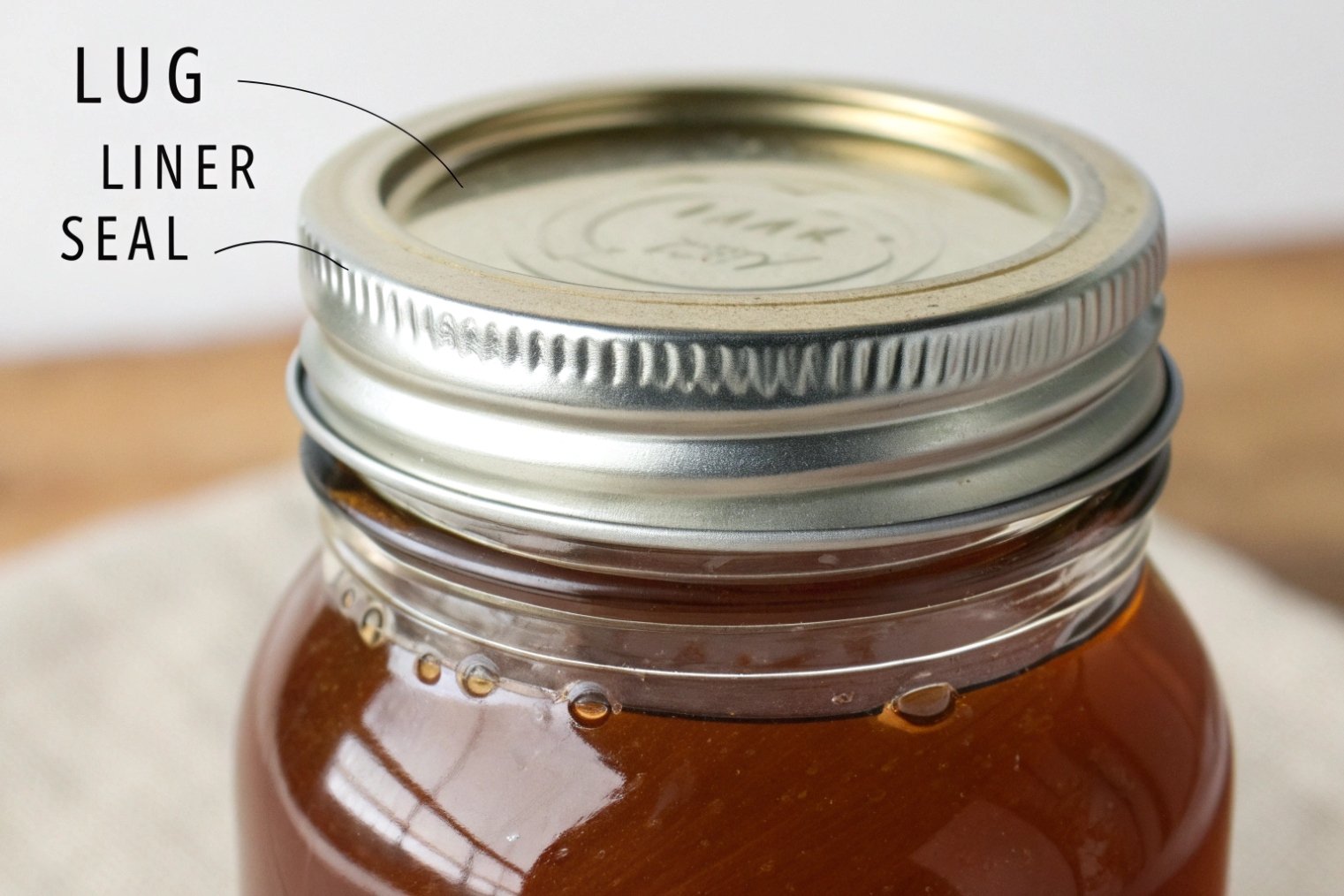
How lug caps work on honey and jam jars
Most honey and jam jars use metal lug closures 6:
- The jar finish has lugs instead of a full thread.
- The cap is pressed and twisted on during filling.
- During cooling, headspace steam condenses and pulls a vacuum.
- The vacuum plus cap geometry keep the liner compressed against the sealing land.
The liner is what actually seals:
- Traditional plastisol liners flow under heat, then set as they cool, giving a tight, conforming seal.
- PVC-free liners use alternative compounds but aim for similar compression and recovery.
Plastisol vs PVC-free in practice
Both systems can work very well if chosen and applied correctly. The main differences:
| Feature / concern | Plastisol liner | PVC-free liner |
|---|---|---|
| History in jams/honey | Long, proven use | Newer but now common |
| Hot-fill performance | Excellent flow and seal at high temps | Good when matched to process |
| Regulatory / perception | Some brands move away from PVC systems | Seen as more modern / “cleaner” option |
| Cost | Often slightly lower | Can be higher, depends on supplier |
The seal quality depends more on:
- Correct liner hardness and thickness for the glass finish.
- Clean, flat sealing lands on the jar (no chips or burrs).
- Proper capper settings:
- Application torque.
- Head pressure.
- No cross-thread or cocked caps.
If these are right, both plastisol and PVC-free can deliver very low leak rates and strong vacuum retention over the full shelf life.
How do amber jars protect light-sensitive spreads?
Some honeys and fruit spreads lose flavor, color, or beneficial compounds when they sit under bright light in clear glass.
Amber jars use iron–sulfur–carbon color systems to absorb UV and blue light, slowing photo-oxidation and preserving color, aroma, and nutrients better than clear flint jars on open shelves.
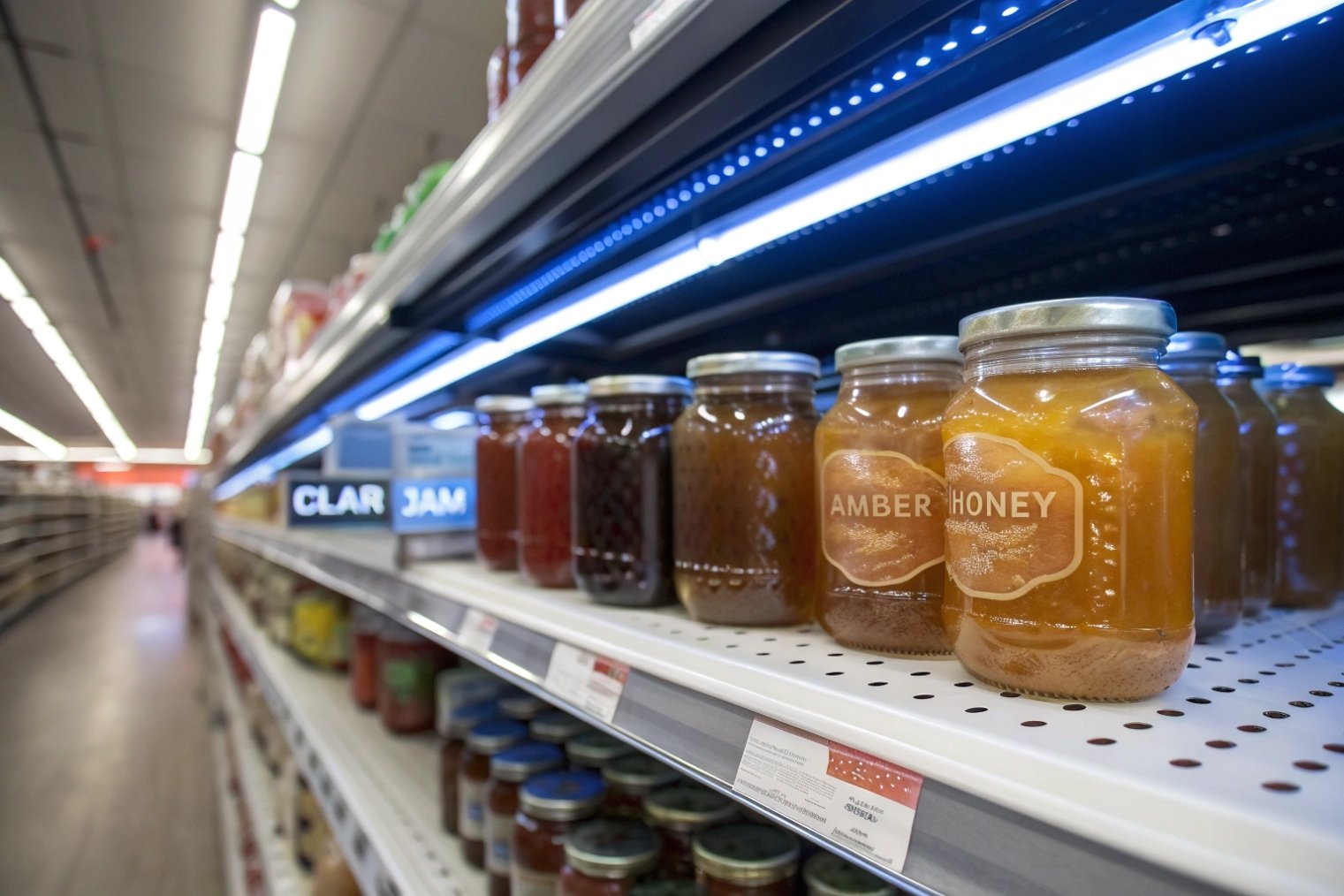
Why light matters for honey and jam
Light, especially UV and blue wavelengths, can:
- Break down pigments in fruit spreads.
- Degrade aroma molecules and flavor notes.
- Accelerate oxidation reactions (including photooxygenation 7) that flatten taste.
- Slowly change color, making products look older.
Honey is somewhat more stable, but some varieties and added ingredients (like herbs or fruit) can still react.
Clear flint glass offers almost no barrier to visible light. It looks beautiful but gives little real protection. That is why many premium or sensitive products move to amber, darker green, or opaque packs.
How amber glass helps
Amber glass is still soda-lime, but the furnace runs with:
- More iron.
- Controlled levels of sulfur and carbon.
- A specific redox balance that forms light-absorbing species.
This creates a rich brown color that:
- Blocks most UV.
- Strongly reduces blue and some green light.
- Lets enough light through to see the product vaguely, while protecting it much better.
The result:
- Slower loss of natural color in fruit preserves.
- Better retention of delicate aromas.
- Less risk of off-notes from light-driven reactions.
Labels and outer packaging can add even more protection. A large, opaque front label and a back label together can cover much of the jar sidewall, cutting light exposure further.
| Aspect | Clear flint jar | Amber jar |
|---|---|---|
| Product visibility | Very high | Lower, warm tone |
| UV / blue light block | Very low | High |
| Protection of flavor | Weak, needs dark storage | Much stronger on brightly lit shelves |
| Perceived “natural” look | Clean, modern | Warm, traditional / apothecary look |
So for honey and spreads that sit under retail lighting for months, amber is a very practical upgrade in protection.
What vacuum and seal tests validate shelf stability?
Even with good jars, caps, and light protection, you still need proof that every batch reached the right vacuum and seal level.
Shelf stability is usually validated with a mix of vacuum measurements, button and leak checks, torque control, upside-down / water-bath tests, and longer storage or incubation tests on retention of vacuum and microbiological safety.
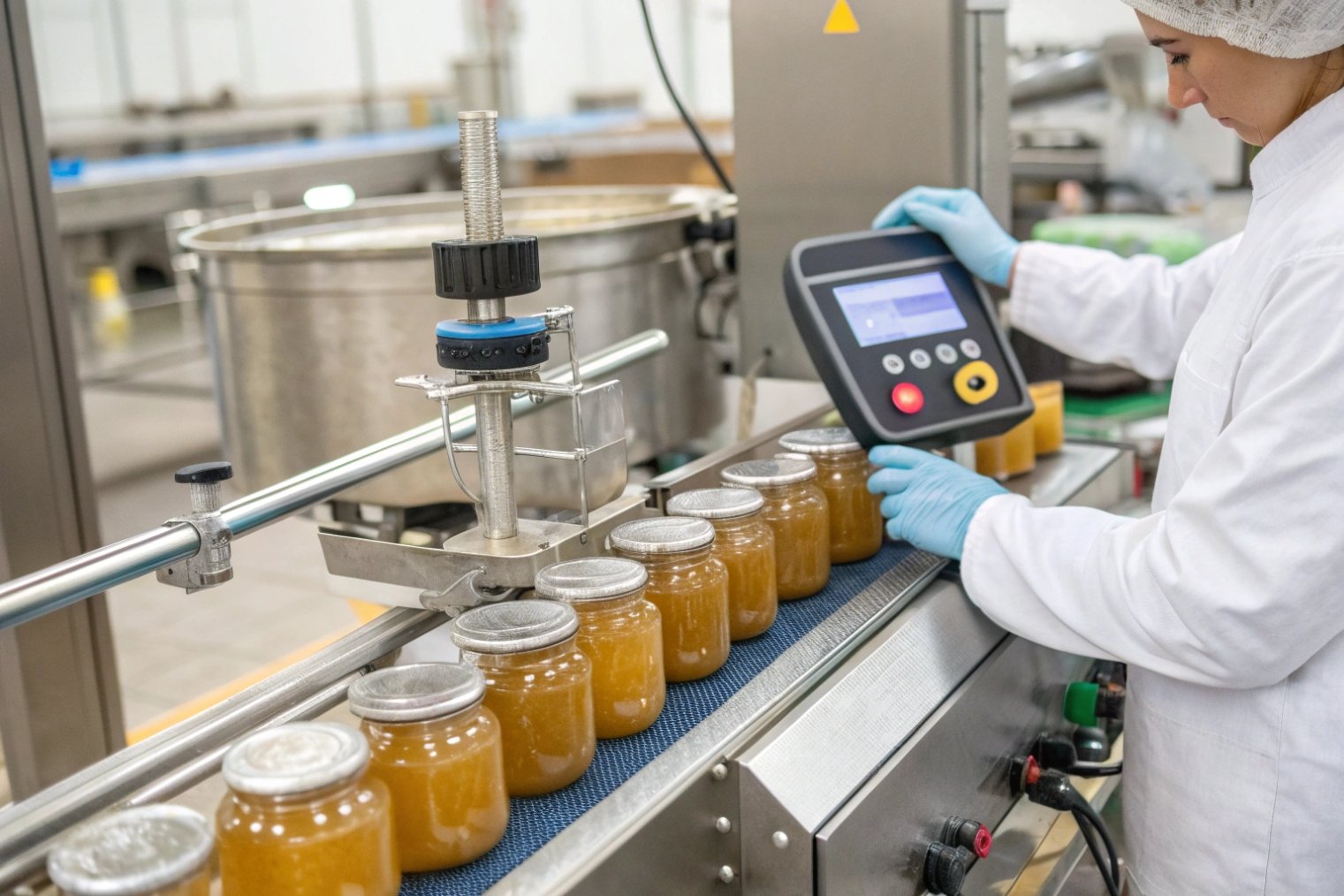
On-line and immediate checks
Right after capping and cooling, typical checks include:
- Vacuum measurement with a headspace gauge on sample jars from each run.
- Button test on lug caps: the center panel should be pulled down and not flex up when pressed.
- Torque checks to make sure caps are neither too loose nor over-tight.
- Short tilt or inverted tests to reveal gross leaks around the seal.
Some plants also use:
- Water-bath leak tests where jars are inverted or tilted in warm water while under light pressure, to see if bubbles escape.
- Dye ingress tests on suspect batches, applying colored solution around the closure and checking if it enters over time.
Longer-term validation
For new products or packaging changes, it is smart to run:
- Accelerated storage tests at elevated temperatures.
- Real-time shelf tests at typical warehouse and shop conditions.
- Regular checks of:
- Vacuum level over time.
- Microbiological safety.
- Sensory quality (flavor, texture, aroma).
A simple matrix helps plan this:
| Test type | Purpose | When to use |
|---|---|---|
| On-line vacuum | Confirm proper process on each batch | Every run, routine QC |
| Cap button / torque | Catch closing and handling issues | Every run, random sampling |
| Leak / tilt test | Detect obvious seal failures | Start-up, after capper changes |
| Storage study | Validate full shelf life and closure choice | New products, new caps, new glass |
If jars, caps, and process are designed as a system—and verified by these tests—honey and jam can hold their taste, color, and safety from filling line to breakfast table.
Conclusion
Honey and jam jars are simple to the eye but complex in design: tuned soda-lime glass, the right lug cap and liner, smart color choice, and solid vacuum testing all work together for safe, stable sweetness.
Footnotes
-
Overview of container-glass formats and how they’re used in bottles and jars. ↩︎ ↩
-
Clear explanation of soda–lime glass composition, properties, and common industrial variants. ↩︎ ↩
-
USGS data on soda ash supply, production, and uses in glass manufacturing. ↩︎ ↩
-
Quick reference on dolomite’s chemistry and why it supplies both CaO and MgO in glass batches. ↩︎ ↩
-
Defines cullet and explains why recycled glass improves melting efficiency and lowers energy. ↩︎ ↩
-
Practical guide to metal lug closures, sealing compound, and the vacuum safety button used on hot-filled jars. ↩︎ ↩
-
Explains photooxygenation—light-driven oxidation chemistry that helps explain color and aroma loss under strong retail lighting. ↩︎ ↩