
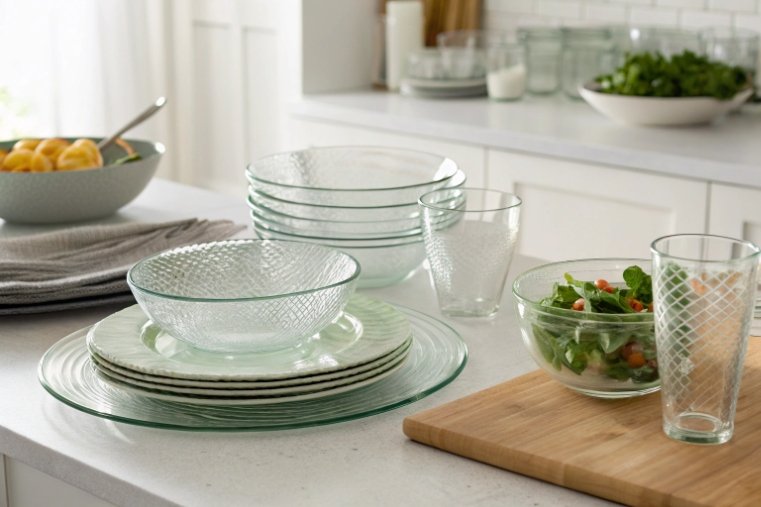
Glass tableware looks simple, but material choices decide if plates chip, crack under heat, or last for years of daily meals.
Glass tableware uses soda-lime, borosilicate, tempered, opal, crystal, high-white, aluminosilicate, and glass-ceramic bodies, plus surface decorations, each with different clarity, strength, cost, and heat resistance profiles.
When the glass recipe matches your real life, dishes move from cupboard to microwave, oven, and sink without drama. So it helps to understand what goes into each type of glass, and what that means for daily use.
What is the difference between soda-lime, borosilicate, and tempered glass?
Thin “nice-looking” plates can shock you the first time they crack in the microwave or under hot water. The issue often starts with the glass type.
Soda-lime is the standard, borosilicate adds thermal-shock resistance, and tempering is a process that strengthens mostly soda-lime or opal glass for better impact and safer breakage.
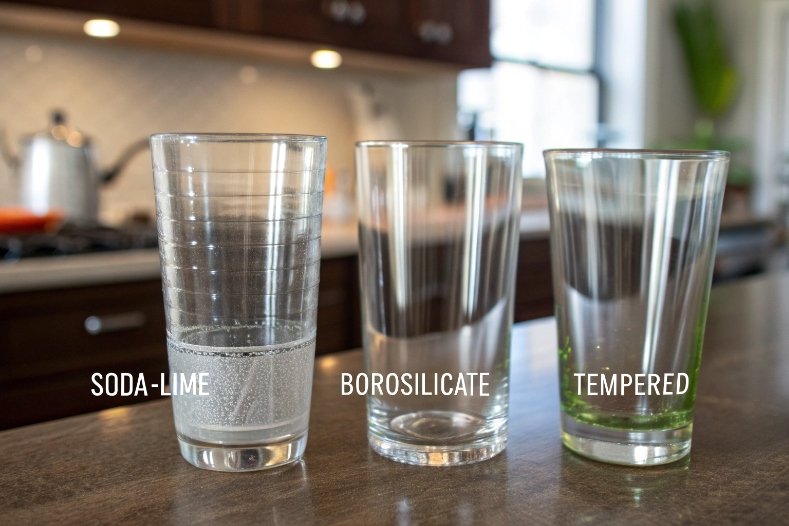
Core compositions in simple terms
Most everyday glass tableware 1 starts with silica sand as the base, then adds different oxides to change behavior.
| Glass type | Main ingredients | Key strengths | Main limits |
|---|---|---|---|
| Soda-lime | Silica, soda (sodium oxide), lime (calcium oxide) | Low cost, easy forming, clear | Modest thermal-shock resistance |
| Borosilicate | Silica, boron oxide, alkali, alumina | High thermal-shock, good chemical resistance | Higher cost, often thinner but more “ringy” |
| Tempered | Usually soda-lime or opal, heat-treated | Strong impact resistance, safer break | Can still fail from deep damage or strong shock |
Soda-lime glass is the workhorse. Plates, bowls, tumblers, and baking dishes often use it. It gives good clarity and low cost. But it does not like sudden temperature changes.
Borosilicate glass 2 changes the story. Boron oxide inside the glass lowers thermal expansion, so the glass expands and contracts less when heated or cooled. That is why borosilicate ovenware and some drinkware handle boiling liquids and fast temperature changes better.
Tempered glass 3 is not a separate chemistry. It is more like “trained” glass. Manufacturers heat soda-lime or opal glass and then cool the surface quickly. This locks compressive stress in the outer layer. That stress makes the piece much stronger against impact and gives a special break pattern: many small pieces instead of long sharp shards.
How they feel and behave on the table
In the hand, these materials feel slightly different:
- Soda-lime tableware usually feels solid, with familiar weight and sound when stacked.
- Borosilicate often feels lighter and “cleaner” but can sound high-pitched when tapped.
- Tempered plates and bowls may feel quite light yet surprisingly tough, especially in triple-layer designs.
In daily use, soda-lime works well for cold and moderate heat, as long as you avoid sharp temperature jumps. Borosilicate handles boiling water and oven use better but still hates extreme shock like cold water on a very hot dish. Tempered glass shines for families and busy kitchens where impact, stacking, and quick handling matter.
Are crystal and high-white glass lead-free and food-safe today?
Crystal looks beautiful on the table. The sparkle and ring feel special, especially for wine and celebration pieces. But many people still worry about lead.
Traditional lead crystal uses lead oxide. Modern “crystal” and high-white glass usually use lead-free formulas with barium, zinc, or other oxides, and are designed to be food-safe when made under current standards.
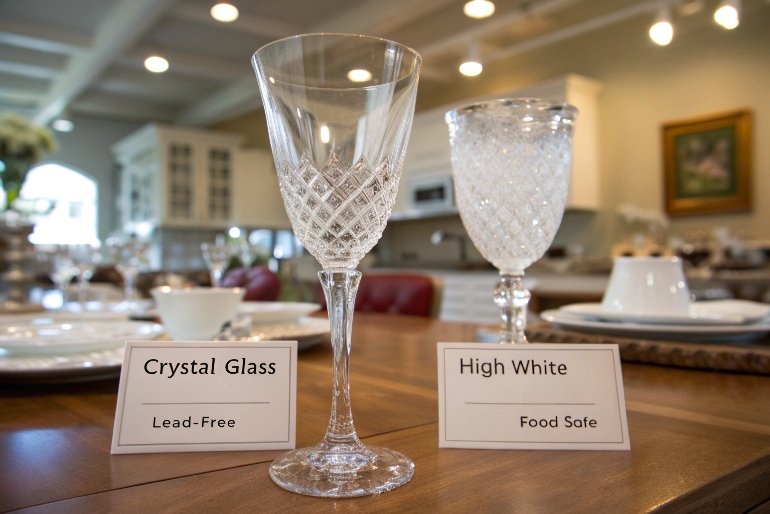
Understanding crystal vs high-white compositions
To keep things clear, it helps to separate three ideas:
| Material type | Main use | Lead content today | Typical role on table |
|---|---|---|---|
| Traditional lead crystal | Older or luxury stemware | Contains lead oxide | Special-occasion glasses, decanters |
| Lead-free “crystal” | Modern fine stemware | Replaces lead with other oxides | Safer sparkle and brilliance |
| High-white flint glass | Clear, bright tableware | Lead-free, high clarity | Premium plates, bowls, tumblers |
Traditional lead crystal 4 uses lead oxide to increase density and refractive index. That gives strong sparkle and weight. Because of health concerns, many modern brands moved away from lead or lowered levels, especially in products meant for regular food and drink.
Lead-free crystal uses barium, zinc, potassium, or other oxides to get similar brilliance without lead. High-white glass is a very clear, high-purity soda-lime or related composition. It aims for colorless, bright appearance without heavy metals.
Practical safety notes at home
In most regions, glass tableware sold today for everyday use must meet strict migration limits for lead and other heavy metals under glass food-contact material regulations 5. That means any leaching into food or drink stays below regulated levels when used as intended.
A few simple habits increase peace of mind:
- For vintage lead crystal, use pieces more for serving at the table than for long-term storage.
- Avoid storing acidic drinks like wine or juice for long periods in old lead crystal decanters.
- For modern high-white or lead-free crystal, check for compliance notes such as “lead-free” or references to current food-contact standards.
In daily life, many homes use high-white glass plates and tumblers as “nicer” everyday pieces. They give a clean, bright look while staying practical, as long as they are marked dishwasher safe and used within normal temperature ranges.
How does thermal expansion affect oven and microwave performance?
The same glass that feels safe at room temperature can behave very differently in an oven or microwave. The hidden player here is thermal expansion.
Glass with a lower thermal expansion coefficient changes size less when heated. That means less internal stress and a much lower risk of thermal-shock cracks in ovens and microwaves.
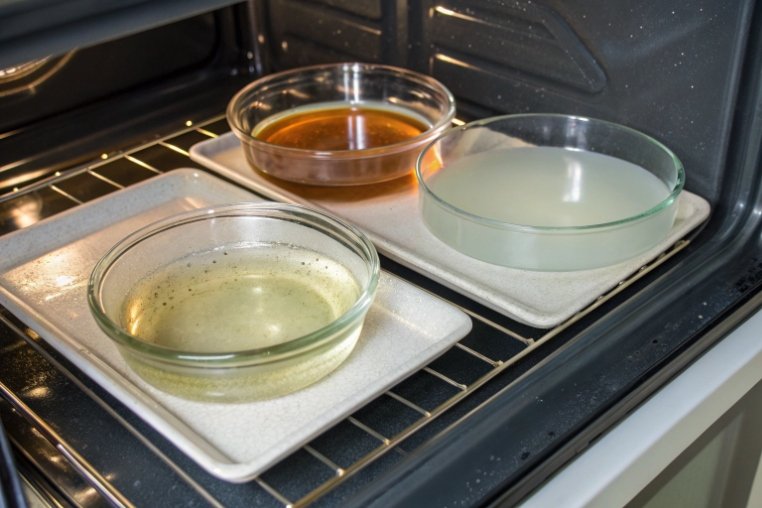
How different glasses react to heat
All glass expands when heated. The rate of expansion depends on the composition. In simple terms:
| Material | Thermal expansion (relative) | Heat behavior | Typical uses |
|---|---|---|---|
| Soda-lime glass | Higher | Good for mild heat, watch thermal shock | Daily tableware, some bakeware |
| Borosilicate glass | Lower | Strong thermal-shock resistance | Ovenware, stovetop-ready pieces, lab |
| Glass-ceramic | Very low or near zero | Extreme shock resistance | Cooktops, specialized cookware |
| Aluminosilicate | Lower than soda-lime | High heat and chemical resistance | High-performance cookware, tech parts |
Lower expansion means that the outer surface and inner body of the glass stay closer in size as temperatures change. That reduces internal tension. This is why borosilicate can handle boiling liquid poured in more safely than standard soda-lime.
Glass-ceramic 6 takes this further. It has both glass and crystalline phases, designed to expand very little. That is why some stove-top and direct-flame products use it. It tolerates severe hot-cold cycles better than normal glass.
What this means in your oven and microwave
In real home use, a few clear rules come from these properties:
- For microwave reheating, most soda-lime or tempered tableware works if labeled microwave safe and if you avoid sudden cold shock after heating.
- For oven baking, borosilicate and glass-ceramic have a clear advantage. They handle preheated ovens and cooling better.
- Do not put cold soda-lime plates straight from fridge into a very hot oven, even if the glass is thick.
Thermal expansion also explains why metallic rims are risky in microwaves. Metal heats differently and can spark. Even if the glass body tolerates the heat, the rim may cause localized overheating and damage.
In my own kitchen, the rule is simple: everyday tempered or opal plates for microwave, clearly marked borosilicate dishes for oven. Anything with metal stays on the table only.
Which material best balances clarity, strength, and cost for daily use?
With so many glass types, it helps to have one simple, reliable choice for daily meals. Most homes want clear pieces that stack well, survive bumps, and do not cost a fortune to replace.
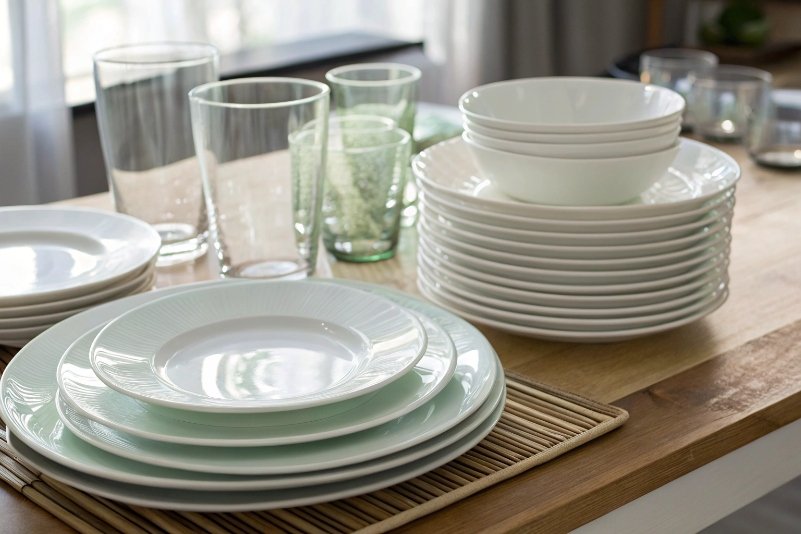
For daily tableware, tempered soda-lime or opal glass usually gives the best balance of clarity, impact resistance, chip resistance, and price. High-white glass works well when you want extra clarity and still keep a reasonable cost.
Comparing everyday material options
You can think of materials as a simple ladder: from budget clarity, up through heat performance, to high-end sparkle. For most people, the sweet spot is in the middle.
| Material | Clarity | Strength / impact | Thermal shock | Cost level | Best role in home |
|---|---|---|---|---|---|
| Standard soda-lime | Good | Moderate | Moderate | Low | Basic plates, tumblers |
| Tempered soda-lime | Good | High | Moderate | Low–medium | Daily chip-resistant tableware |
| Opal glass | Opaque, uniform | High chip resistance | Moderate | Low–medium | Family sets, kids-friendly pieces |
| Borosilicate | Very good | Moderate impact | High | Medium | Oven dishes, hot-drink glassware |
| High-white glass | Very clear | Moderate | Moderate | Medium | Everyday “premium” plates, glasses |
| Lead-free crystal | Brilliant | Moderate, decorative | Low–moderate | Higher | Special occasions, stemware |
Tempered soda-lime or opal glass brings real advantages at the table:
- They are often lighter than thick untreated glass.
- They resist chipping when stacked and when bumped in the sink.
- If they break, they usually form small pieces, which is safer than long sharp shards.
Opal glass tableware 7 adds an opaque, porcelain-like look. It hides scratches, resists stains, and works well for families who want low-maintenance, uniform dishes.
For homes that like a very bright, “hotel-style” look, high-white glass is a strong option. It offers higher clarity without jumping to the cost and care concerns of traditional crystal.
In many kitchens, the best strategy is mixed:
- Tempered or opal sets for daily plates and bowls.
- Borosilicate or glass-ceramic for oven-to-table dishes.
- A few high-white or crystal-style pieces as accent serveware.
That way, each material does the job it is best at, and you do not overpay for performance you do not use.
Conclusion
Choose glass materials by how you really cook and eat: soda-lime or tempered for daily plates, borosilicate or glass-ceramic for heat, and high-white or crystal only where the extra sparkle matters.
Footnotes
-
General introduction to glass composition, production methods, and how material choices affect everyday tableware performance. ↩︎ ↩
-
Detailed explanation of borosilicate glass, its low thermal expansion, durability, and common laboratory and cookware uses. ↩︎ ↩
-
Overview of tempered, or toughened, glass manufacturing, strength improvements, and characteristic small-particle breakage behavior. ↩︎ ↩
-
Background on lead glass, historical crystal formulations, optical properties, and why many manufacturers now offer lead-free alternatives. ↩︎ ↩
-
Introduction to international food-contact material rules governing glass, ceramics, and acceptable migration limits for heavy metals. ↩︎ ↩
-
Technical description of glass-ceramics, near-zero thermal expansion behavior, and why they are used in cooktops and cookware. ↩︎ ↩
-
Overview of opal or milk glass, its opaque appearance, decorative uses, and role in tableware and lighting. ↩︎ ↩






