
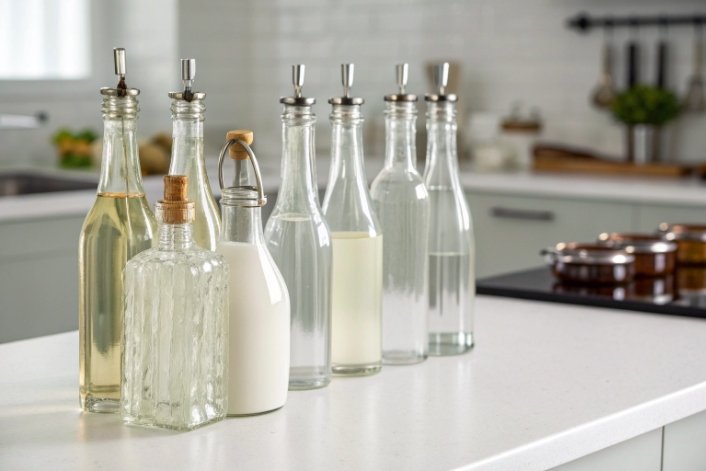
Choosing kitchen glass bottles seems simple, until words like “soda-lime”, “borosilicate”, “flint” and “coating” start appearing on every spec sheet.
Most kitchen glass bottles are soda-lime glass, with a smaller share in borosilicate or opal glass; clarity, strength, safety, and thermal shock depend on glass recipe, recycled cullet, and surface coatings.
When we work with food, beverage, and oil brands, this is often the first technical conversation. The bottle must look clear on shelf, survive filling lines and home kitchens, and pass food safety tests. So it helps to understand what is inside the glass itself, not only the shape or closure.
What’s the difference between soda-lime glass and borosilicate?
Many buyers see both words in catalogs, and assume borosilicate is always “better” glass for bottles.
Soda-lime is the standard for kitchen bottles because it is cheaper, easier to form, and very durable; borosilicate trades extra thermal-shock resistance for higher cost and more limited supply.
What soda-lime bottle glass is made of
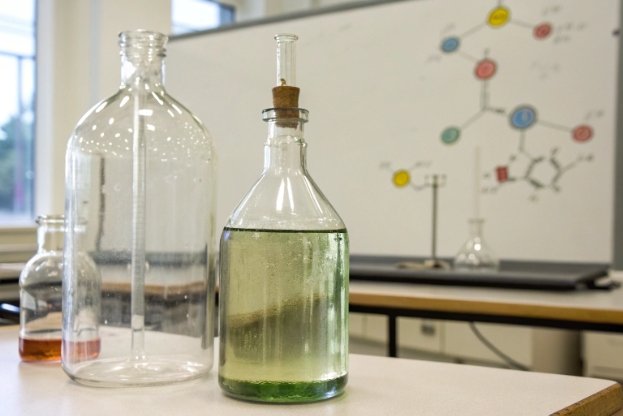
Most kitchen bottles use soda-lime-silica glass 1. Typical container glass has:
- About 70–75% silica (SiO₂) as the network former
- Around 12–15% alkali oxides (mainly Na₂O from soda ash) to lower melting point
- Roughly 10% alkaline earth oxides like CaO, plus some MgO, to give chemical durability and hardness
- Small amounts of Al₂O₃ to improve durability and control viscosity
This blend melts at a practical temperature, flows well in bottle machines, and gives good chemical resistance for oils, acids, alcohol, salts, and detergents. Soda-lime glass makes up the vast majority of food and beverage bottles on the market.
Colorants then tweak this base glass. Iron and sulfur give amber glass with strong UV protection. Iron and chromium give green tones. For clear “flint” glass, small amounts of decolorizers like selenium or cobalt offset the natural green cast from iron in sand.
For most kitchen bottles, soda-lime offers the right balance of:
- Cost
- Formability into complex shapes and ribs
- Strength after proper annealing
- Compatibility with recycling systems
How borosilicate changes performance
Borosilicate glass 2 starts from a similar silica network but replaces part of the alkali with boron oxide (B₂O₃). This change lowers the thermal expansion coefficient and improves thermal shock resistance. It also increases chemical durability in harsh lab or cooking environments.
In practice this means:
- Borosilicate can handle larger and faster temperature swings than standard soda-lime.
- It is common in labware, measuring cylinders, oven dishes, and some high-end oil cruets or teapots.
- It holds up better to repeated direct heating and cooling cycles.
However, borosilicate is harder to melt and form, and the raw material mix is more expensive. So most food and beverage brands reserve it for special products that see direct flame, oven, or very rapid temperature changes. Everyday vinegar, soy sauce, syrup, and water bottles almost always stay with soda-lime.
For kitchen buyers, an easy way to think about both:
| Property | Soda-lime bottle glass | Borosilicate glass |
|---|---|---|
| Main use | Food/beverage bottles, jars, tableware | Labware, cookware, some premium bottles |
| Typical silica content | ~70–75% | Often higher silica with boron oxide added |
| Thermal shock resistance | Moderate; needs gentle handling | High; better for sudden temperature changes |
| Cost and availability | Lowest cost, widest supply | Higher cost, fewer suppliers |
| Best role in kitchen use | Oils, sauces, drinks, pantry, condiments | Lab-style cruets, kettles, direct-heat items |
So when you see “soda-lime” in a bottle spec, it does not mean “cheap” or “unsafe”. It means you are looking at the standard workhorse glass that runs on all the big container lines. “Borosilicate” is a special tool for thermal extremes, not the default choice for every kitchen bottle.
Is high-flint (extra-clear) glass truly lead-free and food-safe?
Many people still connect the word “flint” with old lead crystal and worry about lead leaching into oils or spirits.
Modern high-flint or extra-flint bottles for food and spirits are normally lead-free soda-lime or low-iron glass; safety depends on certified tests, not on clarity alone.
“Flint” then and now
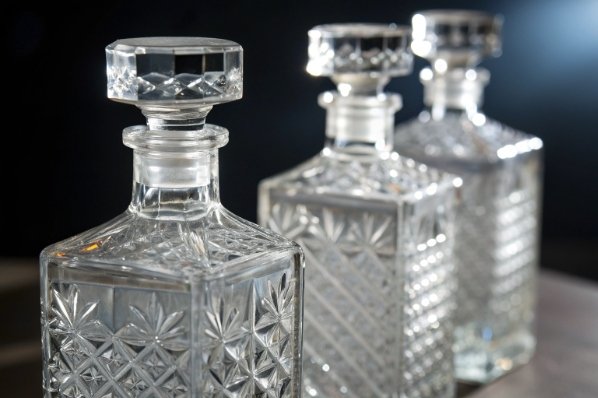
Historically, “flint glass” meant high-lead crystal made with flint stone and lead oxide. That glass had a high refractive index, strong sparkle, and heavy feel. It was popular for decanters and stemware, but lead oxide meant possible lead migration into stored drinks over time.
Today the word “flint” is used very differently in packaging: modern high-flint and extra-flint bottles for food and spirits 3 are normally lead-free soda-lime or low-iron glass. These looks come from purer sand and careful decolorizing, not from lead.
Many bottle suppliers now state clearly that their flint and extra-flint bottles are lead-free and food-grade, and that they have passed migration tests for contact with wine, spirits, oil, or sauces. These are still soda-lime glasses, just with very low iron and optimized melting conditions to improve brightness.
Lead crystal does still exist for luxury tableware, but it is not used for mass-market kitchen bottles. It is also not usually marketed as “extra flint” in the packaging world; it is labeled as “lead crystal” or “crystal glass”.
How to judge food safety beyond marketing names
For a brand or wholesaler, the safe route is to ignore marketing names and focus on documents and tests.
Key checks:
- Ask for a declaration of conformity with relevant food-contact rules 4 (such as FDA in the US or EU 1935/2004 in Europe).
- For spirits, wines, and acidic foods, request specific migration reports that show heavy metals, including lead and cadmium, are below legal limits.
- Confirm that both the glass and any decorations (inks, enamels, metallic foils) meet those limits on all food-contact surfaces.
High-flint containers usually come with tighter cosmetic specs as well: fewer bubbles, higher brightness, and more consistent wall thickness. These are quality and brand image points, not direct safety points.
Some suppliers also talk about “crystal-like” or “crystal-style” bottles. These are normally high-flint soda-lime glass with a heavy base and sharp facets. They aim for the look of crystal without using lead.
A simple way to read the market:
| Term on spec sheet | Typical meaning today | What to verify as buyer |
|---|---|---|
| Flint glass | Standard clear soda-lime glass | Food-contact declaration |
| High flint / extra flint / super flint | Very clear, low-iron soda-lime glass | Food-contact tests and heavy metal reports |
| Lead crystal / crystal glass | High-lead decorative glass (tableware) | Not for long-term food storage |
| Lead-free crystal | Glass with high clarity and sparkle, no lead oxide | Normal food-contact checks |
So high-flint kitchen bottles can be both stunning and safe, as long as the supplier supports that clarity with proper documentation, not just nice photos.
How does recycled cullet content affect clarity and strength?
Many brands want “sustainable” bottles with high recycled content, but still expect perfect clarity and line strength.
Recycled cullet mainly reduces energy use and emissions; with good sorting it does not weaken bottle strength, but very high cullet can affect flint clarity and color control.
What cullet does inside the furnace
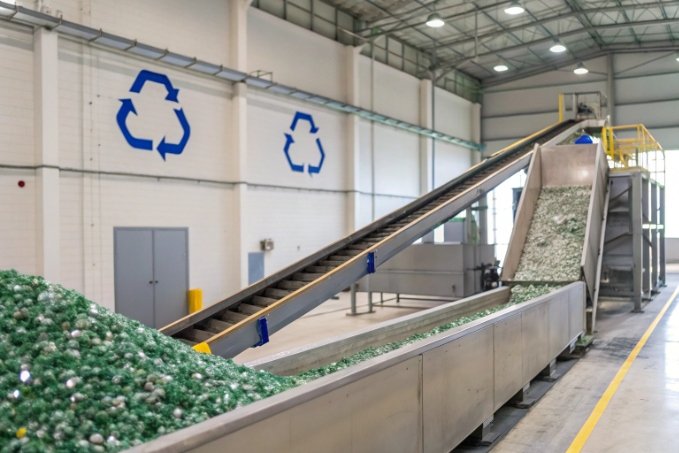
Cullet is simply crushed recycled glass. When we feed cullet back into the furnace:
- It melts at a lower temperature than raw batch.
- It helps the furnace reach working viscosity faster.
- It lowers fuel use and CO₂ emissions per ton of glass.
Industry data shows that increasing recycled glass cullet can cut energy use and CO₂ emissions 5 while also extending furnace life because the melt is less corrosive and runs at slightly lower peak temperatures.
Typical container plants run anywhere from 20–60% cullet in the batch, sometimes more in green or amber glass. The basic soda-lime composition stays almost the same. Only very small adjustments are needed to keep viscosity, color, and durability on target.
The mechanical strength of a bottle depends far more on forming, wall thickness, surface flaws, and proper annealing than on whether it contains 25% or 55% cullet. If the cullet is clean and well sorted, the final glass network is still the same silica-based structure.
Clarity, color, and practical limits
Cullet does bring trade-offs for flint glass:
- Mixed cullet streams often contain some green and amber glass. This raises the iron content and can make clear glass more green.
- To offset this, producers use stronger decolorizers, tighter sorting, or limit cullet in very high-flint lines.
- For amber and green bottles, higher cullet is usually easier to manage, because the recipe already includes colorants.
For kitchen bottles, the effect is most visible in:
- Extra-flint spirit bottles that demand a water-white look
- Thick perfume or oil bottles where color and sparkle are critical
- Products with strict color tolerances from batch to batch
From a strength view, clean cullet does not automatically make glass weaker. In fact, good cullet can help stabilize furnace conditions and improve consistency across runs. The real danger is contamination: ceramics, stones, or metals in cullet create hard inclusions that can cause stress points and breakage.
For brand owners, a simple framework helps:
| Cullet level (approximate) | Typical use scenario | Main impact on bottle |
|---|---|---|
| 0–20% | Premium extra-flint, tight color specs | Maximum clarity, higher energy demand |
| 20–60% | Standard flint and most colored bottles | Good balance of clarity, strength, sustainability |
| 60%+ | Some high-recycle or local programs | Strong sustainability story; needs careful sorting |
So “more cullet” is not automatically good or bad for a kitchen bottle. It is a design choice that balances clarity, sustainability, and cost. The best plan is to set a realistic cullet target with your glassworks and then tune clarity and color specs around that level.
Which coatings and surface treatments are used for kitchen bottles?
A lot of people think only about bare glass. In real production, many bottles carry invisible coatings or visible decorations that change slip, scratch resistance, and shelf appeal.
Most kitchen bottles use a tin or titanium oxide hot-end coating plus a cold-end polyethylene-type wax; some also add decorative sprays, frosts, or barrier layers like SiOx to boost protection and durability.
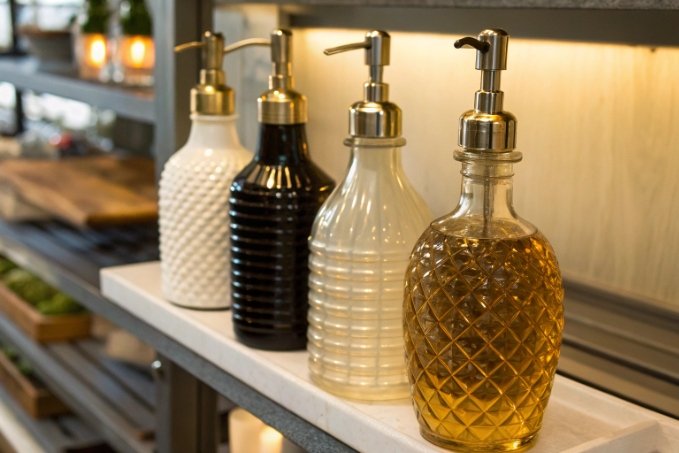
Functional coatings: hot-end and cold-end
Right after forming, hot bottles move through a coating tunnel. Two main coatings work as a system in modern hot-end and cold-end container glass treatments 6:
-
Hot-end coating
A very thin layer of tin oxide or titanium oxide is vapor-deposited onto the still-hot glass at the “hot end”. This layer:- Increases surface strength by closing micro-cracks
- Helps bottles slide more smoothly during handling
- Gives an anchor layer for the later cold-end coating
-
Cold-end coating
After annealing, bottles receive a light spray of polyethylene-type wax or other lubricants at the “cold end”. This cold-end film:- Reduces scratching and scuffing on filling lines and conveyors
- Improves resistance to abrasion in packing, shipping, and shelf life
- Allows bottles to be “light-weighted” without sacrificing line strength
Together, these coatings do not change the look of the bottle, but they make it handle like a stronger, smoother container. They are so standard in modern production that uncoated bottles are now the exception.
Some high-temperature cold-end systems are designed to survive hot-fill, pasteurization, or dishwashing above 100 °C, which is important for sauces, juices, and reusable bottles.
Visual and barrier surface treatments
On top of functional coatings, many kitchen bottles also get one or more visual or barrier treatments:
-
Spray coatings / painting
Organic or inorganic paints can give full-body color (for example, black, matte white, or brand colors). These coatings add visual impact and extra light protection, but they must be food-safe and dishwasher-resistant where needed. -
Frosting and etching
Acid etch or sandblast effects give a matte, “frosted” look. They diffuse light and hide fingerprints, but they must be controlled so they do not weaken the surface. -
Electroplating and metallization
Thin metallic layers (gold, silver, chrome tones) on the outside of perfume or oil bottles give a premium feel. In kitchens, these are more common for table oils and syrups than for heavy everyday use. -
Opal (milk) glass
Some bottles use opal glass, which is opaque or milky white. This comes from opacifiers such as fluorides, phosphates, or certain oxides added into the glass melt itself. The result scatters light and protects light-sensitive contents like oils, dairy drinks, or nutraceuticals. -
Barrier layers like SiOx or thin polymers
For special cases, thin internal layers of SiOx or other barrier coatings 7 can be added by plasma or vapor deposition. These layers boost gas barrier performance and scratch resistance. They are more common today on PET bottles but also appear in some high-performance glass and composite containers.
Coatings and treatments must also respect recyclability. Thin hot-end and cold-end coatings usually burn off or integrate in furnaces without issue. Heavy organic paints, metallic foils, or thick plastic sleeves can complicate sorting and recycling unless they are designed to detach or be recognized by sorting systems.
For kitchen buyers, a simple way to group surface options:
| Treatment type | Main purpose | Typical use in kitchen bottles |
|---|---|---|
| Hot-end tin/titanium | Strength and scratch resistance | Almost all modern bottles |
| Cold-end polyethylene | Low friction, scuff protection | Almost all modern bottles |
| Opal (milk) glass | Light protection, brand look | Dairy, sauces, oils, nutraceuticals |
| Spray color or lacquer | Brand color, light control | Oils, sauces, syrups, premium water |
| Frost / etch | Tactile feel, diffused light | Premium oils, vinegars, gift products |
| SiOx / barrier coatings | Extra oxygen and CO₂ barrier, scuff resistance | Specialty bottles and some PET applications |
This is why the same soda-lime bottle recipe can behave very differently in the field: surface engineering and coatings are a big part of the performance, not just the glass chemistry underneath.
Conclusion
Kitchen glass bottles are mostly soda-lime glass, but clarity, safety, thermal behavior, and line strength come from glass recipe, cullet strategy, and smart coatings working together.
Footnotes
-
Overview of soda-lime glass composition and container applications. ↩︎ ↩
-
Technical description of borosilicate glass properties and thermal-shock resistance. ↩︎ ↩
-
Example of premium high-flint packaging used for spirits and gourmet products. ↩︎ ↩
-
EU summary of food-contact material rules and compliance obligations for packaging. ↩︎ ↩
-
Industry overview of how recycled glass cullet reduces furnace energy use and emissions. ↩︎ ↩
-
Explanation of hot-end and cold-end surface treatments for stronger, more durable glass containers. ↩︎ ↩
-
Technical outline of SiOx barrier coatings for enhanced gas barrier and scratch resistance. ↩︎ ↩






