
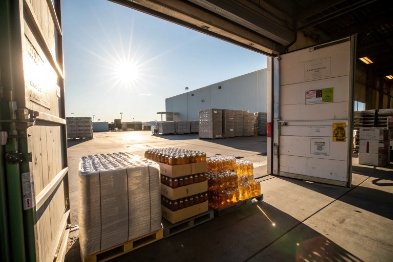
Sunlight can ruin a premium product while the bottle still looks perfect. The damage often appears later, when returns and bad reviews already started.
Long sun exposure mainly heats the bottle and lets UVA/visible light pass through many glass colors, which can trigger flavor changes, fading, and label failures. The risk is highest when exposure repeats daily and the pack has clear “light paths.”
Sun exposure is a photon + heat problem, not just “UV”
Long outdoor exposure hits the package in two ways at the same time: radiation energy (UV/visible) and heat load (IR-driven warming). Glass itself is stable, but it is not a perfect light shield. Common soda-lime glass blocks most very short UV, yet it can still pass a meaningful amount of ultraviolet radiation 1 and visible light, especially when the glass is flint (clear). That means the bottle can act like a window for the wavelengths that drive many photo-reactions in foods, beverages, and cosmetics.
The second part is heat. Sunlight also carries infrared energy, and any dark label, dark sleeve, or dark liquid can absorb it and raise temperature fast. That heat speeds up oxidation, aroma loss, and color shift inside the product. It also softens label adhesives and can increase internal pressure in carbonated or hot-filled items. So the real risk is rarely “only UV.” It is light + temperature + time.
This is why two bottles of the same product can age differently: one sat on a sunny porch or a retail endcap, and the other stayed shaded. The product chemistry changes first. The package failures often show later.
Where the exposure enters a bottle system
-
Through the sidewall (largest area, biggest light path).
-
Through the shoulder/neck if the label stops low.
-
Through the closure if the cap or liner is translucent.
-
Through gaps in labels or clear windows.
| Exposure driver | What happens | What you see | What to measure |
|---|---|---|---|
| UVA + blue light | Photo-oxidation, lightstruck reactions | Off-notes, fading, haze | UV-Vis transmittance + sensory |
| IR + absorbed visible | Bottle and product heating | Flavor drift, pressure rise | Product temp profile under sun |
| Repeated cycles | Daily heat-up / cool-down stress | Label edge lift, ink fade | Adhesion after cycling |
| Partial coverage | Hot spots and light spots | Uneven aging by zone | Zone mapping on the bottle |
A reliable design treats sunlight as a repeatable load. The next sections show what changes in glass and contents, why UV and IR hurt products and labels, how to test it, and how smart caps and sleeves reduce exposure peaks.
What changes occur to glass and contents under sun?
Sun does not usually “damage” the glass network in normal outdoor use. The big changes happen in the contents and at the interfaces.
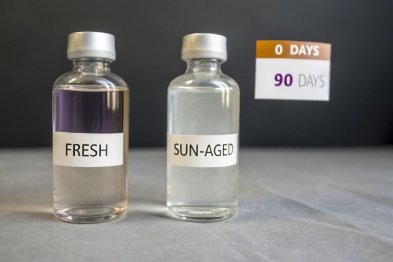
Clear and lightly tinted bottles can pass the wavelengths that trigger photochemistry, while sun heating increases reaction speed, pressure, and volatility loss. The bottle looks the same, but the product chemistry can move fast.
What changes in the contents
Most product damage comes from three linked effects:
1) Photo-reactions: UVA and short visible can trigger photodegradation 2, aroma breakdown, and pigment fading.
2) Heat acceleration: warmer liquid means faster chemistry. Even small temperature jumps matter when exposure repeats daily.
3) Headspace and pressure shifts: warm cycles expand gas and raise internal pressure based on thermal expansion 3 coefficients.
Beer is a simple example. Light can trigger lightstruck off-notes 4 in minutes under the wrong conditions, especially in clear and green bottles. Many vitamins and essential oils also shift when UV and blue light reach them.
Why UV and IR exposure threaten product quality and labels?
Sunlight attacks the product and the decoration in different ways. Product quality fails first, label failures often appear later, and both can create a “cheap” shelf impression.
UV and short visible light drive photochemical damage in many formulas, while IR-driven heating speeds oxidation and weakens label adhesives and inks. Sun exposure also creates uneven temperatures across the bottle, which stresses sleeves and glue lines.
Labels, inks, and sleeves: why they fail outdoors
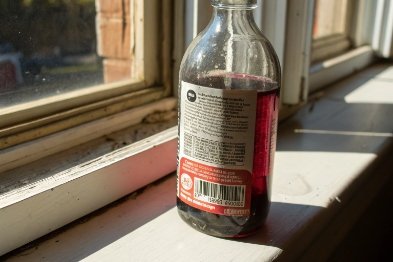
Decoration systems are usually polymer-based. UV aging can fade inks and reduce contrast. Heat adds another problem: adhesives soften, sleeves shrink unevenly, and seams creep.
A common failure pattern is “looks fine in the factory, fails in the field.” That happens when validation uses indoor light, short tests, or no heat cycling.
How to simulate outdoor exposure for packaging validation?
Outdoor exposure is slow and messy. A good validation plan uses accelerated weathering to screen designs, then uses a short real-world trial to confirm.
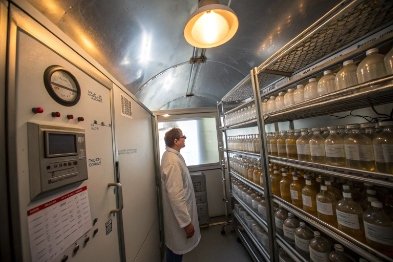
The most useful lab tools are xenon-arc testing for full-spectrum sunlight simulation and fluorescent UV testing for UV-focused screening. Validation should include filled bottles, temperature monitoring, and pass/fail metrics tied to product and label performance.
Step 1: choose the exposure method that matches the risk
-
xenon arc testing 5 is strong for “sunlight realism” because it can simulate UV + visible + heat effects.
-
Fluorescent UV is useful for quick UV-driven screening of labels, inks, and coatings.
Both are widely used for outdoor durability work. The key is to match the method to the failure mode and to run the test as a system.
Step 2: define pass/fail metrics that match the brand promise
For labels and adhesives, validation should involve standardized adhesion testing 6 to ensure that edge lift does not occur after thermal cycles and moisture exposure.
Are UV-smart caps and sleeves mitigating exposure peaks?
Smart features can reduce risk, but they work best when they are used for the right job. Some tools reduce light. Others only show exposure.
Sleeves and caps can cut exposure peaks when they block light paths and reduce heat hot-spots. UV indicators help monitoring, but they do not protect by themselves, so they should be paired with real barriers like amber glass or light-blocking sleeves.
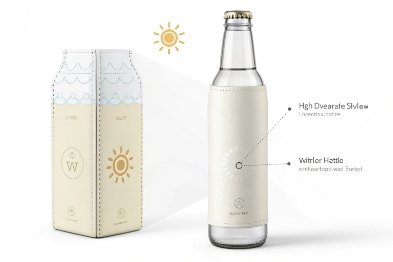
Sleeves: the fastest way to remove the “light path”
A full-body sleeve can block UV and visible light across the sidewall, which is the main exposure area. Light-barrier sleeves and metallized films can also reduce visible transmission. When bottles are no longer needed, effective glass recycling 7 depends on the easy removal of these sleeves to prevent cullet contamination.
Conclusion
Long sun exposure drives product damage through UVA/visible light and heat. Stable protection needs light barriers, thermal control, and a validation plan that tests filled bottles, labels, and closures together.
Footnotes
-
Learn how ultraviolet radiation affects health and material degradation in various environmental conditions. ↩ ↩
-
A comprehensive guide to the chemical breakdown of molecules caused by absorption of light energy. ↩ ↩
-
Understanding the coefficients of thermal expansion for glass and liquids across different industrial applications. ↩ ↩
-
Technical insights into the photochemical reaction that causes skunky off-flavors in beer when exposed to light. ↩ ↩
-
Official standard for operating xenon arc light apparatus for exposure of nonmetallic materials. ↩ ↩
-
Industry standard methods for measuring adhesion by tape test to ensure coating and label durability. ↩ ↩
-
Insights into the sustainable circular economy of glass packaging and the benefits of closed-loop recycling. ↩ ↩






