
Formulating the perfect glass packaging is like balancing a chemical equation; one wrong variable, and your premium bottle becomes a liability. Whether you are bottling acidic kombucha or alkaline cleaning agents, the longevity of your container depends entirely on the microscopic architecture of its ingredients.
The acid and alkali resistance of a glass bottle is primarily determined by the ratio of Network Formers (Silica, Boron) to Network Modifiers (Sodium, Potassium). Specifically, Aluminum Oxide ($Al_2O_3$) is the critical stabilizer for alkali resistance, while Boron Trioxide ($B_2O_3$) enhances acid resistance by tightening the molecular structure.
Understanding the Molecular Battleground
At FuSenglass, we view every bottle as a frozen liquid with a specific personality. That personality is defined by its oxides. To understand durability, you must distinguish between the ingredients that build the walls and the ingredients that open the doors.
Glass chemistry is a constant "tug-of-war" between processability (making it melt) and durability (making it last).
The Three Pillars of Composition
| Category | Key Ingredients | Function | Impact on Durability |
|---|---|---|---|
| Network Formers | Silica ($SiO_2$), Boron ($B_2O_3$) | The Backbone | Positive (+). Creates the insoluble structure. |
| Network Modifiers | Sodium ($Na_2O$), Potassium ($K_2O$) | The Flux | Negative (-). Breaks bonds to lower melting temp. |
| Stabilizers | Alumina ($Al_2O_3$), Calcium ($CaO$) | The Glue | Positive (+). Reconnects broken bonds; blocks ion movement. |
How do network formers and modifiers change chemical durability?
The glass network is not a solid block; it’s a mesh. The "tightness" of this mesh determines if chemical ions can enter or exit.
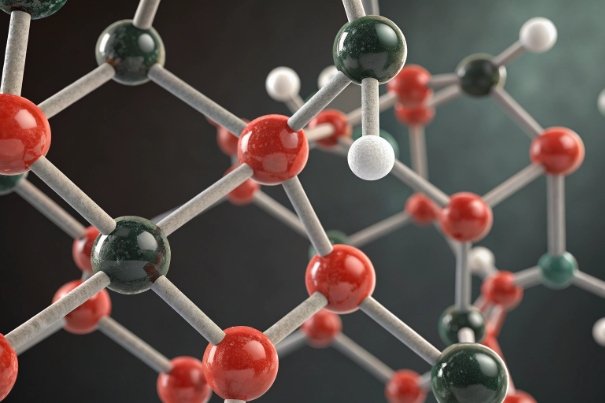
Network formers like Silica ($SiO_2$) and Boron ($B_2O_3$) create strong, cross-linked structures that resist chemical attack. Conversely, modifiers like Sodium ($Na_2O$) and Potassium ($K_2O$) disrupt this network, creating "Non-Bridging Oxygens" that act as weak points for acid leaching and alkali dissolution.
The Chemistry of Attack
-
The Backbone ($SiO_2$): Silica is the fortress. It is virtually insoluble in acid (except HF). However, a pure silica glass 1 bottle requires $2000^{\circ}C$ to melt.
-
The Weakness ($Na_2O$): To lower the melting point to $1500^{\circ}C$, we add Sodium. This breaks the silica chains. In acidic solutions, Hydrogen ions ($H^+$) target these breaks, kicking out the Sodium (leaching) and leaving a porous "gel layer."
-
The Reinforcement ($B_2O_3$): Boron heals these breaks. It links the silica islands together, making the mesh too tight for ions to pass through. This is why Borosilicate glass is the gold standard for acid resistance.
Modifier vs. Former Impact
| Oxide | Type | Acid Impact | Alkali Impact |
|---|---|---|---|
| $SiO_2$ | Former | High Resistance | Soluble in strong alkali ($pH > 9$) |
| $B_2O_3$ | Former | Superior Resistance | Moderate (hydrolyzes in hot caustic) |
| $Na_2O$ | Modifier | Reduces Resistance (Leaching) | Reduces Resistance (Dissolution) |
| $CaO$ | Stabilizer | Improves vs. Pure Alkali | Improves vs. Pure Alkali |
What role does Al2O3 play in improving alkali resistance?
If you are packaging high-pH products like hair relaxers or industrial cleaners, Silica alone isn’t enough. You need Alumina.
Aluminum Oxide ($Al_2O_3$) acts as a powerful network intermediate that stabilizes the glass against alkaline attack by plugging molecular gaps. However, adding too much Alumina increases the viscosity of the molten glass, leading to higher energy costs and potential forming defects like cords or stones.
The Alumina Trade-Off
In the furnace, Alumina is stubborn. It doesn’t want to melt.
-
The Benefit: Alumina enters the network and creates $Al-O$ bonds that are chemically more resistant to Hydroxide ($OH^-$) attack than $Si-O$ bonds. Increasing Alumina from 1% to 2.5% can double the lifespan of a bottle in a caustic wash.
-
The Processing Risk: High Alumina makes the glass "stiff" (high viscosity 2). It narrows the "working range"—the time the machine has to mold the bottle before it freezes. If the operator isn’t careful, this leads to:
-
Stones: Unmelted particles that create stress cracks.
-
Cords: Streaks of different composition that etch at different rates.
-
Alumina Content Guide
| Glass Type | Typical $Al_2O_3$ | Alkali Grade (ISO 695) | Manufacturing Difficulty |
|---|---|---|---|
| Standard Soda-Lime | 1.5% – 2.0% | Class A2/A3 | Low (Easy to form) |
| Resistant Soda-Lime | 2.0% – 3.0% | Class A2 | Moderate |
| Aluminosilicate | 15% – 20% | Class A1 | High (Specialized furnaces) |
How do recycled cullet ratio and contaminants affect resistance?
Sustainability is non-negotiable today, but high PCR (Post-Consumer Recycled) content introduces a wildcard into our precise chemical recipe.
High ratios of external recycled cullet can introduce composition drift and contaminants, leading to inconsistent chemical resistance across batches. Contaminants like ceramics (CSP) create stress points that are highly susceptible to acid/alkali attack, causing localized pitting or failure.
The Consistency Challenge
When we use 100% virgin raw materials, we know exactly how many grams of Soda Ash are in the mix. When we use 50% external cullet 3, we are relying on the average.
-
Composition Drift: If the recycled glass comes from mixed sources (e.g., window glass mixed with bottles), the oxide levels shift. A slight drop in Alumina or rise in Sodium can demote a batch from Class A2 to Class A3 without warning.
-
The "Stone" Effect: Ceramic contaminants do not melt. They remain as solid stones. The interface between a stone and the glass is chemically weak. Acid eats away at this interface first, leading to a "pinhole" leak or a crack.
Cullet Management for Durability
| Cullet Source | Risk Level | Mitigation Strategy |
|---|---|---|
| Internal (Factory) | Low | Safe for all high-resistance glass. |
| External (Color Sorted) | Medium | Limit to 30-40% for sensitive chemicals. |
| External (Mixed) | High | Avoid for pharma or high-pH products. |
What test plan should B2B buyers use?
Trusting a supplier’s brochure is not a quality control strategy. You need a data-driven validation plan that covers regulatory safety, material classification, and real-world performance.
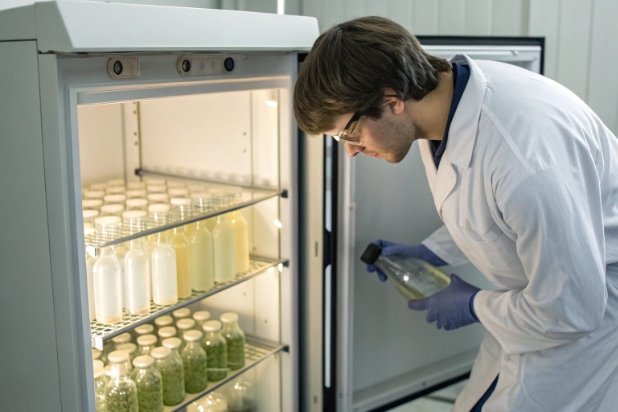
A robust B2B test plan must cover three layers: Standard Classification (ISO 719/695) to verify the glass type, Safety Compliance (ISO 7086) to check for heavy metal migration, and Simulation Testing to predict shelf-life stability.
The Triangle of Verification
I recommend this tiered approach to my clients to save costs while ensuring safety.
-
Tier 1: Material Verification (One-Time): Confirm the glass recipe.
-
Tier 2: Safety Compliance (Per Batch/Year):
-
Tier 3: Application Simulation (New Product Launch):
- Real-Use: Incubate the bottle with your product at $50^{\circ}C$ for 3 months. Check for haze, pH shift, or precipitation 7.
Buyer’s QC Checklist
| Test Method | What it Measures | Critical For… |
|---|---|---|
| ISO 719 / USP <660> 8 | Alkalinity Release | Pharma, Water, Vinegar |
| ISO 695 | Weight Loss (Erosion) | High-pH Creams, Returnable Bottles |
| ISO 7086 | Heavy Metal Leaching | All Food & Beverage (Legal Requirement) |
| ASTM C675 9 | Decoration Durability | Painted/Printed Bottles |
Conclusion
The difference between a bottle that protects your product and one that degrades it lies in the invisible balance of Silica, Alumina, and Sodium. By understanding how these ingredients fight acid and alkali attack—and verifying them with ISO testing 10—you ensure your packaging is as robust as your brand promises.
Footnotes
-
A glass consisting of almost pure silica (silicon dioxide), known for its high melting point and thermal resistance. ↩
-
A measure of a fluid’s resistance to flow; thicker liquids like molten glass have high viscosity. ↩
-
Recycled broken or waste glass used in glassmaking to reduce energy consumption and raw material usage. ↩
-
International standard specifying the test method for hydrolytic resistance of glass grains at 98°C. ↩
-
International standard for testing the resistance of glass to a boiling mixture of alkaline solutions. ↩
-
Standard specifying permissible limits for lead and cadmium release from glass hollowware. ↩
-
The formation of a solid in a solution during a chemical reaction, often due to insolubility. ↩
-
United States Pharmacopeia standard for testing glass containers used for pharmaceutical products. ↩
-
Standard test method for alkali resistance of ceramic decorations on returnable beverage glass containers. ↩
-
Globally recognized standards organization that develops testing protocols for quality and safety. ↩






