
Glass bottle prices often look mysterious from the outside, and this makes it hard for buyers to plan budgets or compare suppliers fairly.
Glass bottle pricing comes from a mix of raw material and energy costs, design and tooling, order volume and decoration, plus logistics and policy factors that change the final landed cost in each market.

When we break the price down into clear blocks, it becomes easier to make smart trade-offs. You can then decide where to invest, where to simplify, and where to push for better terms from your supplier without hurting performance.
How do sand purity, cullet ratio, and energy costs affect cost per unit?
Many buyers focus on mold cost or printing, but the furnace eats money every hour. When fuel, power, or soda ash statistics and information 1 jump, bottle prices move even if the design does not change.
Higher sand purity, lower cullet ratios, and rising fuel or electricity costs all push the melt cost up, while high cullet use and stable energy contracts can pull the unit bottle cost down.
Raw material levers: sand, soda ash, and cullet
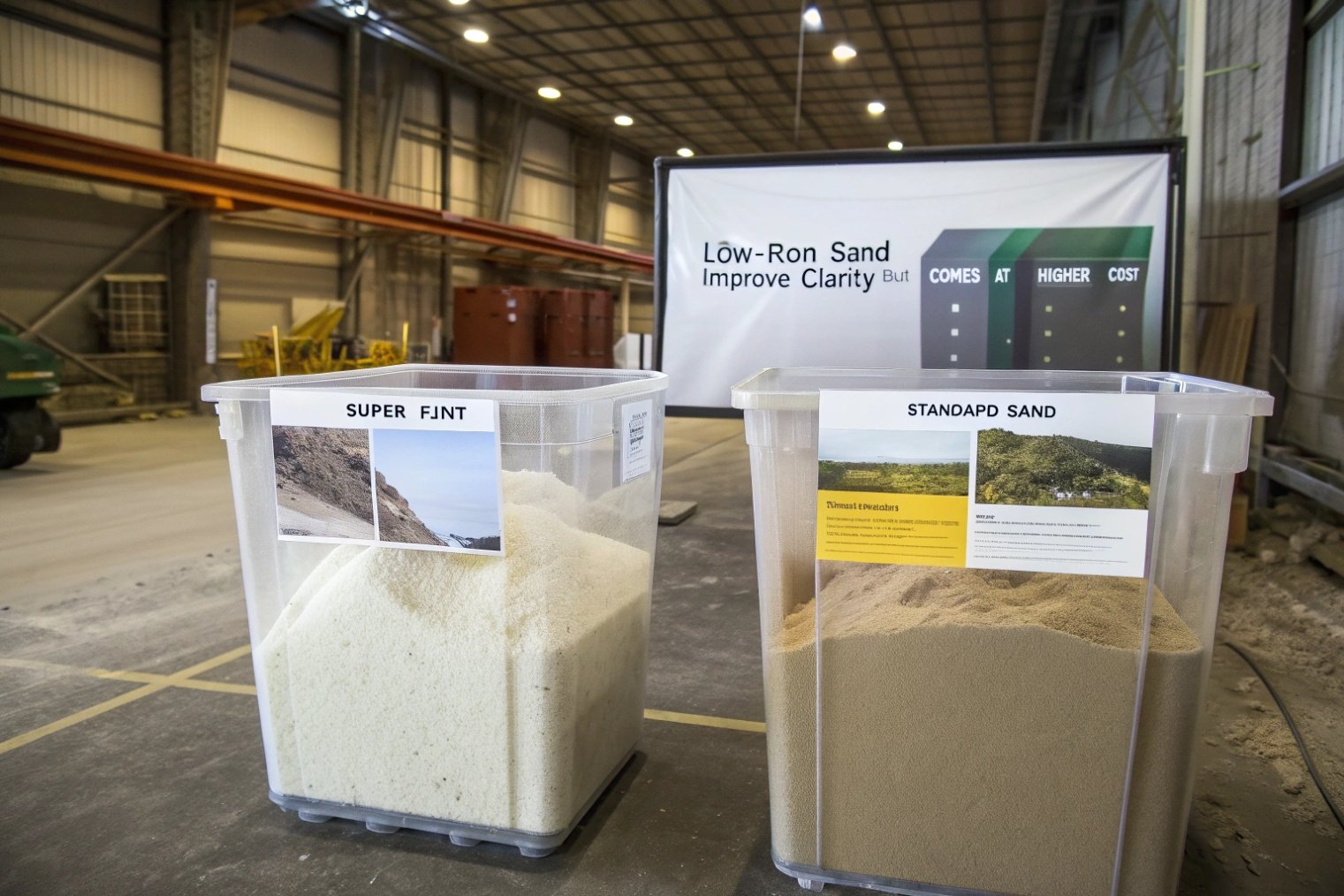
For most standard soda-lime glass bottles, the main raw materials are silica sand, soda ash, limestone, and cullet. The price of these inputs, and how we mix them, shape the “melt cost” per ton.
| Factor | Effect on glass cost | Notes for buyers |
|---|---|---|
| Sand purity | Higher purity = higher cost | Needed for super flint and high clarity |
| Soda ash | Major cost and very volatile | Direct pass-through in many contracts |
| Cullet ratio | More cullet = less energy and raw cost | Needs clean, sorted cullet |
| Additives / colorants | Extra cost per ton | Amber, green, special tints |
When you ask for super flint or extra clear glass, you are asking for higher purity sand and tighter iron control. This gives a nice, premium look, but the melt cost is higher than standard flint.
Cullet is the opposite side of the story. Clean cullet melts easier than virgin batch and needs less energy. Many plants quote it bluntly: energy costs drop about 2–3% for every 10% cullet used 2. High cullet ratios can offset part of the fuel and raw material cost. But cullet supply is not always stable, and color mixing has limits. For example, too much mixed-color cullet can ruin high-end flint.
Energy and furnace economics
A glass furnace runs 24/7. It burns fuel or uses electricity even when demand is soft. Energy cost is often the largest single variable in the cost structure.
| Energy item | Impact on price | Typical response from plants |
|---|---|---|
| Natural gas / fuel oil | Main furnace energy | Price swings pass into bottle quotes |
| Electricity | Boosting, IS machines, lehrs | Higher with electric boost or all-electric |
| Efficiency | Cullet use, preheaters, oxy-fuel | Can offset part of fuel increases |
| Utilization | Tons per day vs. capacity | Better utilization spreads fixed costs |
When fuel or power prices rise fast, you often see surcharges or new price lists. Plants with cullet preheating or oxy-fuel furnace conversion 3 can absorb part of the shock, but not all.
As a buyer, you cannot control global energy markets, but you can:
- Discuss cullet content and color flexibility
- Ask for long-term pricing models that reflect energy indexes
- Align your demand to keep stable volumes so the plant runs at good utilization
These steps help keep your unit cost more stable over time.
What impact do mold complexity and custom embossing have on tooling?
Many brands want a “signature” bottle with heavy base, sharp shoulders, and deep embossing. This does build value. It also adds serious tooling cost and sometimes slower production speed.
Complex molds, special shapes, and deep custom embossing raise upfront tooling investment and can reduce forming speed, which pushes both the one-time mold fee and the ongoing unit price higher.
Tooling basics: where the money goes
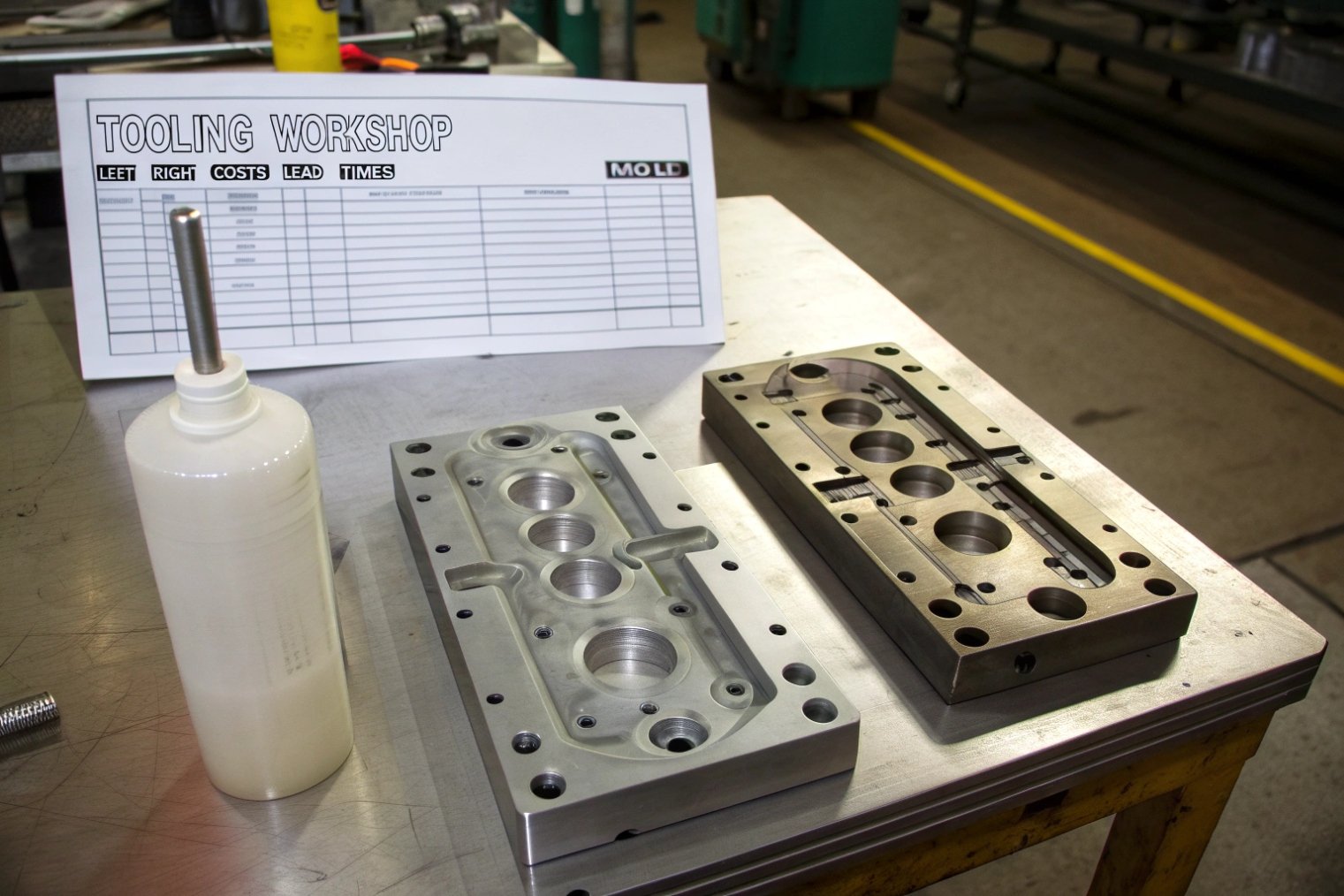
Glass bottle molds are precision tools. A full set includes blank molds, blow molds, neck rings, plungers (for press-and-blow), bottom plates, and many inserts. For a multi-section IS machine, you need one full set per section, sometimes with spares.
| Tooling element | Cost impact | Comment |
|---|---|---|
| Standard shape molds | Lowest cost | Based on existing designs |
| Custom molds | Higher cost | Design + machining + sampling |
| Neck rings / finishes | Critical for sealing and caps | Complex closures cost more |
| Embossing inserts | Extra machining and testing | Deep or fine detail costs more |
A simple cylindrical bottle with a standard neck can use proven mold designs and needs less engineering time. A complex perfume bottle or a heavy spirit bottle with many curves and facets may require several design iterations and trials before the glass flows correctly.
Custom embossing adds more work. The engravings must be deep enough to be visible after decoration and labeling, but not so deep that air traps or non-fill defects appear. This often means extra venting and careful polishing of the mold cavities.
How design choices affect speed and unit cost
Tooling is not just a one-time cost. The design can change the line speed and scrap rate, which both affect your unit price.
| Design feature | Effect on production | Impact on price |
|---|---|---|
| Heavy base / thick walls | More glass per unit, slower cooling | Higher weight + lower speed = higher cost |
| Sharp corners / edges | Harder glass distribution | Higher reject risk |
| Deep embossing | Risk of non-fill or sticking | More setup time, more mold maintenance |
| Very tall / slim body | Handling and stability challenges | May limit speed on IS and filling lines |
In many custom projects, mold cost is separate as a one-time fee. The unit price then reflects:
- Extra glass weight
- Lower forming speed if any
- Higher inspection and reject rates at the beginning
This is why you often see MOQs of 10,000 pieces or more for new designs. The plant needs enough volume to spread the tooling and setup time over a meaningful number of bottles.
As a buyer, it helps to discuss three design options:
- A “dream” shape with full embossing and heavy glass.
- A simplified version with fewer sharp details or a lighter base.
- A hybrid that uses standard finishes or shared components.
This way you can see the price gap and decide where the brand value justifies the extra cost.
How do order volume, color runs, and decoration drive price breaks?
Many customers ask, “Why is the quote so high for 5,000 units, but much lower for 50,000?” The answer sits in furnace economics, job changeover time, and decoration line setup.
Larger orders, long single-color runs, and simplified decoration let the factory spread fixed costs and changeovers over more bottles, which creates clear price breaks at certain volume steps.
Volume, MOQs, and color campaigns
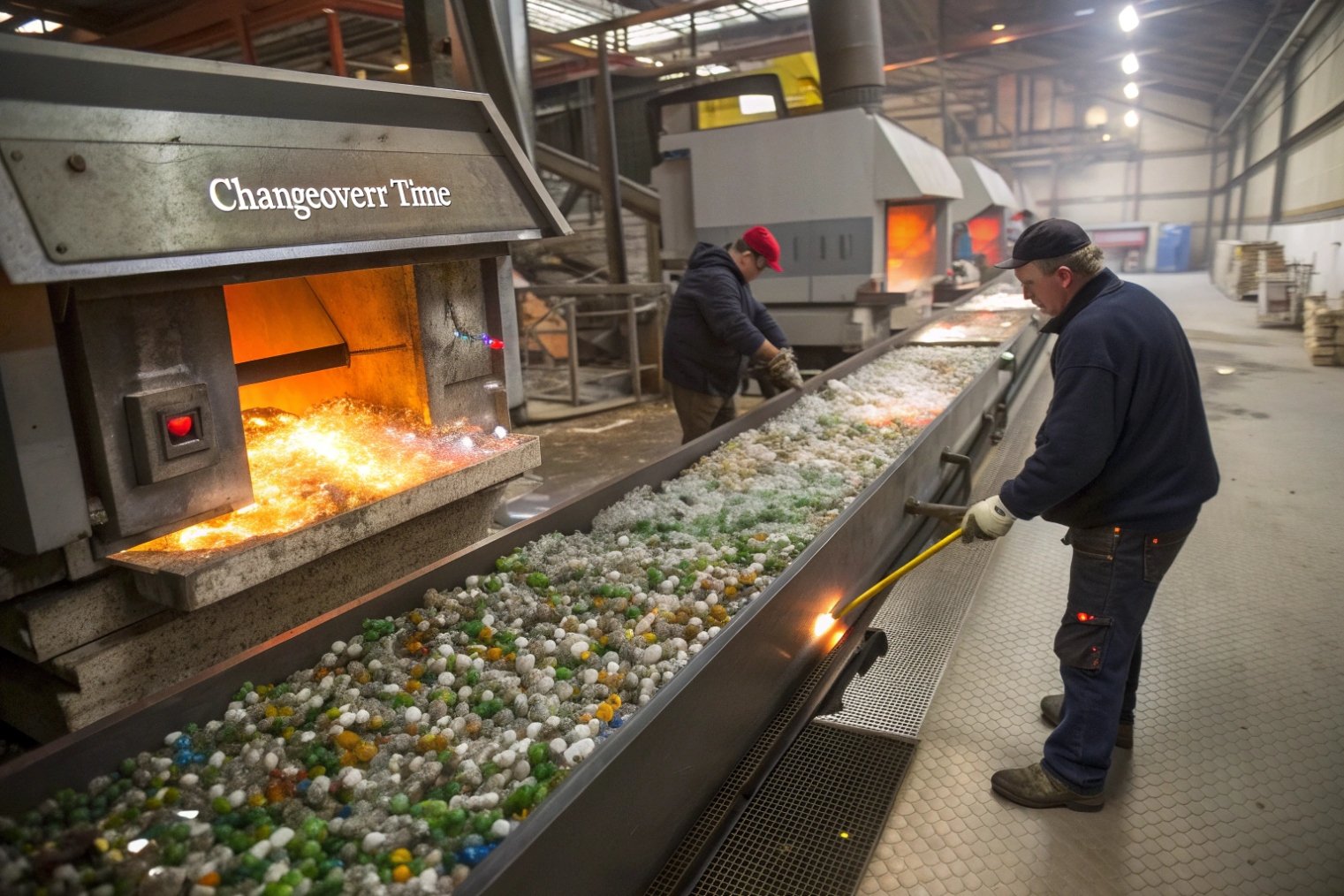
Every furnace has a minimum economic batch size. Starting and stopping jobs too often kills efficiency. So plants plan “color campaigns” and production slots.
| Factor | How it changes price |
|---|---|
| Order quantity | Higher volume = lower unit cost |
| MOQs | Offset mold and setup cost |
| Color changes | Each change = lost time and cullet |
| Job length | Longer runs keep the line stable |
For custom projects, you often see an MOQ around 10,000 pieces or more per run. At this level, the plant can justify job setup, mold heating, and forming adjustments. When volume moves up to 50,000 or 100,000 pieces, fixed costs and overhead spread over more units, so the price per bottle drops again.
Color also matters. If your bottle shares a standard color (flint, amber, common green) with other products, the plant can schedule your job inside a larger color campaign. If you ask for a rare color or gradient, the changeover may generate more waste and downtime, so the unit price climbs.
Decoration and secondary processes sit on top of the bare glass cost. Each step adds time, labor, and sometimes extra rejects.
Common decoration and treatment items include:
| Process | Cost type | Notes |
|---|---|---|
| Hot-end coating | Usually standard | Part of base bottle strength |
| Cold-end coating | Usually standard | Helps reduce scratches |
| Spray painting | Per unit + setup | More colors = more cost |
| Screen printing | Per color + setup | Multi-color logos cost more |
| Decals, hot stamping | Per position + tooling | Premium look, higher cost |
| Acid frosting / sandblast | Per unit | Uses chemicals or blasting media |
Each decoration line has its own setup cost. For example, one extra print color means another screen, registration setup, and test run. So unit price drops when you repeat the same decoration design in higher volumes.
From a buyer’s view, you can manage price by:
- Grouping SKUs to share the same bottle shape and color
- Reusing decoration layouts across several products
- Planning volume so each design justifies a full, clean run
This often saves more money than pushing only on the base glass price.
Which logistics choices most change landed cost to North America/EU?
For import buyers, the factory price is only half of the story. Glass is heavy, fragile, and low value per unit volume, so logistics can sometimes cost more than the bottle itself.
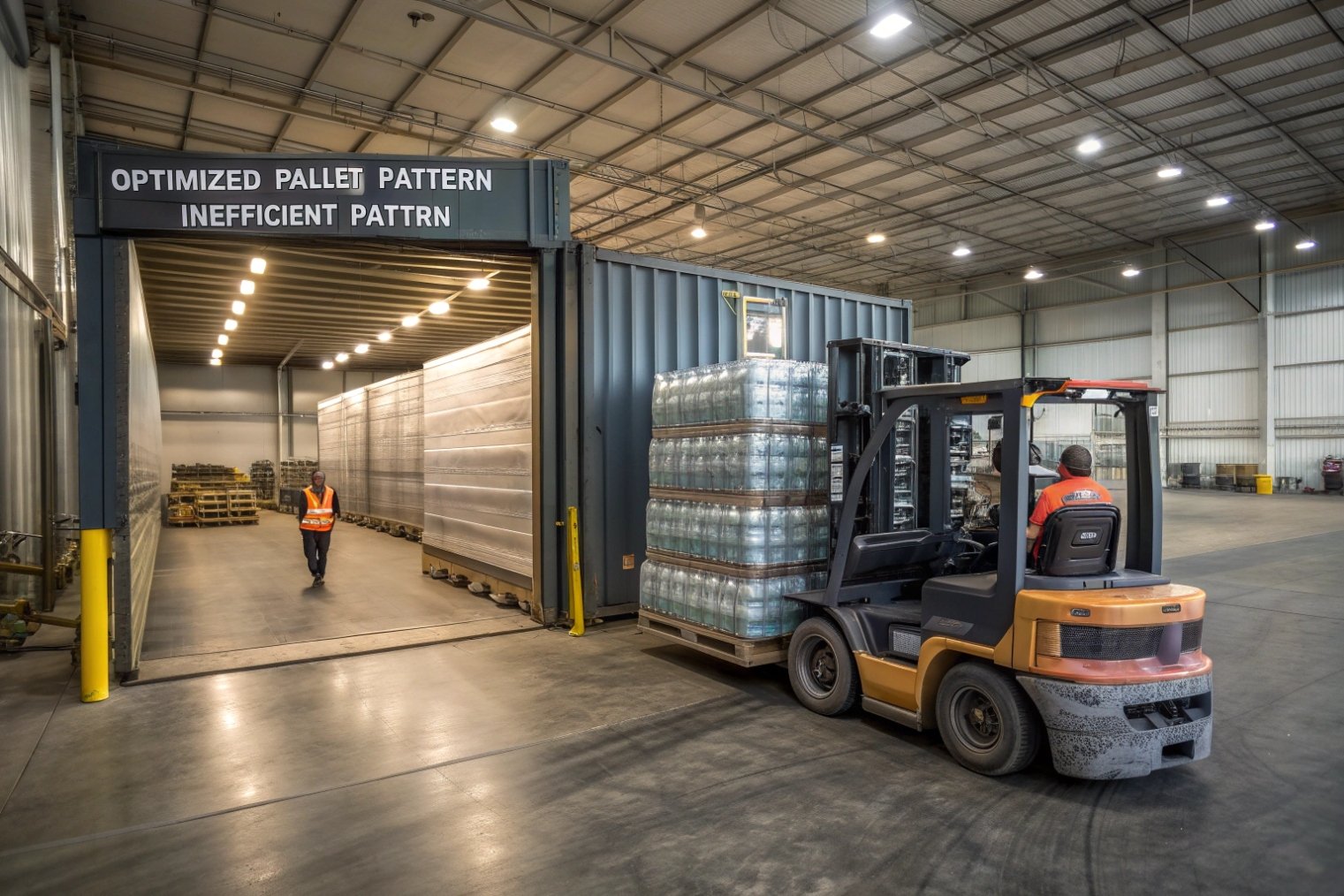
Full-container loads, high pack density, smart packing (bulk vs. carton), and the right Incoterms and route choices all change landed cost to North America and Europe more than many buyers expect.
Packing, mode, and route selection
The way we pack and ship bottles has a huge impact on cost per piece.
| Choice | Impact on landed cost |
|---|---|
| FCL vs. LCL | FCL usually cheaper per unit at scale |
| Bulk vs. carton | Bulk uses space better, but needs more handling |
| Pallet type / size | Affects how many bottles fit per container |
| Route and port | Distance, fees, and transit time |
For export to North America or the EU, full container load (FCL) is usually the most efficient. Guidance like Maersk’s FCL vs LCL ocean freight decision 4 helps buyers model the real trade-offs: cost per unit, handling touches, transit time, and damage risk.
Bulk-packed bottles (no retail cartons, only layer pads and shrink wrap on pallets) fit more units into each container. This lowers freight per bottle but needs good handling at the filling plant. Carton-packed goods protect each bottle and support direct-to-retail supply, but they take more space and raise both packaging and freight cost.
Choice of port and route also matters. Different ports have different local charges, handling fees, and congestion. A “cheaper” ocean rate can be eaten up by high port or inland trucking charges. For EU, importing via a main hub port and then using rail or short-sea options may save cost compared to trucking from a distant port.
Just as important, make sure you quote using the correct Incoterms® 2020 rules 5, because the “same” unit price can hide very different allocations of cost and risk (freight, insurance, terminal handling, customs).
Duties, taxes, and currency effects
On top of freight and packing, import policies and currency swings can shift the final cost.
Key elements include:
| Factor | Effect on landed cost |
|---|---|
| Import duties / tariffs | Add percentage on CIF value |
| EPR / “glass tax” | Extra cents per bottle in some markets |
| VAT and other taxes | Paid on value plus duties |
| Exchange rates | Change effective cost in local currency |
| Insurance and risk | Affects total logistics budget |
New tariffs or anti-dumping duties can add 10–25% on imported glass bottles. Environmental levies and producer-fee systems often link back to wider EU packaging waste policy 6, which can add per-unit costs that never appear on the factory invoice.
Currency risk also plays a big role for buyers in North America and Europe. If the contract is in USD or EUR and the producing country’s currency moves, the supplier may adjust prices. If the contract is in the producer’s currency, you carry the risk. Some buyers now ask for partial local sourcing of materials or split-currency deals to manage this.
The main point is simple: landed cost is not just ex-works price plus a fixed freight guess. When planning a new project, it pays to:
- Compare FCL vs. LCL scenarios
- Test different packing plans and pallet layouts
- Check duty and tax codes for your product category
- Discuss currency and surcharge clauses with your supplier
This way you see a realistic cost per filled bottle on the shelf, not just a factory price on paper.
Conclusion
Glass bottle pricing is not random. It comes from clear levers: melt and energy, design and tooling, volume and decoration, plus logistics and policy. Once you see these levers, you can plan smarter and buy better.
Footnotes
-
USGS soda ash stats help track volatility that impacts glass melt costs. ↩ ↩
-
GPI explains how cullet percentage reduces energy and cost in container glass production. ↩ ↩
-
Lehigh lecture quantifies energy savings from switching air-fuel to oxy-fuel glass furnaces. ↩ ↩
-
Maersk guide compares FCL vs LCL trade-offs affecting freight cost and damage risk. ↩ ↩
-
ICC official Incoterms® 2020 reference clarifies cost and risk responsibilities in international trade. ↩ ↩
-
European Commission page explains EU packaging waste rules and producer-responsibility context impacting packaging costs. ↩ ↩






