Designers and engineers often overlook the microscopic movements of glass, but ignoring thermal expansion is a recipe for production line disaster.
The typical Coefficient of Thermal Expansion (CTE) for soda-lime container glass is approximately $9.0 \times 10^{-6} K^{-1}$. This means for every degree of temperature increase, the glass expands by 9 parts per million. This value is critical for calculating thermal shock limits and ensuring proper closure fitment.
The Invisible Force of Expansion
In my two decades running FuSenglass, I’ve seen production lines halt not because of a machine breakdown, but because an engineer didn’t account for the $9.0$ CTE factor.
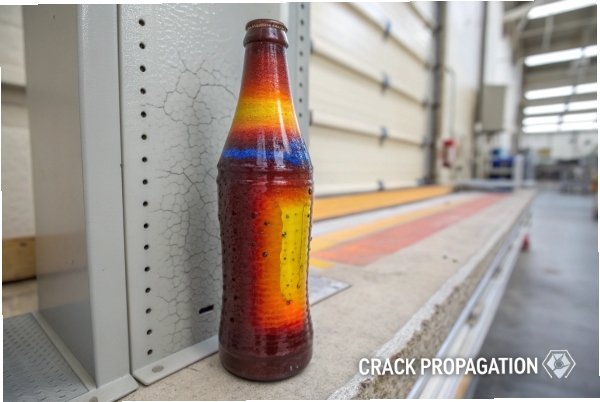
Thermal expansion 1 is the tendency of matter to change its shape, area, and volume in response to a change in temperature. For glass, this is a linear relationship. While $0.000009$ meters per degree might sound negligible, when you apply it to a rigid material like glass undergoing a $100^{\circ}C$ temperature swing during pasteurization, the internal stresses generated are massive.
If you are designing a new packaging line or troubleshooting breakage, you need to stop thinking of glass as a static solid. It is a dynamic material that grows and shrinks.
Why This Number Matters
The CTE isn’t just a number for the datasheet; it determines the Thermal Shock Resistance of the bottle.
$$ \text{Thermal Shock Resistance} \propto \frac{1}{\text{CTE}} $$
Because soda-lime glass has a relatively "high" CTE (compared to Borosilicate’s $3.3$), it has lower thermal shock resistance 2. This is why you can’t pour boiling water into a standard mason jar without pre-heating it.
| Material | CTE ($\alpha$) at 20-300°C | Expansion Risk |
|---|---|---|
| Soda-Lime Glass | $9.0 \pm 0.5 \times 10^{-6} K^{-1}$ | Moderate |
| Borosilicate 3.3 | $3.3 \times 10^{-6} K^{-1}$ | Very Low |
| Aluminium Cap | $23.0 \times 10^{-6} K^{-1}$ | High |
| Polypropylene (PP) Cap | $70-100 \times 10^{-6} K^{-1}$ | Extreme |
What CTE range is typically reported for soda-lime container glass, and which temperature interval should you reference?
When you request technical drawings from us or any major manufacturer, you’ll see a standard range. Understanding the boundaries of this range is key to setting your safety margins.
The standard reported range for soda-lime glass is $8.5$ to $9.5 \times 10^{-6} K^{-1}$, with $9.0$ being the accepted nominal value. This coefficient is valid only within the reference temperature interval of 20°C to 300°C, which covers the glass’s elastic range before it approaches the transition temperature.

The Standard Interval: 20°C to 300°C
Why do we stop at 300°C? Because glass is an amorphous solid 3.
-
Below 300°C: The expansion is linear. The atoms vibrate and move apart predictably.
-
Above 500°C (Transformation Range): The glass begins to soften. The structure starts to rearrange itself, and the expansion curve shoots up non-linearly.
For 99% of food, beverage, and cosmetic applications, the 20-300°C range is the only one that matters. Unless you are putting your bottles in a furnace (which I hope you aren’t!), you can rely on the linear $9.0$ value.
Batch-to-Batch consistency
One question I often get from pharmaceutical clients is: "Does the CTE change between batches?"
The short answer: Negligibly.
Soda-lime glass 4 is a commodity recipe (Sand, Soda Ash, Limestone, Feldspar). Unless a factory drastically changes its cullet (recycled glass) ratio or raw material source, the chemical composition remains stable enough that the CTE rarely fluctuates outside the $\pm 0.2$ range.
Practical Data for Engineers
| Parameter | Value | Notes |
|---|---|---|
| Nominal CTE | $9.0 \times 10^{-6} K^{-1}$ | Use this for calculations |
| Min-Max Range | $8.5 – 9.5 \times 10^{-6} K^{-1}$ | Tolerance band |
| Reference Temp | $20^{\circ}C – 300^{\circ}C$ | ISO 7991 5 Standard |
| Strain Point | $\sim 510^{\circ}C$ | Do not use linear CTE above this |
How do flint, amber, and green soda-lime bottles differ in thermal expansion due to composition and colorants?
Color is often confused with chemistry. While the colorants change how the glass looks and handles light, they do surprisingly little to how it expands.
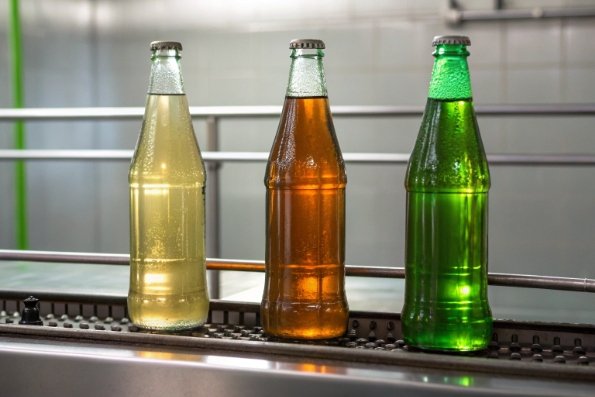
The addition of colorants like iron, sulfur, or chromium constitutes less than 1% of the total glass mass and does not significantly alter the silica network structure. Therefore, flint, amber, and green soda-lime bottles share the same CTE ($\approx 9.0 \times 10^{-6} K^{-1}$), though their radiative heat absorption rates differ.
The Chemistry of Color
I remember a project with a brewery in Germany that wanted to switch from amber to flint bottles but keep their pasteurizer settings exactly the same. They were worried about expansion.
I assured them: "The skeleton of the glass is the same."
-
Flint (Clear): Standard recipe.
-
Amber: Adds Iron Oxide 6 + Sulfur + Carbon.
-
Green: Adds Chrome Oxide + Iron Oxide.
These additives are "dopants." They sit in the glass structure but don’t fundamentally change the bond strength of the silicon-oxygen network that dictates expansion.
The "Heat Up" Trap
While the CTE is the same, the thermal behavior is not.
-
Amber/Green Glass: These are dark. They absorb Infrared (IR) energy efficiently. In a radiant heating tunnel, they will get hotter faster than clear glass.
-
Flint Glass: Transparent to IR. It heats up slower.
The Risk: If you run mixed bottles on the same line, your amber bottles might exit the washer at $70^{\circ}C$ while your flint bottles are only at $60^{\circ}C$. If you then fill them with $4^{\circ}C$ beer, the amber bottle suffers a higher $\Delta T$ shock ($66^{\circ}C$) than the flint bottle ($56^{\circ}C$).
- Conclusion: The expansion rate didn’t break the bottle; the temperature absorption did.
| Glass Color | CTE Value | IR Absorption | Heating Rate |
|---|---|---|---|
| Flint (Clear) | $9.0 \times 10^{-6}$ | Low | Slow |
| Amber (Brown) | $9.0 \times 10^{-6}$ | High | Fast |
| Emerald Green | $9.0 \times 10^{-6}$ | Medium-High | Medium-Fast |
Which test method and standards should you use to measure soda-lime bottle CTE accurately (e.g., dilatometry and sample prep)?
You cannot check CTE with a caliper on the factory floor. It requires precise laboratory equipment that measures movement at the micron level.
The industry standard for measuring glass CTE is Push-Rod Dilatometry (ASTM E228 or ISO 7991). This involves cutting a uniform rod sample from the bottle wall, heating it in a controlled furnace, and measuring the linear expansion using a high-precision LVDT sensor.
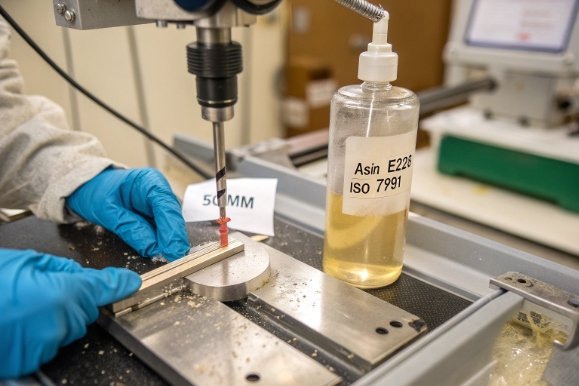
The Test Protocol (ASTM E228)
When we need to certify a glass formula for a demanding client, we send samples to the lab. Here is the process:
-
Sample Extraction:
We don’t test the whole bottle. We use a diamond saw to cut a small rod (usually 50mm long) from the sidewall or the annealing lehr strip.
- Critical: The ends must be polished flat and parallel.
-
The Dilatometer:
The sample rod is placed in a silica tube holder. A silica push-rod rests against the end of the sample.
- Why Silica? Fused silica 7 has a near-zero expansion coefficient, making it a perfect reference.
-
The Furnace Cycle:
We heat the sample at a steady rate (e.g., $5^{\circ}C/min$) from room temp to $300^{\circ}C$.
-
Measurement:
As the sample expands, it pushes the rod. An LVDT (Linear Variable Differential Transformer) detects this movement.
- Example: A 50mm sample might expand by roughly $0.135mm$ over $300^{\circ}C$.
Why Not Measure the Whole Bottle?
Clients sometimes ask, "Can’t we just measure the height of the bottle hot vs. cold?"
No.
-
Geometry: The complex shape of a bottle (curved bottom, neck) expands anisotropically 8 (in different directions).
-
Accuracy: The expansion is microscopic. You need a resolution of $0.1 \mu m$ (microns). A standard caliper is nowhere near accurate enough.
| Step | Requirement | Purpose |
|---|---|---|
| Sampling | Diamond Cut Rod | Isolate material property from shape |
| Reference | Fused Silica | Stable baseline for measurement |
| Sensor | LVDT 9 | Detect micron-level changes |
| Standard | ASTM E228 / ISO 7991 | Ensure global comparability |
How should you use soda-lime CTE data to set safe limits for hot-fill, pasteurization, and closure sealing performance?
CTE data is useless if it sits in a drawer. You must plug it into your risk calculations to prevent breakage and leaking.
Use the CTE to calculate the maximum safe thermal shock ($\Delta T \approx 42^{\circ}C$) and to model the "differential expansion" between the glass finish and the closure. In hot-fill applications, CTE mismatch often causes plastic caps to loosen (back-off) or overtighten upon cooling, necessitating precise torque adjustments.
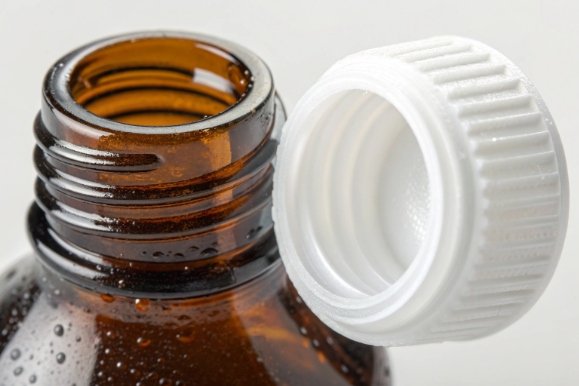
1. Calculating Thermal Shock Limits
The most direct application is establishing the "Safe $\Delta T$".
$$ \Delta T_{shock} = \frac{\text{Tensile Strength}}{\text{Young’s Modulus} \times \text{CTE}} $$
Since we know the CTE ($9.0$) is fixed and relatively high, we know the denominator is large, making the safe $\Delta T$ small.
-
Rule: For soda-lime, never exceed a $\Delta T$ of $42^{\circ}C$ in a single instant.
-
Action: Set your pasteurizer zones to step down in $30^{\circ}C$ increments (e.g., $60^{\circ}C \to 30^{\circ}C$).
2. The Closure Mismatch (The Leaker Cause)
This is the most common "hidden" problem CTE causes.
-
Glass CTE: $9.0$
-
Polypropylene (PP) Cap CTE: $\sim 150.0$ (Plastic expands/shrinks 15x more than glass!)
The Hot-Fill Scenario:
-
Fill & Cap: You cap the bottle at $85^{\circ}C$. The plastic cap is hot and expanded. The glass is hot and expanded (but less so).
-
Cool Down: As the package cools to $20^{\circ}C$, the plastic cap wants to shrink drastically. The glass neck barely shrinks.
-
The Result: The shrinking plastic cap tightens onto the glass threads.
-
Good: It creates a tight seal.
-
Bad: If the cap was applied with high torque initially, the shrinking force can exceed the strip torque of the threads or even snap the glass neck (Hoop Stress 10).
-
The Retort Scenario (Sterilization):
-
Heat Up: In the autoclave ($121^{\circ}C$), the plastic cap expands largely away from the glass.
-
The Risk: The seal integrity is momentarily lost. Steam can enter, or the cap can vibrate loose ("Back-off").
-
Solution: You need "Retort Grade" caps with liners that maintain resilience, and you must validate torque retention post-cycle.
| Material Pair | CTE Mismatch | Risk During Cooling | Risk During Heating |
|---|---|---|---|
| Glass + Tinplate (Steel) | Low | Steel shrinks slightly more (Good Seal) | Minimal |
| Glass + Aluminum | Moderate | Aluminum shrinks more (Good Seal) | Minimal |
| Glass + Plastic (PP/PE) | Extreme | Cap overtightens / Stress cracks | Cap loosens / Leaks |
Conclusion
The CTE of soda-lime glass ($9.0 \times 10^{-6} K^{-1}$) is a small number with big consequences. By respecting this constant, validating your $\Delta T$ limits, and accounting for cap-to-glass expansion differences, you can run a seamless, breakage-free production line.
Footnotes
-
Tendency of matter to change in shape, area, and volume in response to temperature. ↩
-
Ability of a material to withstand sudden temperature changes without failing. ↩
-
Solid material that lacks the long-range order that is characteristic of a crystal. ↩
-
Most common commercial glass type, composed of silica, soda ash, and lime. ↩
-
Standard determination of mean linear thermal expansion coefficient of glass. ↩
-
Chemical compound often used as a pigment in glass manufacturing. ↩
-
High-purity synthetic amorphous silicon dioxide with extremely low thermal expansion. ↩
-
Having a physical property that has a different value when measured in different directions. ↩
-
Sensor used for measuring linear displacement with high accuracy. ↩
-
Circumferential stress in a cylinder subjected to internal or external pressure. ↩