
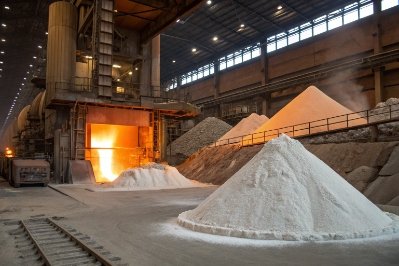
When bottle quality drifts, the root cause is often hidden in the batch room. A small recipe shift can turn into haze, breakage, or color claims.
For most soda-lime container bottles, SiO₂ is typically around 70–74% by weight. The exact target depends on cullet level, forming window, durability needs, and furnace energy strategy.
The “standard” SiO₂ target is a controlled window, not one fixed number?
Typical SiO₂ range for soda-lime container glass
In everyday bottle production, soda–lime container glass 1 sits in a narrow comfort zone. SiO₂ is the main network former, so it must stay high enough to keep the glass stable. At the same time, SiO₂ cannot be pushed too high without raising melting temperature and viscosity. That would increase energy use and can tighten the forming window. This is why many container plants aim at a practical band like 70–74% SiO₂ by weight for standard clear or colored bottles. Some product lines sit a bit lower for easier melting. Some sit a bit higher for stronger durability targets, but only if the furnace and forming process can handle it.
Why the range is not identical across suppliers
Two suppliers can both make “standard” bottles and still run different SiO₂ targets. The reasons are simple:
- Local sand purity and grain size change melting behavior.
- Cullet percentage 2 changes the effective chemistry and melt rate.
- Color targets change allowable iron and other trace oxides, which can shift recipe balance.
- Forming style (lightweight vs heavy) changes viscosity needs at the feeder.
So “standard silica” is not a universal number. It is a target window that matches a plant’s raw materials and equipment.
The fast way to read SiO₂ in context
| SiO₂ level (general) | What it tends to help | What it tends to hurt | Where it fits best |
|---|---|---|---|
| Lower end of the window | lower melt temperature, easier pull rate | lower chemical durability margin | cost-driven SKUs, thick-walled bottles |
| Middle of the window | balanced melting and durability | none extreme | most food and beverage bottles |
| Higher end of the window | better network stability and durability | higher energy and viscosity risk | aggressive durability goals, higher-quality cullet control |
A purchasing spec should avoid “SiO₂ = X%” without context. A better spec ties SiO₂ to performance tests and process controls, so both sides stay aligned.
If the goal is stable quality, the next step is understanding what SiO₂ actually does inside the glass network. That makes the rest of the controls feel logical, not arbitrary.
What role does SiO₂ play in glass networks?
Low defects and stable transmittance start with the network. If the network is weak, the plant will fight problems every week.
SiO₂ builds the backbone of the glass network. It controls structure, viscosity, durability, and how other oxides behave, so it sets the “base stability” for bottle performance.

SiO₂ is the structural framework
Glass is not a crystal, but it still has structure. SiO₂ forms a connected network of Si–O bonds, and silica is called a network former in glass chemistry 3. This network is the reason glass can be hard, stable, and chemically resistant. When SiO₂ is high enough, the network has fewer weak points. When SiO₂ is too low, the network has more “open” sites where modifiers and alkali can move, which can reduce chemical resistance.
In bottle glass, other oxides are added for good reasons. Soda (Na₂O) lowers melting temperature. Lime (CaO) stabilizes. Magnesia (MgO) tunes viscosity. Alumina (Al₂O₃) improves durability and helps resist devitrification in some systems. Still, none of these replace the network role of SiO₂. They work inside the network that SiO₂ creates.
SiO₂ also controls viscosity and forming behavior
Viscosity is the hidden hero in container glass. The glass must be fluid enough in the furnace. It must also be “just right” at the feeder and in the mold. SiO₂ is a strong driver of viscosity. Higher SiO₂ tends to raise viscosity at the same temperature. That can improve shape control, but it can also raise forming stress if the temperature is not adjusted.
This is why the same “SiO₂ increase” can look good in lab durability tests, but can cause forming issues in real production if the thermal profile is not updated.
A simple network view for buyers
| Network concept | What SiO₂ does | What buyers see when it is off |
|---|---|---|
| Network strength | builds stable Si–O backbone | more chemical interaction, more variability |
| Melt behavior | higher SiO₂ needs more heat | higher fuel cost or slower pull rate |
| Viscosity curve | higher SiO₂ shifts the curve up | forming window gets tighter |
| Optical stability | supports stable base glass chemistry | more drift in color and transmittance if balance shifts |
When a buyer wants stable bottles, SiO₂ is not a “raw material line item.” It is the core structure control. That is why silica targets are usually handled with tight batch discipline and change control rules.
Why target silica ranges stabilize quality and viscosity?
Plants do not chase a silica number for fun. They chase it because it keeps the furnace and the forming line predictable.
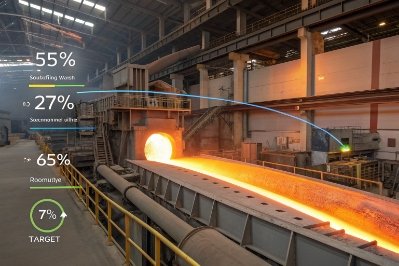
A target SiO₂ range stabilizes viscosity, melting behavior, and defect risk. When SiO₂ drifts, the plant must “fix” it with temperature or other oxides, and that creates variability and claims risk.
Viscosity stability is the real reason
In container glass, consistent viscosity at key process points matters more than almost any single lab test. The furnace needs a stable melt. The feeder needs a stable gob temperature. The molds need a stable flow and set rate. SiO₂ sits at the center of this, because it is the main network former.
If SiO₂ drifts upward, viscosity rises at the same temperature. Operators often respond by raising temperature. That can increase volatility of alkali and can change redox state, which can shift color. If SiO₂ drifts downward, viscosity drops. Operators may lower temperature or adjust pull. That can raise seed and bubble risk if fining conditions change.
So the “silica window” is a practical control tool. It reduces the need for constant thermal correction, and that reduces day-to-day variability.
Quality stability is tied to defect and stress control
SiO₂ drift can also change:
- fining efficiency (see the glass fining process 4)
- cord and striae risk (mixing and dissolution behavior changes)
- devitrification tendency (some compositions are less forgiving)
- residual stress (forming changes can change stress patterns)
These issues show up as higher reject rates, higher breakage in distribution, and more buyer complaints. Many disputes about “why this lot looks different” start with small chemistry drift that forced process adjustments.
What a stable silica target prevents
| Drift symptom | What it can cause | What the buyer experiences |
|---|---|---|
| SiO₂ too high vs baseline | tighter forming window, higher energy | shape variation, higher cost, more stress cracks |
| SiO₂ too low vs baseline | lower durability margin, more volatility | more leaching risk, more quality scatter |
| Constant correction in furnace | temperature swings, redox swings | color drift and transmittance drift |
| Viscosity instability | feeder and gob inconsistency | wall thickness variation, higher breakage |
A stable silica range is not about perfection. It is about keeping the plant in a steady operating zone where quality is repeatable. That repeatability is what procurement really buys.
How to specify SiO₂ with batch and melt controls?
A supplier can promise “72% SiO₂,” then ship bottles that still drift in performance. The missing piece is the control plan.
Specifying SiO₂ works best when it is paired with batch controls (raw material and cullet discipline) and melt controls (furnace stability, sampling, and change control), plus bottle-level performance tests.

Start with what is realistic and measurable
In a bottle contract, SiO₂ should be treated as a controlled range, not a single-point guarantee. The recipe is also influenced by cullet and trace oxides, so a tight single-point number can create unnecessary arguments. A practical spec uses:
- a target SiO₂ range (agreed window)
- a method for chemical analysis (how the glass is tested)
- a sampling rule (frequency and location)
- a change control rule (when the supplier must notify changes)
This keeps both sides focused on what matters: stable performance.
Batch controls that actually move the needle
Batch control is where SiO₂ stability is won or lost. Key controls include:
- sand quality control: SiO₂ purity, moisture, grain size, and contamination checks
- cullet control: color sorting, contamination limits, and stable mix ratio
- weighing and feeding control: calibrated scales, batch records, and alarms
- recipe governance: locked recipes with documented revisions
Cullet is the big variable. Higher cullet improves melt energy, but it can raise chemistry variability if the cullet stream is not clean. Clean cullet helps sustainability and helps quality at the same time, but it needs discipline.
Melt controls that keep chemistry from drifting on the line
Even with a perfect batch, melt conditions matter:
- stable furnace temperature profile
- stable refining and mixing conditions
- stable redox control (affects color and iron state)
- stable pull rate and residence time
A smart procurement spec asks for evidence of process stability, not only a lab report.
A buyer-friendly specification template
| Spec area | What to write | Why it reduces disputes |
|---|---|---|
| SiO₂ chemistry window | “SiO₂ = target range X–Y wt%” | avoids false precision |
| Test method | “Glass composition by agreed lab method” | aligns measurements |
| Sampling | “1 sample per batch/shift/campaign” | stops cherry-picking |
| Cullet policy | “Cullet % range and contamination limits” | keeps stability under recycling |
| Change control | “Notify before raw source or cullet stream change” | prevents surprise drift |
| Performance link | “Bottle-level durability + transmittance checks” | ties chemistry to real outcome |
When this is in place, silica control becomes a shared system. It stops being a blame game after a complaint.
Are higher-silica formulas improving durability trade-offs?
Many buyers hope there is a simple lever: “raise SiO₂ and solve durability.” Sometimes that works. Sometimes it creates new pain.
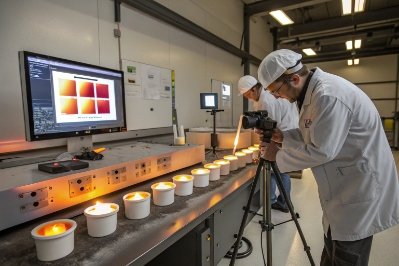
Higher-silica formulas can improve chemical durability and network stability, but they usually increase melting energy and can tighten the forming window. The best upgrades balance SiO₂ with stabilizers and process capability, not SiO₂ alone.
Where higher SiO₂ helps
A stronger SiO₂ network can:
- improve resistance to chemical attack for certain fills
- reduce the sensitivity of performance to small alkali swings
- support more stable long-term appearance for some products
For premium food and beverage packaging, this can be a real advantage, mainly when the fill is aggressive or when long shelf life matters. It can also help when the brand wants tighter consistency across seasons, since the network is less “soft” to minor drift.
The trade-offs that show up in real plants
Higher SiO₂ often means:
- higher melting temperature demand
- higher viscosity at the same operating temperature (see viscosity of a standard soda-lime-silica glass 5)
- slower dissolution of raw silica if sand quality is not controlled
- higher risk of defects if mixing and refining are not adjusted
If the plant compensates with higher furnace temperature, energy cost rises. If the plant compensates with more flux, durability gains can shrink. So the “higher silica” move only works when the entire recipe and process window are designed together.
How higher SiO₂ fits sustainability goals
Higher SiO₂ can raise energy demand, which can push emissions up if the furnace fuel mix stays the same. Still, a 10% increase in cullet usage 6 can offset some of that by lowering net melting energy. This is why modern “better durability” programs often pair:
- clean, high cullet usage
- stable silica supply
- tuned stabilizer levels
- tighter color and redox control
The best result is a stable glass that meets durability targets without pushing defect rates up.
A decision guide for procurement
| Goal | Higher SiO₂ helps when… | Higher SiO₂ hurts when… | Better approach |
|---|---|---|---|
| Better chemical durability | furnace and refining can handle it | energy budget is tight | tune SiO₂ + Al₂O₃ + CaO/MgO together |
| Stable transmittance | iron and redox are controlled | cullet stream is dirty | control cullet + set spectral limits |
| Lower total cost of quality | breakage and rejects drop | pull rate drops and defects rise | pilot run + full KPI tracking |
| Sustainability | clean cullet offsets energy | fuel mix is carbon-heavy | pair with efficiency or electrification plan |
Higher silica can be part of a better bottle, but it is not a magic fix. The strongest programs treat the recipe as a full system and validate it with both chemistry and bottle-level performance.
Conclusion
Standard bottle glass typically holds SiO₂ around 70–74%. The best specs treat SiO₂ as a controlled window tied to batch discipline, furnace stability, and finished-bottle performance tests—starting with a reliable batch house control approach 7.
Footnotes
-
Reference typical soda-lime container glass composition and common SiO₂ ranges. ↩ ↩
-
Definition of cullet and contamination controls that affect batch chemistry stability. ↩ ↩
-
Explains why silica forms the glass network backbone (Si–O bonds) in simple terms. ↩ ↩
-
Overview of fining—how bubbles are removed from molten glass to reduce defects. ↩ ↩
-
Authoritative viscosity–temperature data used to understand forming window impacts of composition shifts. ↩ ↩
-
Shows typical energy savings relationships when increasing cullet content in container glass melting. ↩ ↩
-
Practical guidance on batch house weighing, mixing, and automation to prevent recipe drift. ↩ ↩






