
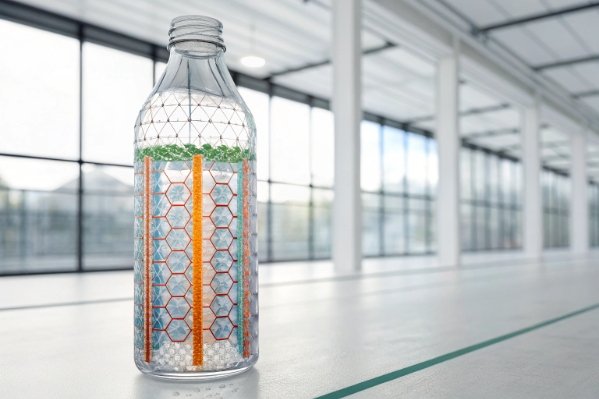
We often view glass as an impenetrable fortress, but chemically aggressive contents can breach its walls, leading to the silent contamination of food and drugs. Understanding the link between chemical resistance and ion leaching is the key to product purity.
The relationship is inversely proportional: higher acid and alkali resistance signifies a more stable silica network, which directly drastically reduces substance migration. Conversely, poor resistance allows chemical attacks to break down the glass matrix, releasing sodium, calcium, and other ions into the contained product.
What Is the Relationship Between Acid/Alkali Resistance and Substance Migration in Glass Bottles?
The Myth of Inertness
In my role at FuSenglass, I frequently have to correct a dangerous misconception: the idea that glass is chemically "dead." While glass is far more inert than plastic or metal, it is legally and chemically defined as a substance that can release constituents into food. This process is called migration.
The relationship between "Resistance" and "Migration" is fundamental. Resistance is the glass’s ability to withstand chemical attack without structural degradation. Migration is the result of that resistance failing. When a client asks, "Is this bottle resistant to pH 12?" they are really asking, "Will this bottle dissolve into my product?"
The Mechanism of Release
Glass is a network of Silica ($SiO2$) modified by [Fluxes](https://en.wikipedia.org/wiki/Flux(metallurgy)) 1 (Sodium, Potassium) and Stabilizers (Calcium, Magnesium). These modifiers are not chemically bonded as tightly as the silica.
- Low Resistance: Means the chemical bonds holding these modifiers are weak. When exposed to acids or alkalis, these ions are easily "plucked" out of the wall.
- High Resistance: Means the network is dense and chemically neutral. The "door" is locked, keeping the ions inside the glass structure.
For high-end spirits, pharmaceuticals, and mineral waters, migration is a quality killer. It changes the pH, alters the flavor, and can even cause visible sediment (flaking).
Resistance vs. Migration Outcomes
| Glass Characteristic | Chemical Resistance | Migration Potential | Consequence for Product |
|---|---|---|---|
| Type I (Borosilicate) | High | Very Low | pH stable; No flavor change. |
| Type II (Treated Soda-Lime) | High (Surface) | Low | Good for most IV fluids/meds. |
| Type III (Soda-Lime) | Moderate | Moderate | Acceptable for dry/neutral foods. |
| Low Quality / High Alkali | Poor | High | pH shift; Sediment; "Glassy" taste. |
The resistance of the bottle is essentially the "dam" holding back the reservoir of ions in the glass.
How Does a Glass Bottle’s Acid and Alkali Resistance Affect the Migration of Substances?
If the chemical shield of the glass is breached, the contents of the container act as a solvent, extracting minerals from the package itself. You must understand the distinct mechanisms of acid versus alkali attacks to predict what will migrate into your product.
Acid resistance limits "ion exchange," preventing hydrogen ions from swapping with sodium ions in the glass; alkali resistance prevents "network dissolution," stopping the breakdown of the silica structure itself, which causes gross migration of all glass components.
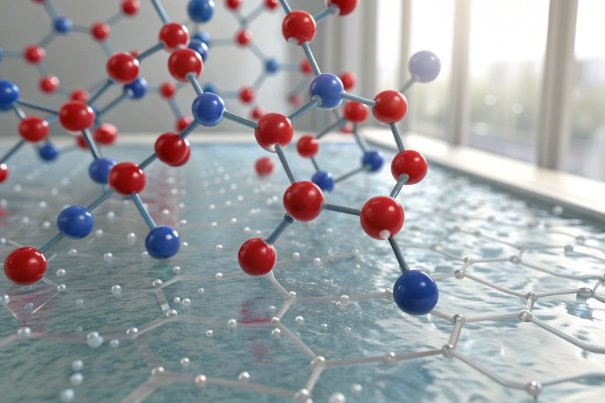
Acid Attack: The Great Swap (Ion Exchange)
When a glass bottle has high acid resistance, it resists leaching.
In an acidic environment (fruit juice, wine, vinegar), the hydrogen ions ($H^+$) in the liquid try to attack the glass surface. They want to swap places with the Sodium ($Na^+$) or Potassium ($K^+$) ions sitting in the glass network.
- Low Resistance: The glass readily gives up its Sodium. The Sodium migrates into the juice, and Hydrogen moves into the glass. This forms a "silica gel" 2 layer on the surface. While the glass structure doesn’t dissolve, the chemistry of the liquid changes (Sodium levels rise).
- High Resistance: The glass holds onto its Sodium. Migration is halted.
Alkali Attack: Total Destruction (Network Dissolution)
Alkali resistance is different. It guards against dissolution.
Strong alkalis ($OH^-$ ions) don’t just want to swap; they want to break the Silicon-Oxygen bonds ($Si-O-Si$) that hold the bottle together.
- Low Resistance: The alkali breaks the backbone of the glass. This releases everything—Silica, Sodium, Calcium, Aluminum—into the liquid. This is "Total Migration." It can lead to visible flakes (delamination) 3 in the product.
- High Resistance: The glass composition (often with Alumina or Boron) shields the Silica bonds, preventing this breakdown and keeping the glass solid.
Migration Profiles by Attack Type
The "Resistance" rating of a bottle (e.g., ISO Class) directly predicts the migration load.
| Chemical Environment | Mechanism of Migration | Elements Released | Impact of High Resistance |
|---|---|---|---|
| Acidic (pH < 6) | Ion Exchange (Diffusion). | Alkali Earths (Na, K, Ca). | Prevents pH rise in product; Stops "blooming". |
| Neutral (Water) | Hydrolysis 4. | Sodium ($Na^+$). | Keeps water tasting fresh; No pH shift. |
| Alkaline (pH > 9) | Network Dissolution. | Silica ($SiO_2$), Metals. | Prevents delamination/flakes; Stops turbidity. |
| Chelating Agents | Metal Extraction. | Trace metals (Pb, Cd, Fe). | Prevents heavy metal contamination. |
Understanding this chemistry explains why a standard soda-lime jar (Type III) is fine for pickles (Acid) but might fail for a high-pH cleaning product (Alkali).
How Do Surface Treatments Influence Material Migration Rate?
Modifying the surface of the glass can either seal the pores to stop migration or strip away the protective skin, accelerating it. You need to know which treatments act as shields and which open the floodgates.
Surface treatments like sulfurization and sol-gel coatings significantly reduce migration by creating a barrier or depleting surface ions; conversely, etching or sandblasting removes the fire-polished skin, increasing surface area and drastically accelerating migration.
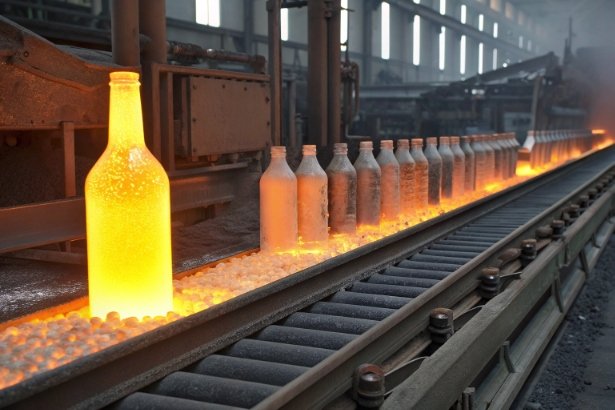
The Shield: De-alkalization (Sulfur Treatment)
At FuSenglass, when we produce bottles for the pharmaceutical industry (Type II Glass), we perform a "Sulfur Treatment."
We inject Ammonium Sulfate into the bottle while it is still hot. This gas reacts with the Sodium on the surface of the glass, forming Sodium Sulfate dust, which we wash away.
- Effect on Migration: We have essentially "pre-leached" the glass. We removed the Sodium from the top microscopic layer. When you fill the bottle, there is no Sodium left on the surface to migrate into your drug. This treatment makes a cheap Soda-Lime bottle behave like expensive Borosilicate glass regarding migration.
The Barrier: Coatings (Internal Siliconization)
For highly sensitive biological products, we apply a thin layer of Silicone ($SiO_x$) or use Sol-Gel 5 technology.
- Effect on Migration: This creates a hydrophobic barrier. The liquid never actually touches the glass; it touches the silicone layer. Migration drops to near zero. This is crucial for preventing the adsorption of proteins or the leaching of aluminum.
The Vulnerability: Acid Etching (Frosting)
We often frost bottles for cosmetic appeal. However, this process involves dipping the bottle in Hydrofluoric Acid.
- Effect on Migration: This strips away the "fire-polished" skin—the smooth, dense layer formed during molding. It exposes the raw, inner glass structure and increases the surface area 6 by creating microscopic peaks and valleys.
- The Risk: An etched bottle has a much higher migration rate than a clear bottle. If you are bottling a very aggressive liquid, a frosted bottle is riskier because the "shield" has been chemically removed.
Treatment Impact Matrix
| Treatment Process | Effect on Surface | Migration Impact | Best For |
|---|---|---|---|
| Fire Polishing | Seals surface; reduces defects. | Decreases | Standard production. |
| Sulfur Treatment | Depletes surface Sodium. | Drastically Decreases | Pharmaceuticals, Spirits. |
| Siliconization | Adds inert polymer layer. | Eliminates | High-value Serums/Meds. |
| Acid Etching (Frost) | Increases Surface Area. | Increases | Perfume (Alcohol is inert). |
| Sandblasting | Creates micro-cracks. | Increases Significantly | Decoration only. |
Do not assume a treated bottle behaves the same as a plain one. The treatment dictates the migration profile.
What Factors Contribute to Migration Rates of Metals, Ions, or Other Compounds?
Migration is not static; it is a dynamic process driven by energy, time, and geometry. You must calculate these variables to predict the shelf-life stability of your packaged product.
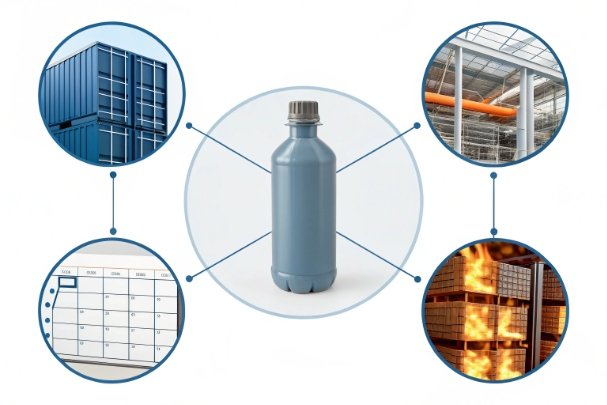
Key factors driving migration include the glass composition (sodium content), the surface-to-volume ratio (bottle size), the storage temperature (Arrhenius effect), and the duration of contact; higher temperatures and smaller bottles exponentially increase migration concentrations.
The Glass Composition (The Source)
You cannot migrate what isn’t there.
- Soda-Lime Glass: Contains ~14% Sodium Oxide and ~10% Calcium Oxide. It has a massive reservoir of ions to release.
- Borosilicate Glass: Contains Boron and Aluminum, with much lower alkali content. The network is tighter.
- Colored Glass: Amber and Green glass contain Iron, Chrome, or Manganese oxides. In aggressive acidic conditions, trace amounts of these heavy metals can migrate, which is a major concern for regulatory compliance (Prop 65, REACH 7).
Temperature (The Accelerator)
This is the most critical factor for storage. Migration follows the Arrhenius Equation.
- Rule of Thumb: For every $10^{\circ}C$ increase in temperature, the rate of chemical reaction (and leaching) roughly doubles.
- Real World: A bottle stored in a hot shipping container ($50^{\circ}C$) for 2 weeks might release as much sodium as a bottle stored at room temperature ($20^{\circ}C$) for 6 months. Hot-filling processes also trigger an immediate spike in migration.
Surface-to-Volume Ratio (The Geometry)
This is often overlooked.
- Small Vials (2ml): Have a huge amount of glass surface area relative to the tiny amount of liquid. The concentration of leached ions rises very fast.
- Large Jugs (1L): Have a small surface area relative to the volume. The dilution effect is huge.
- Implication: You might pass a migration test with a 500ml bottle but fail the same test with the same glass in a 5ml tester size.
Contact Time (The Duration)
Migration is diffusion-controlled. It slows down over time but generally continues until equilibrium is reached.
- Leaching: Occurs most rapidly in the first days/weeks as the immediate surface is depleted.
- Dissolution: (Alkali attack) continues linearly as long as the liquid remains alkaline.
Factor Influence Table
| Factor | High Condition Example | Impact on Migration | Why? |
|---|---|---|---|
| Alkali Content | Soda-Lime (Type III) | High | More mobile ions available to move. |
| Temperature | Hot Fill / Pasteurization | Exponential Increase | Heat provides energy to break bonds. |
| Surface Area | 5ml Ampoule | High Concentration | Less liquid to dilute the leached ions. |
| pH | Extreme pH (2 or 12) | High | Aggressive chemical attack on network. |
| Agitation | Transport / Shaking | Moderate Increase | Refreshes the liquid layer at the surface. |
To control migration, you must control the environment, not just the bottle.
How Can Manufacturers Improve Acid/Alkali Resistance to Minimize Migration Risks?
Waiting for a recall is not a strategy; we must engineer the glass to be robust from the moment it leaves the furnace. By optimizing the raw material batch and the thermal history of the bottle, we can lock contaminants inside the glass structure.
Manufacturers improve resistance by formulating glass with higher alumina or boron content to stabilize the network, utilizing surface de-alkalization treatments to deplete mobile ions, and ensuring perfect annealing to reduce stress-corrosion susceptibility.

Batch Formulation: Strengthening the Network
The first step is in the "Batch House." To improve resistance, we adjust the recipe.
- Add Alumina ($Al_2O_3$): Increasing Alumina tightens the molecular network, making it harder for Sodium to leave. This improves Hydrolytic Resistance (Water resistance).
- Reduce Fluxes: We try to use the minimum amount of Soda Ash ($Na_2CO_3$) necessary to melt the glass. Less Sodium in the batch means less Sodium to leach out later.
Thermal History and Annealing
A stressed bottle is a weak bottle—chemically and physically.
- Annealing: If glass is cooled too fast, it has internal tension. Stressed glass is more chemically reactive and prone to corrosion. We ensure our Lehrs 8 (ovens) provide a slow, even cool-down to maximize the density and stability of the surface.
Quality Control: Hydrolytic Resistance Testing
We cannot manage what we don’t measure. We perform ISO 4802 tests.
- The Test: We crush the glass into grains (or fill the bottle), boil it in water, and titrate the water to see how much alkali leached out.
- The Standard: We aim for Type II or high-quality Type III limits. If a batch shows high leaching, we investigate the furnace temperature or batch composition immediately.
Coatings as a Safety Net
As discussed, for clients with strict migration limits (like baby food or pharma), we employ Hot End and Cold End coatings not just for scratch resistance, but to seal the surface.
- Hot End (Tin Oxide): Applied immediately after forming. It helps heal micro-cracks and acts as a barrier precursor.
- Internal Treatment: Using Ammonium Sulfate injection (Sulfur Treatment) is the most effective way to turn a standard bottle into a high-resistance vessel.
Manufacturer’s Toolkit for Safety
| Process Step | Action Taken | Resulting Benefit |
|---|---|---|
| Raw Materials | Increase $Al_2O_3$; Decrease $Na_2O$. | Stronger molecular bonds; less leaching. |
| Melting | Higher Temp; Better Homogeneity. | Uniform glass structure; fewer weak spots. |
| Forming | Ammonium Sulfate Injection. | Removes surface alkali (Type II Glass). |
| Annealing | Optimized cooling curve. | Denstified surface; lower reactivity. |
| QC Lab | Titration Tests (USP <660> 9). | Verification of low migration rates. |
At FuSenglass, we treat the glass bottle not just as a container, but as a chemical component of your final product—one that must remain silent and invisible.
Conclusion
The link between acid/alkali resistance and substance migration is the difference between a safe product and a contaminated one. By understanding that chemical resistance acts as the "lock" on the glass matrix, and utilizing surface treatments and Type I/II compositions, brands can ensure their packaging protects product purity rather than compromising it.
Footnotes
-
Chemical cleaning agents used to facilitate melting and refining of metals and glass. ↩
-
A porous form of silicon dioxide used as a desiccant or support for chemical reactions. ↩
-
The flaking of glass surfaces in pharmaceutical vials, causing contamination. ↩
-
The chemical breakdown of a compound due to reaction with water. ↩
-
A process to produce solid materials from small molecules, used for high-purity glass coatings. ↩
-
The total area of the surface of a three-dimensional object, critical for reaction rates. ↩
-
EU regulation concerning the Registration, Evaluation, Authorisation and Restriction of Chemicals. ↩
-
A long oven used for annealing glass to remove internal stresses. ↩
-
United States Pharmacopeia standards for glass containers used in pharmaceutical packaging. ↩






