
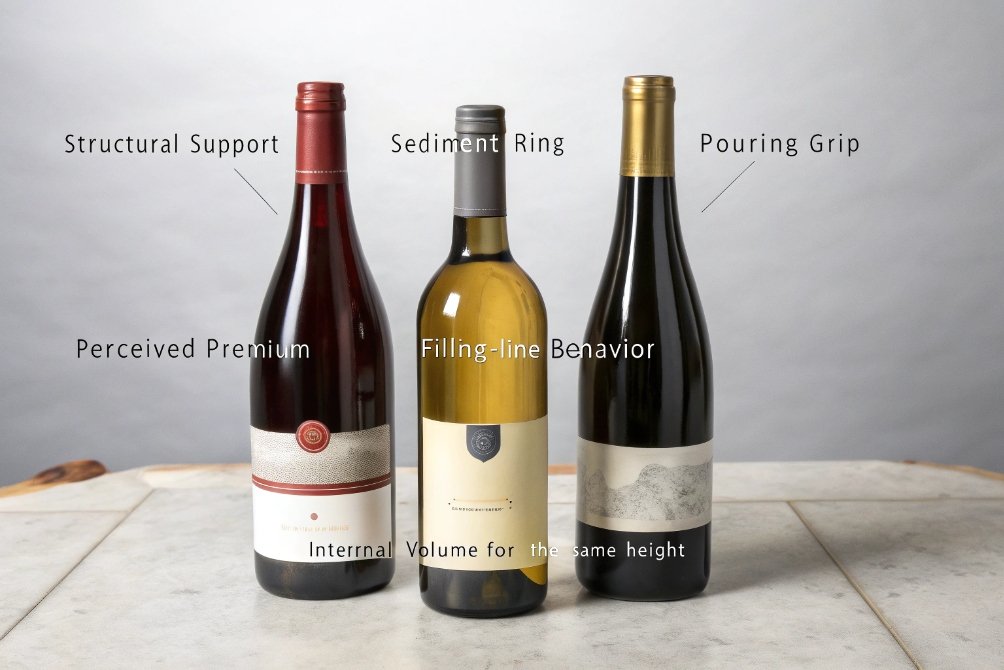
Many people assume a deeper punt signals higher wine quality. But this shape comes from physics, handling, and tradition, not a secret ranking system.
A punt adds structural support, helps manage sediment and pouring, influences handling and labeling, and sometimes affects sustainability and filling-line behavior. The depth is often more about aesthetics and marketing than strength.
The punt solves different problems at once. Some benefits matter in real use. Others remain mainly symbolic.
Does a deeper punt add strength or is it mostly aesthetics?
A punt changes how force moves through the base of the bottle. But depth alone does not guarantee strength. Design, wall thickness, and annealing matter far more.
A deeper punt can help the base handle internal pressure in sparkling wines, but in still wine bottles it is mainly aesthetic and connected to tradition. Many modern lighter bottles use shallow punts without losing strength.
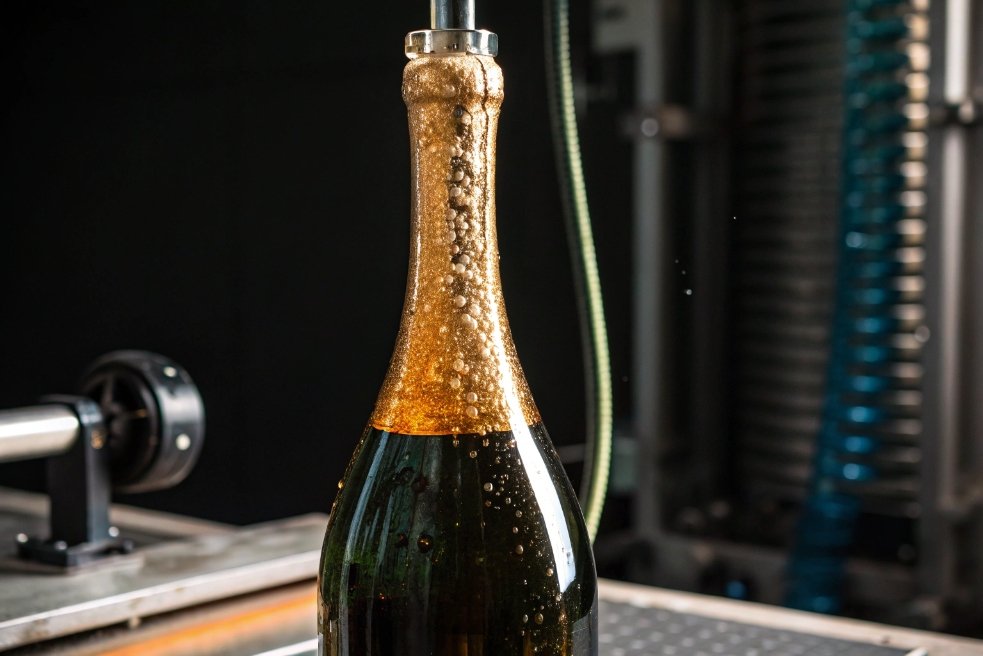
A deeper look at structural performance
The curve of a punt spreads stress across the heel area. This shape helps Champagne bottles 1 resist the high pressure from carbonation. Thick heels, heavier glass, and proper annealing create the real strength. The punt plays a support role, but it is not the main load-bearer.
For still wines, the internal pressure is low. The base does not need a deep cavity to stay safe. Still wine bottles with shallow punts perform well as long as the glass distribution is correct. Many sustainability programs 2 push for shallower punts to reduce glass weight and lower carbon footprint.
Deep punts also change how customers feel about the bottle. They add weight and a premium look. The shape gives an impression of higher value. But the depth itself does not prove better quality or stronger engineering.
A quick view:
| Bottle type | Punt purpose | Real impact |
|---|---|---|
| Sparkling wine | Supports pressure distribution | Helpful but not the primary strength feature |
| Still wine | Mostly tradition and appearance | Minimal strength gain |
| Lightweight bottles | Reduce punt depth for sustainability | No major loss if heel is well designed |
So the punt can help, but deeper is not always stronger.
How does the punt help with sediment and pouring?
A punt changes how sediment settles and how the bottle moves in your hand. These benefits matter more in aged reds and traditional service.
The punt helps collect sediment in a tight ring and gives a natural grip point for controlled pouring. These effects come from shape and handling, not from wine chemistry.

A deeper look at sediment control and pouring
Sediment forms in aged wines. The punt lifts the center of the base and pushes the sediment outward into a ring. When the wine pours over the rim, the sediment tends to stay at the bottom. This keeps the last pour cleaner. Flat-bottom bottles can also work, but the ring helps slow sediment movement.
The punt also provides a grip point for service. Many sommeliers 3 place their thumb inside the punt and rest their fingers on the base. This grip gives steady control, especially during slow pours at the table. The technique works because the indentation centers the thumb.
The punt does not replace proper decanting. It only gives a small advantage during the final pour.
A quick summary:
| Factor | Punt effect | Notes |
|---|---|---|
| Sediment | Collects sediment in a narrow ring | Helps keep sediment in the bottle |
| Pouring | Creates a natural thumb grip | Useful in table service |
| Riddling | Not required for riddling | Sparkling wines use neck-down racks instead |
These benefits matter in service, even if the chemistry stays the same.
Are there stability or labeling implications from punt depth?
The punt changes the way a bottle stands and the available space for labels. Both effects matter on filling lines and store shelves.
Deep punts reduce internal volume for the same bottle height, and they influence center of gravity, label placement, and how securely a bottle stands. Shallow punts give more stable bases and more predictable line handling.
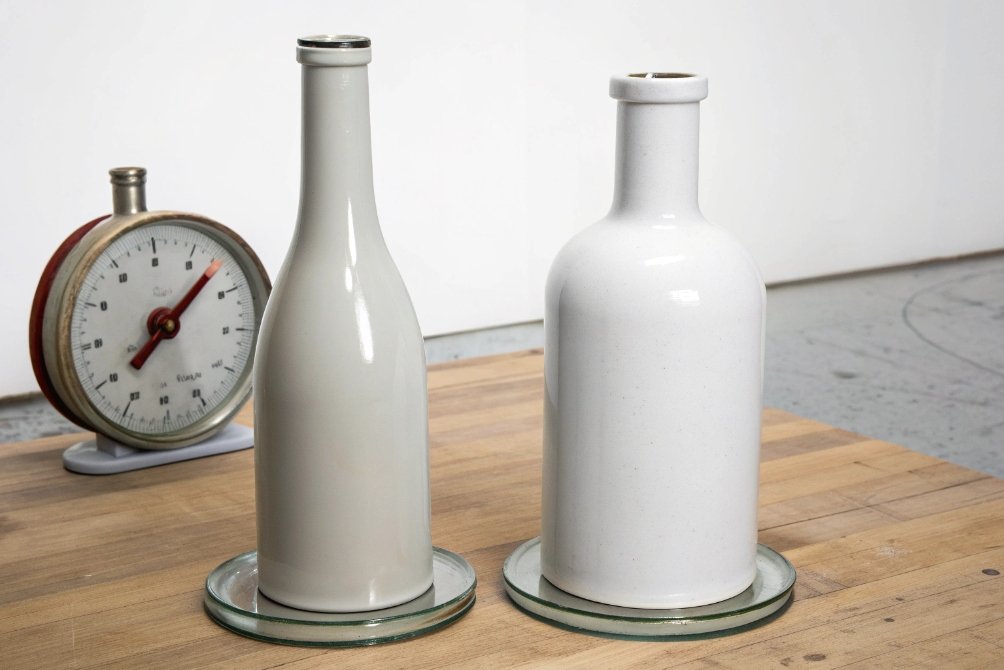
A deeper look at stability and labeling
A very deep punt creates a small contact ring at the base. This ring must be flat and even. If the base ring tilts or is uneven, the bottle rocks or leans. Lightweight bottles with shallow punts often stand more consistently.
Labeling lines rely on bottle stability. If the base is narrow or slightly uneven, labels can skew. Punt depth also affects the look of the bottle. A deeper punt reduces internal volume while keeping the height the same. This makes the bottle appear taller or more premium without changing the fill.
Designers must match the punt depth to the label height, especially for full-height front labels or wrap-around labels. A deep punt can shift the balance point of the bottle, which influences how it sits on conveyors.
A simple view:
| Impact area | Effect of punt depth |
|---|---|
| Stability | Deep punt → smaller base ring → more rocking risk |
| Labeling | Affects label height and alignment |
| Perception | Taller profile without extra volume |
| Capacity | Deep punt reduces internal space |
So punt depth affects more than appearance. It touches the entire bottle workflow.
Do punts affect filling-line handling or stackability?
Filling lines need predictable bottle motion. Stackability depends on how the base meets the closure of the bottle above.
Deep punts can change how bottles move on conveyors, how they index in starwheels, and how they stack in cartons. Shallow punts make line handling smoother and reduce complexity.

A deeper look at line behavior and packaging
On filling lines, the base contacts guides and conveyors. A very deep punt creates a narrow contact ring, which increases the chance of wobble or misalignment at high speeds. Modern lines work well with many shapes, but additional stability is always helpful.
In cartons, stackability depends on how the base rests on the closure or shoulder of the bottle below. Deep punts can trap capsule tops inside the punt cavity. That can reduce nesting stability. Many packaging designers avoid extreme punt depth to prevent these issues.
During transport, a shallow punt usually behaves more predictably. Cartons stack straight, and the bottles settle with less shifting. Lightweight, eco-friendly bottles often choose moderate or shallow punts to keep handling consistent.
A simple breakdown:
| Line/pack factor | Effect of deep punt |
|---|---|
| Conveyor motion | Higher wobble risk |
| Starwheel feed | Less predictable alignment |
| Carton stacking | Capsule tip may sit inside punt cavity |
| Transport | Can reduce stability in tight packs |
The best punt is deep enough for design goals but shallow enough for stable handling.
Conclusion
The punt supports pressure in sparkling wines, guides sediment, improves grip, and shapes the bottle’s look. Its depth influences stability, labeling, and line handling, but it does not prove wine quality. The right punt is a balance of function, design, and efficiency.






