
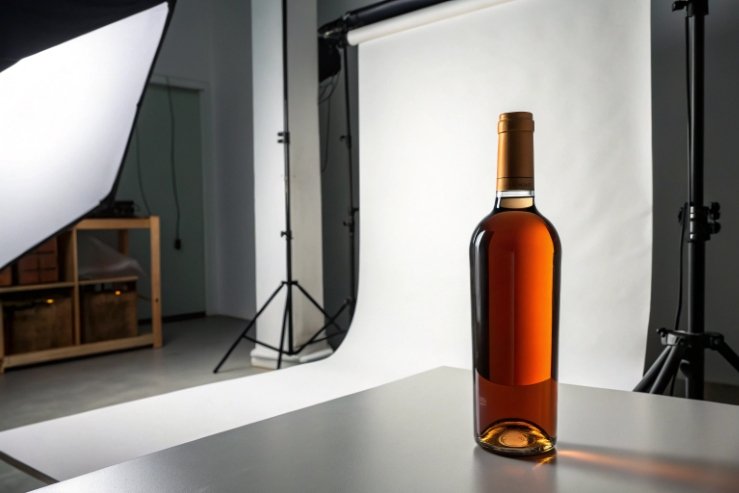
A bottle that looks premium can still fail in filling, shipping, or pouring. The base is where cracks start, wobble shows, and customer doubt begins.
A punt is a pushed-in bottle base that can add base strength, guide pressure into a stronger ring, help sediment stay back while pouring, and signal tradition. It can also support more stable handling on lines, though it adds design and QC trade-offs.
Most people treat the punt as a “wine thing.” In real production, it is a mix of physics, process control, and brand psychology. When it is designed well, it solves several small problems at once. When it is designed poorly, it creates new ones.
Does a punt improve strength and pressure distribution?
If base cracks, heel checks, or pressure failures show up, the punt becomes more than a style choice. The bottle bottom is a high-stress zone during filling, capping, and impact.
Yes, a punt can improve base strength by moving glass mass into the heel ring, which is the most supportive contact area. It also helps spread loads away from the flat center, which can reduce stress peaks under pressure and impact.
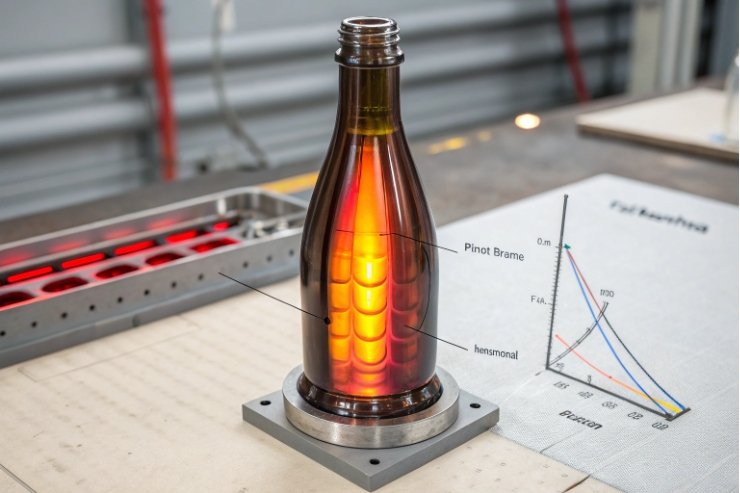
Why the heel ring matters more than the center
A flat-bottom bottle asks the center to stay perfect. Any small rock, uneven conveyor, or thermal stress can focus force into one weak point. A punt changes the geometry. It creates a raised circular “standing ring” (also called a bearing surface). That ring can carry load more evenly. It also gives a thicker cross-section near the heel, where many bottom failures start.
For sparkling wine and other pressurized drinks, the base shape matters because the bottle sees internal pressure plus line shocks. The punt does not magically “hold pressure” alone. The full design does. Glass type, wall thickness, bottom thickness, heel radius, and annealing 1 quality all matter. Still, a punt gives designers a better place to put glass where it works hardest. This matches what many producers observe: deeper push-up designs are common in high-pressure bottles, but only when the whole base and heel are engineered as a system.
What the punt does during manufacturing and cooling
A punt can also support more even cooling. The base is thick and cools slower than the shoulder. Uneven cooling can lock stress into the bottom. A pushed-up bottom can reduce a wide, thick “pancake” zone and shift thickness into a ring. That ring can be easier to cool and anneal in a controlled way.
Design trade-offs that matter in real QC
A punt also creates tighter shape tolerances. If push-up depth varies too much, stability and capacity control can drift. It is not a free gain. The best results come from stable molds, stable gob weight, stable forming temperature, and strong annealing discipline.
| Design factor | What changes with a punt | What it helps | What it can hurt |
|---|---|---|---|
| Heel thickness | Often increases near ring | Impact resistance at base | Heavier bottle if not optimized |
| Standing ring width | More defined contact area | Better stability and load spread | Rocking if ring is uneven |
| Push-up depth variation | Can vary with forming | Capacity control and look | Fill-level consistency issues |
| Bottom stress profile | Less flat center stress | Lower crack risk in many cases | Stress at heel if radius is sharp |
From a manufacturing view, the punt is most useful when the base ring is round, the heel radius is smooth, and thickness transitions are gradual. Sharp transitions are where cracks love to start.
How does a punt help sediment collection and pouring control?
Sediment is not the main reason punts were invented, but it is one reason the shape stayed. In aged red wine, sediment control is a real user experience problem, not a myth.
A punt can encourage sediment to settle in a ring around the base edge, so the first pour stays clearer. It also gives a natural thumb rest that can improve one-handed pouring control, especially in service settings.
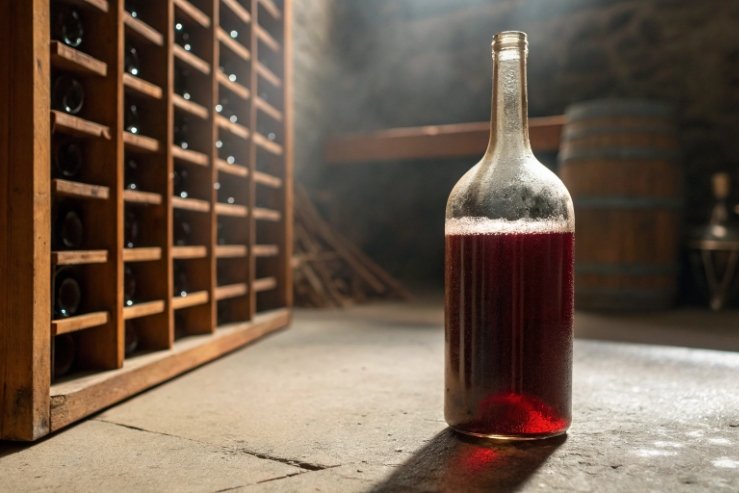
Sediment behavior is about flow and where particles rest
Sediment settles where motion is low. A punt changes the “floor” of the bottle. Instead of a wide flat bottom, there is a slope into the center and a ring near the edge. Over time, particles can gather along the lower-energy zones near that ring. During pouring, the last part of the wine moves across the base. If sediment is clustered in a ring and stays put, it may be less likely to rush straight into the neck at the first tilt.
This is not perfect. If a bottle is shaken, moved during transport, or stored on its side and then stood up, sediment can spread anywhere. Decanting 2 still matters for older wines. But in normal handling, the punt can make it a bit easier to pour a clean first glass.
Pouring control and grip: the “sommelier hold”
A punt gives a place for the thumb to sit inside the base while fingers wrap the body. This grip is common in restaurants. It can feel more stable because the bottle is balanced with a locked hand position. It also makes the bottle feel “made for pouring,” which adds to perceived quality even when the mechanical benefit is small.
A deeper punt can make the thumb rest feel more secure. But depth is not the only factor. The diameter of the punt opening and the smoothness of the edge matter too. If the edge is sharp, it is uncomfortable. If the opening is too small, large hands cannot use it well.
| Use case | What the punt helps | Limits to know |
|---|---|---|
| Aged red wine | Sediment stays back longer | Not a replacement for decanting |
| Table service | Thumb rest improves grip | Comfort depends on punt edge finish |
| One-handed pour | Better balance for some users | Heavy bottles still fatigue the wrist |
| Home use | “Feels premium” in hand | Many buyers overvalue depth alone |
A practical takeaway: if the brand story includes ritual, service, or tradition, the punt supports that story with both function and feel.
In many markets, buyers use quick signals. They do not test glass stress. They touch, lift, and look. That is why punt depth becomes a marketing tool.
Punt depth is often correlated with premium perception because consumers link deep punts with traditional wine and spirits packaging, heavier glass, and higher price cues. But the relationship is cultural, not scientific, and it can backfire when sustainability and lightweighting matter.
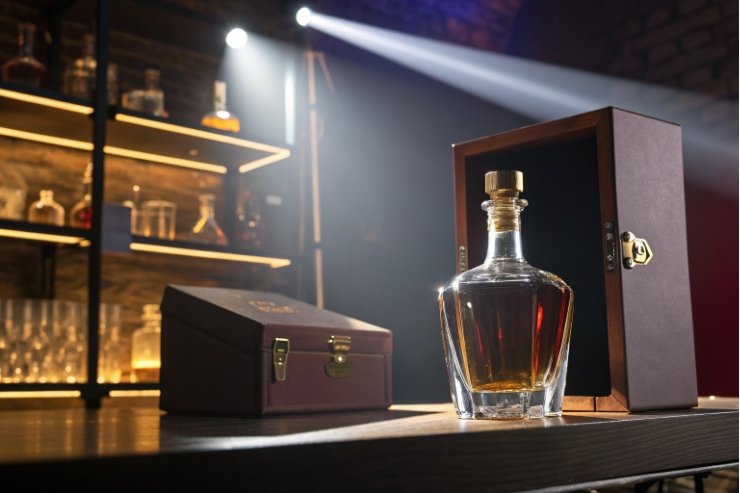
Why people read a deep punt as “better”
Several cues stack together:
- A deeper punt often comes with a thicker base.
- A thicker base often makes the bottle heavier.
- A heavier bottle often feels “expensive” to a shopper.
This chain is not always true, but it is common enough that it becomes a shortcut in the mind. Spirits brands also use deep push-ups to create a strong silhouette and a “thick glass” look from the side.
There is also a tradition cue. Many classic wine regions use punted bottles. This creates a learned association. Over time, buyers start to think punt equals heritage.
When deep punts stop helping
Two trends can weaken the premium link:
- Sustainability pressure 3: Heavy glass raises transport emissions and cost. Many brands now want lightweight bottles.
- Minimalist design: Some modern premium brands use clean, flat bases to look simple and contemporary.
So the better question is not “Is deeper always more premium?” The better question is “Does this base match the brand position and the channel?” A luxury gift spirits bottle can justify deep push-up and weight. A high-volume table wine brand may look premium with a modest punt and strong decoration instead.
| Brand goal | Punt strategy that fits | Why it works |
|---|---|---|
| Traditional wine | Medium-to-deep punt | Matches classic expectations |
| Luxury spirits gift | Deep punt + thick base | Strong shelf impact and hand feel |
| Eco-focused premium | Shallow punt or optimized push-up | Premium look without heavy weight |
| Modern minimalist | Low punt or flat base | Clean lines support modern cues |
A helpful internal rule: premium perception comes from a package system, not one feature. Closure, label finish, decoration, and glass clarity can outperform a deep punt when the rest of the pack is strong.
Do punts affect line handling and labeling?
In bottling plants, the bottle bottom is a handling interface. Conveyors, star wheels, base guides, rinsers, and packers all interact with the base and heel.
Yes, punts can affect line handling. A consistent standing ring can improve stability on conveyors and in guides. But punt variation can cause rocking, misfeeds, and fill-height variation. Labeling is mostly indirect, yet base stability affects label placement accuracy.

Handling: stability, stacking, and conveyor behavior
A bottle stands on the bearing ring. If that ring is flat and even, the bottle tracks better and wobbles less. This supports smoother movement through high-speed lines. A punt can also help glassmakers “hide” small mold marks and push-up variations inside the concave area, so the outside heel ring stays cleaner.
There is also a stacking effect in some supply chains. Certain bottles pack more consistently because the base geometry is predictable. This is not universal, but it shows up in practice when bottles are palletized 4 and moved many times.
The risk is variation. If the push-up is not consistent, the bottle may sit on a slightly tilted ring. That causes micro-wobble. Wobble becomes a big problem at speed. It can show as:
- poor cap application
- label skew
- sensor errors
- more line stops
Labeling: the punt does not touch the label, but it still matters
Most labels sit on the body, so the punt does not physically block a label. Still, labelers depend on stable bottle transport and stable bottle rotation. If the bottle wobbles or does not rotate evenly, label placement shifts. A stable base supports better label repeatability.
Also, some brands add back labels low on the body. If the heel area is too thick or too curved near the base, a low label can wrinkle. This is not caused by the punt alone, but punt design often comes with heel profile changes, so it must be checked at the same time.
| Line topic | How a punt can help | How it can hurt | What to control |
|---|---|---|---|
| Conveyor tracking | Defined standing ring | Rocking if ring is uneven | Heel flatness and roundness |
| Rinser and star wheel | Predictable base geometry | Misalignment from wobble | Base runout tolerance 5 |
| Fill level accuracy | Stable base supports stable height | Push-up depth changes internal volume | Capacity control and QC sampling |
| Label placement | Better stability improves repeatability | Wobble causes skew and wrinkles | Body roundness + base stability |
For wholesalers and brand owners, the best approach is simple: match punt style to the line reality. A deep punt on a boutique line may be fine. A deep punt with loose tolerances on a fast line will cost money every day.
Conclusion
A punt can improve base strength, stability, sediment control, and pouring feel, and it can signal premium value. But real gains come from consistent design, tight tolerances, and a base profile that matches the filling line.
Footnotes
-
A heat treatment process that alters the physical and sometimes chemical properties of a material to increase its ductility and reduce its hardness. ↩ ↩
-
The process of separating sediments from liquid or separating two immiscible liquids by pouring the top layer. ↩ ↩
-
Insight into how reducing glass weight impacts carbon footprint and shipping efficiency in the wine industry. ↩ ↩
-
A machine which provides automatic means for stacking cases of goods or products onto a pallet. ↩ ↩
-
An inaccuracy of rotating mechanical systems, specifically when the tool or shaft does not rotate exactly in line with the main axis. ↩ ↩






