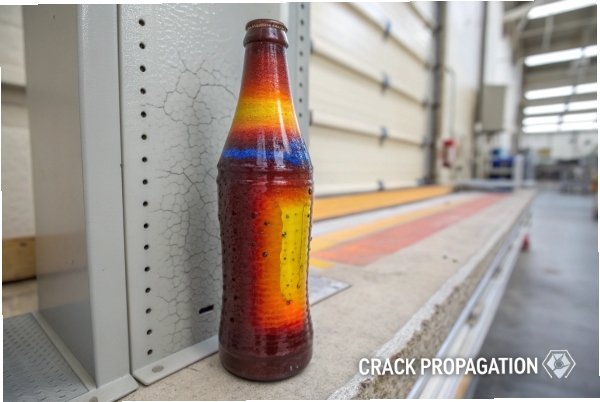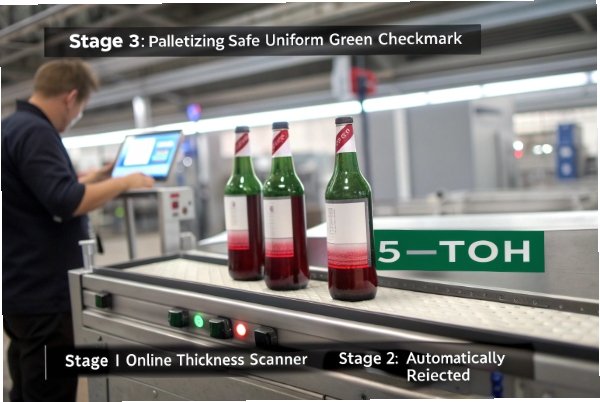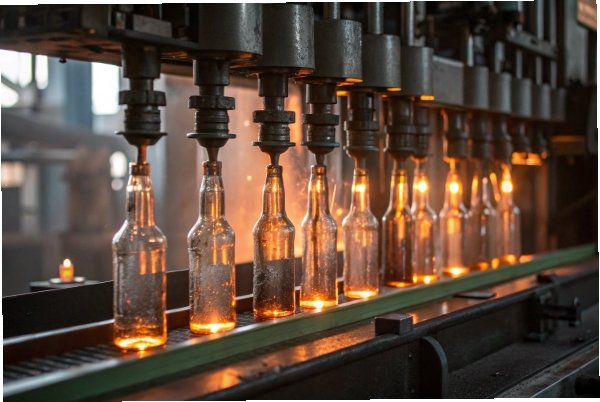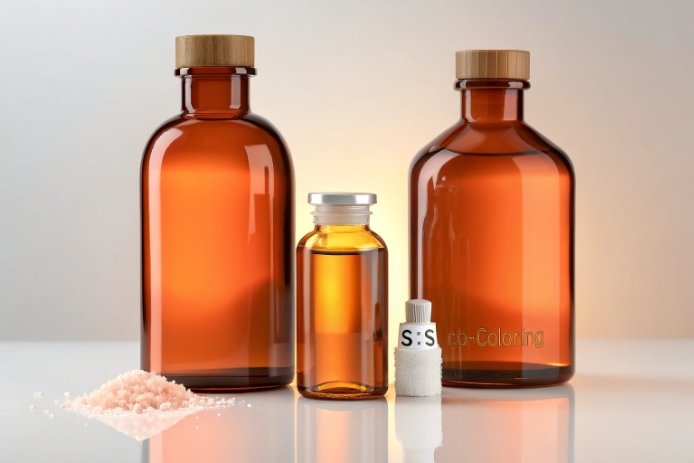
A bottle can leave the lehr looking “perfect,” and still drift into a muddy orange after one furnace swing. That kind of color risk hurts brands and scrap rates.
Se–S co-coloring is a redox-controlled balancing act. Selenium can form a clean pink when the melt is mildly reducing, while sulfur can push the same melt toward amber if iron and sulfide rise at the wrong time.
How Se–S co-coloring works in real container melts
The simplest mental model: selenium wants “mild reduction,” sulfur wants “discipline”
Selenium and sulfur both respond to oxygen activity 1 in the melt. Selenium can produce a pink tone when it is kept in the right chemical form, and it can fade to “no color” if it oxidizes too far. Sulfur can help fining 2 as sulfate, but it can also move into reduced forms that build amber color centers when iron is present. So the same furnace can flip from “pink correction” to “amber contamination” with only small redox drift.
What “pink” and “amber” usually mean in practice
In bottle factories, “pink” often means a soft blush used to neutralize iron green in flint. That pink usually comes from selenium species that remain optically active in the visible range. “Amber” is usually tied to reduced sulfur chemistry interacting with ferric iron and alkalis during cooling. This is why Se–S co-coloring is never only about dosing. It is about keeping sulfur chemistry helpful for fining but not harmful for shade.
Why iron is the gatekeeper
Iron sits in every cullet 3 stream and most sands. Iron level and iron valence decide how sensitive the glass is to sulfur-driven ambering. With higher iron or higher Fe³⁺ availability, reduced sulfur creates amber more easily. That can swallow a planned pink tone and leave a warm brown cast. For high-cullet programs, iron control is often the biggest “hidden” knob in Se–S color work.
Where the co-coloring happens along the furnace line
-
Under the batch blanket: local reduction spikes can strip selenium or create unwanted reduced sulfur.
-
Refining zone: color species settle into a more stable balance if convection is good.
-
Forehearth 4: small reheating and oxygen changes can shift the final shade and cause late “off-tone.”
| What changed | What the bottle looks like | Most likely chemistry reason | Best first action |
|---|---|---|---|
| Redox becomes more oxidizing | pink weakens, bottle looks greener | selenium becomes colorless ions | stabilize combustion and cut over-oxidation |
| Redox becomes more reducing | bottle warms toward orange/brown | sulfur shifts to reduced forms, amber centers grow | remove organics, reduce reducers, calm corrections |
| Iron rises with cullet | color becomes harder to hold | amber chemistry becomes easier to trigger | blend cullet lots, tighten iron baseline |
| Mixing gets worse | cords, shade bands | local redox gradients persist | improve homogenization and forehearth mapping |
If the mechanism is clear, it becomes easier to answer the four operating questions: how redox and iron drive pink formation, how to dose for pink vs amber, whether UV protection improves, and how to verify and control drift.
When a buyer asks for a “stable pink,” the real deliverable is a stable redox window and stable iron baseline.
How do furnace redox conditions and iron levels control Se–S pink color formation?
A small shift in oxygen can erase the pink correction and bring back the cullet green. Then the line starts chasing color with heat, and the drift gets worse.
Pink Se–S color forms when selenium stays in its optically active state under mild reduction, while iron and sulfur stay out of the amber-forming zone. Iron level sets the sensitivity, and redox sets the direction.
What redox does to selenium in a soda-lime bottle melt
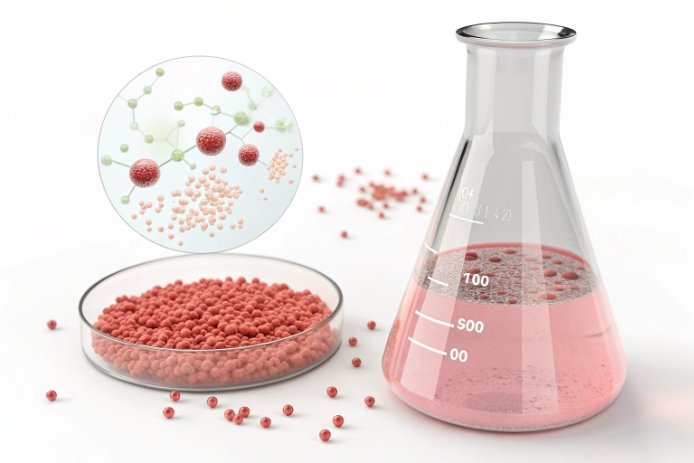
Selenium can exist in several chemical states in glass. Some forms produce visible color, and some are almost colorless. The practical point is simple: if the melt is too oxidizing, selenium tends to shift into colorless ionic forms and the pink fades. If the melt is too reducing, selenium behavior can become less predictable, and the melt can also generate reduced sulfur that drives ambering in soda-lime 5 glass.
What sulfur does to the same redox window
Sulfur is usually present as sulfate additions (for fining) and also as sulfur coming from cullet contamination and batch materials. In a stable oxidizing melt, sulfate helps refining and does not strongly push amber. In a more reducing melt, sulfur can shift into reduced forms that are more likely to create amber when iron is available. That is why sulfur is both a helper and a risk.
Why iron level changes everything
Iron is the “background color” of many bottle systems. It also participates in amber chemistry 6. Higher iron content means the amber pathway needs less help to show up. This is why a Se–S pink that works at 30% cullet can drift warm at 70% cullet even if selenium and sulfate additions are unchanged.
How to control it in plant language
-
Keep oxygen activity stable in the working end. Avoid fast air/fuel swings.
-
Treat cullet organics as a redox input. Blend and clean cullet to prevent spikes.
-
Keep iron stable with cullet sorting and lot blending, not with emergency colorant changes.
-
Avoid local reducing pockets under the blanket by improving charging and coverage.
| Control variable | What it influences | What you can measure quickly | What “good” looks like |
|---|---|---|---|
| Oxygen activity (redox) | Se state + sulfur state | feeder redox proxy, trend charts | slow, flat trend with small noise |
| Total iron | base tint + amber sensitivity | XRF/ICP trend by lot | tight band, no cullet spikes |
| Sulfur balance | fining + amber risk | SO₃ trend + foam events | stable fining, no foam waves |
| Mixing quality | cords and banding | cord inspection maps | low cords, steady shade |
The main habit that keeps Se–S pink stable is simple: use redox control to protect selenium, and use iron control to prevent sulfur from turning into amber.
What dosage and batch chemistry yield a stable pink versus amber shade?
One common mistake is to ask for a single selenium number. The right number depends on iron, cullet, and redox.
Stable pink needs low-to-moderate selenium dosing in a mildly reducing window with controlled sulfate and low reduced sulfur. Amber appears when reduced sulfur rises in the presence of iron and the melt cools into the amber-forming region.
Practical dosing ranges as starting points, not promises
For flint container glass, selenium used for pink correction is often added in very small amounts, typically in the tens of ppm range in the finished glass. The exact number is plant-specific because selenium retention varies with redox and furnace design. If the goal shifts from “blush correction” to “noticeable pink,” the dose may increase, but that also increases volatility risk and drift risk.
A stable workflow is:
1) lock the target Lab* at a defined thickness,
2) set an iron baseline (total Fe and, if possible, Fe²⁺ proxy),
3) trial selenium in small steps,
4) adjust redox and sulfate timing before adding more selenium.
Batch chemistry rules that separate pink from amber
To support pink:
-
Keep sulfur mostly acting as sulfate for fining, not as reduced sulfide chemistry.
-
Keep carbon/reducers stable and low enough to avoid strong reduction.
-
Keep iron stable and avoid sudden high-iron cullet lots.
To drive amber (if amber is the target):
-
Use a controlled reducing strategy with iron and sulfur designed as a set.
-
Avoid instability, because amber can also drift and cord if redox oscillates.
Why “too much help” creates orange
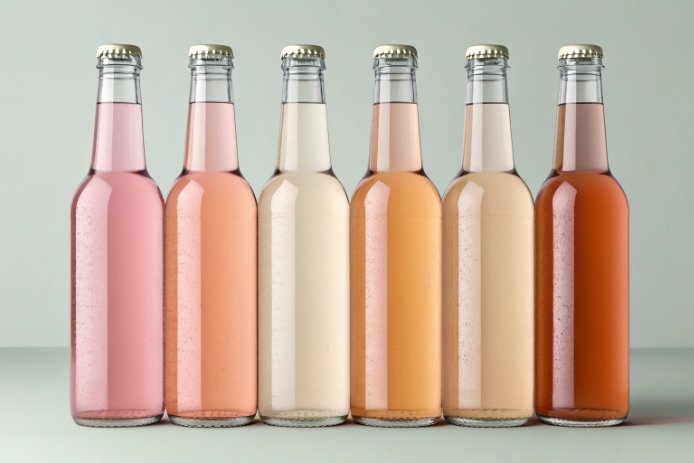
When selenium is fighting iron green and sulfur is drifting toward reduced forms, the combined color result can move from pink-neutral to salmon, then to orange. That is usually the moment when the melt is leaving the selenium-friendly zone and entering the sulfur-amber zone.
| Target shade | Selenium role | Sulfur role | Iron requirement | Redox requirement |
|---|---|---|---|---|
| Stable flint with blush | tiny pink correction | fining sulfate only | low and stable | mildly reducing to neutral |
| Intentional pink bottle | stronger Se presence | tightly controlled sulfate | stable, moderate | controlled mild reduction |
| Amber or “warm” bottle | small or none | reduced sulfur chemistry active | enough Fe³⁺ + alkali | controlled reduction, no oscillation |
| “Accidental orange” | Se drifting + sulfur reducing | mixed species | high or spiky | unstable redox, local pockets |
The best practice is not chasing pink with more selenium when the furnace is drifting. The better move is to fix the redox cause, fix cullet variability, then trim selenium.
Does Se–S co-coloring enhance UV protection for beverages and cosmetics?
Brands often want two wins: a color story and a protection story. These are not always aligned.
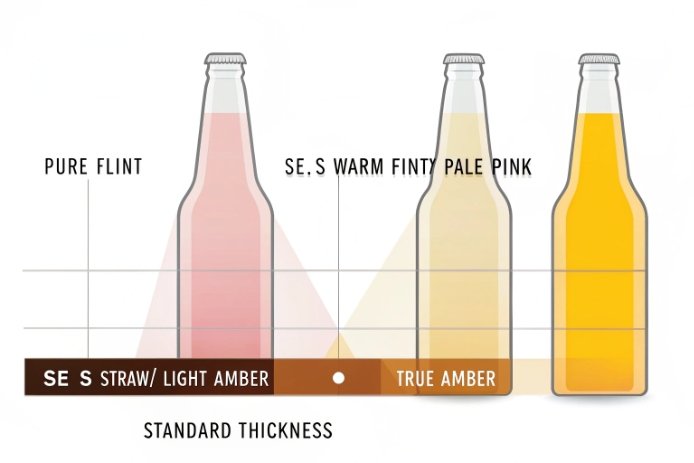
Se–S pink can reduce some visible transmission and may cut a portion of near-UV compared with clear glass, but it is not usually the strongest UV-protection choice. If UV protection is critical, amber chemistry or added UV blockers should be designed intentionally.
What the color is really filtering
A pink selenium tone mostly comes from absorption in parts of the visible spectrum, so it changes how the bottle looks more than it changes UV blocking. Sulfur-driven amber can be much stronger at blocking UV and blue light because amber chromophores absorb strongly in that region. That is why amber is often the standard choice for light-sensitive products.
When Se–S can still help protection
Se–S co-coloring can be useful when the product is moderately light sensitive and the brand wants a lighter, more premium appearance than amber. In that case, “some” protection can be enough, and the bottle can still look soft and modern.
When Se–S is not enough
For pharmaceuticals, some beverages, and some active cosmetics, the requirement can be strict. In those cases, it is safer to:
-
use amber,
-
or use a designed UV protection 7 package (for example, adding specific UV-absorbing oxides),
-
or apply external UV-barrier coatings when allowed.
How to prove protection instead of guessing
The right method is spectral transmission testing, not visual judgment. Measure transmission from 280–450 nm (or the buyer’s required band) at a standard thickness that matches the bottle wall.
| Product sensitivity | Typical packaging need | Se–S pink fit | Best verification |
|---|---|---|---|
| Low to moderate | marketing-driven shade + “some” protection | often acceptable | UV-Vis transmission scan |
| Medium | consistent partial UV blocking | possible with design | UV-Vis + shelf simulation |
| High | strong UV + blue blocking | usually not enough alone | pharmacopeia-style spectral criteria |
| Very high | strict performance + documentation | use amber or special UV glass | certified transmission + traceability |
Se–S co-coloring can support protection goals, but only when protection requirements are defined and tested. Otherwise, a bottle can look premium and still fail shelf-life needs.
How can manufacturers prevent color drift and verify Se–S color using CIE Lab* and spectrophotometry?
Color drift is rarely one big event. It is small daily drift that crosses the customer line on the worst day.
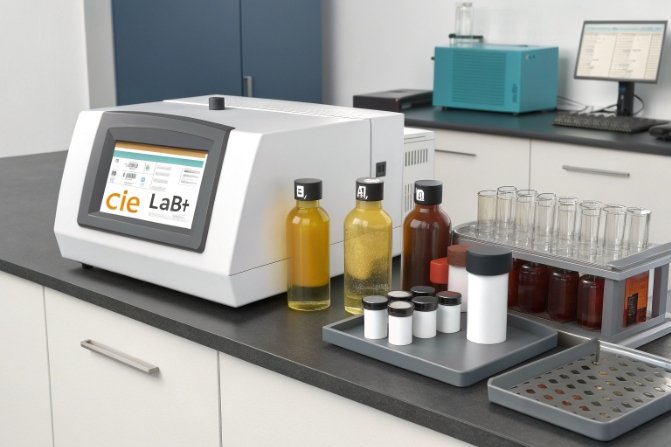
*Prevent drift by holding redox and cullet inputs stable, then verify with two layers: CIE Lab for fast acceptance and full UV-Vis spectra for root-cause and protection confirmation. Build a lag-aware correlation between furnace signals and lab color.**
Drift prevention: stop oscillation and gradients
The biggest drift drivers in Se–S systems are:
-
redox swings driven by cullet organics,
-
changing sulfate effectiveness and foam events,
-
iron spikes from mixed cullet lots,
-
and poor homogenization that leaves cords.
The strongest prevention tools are boring but effective:
-
cullet blending and rejection rules,
-
stable combustion control 8,
-
slow and steady batch trims,
-
and mixing support that prevents stagnant zones.
Verification: use Lab* as the gate, spectra as the truth
Lab is perfect for fast QA. It tells the buyer a number they can compare. Still, Lab alone can hide “how” the color was achieved. UV-Vis spectra show where absorption is happening and whether the bottle is drifting toward amber chemistry or losing selenium color.
A reliable QA protocol includes:
-
standard thickness or a standard coupon,
-
consistent illuminant and observer settings,
-
repeatable sample preparation (clean, dry, same orientation),
-
SPC charts for L, a, b, and ΔE over time using [CIE Lab](https://www.xrite.com/blog/lab-color-space) 9.
Correlate furnace redox with color using time lag
Color changes at the feeder reflect earlier furnace conditions. So the correlation must include:
-
residence time estimate,
-
pull rate,
-
forehearth temperature history,
-
redox proxy history.
When this is in place, the plant can correct earlier with smaller steps.
| Tool | What it tells you | What it misses | Best use |
|---|---|---|---|
| CIE Lab* | customer-facing shade number | mechanism and UV band behavior | release decision and SPC |
| ΔE trend | drift speed and direction | root cause | early warning and action triggers |
| UV-Vis spectra 10 (280–780 nm) | absorption bands and UV protection | operational cause | technical review and buyer proof |
| Fe/S/Se chemistry checks | why the shade changed | fast response | monthly audit and troubleshooting |
| Redox proxy at feeder | live drift indicator | long-lag chemistry | proactive control and alarms |
The win condition is not “perfect pink every minute.” The win is a stable, documented process where drift is detected early, corrected calmly, and proven with data buyers trust.
Conclusion
Se–S co-coloring depends on redox, iron, and sulfur balance. Mild reduction supports pink selenium; reduced sulfur plus iron drives amber. Stable inputs and Lab* plus spectra keep the shade under control.
Footnotes
-
Monitoring oxygen activity in the melt allows operators to predict and control the final color state of selenium. ↩
-
Fining agents like sulfate are essential for removing bubbles but must be managed to avoid color interference. ↩
-
Cullet quality and sorting directly impact the iron content and redox stability of the glass batch. ↩
-
The forehearth is the final temperature conditioning zone where subtle thermal changes can alter glass color. ↩
-
Soda-lime glass is the standard composition for containers, where redox chemistry dictates the success of colorants. ↩
-
Amber chemistry relies on the precise interaction of iron and sulfur ions under reducing conditions. ↩
-
Specific glass additives can enhance UV protection, preserving the quality of light-sensitive contents. ↩
-
Precise combustion control ensures a stable furnace atmosphere, preventing unwanted redox shifts. ↩
-
The CIE Lab* color space provides a standardized numerical method for communicating and verifying glass shade. ↩
-
UV-Vis spectroscopy offers detailed insight into light absorption properties, revealing the root causes of color drift. ↩