
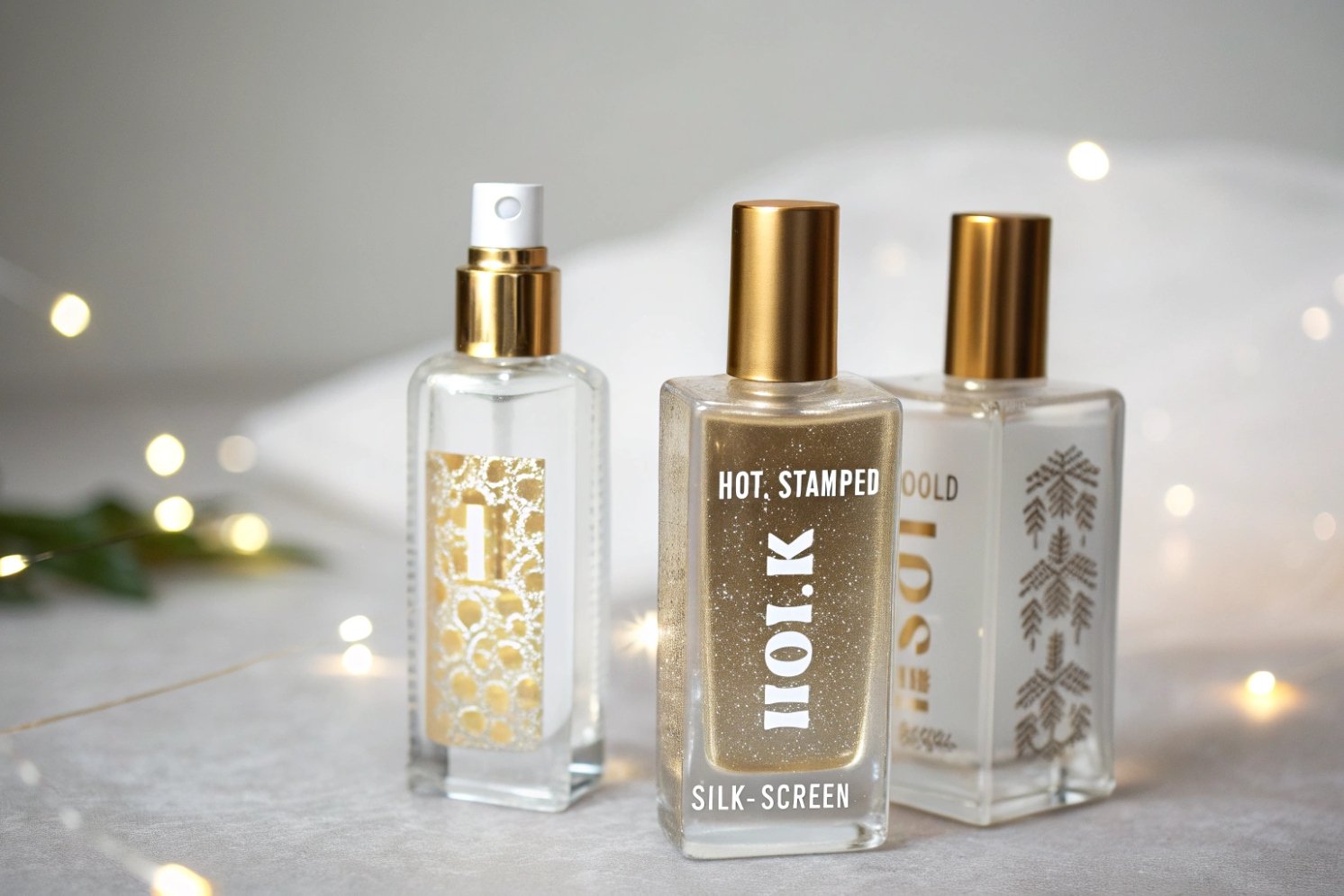
A bottle can look “premium” in a mockup, then look cheap in real life. Bad decoration choices cause peeling logos, dull metallics, and slow lead times that delay launches.
Hot stamping adds metallic foil by heat and pressure, while silk screen printing applies ink through a mesh screen. Both can look luxury on glass, but they behave differently in cost, durability, and artwork rules.
How these two decoration methods really differ
Hot stamping and silk screen printing solve different problems. The hot stamping process 1{#fnref1} is a transfer process. A heated die presses foil onto the bottle. The foil releases from a carrier film and bonds where the die touches. This creates sharp metallic or special-effect areas. The look is clean and high contrast, so it fits logos and short text.
Silk screen printing is a direct print process. A silkscreen printing technique 2{#fnref2} applies ink through a mesh screen with a stencil. The bottle rotates under the screen so the artwork wraps around. Each color usually needs its own screen and print pass. The ink layer can be thicker than many other print methods, so the color can look rich and solid.
On glass, both methods often depend on surface preparation. Glass is smooth. Some foils and some inks need a primer to grab the surface. If the surface has dust, oil, or mold-release residue, adhesion drops fast. That is why cleaning and plasma treatment 3{#fnref3} can matter as much as the chosen process.
A simple way to choose is to think in “layers.” Screen printing is great for the base layer. It builds solid color, warnings, and fine text. Hot stamping is great for the highlight layer. It adds metallic accents that catch light. Many luxury bottles use both: first a primer or base print, then foil on top.
Here is a quick decision view that keeps teams aligned:
| Goal | Better Choice | Why it wins on glass | Common risk |
|---|---|---|---|
| Metallic logo or text | Hot stamping | Real foil shine and sharp edges | Foil adhesion if primer is weak |
| Large blocks of color | Silk screen | Thick, opaque ink coverage | Scratching if curing is weak |
| Many colors | Silk screen (but cost rises) | Color control and repeatability | More screens, more setup |
| Fast change of artwork | Silk screen (simple jobs) | Screen updates can be easier than new dies | Registration issues on curved bottles |
| Premium “pop” | Hot stamping + screen | Best of both looks | Longer lead time |
A good decoration plan starts with the bottle shape and usage scene. A bathroom product gets constant handling and moisture. A fragrance bottle gets gentle handling but high visual standards. The next sections explain the practical differences and the sourcing rules that control quality and price.
If the decoration method matches the formula position and the supply plan, the bottle looks expensive and stays that way.
What’s the difference between hot stamping and silk screen printing on cosmetic glass bottles?
A lot of buyers treat these processes as “just different printing.” That view creates mistakes, because the mechanics are not the same.
Hot stamping transfers foil with a heated die, so it excels at metallic effects. Silk screen printing lays ink directly onto the glass, so it excels at solid color coverage, legible text, and repeatable multi-color designs.
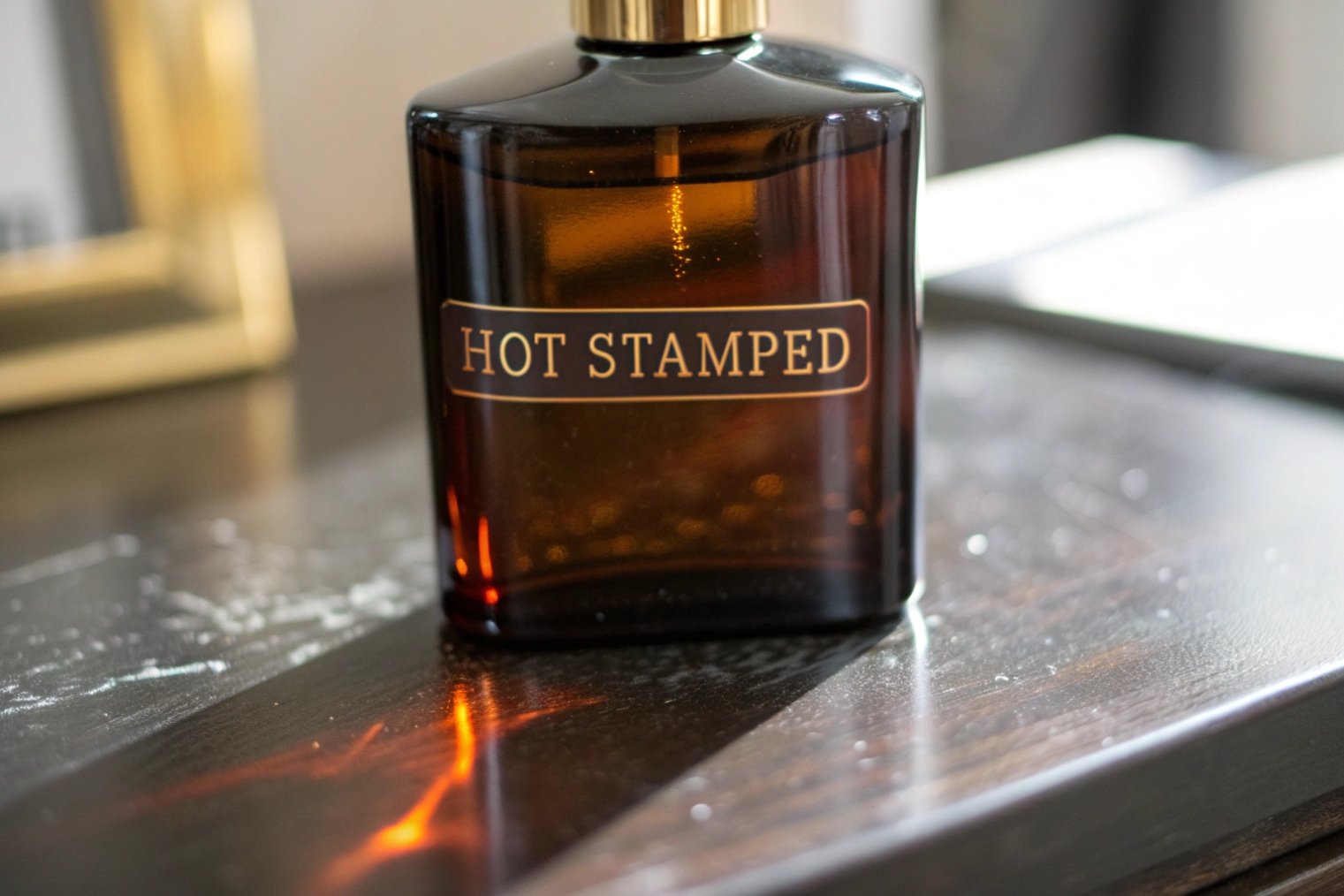
What changes in the production line
Hot stamping needs a die. The die is made to match the artwork. This is a setup cost and a setup time. The press uses heat and pressure, so parameters like temperature, dwell time, and pressure matter a lot. A small change can turn foil from bright to dull, or cause edge break.
Screen printing needs a screen per color. Each screen is a frame with mesh and an emulsion stencil. Setup includes screen making, ink mixing, and registration. On round bottles, registration depends on bottle roundness and stable rotation, because you typically need to rotate the bottle at a matched speed 4{#fnref6} while printing. If the bottle has an uneven seam or oval shape, the print can shift.
What changes in the look and feel
Foil has a “real metal” shine. Ink rarely matches that shine, even with metallic inks. Screen printing gives more color freedom and thicker coverage. It also supports larger print areas more easily.
What changes in durability expectations
Durability depends on materials and cure, not only the method. Screen inks can be very durable when cured well, and ceramic inks can be extremely durable when fired. Hot stamping can also be durable when the primer and foil system is correct, but poor primer cure can cause flaking.
| Factor | Hot stamping | Silk screen printing |
|---|---|---|
| Setup tool | Die/plate | Screen/frame per color |
| Best visual effect | Metallic foil, special foil | Solid ink color, layered ink feel |
| Color flexibility | Limited vs ink | Wide range of colors |
| Fine text | Good when artwork is clean | Good when screen and mesh fit |
| Typical weakness | Adhesion on curves/edges | Multi-color registration |
In my experience, the biggest confusion is cost. Buyers see hot stamping and assume it is always “more expensive.” That is often true for large areas or complex dies. But for a small metallic logo, hot stamping can be a smart cost choice because it avoids extra ink layers and delivers a high-end look fast.
Next is the most common luxury request: metallic foil branding.
When should you choose hot foil stamping for a luxury metallic logo or text on glass packaging?
A metallic logo looks simple, but it can fail fast if the foil chips or turns cloudy. That failure hurts the brand more than a plain print.
Choose hot foil stamping when the design needs true metallic shine, high contrast, and a premium “catch the light” moment, and when the artwork is mostly solid shapes or clean text.
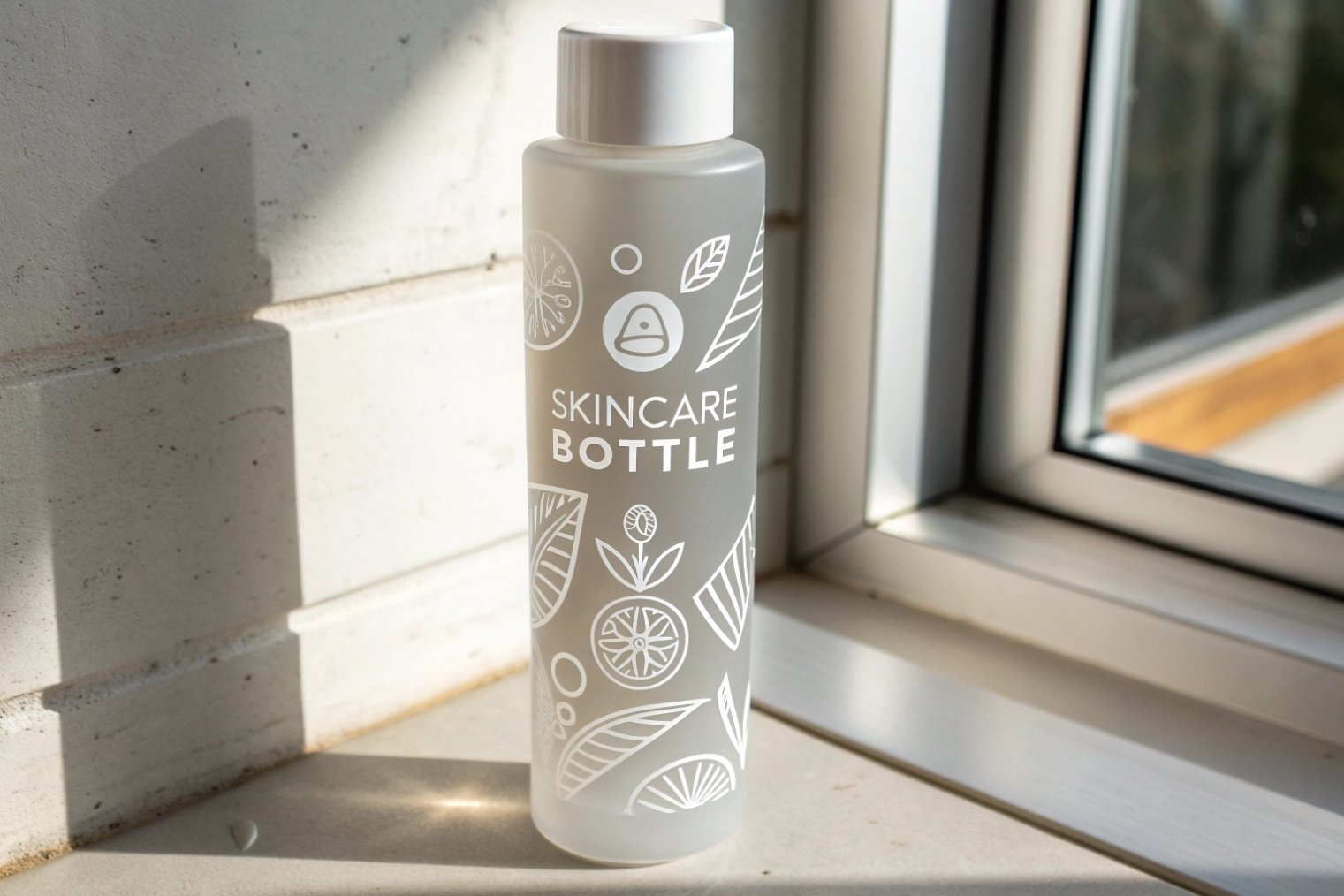
The strongest use cases for hot stamping
Hot stamping fits luxury branding because foil reads as “premium” at first glance. Gold and silver are common, but there are also colored foils, holographic foils, and pearlescent foils. On glass, hot stamping is often used for:
- Brand logos on the front panel
- Short product names
- Borders, seals, and small icons
- Limited edition accents
Why primer matters more than most teams expect
On glass, foil often needs a primer layer to bond well. Many projects screen print a screen print primer 5{#fnref7} first, then hot stamp on top. Primer cure quality controls foil clarity and edge sharpness. If primer is under-cured, the foil can lift. If primer is over-cured or contaminated, the foil can look patchy.
When hot stamping is not the best choice
Hot stamping struggles when artwork has very fine gradients, tiny halftones, or very large full-wrap coverage. It also becomes harder on deep curves, sharp shoulders, or heavy emboss areas. For full-wrap decoration, screen printing or coating is often a better base.
| Choose hot stamping when… | Avoid hot stamping when… | Better alternative |
|---|---|---|
| Metallic shine is a must | You need photo-like detail | Screen + label |
| Logo is small to medium | You need full 360° coverage | Screen print |
| Simple vector shapes | Very tiny fonts and thin lines | Screen with high mesh |
| You can accept a die | Artwork changes often | Screen or label |
A practical rule: use hot stamping as a highlight, not as the full decoration plan. A small foil logo on a frosted bottle can look more expensive than full metallic coverage that shows defects.
Next is silk screen printing details, because durability and ink chemistry decide whether the print lasts in bathrooms and shipping.
What types of inks, primers, and curing methods are used in silk screen printing, and how durable are they?
A screen print can look perfect on day one and still scratch after two weeks in real use. Most of the time, the issue is ink system and cure control.
Silk screen printing uses inks that can be organic, UV-curable, or ceramic-based, often with primers for adhesion. Durability depends on surface prep, ink choice, and curing method, not only on the color.
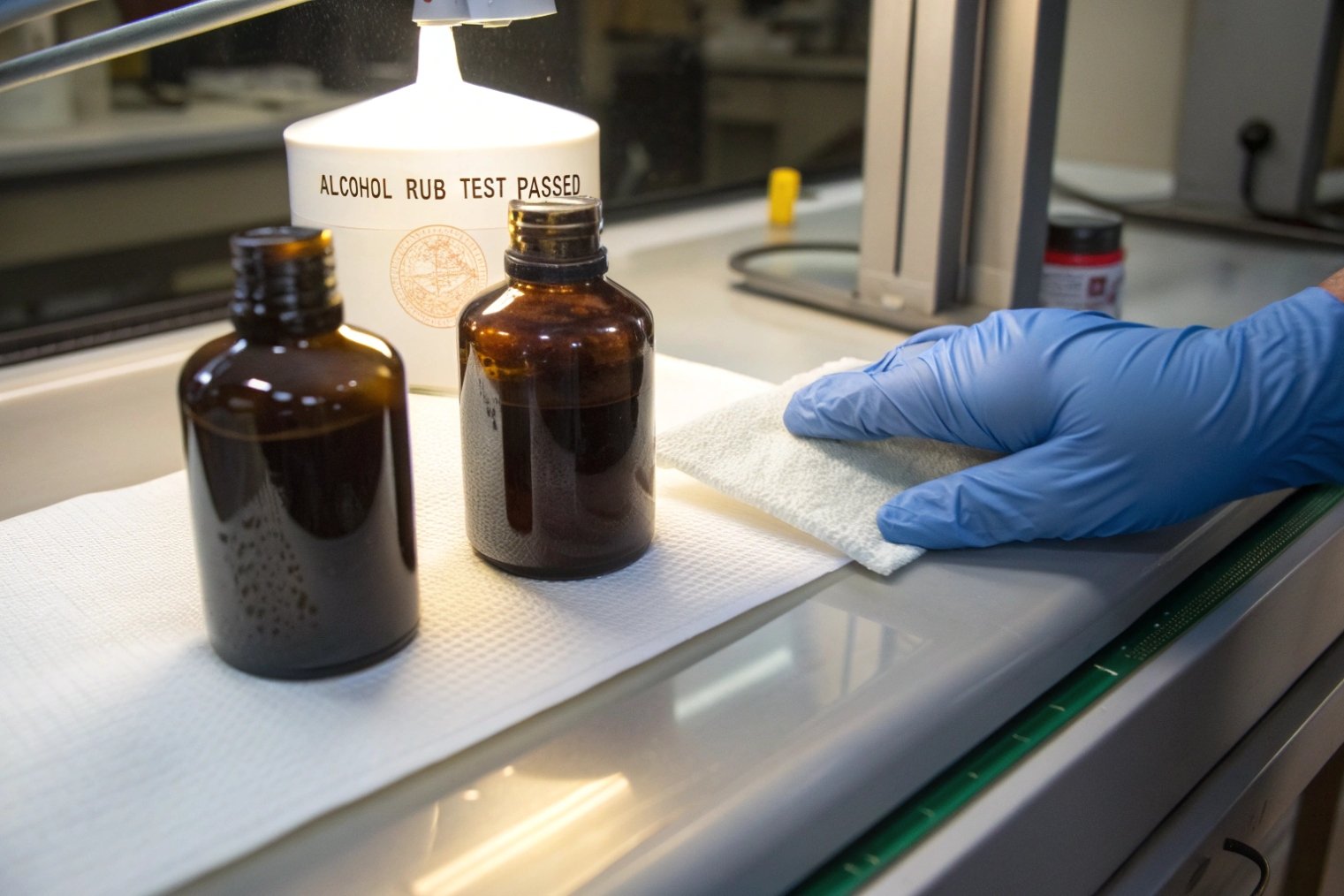
Common ink systems for cosmetic glass
For cosmetic glass bottles, screen printing often uses organic inks or UV-curable inks. These can deliver strong color and good clarity when cured correctly. For very high durability needs, ceramic inks can be used, then fired so the ink bonds into the glass surface. This approach is strong against abrasion and chemicals, but it needs high-temperature firing and process control.
Primers can be used to improve adhesion on glass, especially for difficult colors or special effects. Primers can also help when the bottle has a coating like frosting or spray color. In those cases, the print is bonding to the coating layer, so compatibility matters.
Cure methods and what they change
Curing turns wet ink into a stable film. Common curing methods include UV curing and heat/IR curing. UV curing is fast and consistent when the line is tuned, and many suppliers reference UV/EB curing 6{#fnref4} for its speed and film properties. Heat curing can also work well but needs stable time and temperature.
If curing is weak, prints scratch, smear, or lose gloss. If curing is too aggressive, some inks can discolor or become brittle.
What “durable” should mean in testing terms
Durability should be defined with tests that match the usage:
- Rub resistance (dry and wet rub)
- Tape adhesion test
- Alcohol or sanitizer wipe resistance (for bathroom use)
- Hot/cold cycle exposure
- Dishwasher resistance when needed
A common baseline is an ASTM D3359 tape adhesion test 7{#fnref5} when coatings or prints are expected to survive handling without peeling.
| Ink / process | Look | Durability potential | Typical use |
|---|---|---|---|
| UV-curable ink | Bright, clean | High when tuned | Most cosmetic bottles |
| Heat-cured organic ink | Solid and smooth | Medium-high | Larger text areas |
| Ceramic ink + firing | Deep, fused look | Very high | Long-life, high-abrasion |
| Primer + ink system | Improves bonding | Higher consistency | Coated or smooth glass |
For bulk orders, the biggest risk is not “ink type.” The biggest risk is process drift. A stable supplier controls mesh count, squeegee pressure, ink viscosity, cure energy, and line speed. That control keeps print thickness and adhesion stable across production lots.
Next is pricing reality: artwork rules, color limits, and MOQ/lead time factors that decide the final quote.
What artwork rules, color limits, and MOQ/lead-time factors affect pricing for bulk glass bottle decoration?
A decoration quote can swing a lot with small artwork changes. Teams often learn this too late, after the brand design is final.
Pricing is driven by setup tools (screens and dies), number of colors and passes, print area size, bottle shape complexity, and yield risk. Clean vector artwork, limited colors, and stable specs keep costs and lead time under control.
Artwork rules that reduce defects
For hot stamping, artwork should be clean vector shapes. Very thin lines can break or fill. Tiny text can lose sharpness, especially on curved surfaces. Solid areas should avoid sharp corners that create stress points for foil lift.
For screen printing, each color usually needs its own screen and pass. More colors mean more setup and more registration steps. Tight registration needs stable bottle roundness and stable fixturing. If the bottle has heavy shoulders, deep curves, or emboss, the artwork may need to avoid those areas or use smaller wrap ranges.
Many designs look simple but use many spot colors. Each added color increases:
- screen making
- setup time
- line change time
- scrap risk from misregistration
For luxury looks, a smart trick is to use one or two screen colors for the base and one foil color for the highlight.
MOQ and lead time drivers
MOQ and lead time depend on how much setup cost needs to be spread over units, and how busy the decoration line is. Dies for hot stamping add tooling time. Screens for printing add prep time. Coatings and frosting add extra steps and curing time. Complex decoration also increases yield risk, so suppliers may ask for higher MOQ to keep production stable.
| Cost driver | Hot stamping impact | Screen printing impact | How to reduce cost |
|---|---|---|---|
| Tooling | New die cost | New screen cost per color | Reuse tools, keep artwork stable |
| Colors | Foil color changes add time | Each color adds a pass | Limit to 1–3 colors |
| Print area | Larger foil areas cost more | Larger prints raise ink use | Focus on front panel branding |
| Bottle shape | Curves raise defect risk | Curves raise registration risk | Keep safe print zones |
| Finish layers | Primer may be needed | Primer may be needed | Choose proven systems |
| Lead time | Die making adds time | Screen making adds time | Lock artwork early |
A practical workflow helps keep pricing predictable:
1) Lock bottle shape and finish first.
2) Choose decoration method second.
3) Finalize artwork with print rules in mind.
4) Approve color chips and samples.
5) Run adhesion and rub tests before mass production.
When a buyer asks for “luxury” without defining durability and test standards, the supplier can only guess. Clear standards protect both sides and reduce rework.
Conclusion
Hot stamping delivers true metallic shine, screen printing delivers rich ink color and strong legibility. The best results come from matching artwork rules, primers, curing, and bulk testing to the bottle shape and real use.
Footnotes
-
Manufacturer FAQ on how hot stamping foil transfers and which variables affect results. ↩ ↩
-
Clear definition of silkscreen printing and why it’s useful beyond flat surfaces. ↩ ↩
-
Explains how plasma pretreatment boosts adhesion for printing/coating without relying only on primers. ↩ ↩
-
Visual explanation of how screen printing works on round bottles and why alignment affects quality. ↩ ↩
-
Why primers are commonly used to make hot stamping adhere reliably on glass packaging. ↩ ↩
-
Practical overview of UV/EB curing fundamentals and why it improves production speed and film performance. ↩ ↩
-
Standard reference for rating coating/ink adhesion using a tape test method. ↩ ↩






