
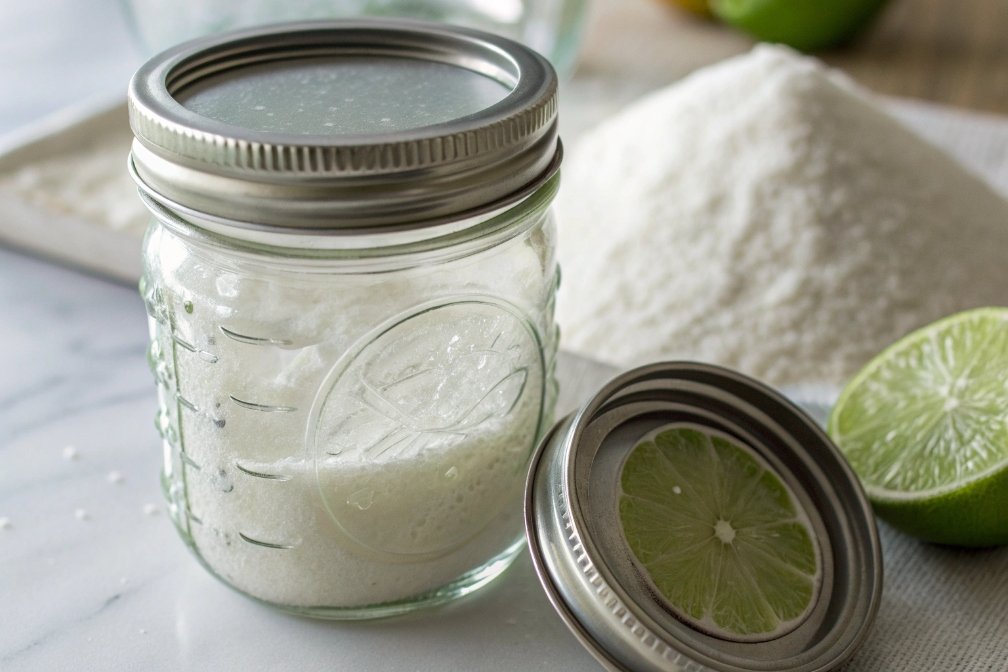
For many buyers, “Mason jar” is a familiar word, but the technical details behind the glass, lid, and certifications are not always clear.
A Mason jar is a reusable, screw-finish canning jar made from soda-lime glass, paired with a metal lid system that creates a vacuum seal during heat processing to safely preserve food.
At its core, a Mason jar is simple: a glass body, a threaded finish, and a metal closure with a sealing compound. But small choices in glass recipe, lid design, embossing, and food-contact paperwork make a big difference once you move from hobby canning to industrial packing and global distribution. Let us break these decisions down step by step.
Is soda-lime glass standard for canning strength and clarity?
People often ask if they need special “canning glass,” or even borosilicate, for safe hot-fill and water-bath canning.
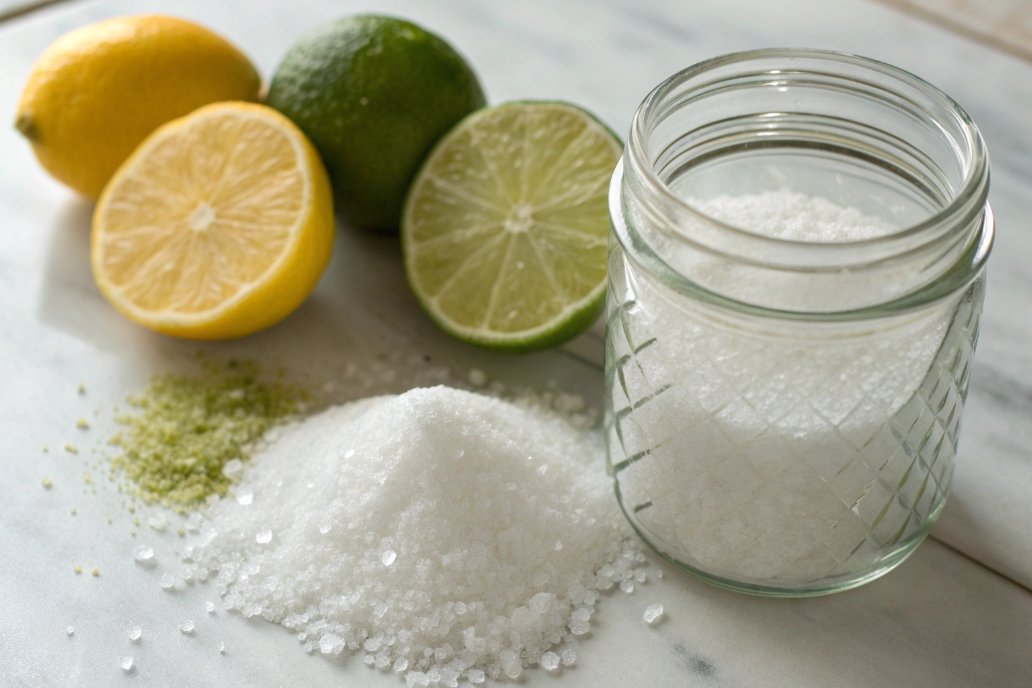
Yes, Mason jars are almost always made from soda-lime container glass, using silica sand, soda ash, lime, and cullet; this recipe gives enough strength, clarity, and thermal performance for canning when jars are formed and annealed correctly.
Why soda-lime glass is the standard for Mason jars
For canning jars, the body material is classic soda-lime container glass 1{#fnref1}. The typical composition is:
- About 70–75% silica (SiO₂) from quartz sand.
- About 12–16% sodium oxide (Na₂O), coming from soda ash.
- About 10–15% calcium oxide (CaO), from limestone.
- Small amounts of MgO, Al₂O₃ and other oxides.
- Plus recycled cullet, which helps save energy.
This typical soda-lime composition 2{#fnref2} hits a good balance:
- Strong enough for stacking, hot-fill, and normal handling.
- Good clarity, especially when low-iron sand is used.
- Enough thermal shock resistance for boiling-water canning, when used correctly.
For most food applications, there is no need to switch to borosilicate. Borosilicate melts at higher temperature, costs more, and complicates recycling streams. Standard soda-lime is already optimized for container production and high-volume forming.
Thermal performance and processing limits
Canning jars see heat from:
- Hot-fill sauces, jams, and juices.
- Water-bath canning 3{#fnref3} for high-acid foods.
- Sometimes pressure canning for low-acid products.
Properly annealed soda-lime jars can handle these conditions if:
- The glass thickness and distribution are well controlled.
- The jars are not exposed to extreme, sudden temperature jumps (for example, freezer to boiling water).
- The bottom and heel are designed with safe radii and enough thickness.
In production, people often think of “canning-grade” jars as those that pass internal tests for:
- Internal pressure or vacuum strength.
- Thermal shock (hot–cold water cycles).
- Vertical load for stacking.
So, yes, soda-lime is the standard. The key is not exotic material, but good design, stable forming, and correct annealing.
Which lid systems (twist-off, lug) and liners suit hot-fill?
The glass body can last for years, but the seal between lid and jar decides whether food stays safe or spoils quietly on a shelf.
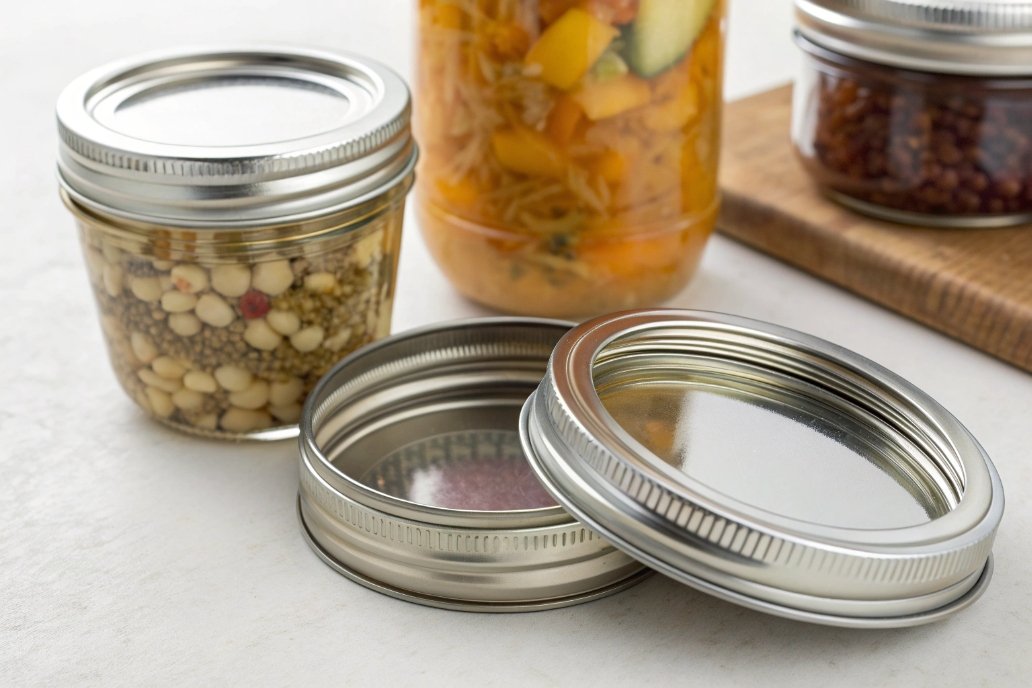
For Mason-style jars, two main lid systems are used: classic two-piece canning lids and twist-off (lug) closures; for hot-fill and canning, metal lids with plastisol liners are the common choice because they flow against the glass finish and form a tight vacuum seal.
Two-piece Mason lids vs twist-off / lug systems
Traditional Mason jars use a two-piece closure system for Mason jars 4{#fnref4}:
- A flat metal disc (tinplate or steel) with a sealing compound on the inside.
- A separate screw band (ring) that clamps the disc during processing.
During heat processing, air is driven out. As the jar cools, vacuum forms. The disc is pulled down and bonds to the glass finish through the plastisol layer. The band can be reused, but the flat lids are considered one-time use for safe canning.
For industrial lines, many packers prefer twist-off / lug caps 5{#fnref5}:
- A one-piece metal closure with lugs (short interrupted threads).
- It engages with molded lugs on the jar finish.
- During capping, torque compresses the liner, and cooling locks the vacuum.
Twist-off systems run very well on high-speed lines and are standard for jams, sauces, and baby food worldwide. For “Mason-look” jars used in factories, a twist-off finish is common even if the consumer sees it as a “Mason jar style.”
Liner types for hot-fill and pasteurization
The liner is where the real seal forms. For hot-fill, these are typical:
- Plastisol liners 6{#fnref6} (PVC-based or non-PVC alternatives) are the classic choice for metal lids on glass. They soften during heating and flow to fill tiny scratches and uneven spots on the glass land. When cooled, they set and hold a vacuum.
- Some specialty closures use TPE or other elastomer liners for special chemistry or higher-temperature needs, but plastisol is still dominant in food canning.
For hot-fill and canning, we want liners that:
- Are compatible with the product (acids, oils, sugar, salt).
- Tolerate process temperatures and cooling rates.
- Maintain vacuum retention during the intended shelf life.
The cap design, liner hardness, and application torque must match the jar’s finish dimensions. If the finish is flat and round, the liner is specified correctly, and torque is controlled, then hot-fill and canning seals remain stable.
How do embossing and graduations aid branding and use?
A Mason jar is already iconic. With the right embossing and graduations, it also becomes a silent salesperson and a practical tool in the kitchen.
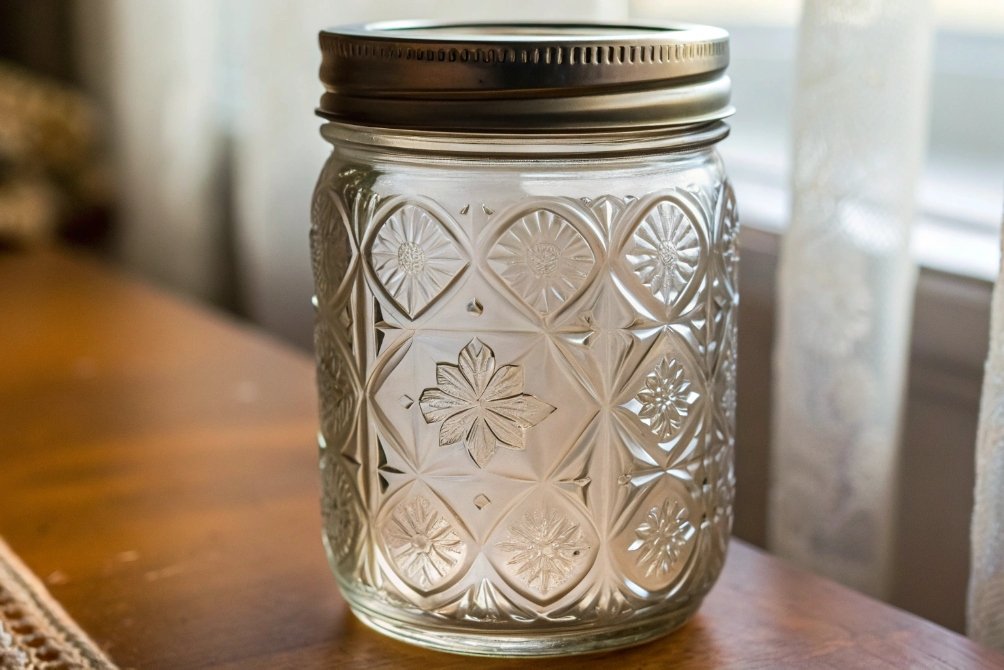
Embossed logos, capacity marks, and volume graduations turn a simple jar into a brand asset and a measuring tool, helping consumers portion, mix, and reuse while keeping your brand visible every time they open the cupboard.
Embossing for brand story and shelf impact
Embossing is one of the most cost-effective ways to add premium feeling without extra labels:
- Front-panel logos create instant brand recognition, even if the paper label is removed later.
- Embossed wordmarks, dates (“Since 19xx”), and small icons tell a story of heritage or craft.
- Shoulder or base embossing can carry batch codes, volume marks, or decorative patterns.
Because the relief is in the glass itself, embossing:
- Survives washing and reuse.
- Feels “honest” and more permanent than a sticker.
- Helps discourage cheap copycats who do not want to pay for new molds.
When designing embossing, the key is depth and placement. Very deep or sharp embossing can disturb glass flow and wall thickness, so we usually keep it within safe limits and avoid critical strength areas such as the heel.
Graduations and practical use
Consumers use Mason jars far beyond canning:
- As drinkware and smoothie cups.
- For overnight oats, salads, and meal prep.
- For dry-good storage and sourdough starters.
- As mixing vessels for dressings, cocktails, and more.
Clear volume graduations on the side make all these uses easier:
- Home cooks can measure liquids directly in the jar.
- Cafés and restaurants can portion sauces or cold brew with fewer tools.
- DIY users can mix ratios for concentrates, cleaning solutions, and infusions.
Graduations can be:
- Embossed in the glass.
- Printed with durable ink.
- Combined with integrated fill lines for specific recipes or serving sizes.
For brands, this adds value without changing the lid or the basic footprint. A jar that doubles as a measuring cup is more likely to stay in the customer’s life. Every reuse means another free brand impression.
A simple design layer can include:
- Embossed logo on one panel.
- Embossed or printed ml / oz scale on another.
- Clear “fill to here” lines for common recipes or serving sizes.
What food-contact certifications should buyers require?
A nice design and strong seal are not enough for serious buyers. They also need proof that the glass and lids are safe for food and meet target market rules.
Buyers should ask for compliance with main food-contact regulations in their target markets (such as FDA and EU rules), heavy-metal and migration test reports, and quality system certificates that show the supplier controls traceability and hygiene.
Glass body: what to check
For the glass jar itself, soda-lime glass is naturally inert. But regulators still expect documented compliance. Buyers often look for:
- EU food-contact compliance, usually based on Regulation (EC) 1935/2004 7{#fnref7} and related guidance for glass. This includes limits for heavy metals like lead and cadmium.
- US FDA food-contact compliance, typically via reference to relevant 21 CFR sections and migration testing.
- For Germany, LFGB test reports.
- For other markets, local standards such as GB standards in China.
Test reports should confirm that:
- Heavy metals migration is below legal limits.
- Any surface treatments, coatings, or decorations do not introduce unsafe substances into food-contact zones.
Quality system certificates such as ISO 9001 help show process stability. For pharma or very sensitive uses, buyers may also ask about ISO 15378 or similar GMP-related frameworks.
Lids, coatings, and linings
Metal lids and liners have more direct contact with the product, especially at the seal area and the headspace.
For lids, buyers often ask for:
- Food-contact compliant coatings and liners under FDA and/or EU rules.
- Confirmation that any PVC, plasticizers, pigments, and stabilizers are allowed for the intended use and fill type (acidic, fatty, alcoholic, baby food, etc.).
- BPA-free or other specific substance restrictions where relevant.
- Migration test reports on the finished lid, not only on raw materials.
For export projects, buyers want to see:
- Documentation matching each region’s rules (for example, EU, US, UK, Middle East).
- Clear lot traceability, so if an issue appears, the affected batches can be traced back to glass and lid production.
Putting it together for a real project
When specifying a Mason-style jar project, a typical checklist looks like this:
-
Glass:
- Soda-lime composition, canning-grade design.
- Food-contact compliance reports for target markets.
- Heavy-metal and migration testing.
-
Closure:
- Two-piece or twist-off / lug system defined.
- Liner type and temperature range confirmed for hot-fill or canning.
- Food-contact and migration reports, BPA and other substance declarations.
-
Factory and system:
- ISO 9001 or similar quality management.
- For pharma or high-risk products, stronger GMP evidence.
- Clear documentation and coding on pallets and cartons.
With these pieces in place, a Mason jar becomes more than a nice container. It becomes a certified, traceable packaging component that can safely carry your brand into retail, e-commerce, and global markets.
Conclusion
A Mason jar is simple in appearance but complex in detail; once you choose the right soda-lime body, hot-fill lid system, branding embossing, and food-contact documentation, it turns into a reliable, reusable hero for both home canning and modern packaged foods.
-
Overview of container-grade soda-lime glass and its typical packaging applications. ↩ ↩
-
Explains the basic oxide composition and roles in standard glass recipes. ↩ ↩
-
Home-canning guidance on hot-fill and water-bath processing for high-acid foods. ↩ ↩
-
Technical explanation of the classic Mason two-piece lid and how it seals under heat. ↩ ↩
-
Describes lug/twist-off closure design and how caps engage with glass jar finishes. ↩ ↩
-
Reference guide to plastisol and other liner types used in food jar closures. ↩ ↩
-
Core EU framework for food-contact packaging, including general safety and migration principles. ↩ ↩






