
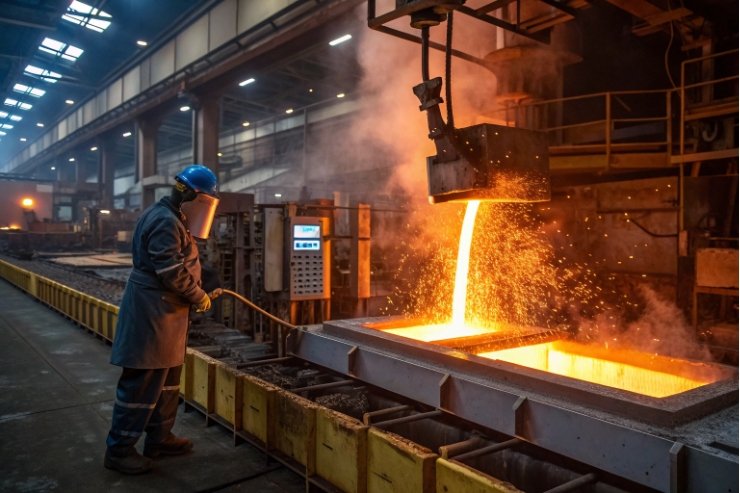
You cannot talk about glass bottles and jars without talking about how the molten gob actually meets the mold and turns into a container.
Blow-blow, press-and-blow, NNPB, tubing forming, and hand-blown methods all create very different glassware, with different wall control, yields, and automation options.
Once you understand the strengths and limits of each forming process, conversations with suppliers become much easier. You know when a design is realistic, when weight can come down, and where quality risks really sit.
How do blow-blow, press-and-blow, and NNPB processes really differ?
Most people only see a hot bottle leaving the machine. They do not see that the forming route already decided its wall profile and weight target.
Blow-blow suits classic narrow-neck bottles, press-and-blow favors wide mouths and better distribution, and NNPB pushes narrow-neck lightweighting with tighter wall control.
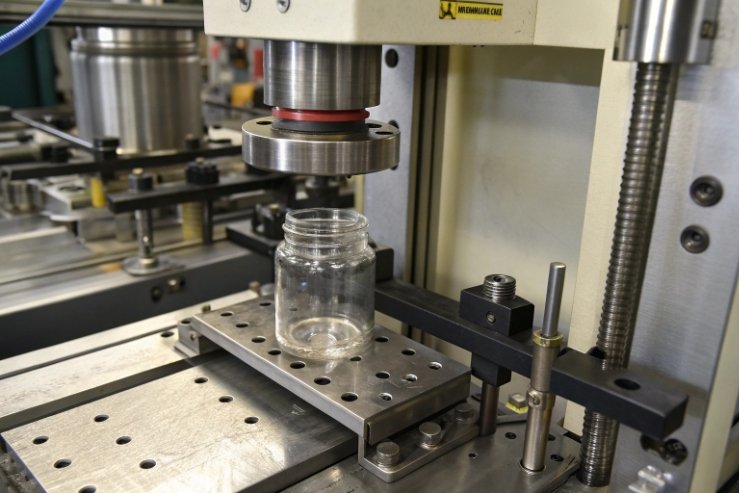
Step-by-step: what actually happens inside the IS machine
In all three processes, an Individual Section (IS) machine 1 takes a molten gob, forms a parison in a blank mold, then transfers it to a blow mold.
Key differences:
-
Blow-and-blow
- Gob drops into the blank mold.
- First air blow forms the parison and the internal bore.
- Parison is transferred to the blow mold for final blowing.
- Thickness depends heavily on gob loading and glass flow.
-
Press-and-blow (P&B) (see the press-and-blow method 2)
- Gob falls into the blank mold.
- A plunger presses from above or below to shape the parison, especially the base and walls.
- Final shape is formed by blow in the blow mold.
- Plunger action improves glass distribution, especially in wide-mouth containers.
-
Narrow-Neck Press-and-Blow (NNPB)
- Similar to P&B, but tuned for narrow finishes.
- Plunger precisely meters glass into the wall area.
- Allows significant lightweighting with controlled wall thickness (overview: Narrow Neck Press and Blow (NNPB) 3).
If you want a neutral process description of the other major route, the blow-and-blow method 4 is the classic reference point for how air forms the parison before final blow.
From a practical point of view, blow-blow is robust and forgiving, particularly for standard narrow-neck beverage bottles. P&B is the workhorse for jars, food containers, and cosmetic glass where base and shoulder thickness are critical. NNPB is the choice when you want a narrow-neck container lighter than the old designs, but still safe for line handling and transport.
Here is a simple comparison:
| Process | Typical use | Strengths | Limits |
|---|---|---|---|
| Blow-blow | Beer, CSD, some spirits | Simple, proven, good for pressure | Less uniform walls, heavier |
| Press-and-blow | Jars, wide-mouth food, cosmetics | Better wall control, strong bases | Less suited to very narrow necks |
| NNPB | Light-weight narrow-neck bottles | Thin walls, reduced glass weight | Tighter process control needed |
In our own projects, we often start design talks with “which IS route?” before we even sketch details. That choice sets the frame for weight, performance, and price.
Where do tubing forming and hand-blown methods fit in modern glassware production?
Not every bottle comes from a gob into an IS machine. Some products need extreme precision, very small runs, or artistic detail that mass production cannot give.
Tubing forming, flame working, and hand-blown methods serve labware, pharma, and decorative glass, where flexibility, precision, or artistry matter more than high speed.
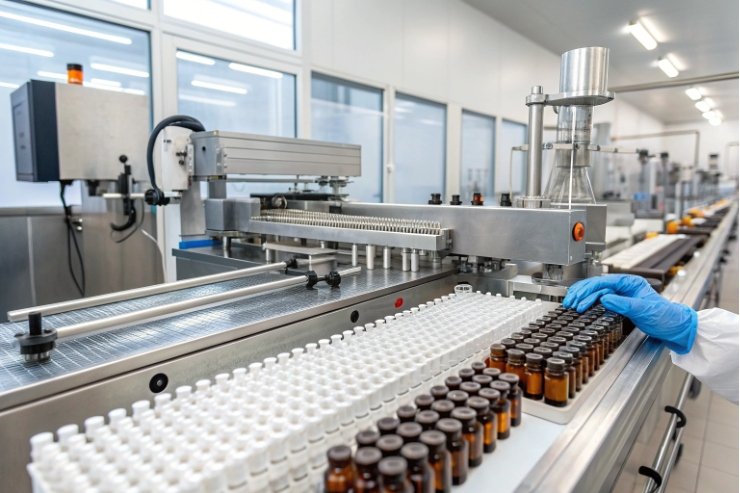
Industrial tubing, lampworking, and hand-blown studios
There are three big families beyond classic container forming:
-
Tubing forming (drawn glass)
- Glass is drawn into continuous tubes from a melt.
- Later cut and reshaped by heat and tooling.
- Common for laboratory glassware, ampoules, droppers, narrow vials, and sight glass.
- Very accurate in diameter and wall thickness across long runs (example flow: tubular glass forming process 5).
-
Lampworking / flameworking
- Uses torches to heat rods or tubing locally.
- Shapes complex small pieces, joints, microreactors, and decorative parts.
- Perfect for prototypes, microfluidic parts, or intricate ornaments (definition: lampworking (flameworking) technique 6).
-
Hand-blown (free-blown and mold-blown)
- A glassworker gathers glass on a blowpipe.
- Shapes it by inflating, swinging, and using tools, sometimes with a mold.
- Used for art glass, limited editions, high-end tableware, and traditional craft bottles.
Tubing and lampworking live closer to precision engineering. They let you control small diameters, joints, and shapes that would never survive an IS machine or would be far too expensive at low volume. Hand-blown work lives closer to art and premium branding, where each piece is slightly different on purpose.
A quick map:
| Method | Typical products | Key benefit |
|---|---|---|
| Tubing forming | Vials, pipettes, droppers, lab glass | Dimensional precision |
| Lampworking | Joints, micro-devices, small décor | Complex small shapes |
| Hand-blown | Art glass, premium carafes, showpieces | Craft story and uniqueness |
In a supply chain, these methods are often the “special forces” next to the “army” of IS machines. We call them in when a standard container cannot tell the story or hold the tolerance the project needs.
Do process choices change wall uniformity and production yield?
Two bottles can have the same outer shape, but very different wall thickness maps inside. That map decides how light the bottle can be and how many rejects you will have.
Yes. Processes like press-and-blow and NNPB usually give more uniform walls and lower weight, while blow-blow and hand methods can be more variable, affecting strength, scrap rate, and line efficiency.
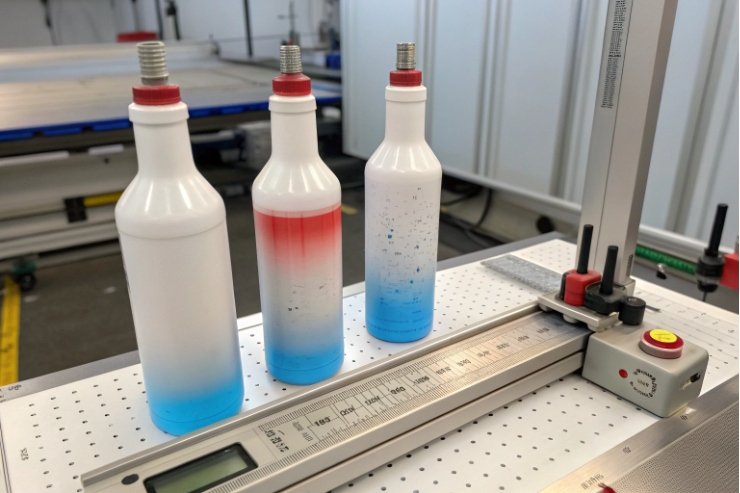
How forming route shapes wall thickness
Wall uniformity is not a cosmetic detail. It controls:
- Vertical load resistance on pallets.
- Burst pressure for carbonated drinks.
- Resistance to impact and thermal shock.
Process impact:
-
Blow-blow
- Glass distribution depends on gob temperature, gravity, and timing.
- Tends to create thicker shoulders and bases, thinner mid-body in some shapes.
- Good enough for many beverage bottles, but not ideal for extreme lightweighting.
-
Press-and-blow / NNPB
- Plunger pushes glass into specific areas of the blank mold.
- More even walls, especially in the upper body and shoulder.
- NNPB refines this in narrow necks, enabling thinner average walls without local weak points.
-
Tubing and lampworking
- Tube drawing naturally gives very uniform walls along length.
- Later forming can introduce variation, but usually in smaller, controlled zones.
-
Hand-blown
- Thickness often varies visibly, especially near the bottom and shoulder.
- This is part of the charm for art glass, but not for high-volume packaging.
Yield, defects, and process capability
More uniform walls usually mean:
- Fewer bottles failing top-load or pressure tests.
- Lower risk of breakage in hot-fill and pasteurization.
- Better consistency on filling lines (less variation in internal volume).
From a production viewpoint:
- P&B and NNPB often deliver higher good-ware rates, once process windows are mastered.
- Blow-blow is robust but can need more glass to reach the same safety margin, which raises cost and energy.
- Hand and small-batch processes accept higher variation and lower yield, offset by higher unit price.
Here is a simplified comparison:
| Process | Wall uniformity | Typical weight for same design | Yield potential (mass production) |
|---|---|---|---|
| Blow-blow | Medium | Higher | Medium–High |
| Press-and-blow | High | Medium | High |
| NNPB | Very high | Lowest | High, but needs tight control |
| Tubing based | Very high (axial) | Depends on design | High for small precise items |
| Hand-blown | Low–Medium | Highest | Low, but acceptable for art |
This is why, when a brand asks us “can you take 30–40 g out of this bottle?”, the first question is not about decoration. It is about whether we can move the design into a process with better glass distribution.
How do automation and sensors improve quality control in glass forming lines?
Old glass factories relied on a skilled eye and a hammer tap. Modern lines run at thousands of bottles per hour. Human inspection alone cannot catch everything.
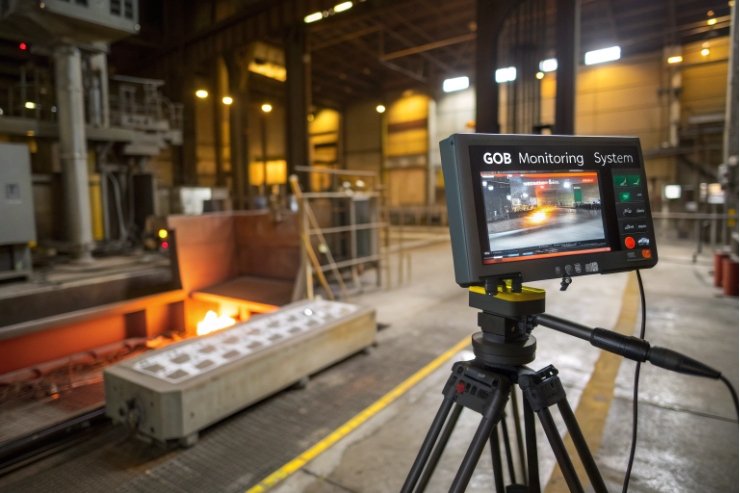
Automation and sensors now watch gob loading, mold temperatures, wall thickness, and surface flaws in real time, improving yield and making forming processes more repeatable.
From “good eye” to real-time data
Today’s forming lines combine:
-
Gob monitoring
- Cameras measure gob length, shape, and temperature.
- Bad gobs are rejected before they ever touch a mold.
-
Mold and plunger temperature control
- Embedded sensors track temperatures section by section.
- Control systems adjust cooling air to keep distribution stable.
-
Machine timing and motion
- IS machine sections are servo-controlled.
- Timing of gob cut, plunger stroke, and blow can be tuned and repeated very precisely.
This reduces section-to-section variation, which is key for NNPB, where a few degrees or milliseconds can decide if you get a perfect lightweight bottle or a thin shoulder that fails later.
100% inspection systems
After forming and annealing, automated inspection systems check every container using machine vision-based inspection systems 7:
- Cameras look for stones, blisters, checks, dirt, and wrong shape.
- Base and finish gauges read dimensions and ovality.
- Polariscopes or stress sensors can sample internal stresses in some workflows.
The system rejects non-conforming ware automatically. Good bottles move on; bad ones go back as cullet.
For customers, this means:
- Much lower chance of a cracked or badly shaped bottle reaching the filling line.
- Fewer line stops from random defects.
- More confidence to run faster and with tighter filling and capping tolerances.
How this ties back to forming process choice
Better sensors and automation make more advanced processes practical:
- NNPB needs tight gob, mold, and timing control; automation delivers that.
- Lightweight P&B jars are safer when wall and base thickness are constantly monitored.
- Even traditional blow-blow benefits from closed-loop control to reduce variability.
A short overview:
| Control element | What it monitors | Benefit for forming process |
|---|---|---|
| Gob cameras | Size, temp, shape | Stable parisons, less distortion |
| Mold temp sensors | Section-by-section heat | Better glass distribution |
| Servo timing control | Plunger / blow coordination | Supports P&B and NNPB lightweighting |
| Vision inspection | Surface and shape defects | Higher yield, fewer complaints |
In our plant, once these systems are tuned, the forming method becomes much more predictable. That is when we dare to commit to aggressive weight targets and complex shapes without sacrificing quality.
Conclusion
Choosing the right glass forming process is really choosing your balance of weight, strength, yield, and design freedom—and automation now makes those choices safer and more predictable than ever.
Footnotes
-
Explains how IS machines cut gobs and form containers across synchronized sections. ↩︎ ↩
-
Practical press-and-blow walkthrough showing plunger shaping and why distribution control improves. ↩︎ ↩
-
Research-backed explanation of NNPB and how plunger control enables major lightweighting. ↩︎ ↩
-
Clear overview of the blow-and-blow sequence: parison formation, transfer, and final blow. ↩︎ ↩
-
Shows how tubular glass is heated, formed, cut, and finished with tight dimensional control. ↩︎ ↩
-
Defines lampworking/flameworking and typical torch-formed products and techniques. ↩︎ ↩
-
Explains hot/cold-end inspection applications and why machine vision replaced older electro-optical checks. ↩︎ ↩






