
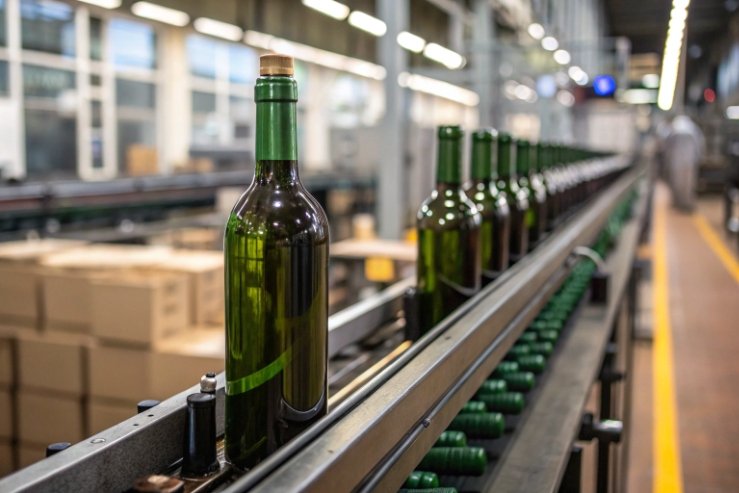
Cracked bottles ruin a bottling day, waste wine, and trigger ugly claims. The worst part is that the crack often started long before anyone saw it.
Cracking usually comes from a mix of trapped internal stress, sudden temperature swings, weak spots like thin walls or inclusions, and surface damage from handling that grows into a visible fracture later.
A wine bottle breaks when stress beats strength. That stress can be thermal, mechanical, or both. Strength drops when glass has defects or micro-damage. Good prevention means finding where stress enters and removing the weak link.
Are thermal checks caused by poor annealing and ΔT abuse?
A bottle can look perfect, then crack during rinsing, filling, or chilling. That crack often gets blamed on “bad glass,” but the trigger is usually temperature stress plus hidden residual stress.
Yes. Poor annealing leaves internal stress, and rapid temperature change (ΔT) adds new stress. Together they create thermal checks, base cracks, and delayed fractures after filling or cold-chain moves.
Why annealing decides how much stress the bottle can tolerate
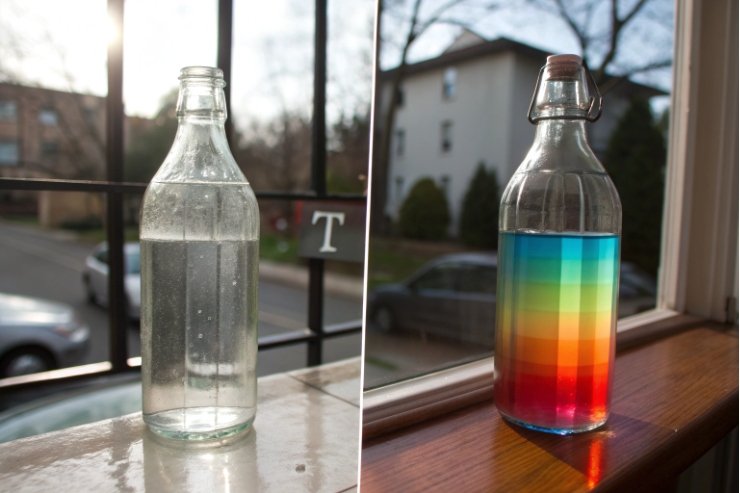
The annealing process 1 is controlled cooling that lets stress relax. If the lehr profile is too fast, uneven, or unstable across the belt, hidden residual stress 2 stays locked in. A stressed bottle can survive gentle handling, then fail the moment it sees a temperature swing. This is why cracks can look “random” across a pallet. The bottle did not become weak at the warehouse. It was already stressed, and the warehouse just exposed it.
A simple way to picture it: a well-annealed bottle has more “stress budget.” A poorly annealed bottle has almost none. Then a small ΔT event consumes the remaining budget and a crack opens.
How ΔT abuse shows up in real operations
Common thermal shock 3 events in wine operations include:
- cold bottles moved into warm rinsing water
- warm bottles placed into cold storage too fast
- pallets staged in the sun, then moved into a cool warehouse
- bottles kept in a cold dock, then filled with warmer product
Thermal checks often start where thickness changes fast, like the heel, base ring, or shoulder. The outside surface can cool or heat faster than the inside, so tension forms and the crack starts at the surface.
What to check and how to prevent it
Thermal failures are easier to prevent than to argue about. The best prevention is process discipline:
- match bottle temperature to rinse and fill conditions
- avoid sudden cold-to-hot or hot-to-cold moves
- use a stress screening method like photoelasticity testing 4 with a simple polariscope check on incoming lots
- quarantine lots that show a sudden change in break pattern
| Crack symptom | Most likely thermal driver | Fast diagnosis | Best prevention |
|---|---|---|---|
| Base crack after rinse | Cold bottle into hot rinse | Check rinse water temp vs bottle temp | Pre-condition bottles and moderate rinse temp |
| Shoulder crack after fill | Bottle temp mismatch with product | Compare line temp logs | Keep bottle and product temps closer |
| Random cracking in storage | Residual stress + gradual temp cycling | Stress screen + lot trace | Stable annealing + reduce large daily temp swings |
| Delayed cracks days later | Hidden stress + minor ΔT events | Retain samples and cycle temp | Improve annealing control and handling |
[Story placeholder: a bottling line once “fixed” breakage by changing rinse temperature. Later it was found the bottle lot had higher stress, and the warm rinse was the final trigger.]
Do inclusions, stones, or thin walls start cracks?
A bottle can break without any obvious impact. When you look closely, the crack often started at a tiny defect or a thin zone that acted like a weak seam.
Yes. Inclusions like stones and unmelted particles, plus thin walls in the shoulder or heel, act as stress concentrators. They help cracks start and make cracks grow faster under normal loads.
Why inclusions and stones are dangerous
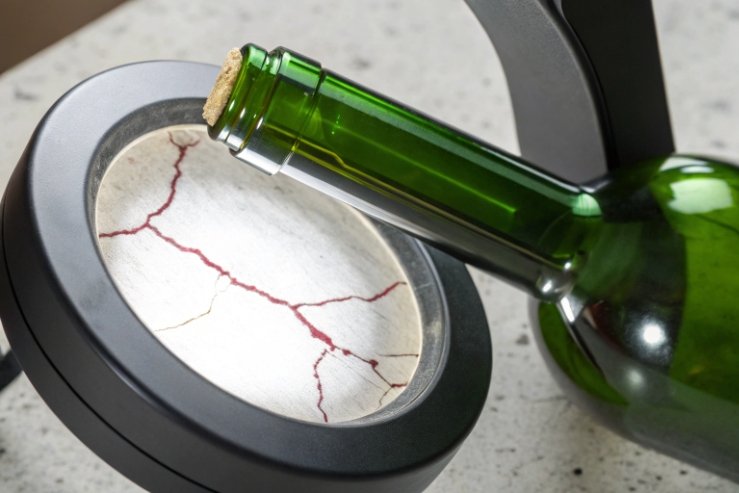
Glass is strong in compression but weak in tension. An inclusion creates a local mismatch in stiffness and can create a stress concentration 5. Even if the inclusion is small, it can behave like a “starter notch.” Under vibration, stacking load, or a small bump, that notch can become a crack.
Stones and hard inclusions are also a safety and appearance issue. They can sit close to the surface. When the bottle gets a small impact, the surface around the inclusion can chip, and the chip becomes a crack origin.
Why thin walls matter more than average weight
Average bottle weight does not guarantee safe distribution. A bottle can be on weight but still thin in the shoulder or heel if glass flowed wrong in forming. Thin zones carry higher stress during impact and during thermal change. In wine bottles, heel thinness is a common break trigger because the heel takes contact in cartons and on conveyors.
This is why “premium heavy bottle” designs still crack if thickness is not uniform. The base can be thick and beautiful, but the shoulder can be fragile.
What to control at incoming QC
Incoming QC that prevents crack surprises focuses on:
- thickness checks at risk zones (heel, shoulder, neck transition)
- visual checks for stones, blisters, cords, and checks under strong light
- base flatness and rocking tests
- finish checks for micro-chips and wire-edge issues
A useful habit is to keep a master sample and compare feel and thickness zones, not only the look. When one cavity drifts, the weak zone shows up as a repeat pattern in the same location.
| Defect type | Where it tends to appear | Why it starts cracks | What to reject as “critical” |
|---|---|---|---|
| Stones/inclusions | Body panels, shoulder, base | Local stress concentration | Any sharp or near-surface stone |
| Thin shoulder | Shoulder and neck transition | High bending stress | Thin spot below minimum spec |
| Thin heel | Heel/base ring | Impact and point load | Heel below minimum thickness |
| Cords/striae | Panels | Weak optical and mechanical zones | Heavy cords in display or stress zones |
[Story placeholder: a winery once blamed cartons for breakage. The real issue was a thin heel band from one mold cavity. Breakage stopped when that cavity was removed.]
Can conveyor scuffing become burst failures later?
Scuffs look cosmetic, so they get ignored. Later, a bottle bursts or cracks and everyone is confused because the bottle was not dropped.
Yes. Conveyor scuffing can remove protective coatings and create micro-cracks. Those micro-cracks can grow under stacking load, vibration, or temperature swings until the bottle fails later.
Why scuffing is more than a “looks” issue
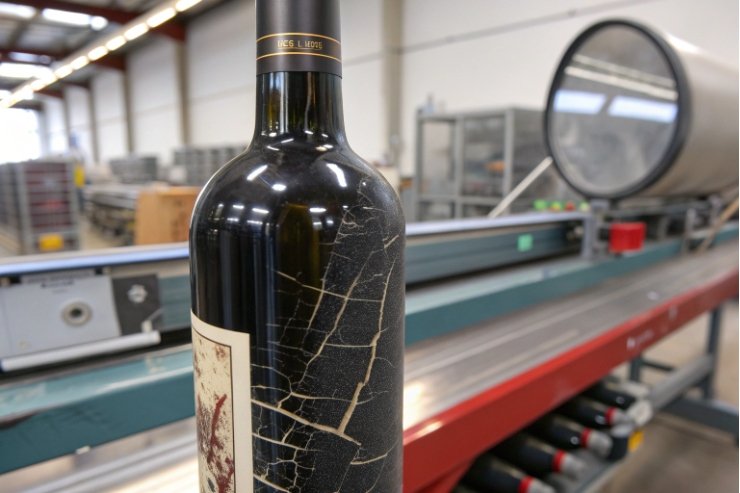
Glass surfaces carry tiny flaws even when new. Coatings and smooth handling reduce how those flaws grow. When bottles rub hard against rails, deadplates, or other bottles, the surface gets scratched. In fracture mechanics 6, that kind of surface flaw is a classic crack starter. This is why scuffed bottles can fail later even if they survive the line.
The risk rises when:
- cold-end coating coverage is uneven
- accumulation tables allow bottle-to-bottle contact
- guide rails are rough or misaligned
- transfer points create short drops or “click” impacts
- cartons let bottles touch during vibration
What “burst” means for still wine bottles
Still wine bottles do not carry high internal pressure like sparkling, but failures can still look like bursts if the crack runs fast through a weak zone. A bottle with a deep heel scratch can fail under pallet load. A bottle with a shoulder scuff can crack during a small ΔT event. The failure looks sudden, but the damage was slow.
How to detect scuff-driven risk before it becomes a claim
A good approach is to treat surface damage as a tracked defect, not a complaint. Track:
- where scuffs appear on the bottle (heel, shoulder, panel)
- which conveyor zones show the most contact
- whether scuffs increase on peak speed or during backups
- whether coated bottles show patchy rub patterns
Simple checks help:
- rub test after a short vibration simulation in the real carton
- inspection of accumulation points during peak production
- a “hotspot map” of where scuffs start
| Surface damage pattern | Common line cause | Why it becomes a crack later | Practical fix |
|---|---|---|---|
| Heel scuffs | Rail contact, tight turns | Heel is a high-stress contact zone | Rail material change, spacing control |
| Shoulder scuffs | Bottle-to-bottle clink | Shoulder cracks under bending | Better accumulation control |
| Patchy scuff areas | Uneven coating | High friction zones | Coating process control + handling review |
| Vertical scratch lines | Misaligned rails | Deep crack starters | Realign guides and reduce pressure |
[Story placeholder: an e-commerce brand had “random” breaks in customer boxes. The cause was heel scuffing at one transfer point, and vibration in shipping finished the crack growth.]
Which storage and handling practices prevent damage?
Even a strong bottle can be damaged by bad storage, bad pallets, and rough temperature swings. Many cracks happen after production, not during it.
Damage prevention comes from stable temperatures, gentle handling that avoids point loads and clinking, strong pallet and carton discipline, and clean conveyors and dividers that protect coatings and surfaces.
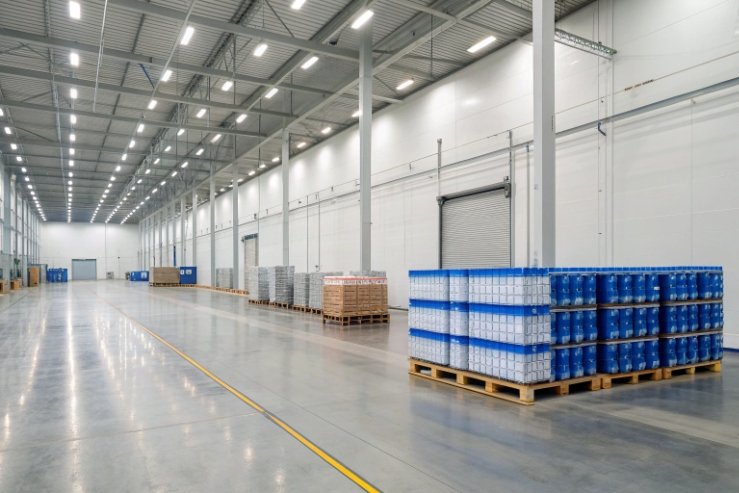
Temperature and conditioning rules that stop thermal cracking
Storage should avoid large daily swings. Docks are risky because they create hot-cold cycles. If bottles are stored cold, avoid moving them directly into warm rinse or warm filling conditions. If bottles are stored warm, avoid sudden cold exposure. The best practice is simple conditioning time so bottle temperature moves slowly.
Mechanical handling rules that stop crack initiation
Point loads start cracks. Clinking starts scratches. Overstrapping starts base stress. So prevention focuses on:
- no carton overhang on pallets
- consistent pallet patterns with flat top layers
- corner boards and correct strapping tension
- no “double stacking” beyond carton spec
- dividers that fully separate bottles
- no loose cartons that allow bottle movement
Forklift handling should be smooth. Pallet impacts can create star cracks at the base ring. Those cracks may not show until later.
E-commerce and parcel shipping needs extra gates
E-commerce creates more drops and more vibration. For online shipments, validate the shipper with ASTM D4169 distribution-cycle testing 7 (or an ISTA equivalent), using the real packed unit:
- use a shipper that immobilizes the bottle
- add corner protection and crush zones
- prevent glass-to-glass contact inside the shipper
- test drops on corners, edges, and faces using the real packed unit
A practical prevention checklist
This checklist reduces both visible damage and delayed cracking:
- keep lots traceable by pallet and date
- inspect pallets for lean and strap cuts
- keep cartons dry and away from condensation
- avoid stacking beyond carton rating
- separate decorated bottles with protective sleeves if needed
| Risk area | Bad practice | Better practice | Result you should see |
|---|---|---|---|
| Temperature | Sudden dock-to-line moves | Conditioning time and stable zones | Fewer thermal checks |
| Palletizing | Overhang, uneven layers | Flat layers, no overhang | Less carton crush and base stress |
| Strapping | Over-tight straps | Correct tension + corner boards | Less delayed base cracking |
| Cartons/dividers | Loose fit, bottle contact | Full separation and tight fit | Lower scuffs and chips |
| E-commerce | Bottle can move in shipper | Immobilized pack design | Lower last-mile breakage |
Conclusion
Cracks come from stress plus weak points. Stable annealing, controlled ΔT, defect control, gentle handling, and ship-tested packaging stop most wine bottle cracking before it starts.
Footnotes
-
Explains controlled cooling in annealing and why it stabilizes glass against cracking. ↩︎ ↩
-
Learn how residual stress stays hidden and later triggers cracks under heat or handling. ↩︎ ↩
-
Overview of thermal shock and why fast temperature changes create stress in brittle materials. ↩︎ ↩
-
Understand photoelasticity and why polariscopes reveal stress patterns in transparent materials. ↩︎ ↩
-
Learn what stress concentration is and why small defects amplify cracking risk in glass. ↩︎ ↩
-
Fracture mechanics basics explain how tiny surface flaws grow into cracks under load. ↩︎ ↩
-
Summary of ASTM D4169 updates for vibration, drop, and compression tests used in shipping validation. ↩︎ ↩






