
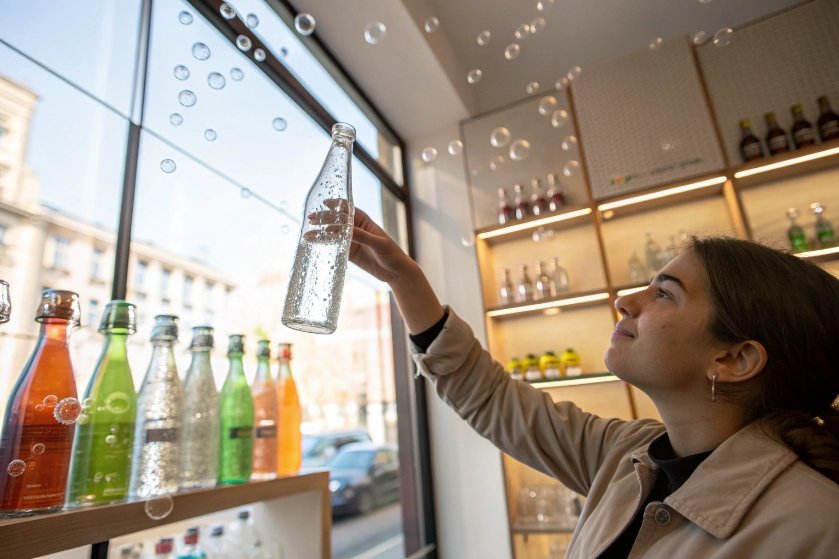
When a buyer picks up a bottle and spots tiny bubbles in the wall, the first question is always the same: “Is this a defect or is this normal?”
Bubbles in glass bottles and jars come from trapped gases in the melt or during forming. Fining efficiency, raw material quality, melting conditions, and mold behavior all decide whether those bubbles stay in the glass or escape.
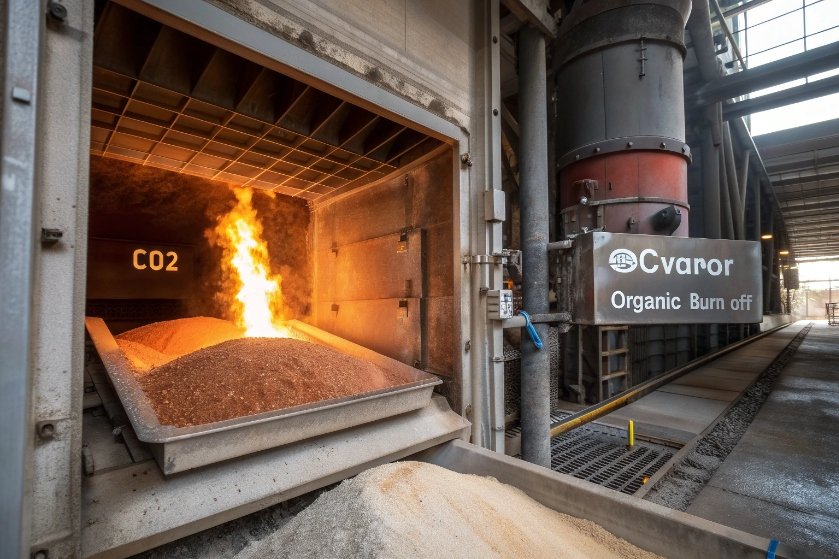
From the furnace to the IS machine, gas is always present. Raw materials release CO₂ and water. The batch and cullet bring in air and moisture. Forming can trap pockets of air at the mold surface. Most of the time, good fining and stable forming push these bubbles out or keep them invisible. When something drifts, the bubbles start to show, and quality questions follow.
Are bubbles from fining, gas entrapment, or melt viscosity issues?
When bubbles show up in a bottle, people often want a single cause. In reality, fining, gas release, and viscosity work together like three sides of the same triangle.
Bubbles come from gases released by raw materials and cullet, and they stay in the glass when fining is weak or melt viscosity is too high for them to rise and escape.
How gas, fining, and viscosity link together
In the melting end, most bubbles are “born” long before the gob reaches the forming machine. They are a natural result of chemistry and physics. The job of the furnace is not to stop gas from forming, but to let it escape before the glass becomes too stiff—this is covered well in melting and fining processes in industrial glass furnaces 1.
Gas sources in the melting process
The batch releases gas as it heats. Carbonates break down and send out CO₂. Hydrated materials and wet batch release water vapor. Moist or dirty cullet can bring in organic material. When this burns off, more gas appears. If cullet is not sorted well, metals or plastics can enter the melt and create local gas pockets and nucleation points.
Furnace refractories can also play a part. At high temperature, certain refractories react at the glass contact surface and release gases. Devitrified layers can trap gas at the interface and then release small bubbles back into the flow.
Fining and clarification
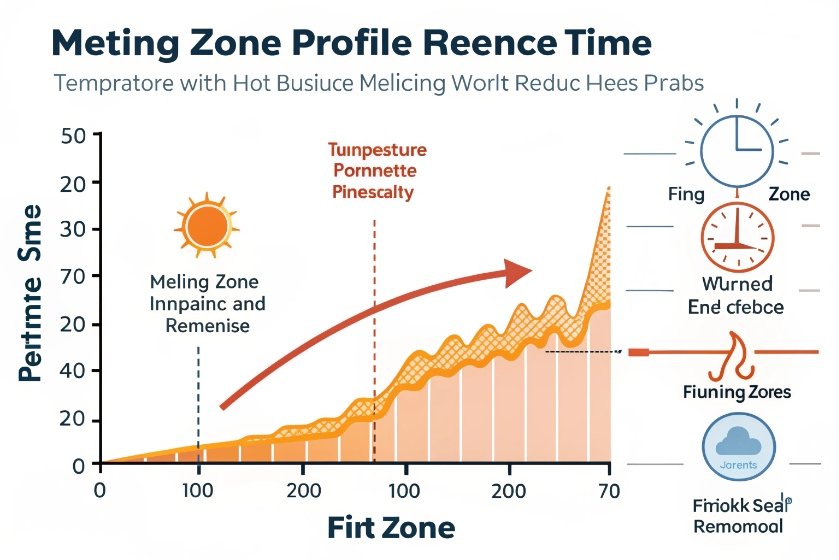
Fining is the step where the melt is held at high temperature with fining agents. These fining agents change the gas behavior in the melt. Gas bubbles grow, coalesce, and rise to the surface. For that to work, the glass must be hot and fluid enough, and the residence time must be long enough.
If the fining zone is too cold, too short, or under-dosed with fining agents, many small “seed” bubbles remain. They are not big enough to rise quickly. They travel forward into the working end and finally into the gob—definitions of “seeds”, “blisters”, and “air-lines” used in glass troubleshooting 2 help keep teams aligned.
Viscosity and thermal profile
Viscosity decides how easily a bubble can rise. High viscosity acts like a brake. Even if gas wants to escape, it cannot move fast. Low furnace temperatures, high pull rates, or strong thermal stratification can leave a cold, stiff band where bubbles get trapped.
So the three factors connect like this:
| Factor | Role in bubble behavior | Result when not controlled |
|---|---|---|
| Gas sources | Create bubbles and dissolved gas in melt | More bubbles to remove |
| Fining | Helps small bubbles grow and rise | Many small seeds remain |
| Viscosity profile | Controls bubble rise speed and escape paths | Bubbles “freeze” into the glass |
When bubbles appear in finished bottles, the first look usually goes to these three levers in the melting process.
Can contaminated batch or worn molds increase bubble frequency?
Sometimes bubbles are not born in the furnace. They appear at the surface as small blisters or as local clusters in certain areas of the bottle. In these cases, attention must move from the batch house to the forming side.
Contaminated batch, dirty or wet cullet, and worn or poorly vented molds all raise the risk of bubbles and blisters, either by adding extra gas into the melt or by trapping air during forming.
How batch quality and mold condition create more bubbles
From the very start of the process, material quality sets the tone. Then the condition of molds and their maintenance patterns decide whether air can escape when the gob hits the cavity.
Batch and cullet contamination
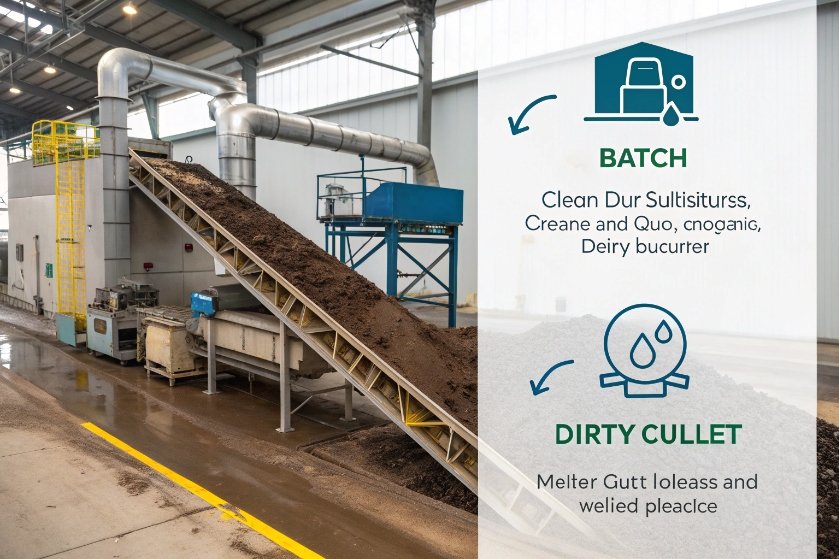
Dirty cullet is one of the fastest ways to get more bubbles. Paper, labels, organic dirt, and plastics burn off and create gas at lower depths. Moist cullet or batch brings in steam. Metals can react and cause local gas pockets. Large cullet pieces or poor particle size distribution can trap air between grains, which then moves into the melt as isolated bubbles.
Poor batch mixing allows clumps of carbonates and fines. These pockets release gas later in the furnace where fining is already less effective. So even if fining agents are correct, the timing of gas release is wrong, and more seeds survive into the working end.
For recycled inputs, meeting rigorous industrial specifications for glass cullet 3 helps reduce contamination-driven bubble spikes.
Worn molds and poor venting
On the forming side, many bubbles are not internal seeds but surface blisters. These come from air trapped between the hot glass and the mold surface. If mold vent holes are blocked by dust, oil, or swabbing build-up, air has no easy path to escape. When the gob presses into the cavity, this air can get trapped as a thin bubble on the surface.
Worn molds with rough areas or corrosion hold more swabbing compound and dirt. Heavy swabbing also creates smoke and vapors. These gases can form blisters if the timing and air flow are not right. Deep engraving, sharp edges, and closed pockets in the design make venting harder again.
Design and maintenance working together
Some shapes are simply more “bubble-prone” than others. Deep embossing, narrow ribs, long panels, and heavy corners are harder to vent. When these shapes are combined with old molds and quick cleaning cycles, the risk of localized bubbles rises fast.
We can picture the combined effect like this:
| Source area | Specific issue | Bubble impact |
|---|---|---|
| Batch / cullet | Dirt, organics, moisture, poor mixing | More internal seeds and small clusters |
| Molds | Blocked vents, heavy swabbing, wear | Surface blisters, local bubble patterns |
| Design | Deep embossing, sharp radii, pockets | Air trapped, harder venting |
A strong bubble reduction plan always treats batch and mold as a pair, not as separate topics.
Which furnace and forming parameters most affect bubble formation?
Even when raw materials and molds are good, drifting settings can bring bubbles back. Furnace and IS machine parameters decide how much time gas has to escape and how much new air can enter.
Bubble formation is most sensitive to melting and fining temperature, residence time, redox and combustion balance, plus gob temperature, blank mold temperature, and mold venting on the forming side.
The key levers from furnace to IS machine
On a live production line, many parameters move together. The art is to link bubble trends with the right group of settings instead of chasing only one number.
Furnace and forehearth parameters
In the furnace, the main levers for bubbles are:
- Total melting and fining temperature
- Time that glass spends in the fining zone
- Fining agent dosing and glass redox
- Pull rate and level control
- Thermal homogeneity and convection
If temperature is reduced to save energy without careful planning, viscosity increases and bubble rise slows. Higher pull rates shorten residence time in the fining zone. Reducing conditions (too much fuel, not enough oxygen) can increase CO and other gases in the melt, which can feed bubbles and reboil effects.
In the forehearth, poor temperature balance across channels can leave “cold tongues” where bubbles slow down. Thermal stratification lets bubbles stay in a layer that moves straight into the gob stream.
Forming and gob delivery parameters
On the forming side, some bubbles are created by the way glass enters and fills the blank:
- Gob temperature and shape
- Shear cuts and gob tails
- Plunger and air timing
- Mold temperature and vent layout
- Swabbing frequency and product
If you want a step-by-step view of where air can be trapped, this container glass forming process from blank/parison to blow mould 4 is a helpful reference.
A gob that is too cold has higher viscosity and can fold on itself. These folds can trap air. Long or ragged gob tails can drag air into the parison. If the blank mold is too cold, the surface of the gob freezes early, so trapped air cannot escape through vent paths.
Too much swabbing compound builds a film on the mold surface. This film can boil when hot glass hits it and create blisters. Not enough swabbing can cause sticking and rough surfaces that hold pockets of air. For practical troubleshooting, the container defect causes and remedies guide 5 is often the fastest way to map symptoms to venting and setup checks.
Making parameters visible for problem solving
When bubbles increase, a simple cause–effect map helps the team:
| Area | Parameters to check first | Typical bubble symptom |
|---|---|---|
| Furnace | Melting temp, fining temp/time, redox, pull | General seed level across all bottles |
| Forehearth | Channel temp balance, throat temp | Bubble changes on certain sections |
| Gob | Gob temp, length, tail, shear timing | Bubbles in specific cavities or panels |
| Molds | Mold temp, vents, swabbing | Surface blisters, local bubble clusters |
This structure keeps troubleshooting focused and avoids random adjustment of many levers at once.
What bubble grades are acceptable under common QA standards?
The next question is always, “Are these bubbles okay to ship?” Not every bubble is a reject. Many standards recognize that some level of seeds is normal in container glass.
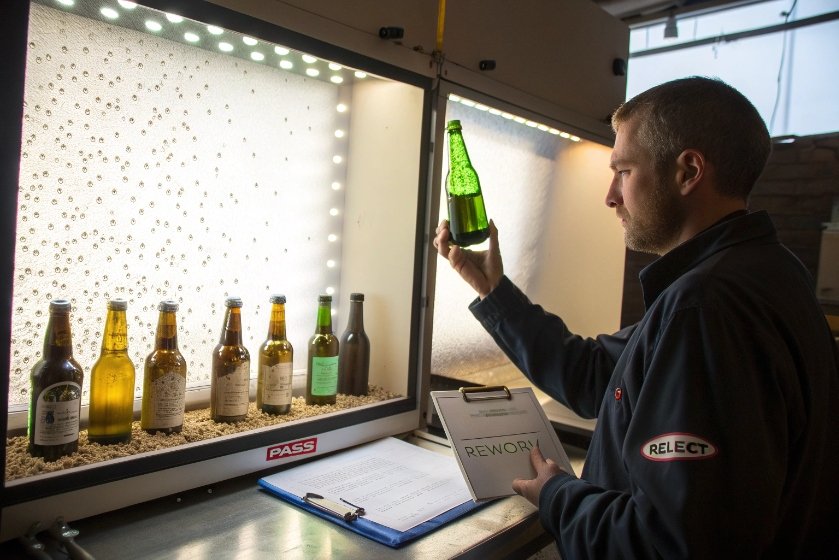
Common QA standards accept small seed bubbles in non-critical zones, while large blisters, open bubbles on the surface, or bubbles in finish and sealing areas are treated as major or critical defects.
How QA teams classify and judge bubbles
In daily work, quality inspectors link bubbles to three things: size, location, and type. From this, they assign a grade and a decision.
Size and type
“Seeds” are very small, usually pin-head or smaller. They are closed bubbles inside the wall and do not break the surface. They can be normal in certain glass colors and markets. “Blisters” are larger bubbles, often near the surface. If a blister is open to the surface, it can weaken the glass and create hygiene or leakage issues—teams often align terminology using examples of glass “seed” and “blister” defects in containers 6.
Stones and knots are not bubbles, but they are often tracked in the same family of defects. They indicate unmelted material or devitrification and are usually not acceptable.
Location and zones
Many standards divide the bottle into zones:
- Finish and sealing surface
- Upper body or shoulder
- Main body
- Base and push-up
A bubble in the sealing surface or finish is often classed as critical. It may break the integrity of the seal or chip under cap load. Bubbles in the shoulder can act as stress risers and reduce impact strength. Seeds in the main body, far from the finish and base, are often allowed within size and frequency limits.
Acceptable levels and customer agreements
Exact limits depend on the customer, the end use, and the reference standard. Some brands accept a low density of seeds up to a certain size in zone 2 or 3. Others, especially in premium cosmetics or spirits, demand near-zero visible bubbles in the viewing area.
In practice, the factory and the customer agree on:
- Bubble size bands (for example, <0.5 mm, 0.5–1 mm, >1 mm)
- Zones where bubbles are not allowed at all
- Maximum count per bottle or per sample size
- Classification as critical, major, or minor defects
This is often captured in an AQL (Acceptable Quality Level) plan based on ISO 2859-1 acceptance sampling (AQL) for attribute inspection 7. Once both sides sign off, inspectors can make clear decisions on the line.
We can sum up QA logic like this:
| Attribute | Typical treatment in QA |
|---|---|
| Tiny seeds | Often accepted in non-critical zones |
| Medium seeds | Limited number allowed, depends on location |
| Large blisters | Usually rejected, especially near surface |
| Finish bubbles | Critical, not accepted |
| Base bubbles | Case by case, based on size and function |
Clear bubble grading and shared standards keep discussions fair when buyers inspect a shipment and see small bubbles in some bottles.
Conclusion
Bubbles in glass bottles come from gas in the melt and trapped air in forming. With stable melting, clean molds, and clear QA rules, most bubbles become rare, controlled, and commercially acceptable.
Footnotes
-
Explains bubble removal, fining zones, and why viscosity/residence time matter in industrial furnaces. ↩ ↩
-
Quick definitions of seeds, blisters, air-lines, and other terms used in glass manufacturing troubleshooting. ↩ ↩
-
Shows how cullet quality specs and contamination control affect closed-loop recycling and melt quality. ↩ ↩
-
Overview of blank/parison and blow molding steps where air can be trapped during forming. ↩ ↩
-
Practical defect guide linking blisters and bubbles to mold venting, fits, and forming settings. ↩ ↩
-
Defines “seeds” vs “blisters” and how bubble defects are named in container glass. ↩ ↩
-
Official ISO page for AQL-based acceptance sampling, often used to agree defect limits in inspections. ↩ ↩






