
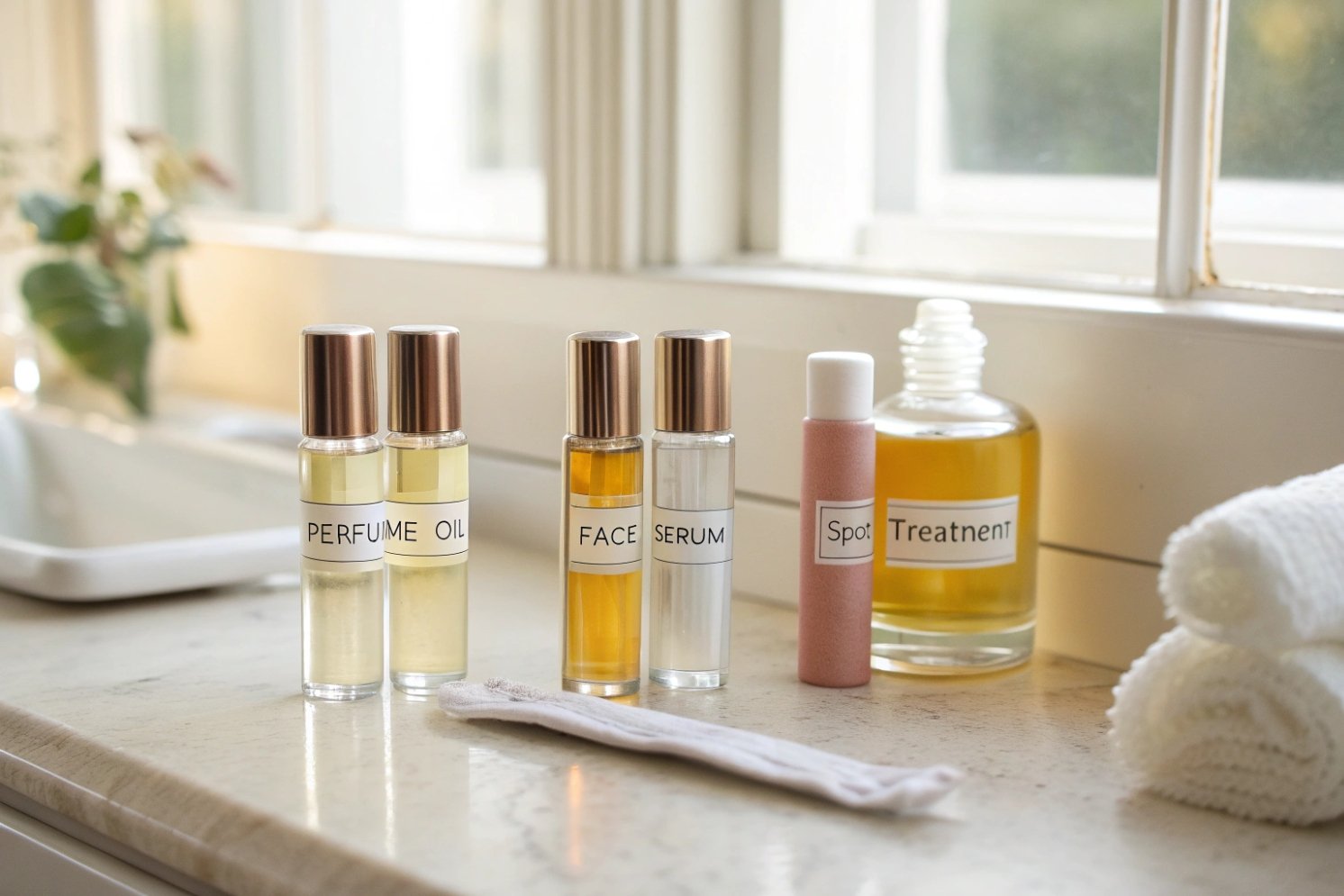
Messy droppers, leaky minis, and oily fingers make many “portable” formats hard to love in real life.
Glass roller bottles give brands a clean, targeted, on-the-go way to apply oils, serums, perfumes, and treatments, while protecting sensitive formulas and reducing leaks, waste, and plastic use.
Used well, a roller bottle is not just a small container. It is an applicator, a dosing valve, a travel format, and often a sampling tool in one. Below I break down what works inside them, which roller balls to choose, how to stop leaks in shipping, and why they help brands win in sampling and travel sets.
Which viscosities and formulas are best suited for roller applicators?
Many people try to put anything liquid into a roller, then blame the hardware when it floods or clogs.
Roller bottles work best with low- to medium-viscosity liquids and light gels—think oils, serums, and thin emulsions—not very watery toners or heavy balms.
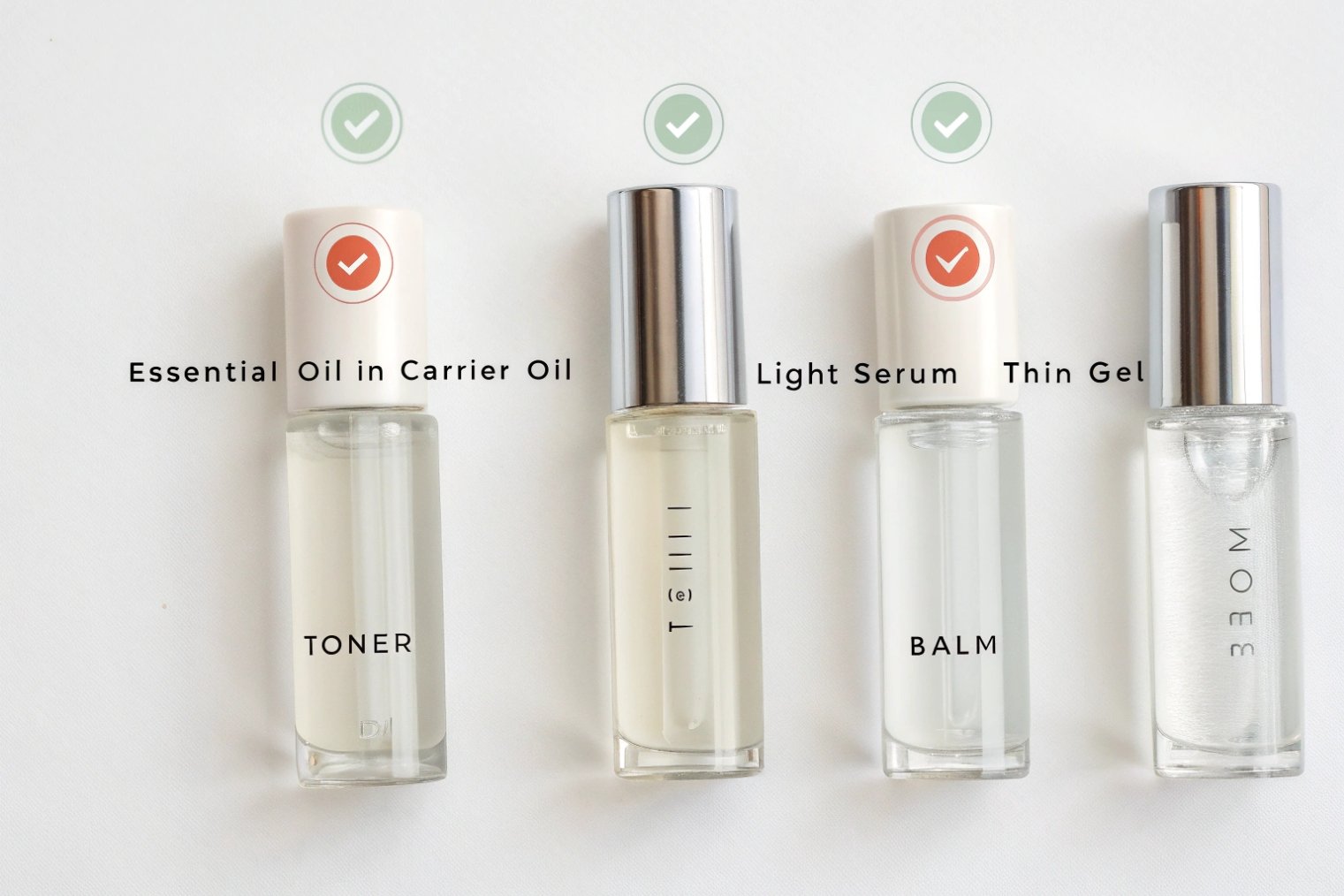
Matching viscosity to roller performance
For a smooth, controllable roll, the formula’s viscosity of a fluid 1 should be low enough to flow, but not so low that it leaks when inverted. In practice, most brands have good results with:
- Essential oils diluted in carrier oils 2
- Oil serums and dry oils
- Light silicone or ester blends
- Thin water-in-oil or oil-in-water serums
- Low-viscosity treatment gels (spot care, roll-on eye care)
Very watery products, like toners, can flood around the ball and drip. Very thick creams and balms will not move well under the ball and feel “draggy”.
A simple way to think about it:
| Product type | Typical feel | Roller suitability |
|---|---|---|
| Pure essential oil + carrier oil | Fluid, oily | Excellent |
| Light face serum | Silk, slightly runny | Very good |
| Thin gel (spot treatment) | Smooth, not sticky | Good with correct orifice size |
| Toner / micellar water | Very watery | Needs special plug, often better in mist |
| Thick cream or balm | Heavy, pasty | Not suitable |
Inside the bottle, glass helps in another way. Glass is inert and non-reactive, so it does not pull aroma compounds, solvents, or active ingredients out of the formula. This is important for essential oils, natural fragrances, and reactive actives, which can attack some plastics over time.
Where rollers shine in real formulas
Roller bottles work especially well for:
-
Essential oils and aromatherapy
Apply blends to pulse points without flooding a large area or touching the oil with fingers. -
Perfume and fragrance oils
Low evaporation at the neck, controlled film on the skin, no overspray in the air. For fragrance products, aligning claims and use levels with IFRA Standards 3 helps brands keep safety and compliance consistent across markets. -
Targeted skincare
Dark spot serums, eye serums, blemish treatments, and lip or cuticle oils. -
OTC and wellness
Headache balms, muscle rubs, bug-bite relief, and herb-based roll-ons.
For each of these, the roller bottle gives both dosing and placement. A small metal or glass ball lays down a thin, even film and often gives a micro-massage effect, which makes the ritual feel more premium than a simple dropper.
Steel vs. glass roller balls: which delivers smoother dosing?
The ball is where the consumer really feels the package. The choice between steel and glass is not only about cost; it changes glide, cooling, and flow.
Stainless-steel balls give a cooler, heavier, often smoother glide with stronger occlusion, while glass balls feel softer and more neutral; both can work well if matched to the formula.
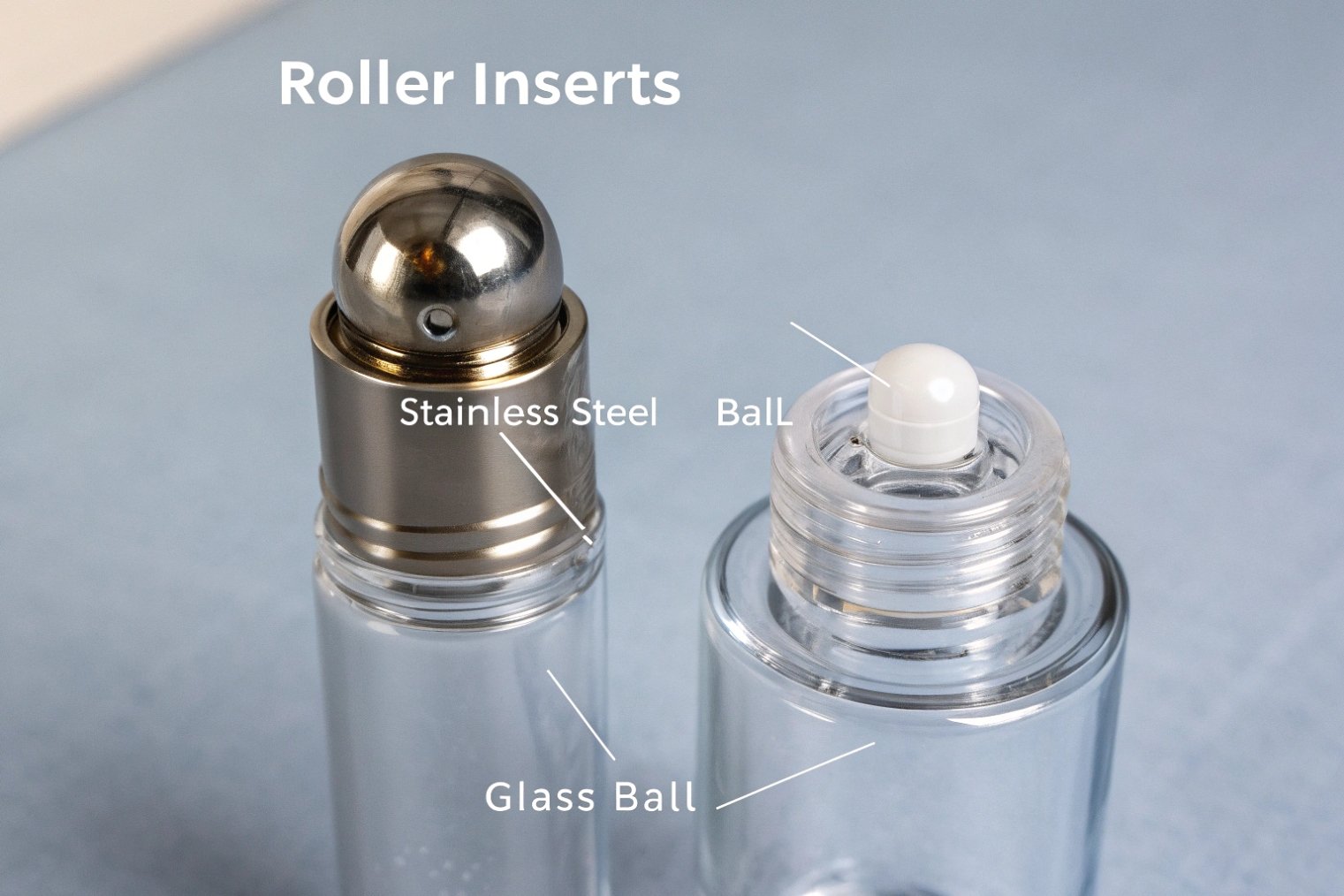
How ball material changes the experience
Stainless-steel balls:
- Have more weight, so they press gently into the skin.
- Feel cool on contact, which many people like for eye and pulse-point use.
- Can keep flow more stable on slightly thicker oils, thanks to this weight.
- Typically use grades like 316 stainless steel 4 for better corrosion resistance in wet, salt, and oil exposure.
Glass balls:
- Feel softer and more “skin-like” on contact.
- Look visually seamless with glass bottles in clear or tinted designs.
- Are extremely inert for high-natural or high-acid formulas.
Both materials can deliver smooth dosing if the housing, orifice size, and formula viscosity are aligned. The “smoothness” that people feel comes more from the whole system than from just the ball material.
A quick comparison:
| Feature | Stainless-steel ball | Glass ball |
|---|---|---|
| Sensation on skin | Cool, firm, “spa-like” | Softer, more neutral |
| Weight and flow | Heavier, good for thicker oils | Lighter, good for thinner fluids |
| Look with clear glass | High-tech, modern | Minimal, seamless |
| Chemical resistance | High (with good grade steel) | Excellent |
| Common uses | Eye serums, aromatherapy, wellness | Perfumes, light serums, cosmetics |
Picking ball type by formula and story
In real projects, I usually see patterns like these:
-
Steel ball for “cooling” eye rollers, headache blends, muscle rubs, and stress-relief oils. The metal feel supports the story and helps with firm massage.
-
Glass ball for fine fragrance, luxury serums, and gentle facial oils, especially where a totally glass-glass system fits the brand’s “clean” or “natural” message.
It is also possible to mix within a line: steel for targeted treatments and glass for general scents. This gives each product its own sensorial signature while keeping the same bottle base and closure.
What neck finishes and caps prevent leaks during shipping?
A great roller experience means nothing if the bottle leaks in a hot truck or on a plane.
Leak-resistant roller bottles combine a well-matched roll-on finish, a tight ball housing with the right orifice, and a cap with proper torque and sealing—then they are tested filled, inverted, and abused.
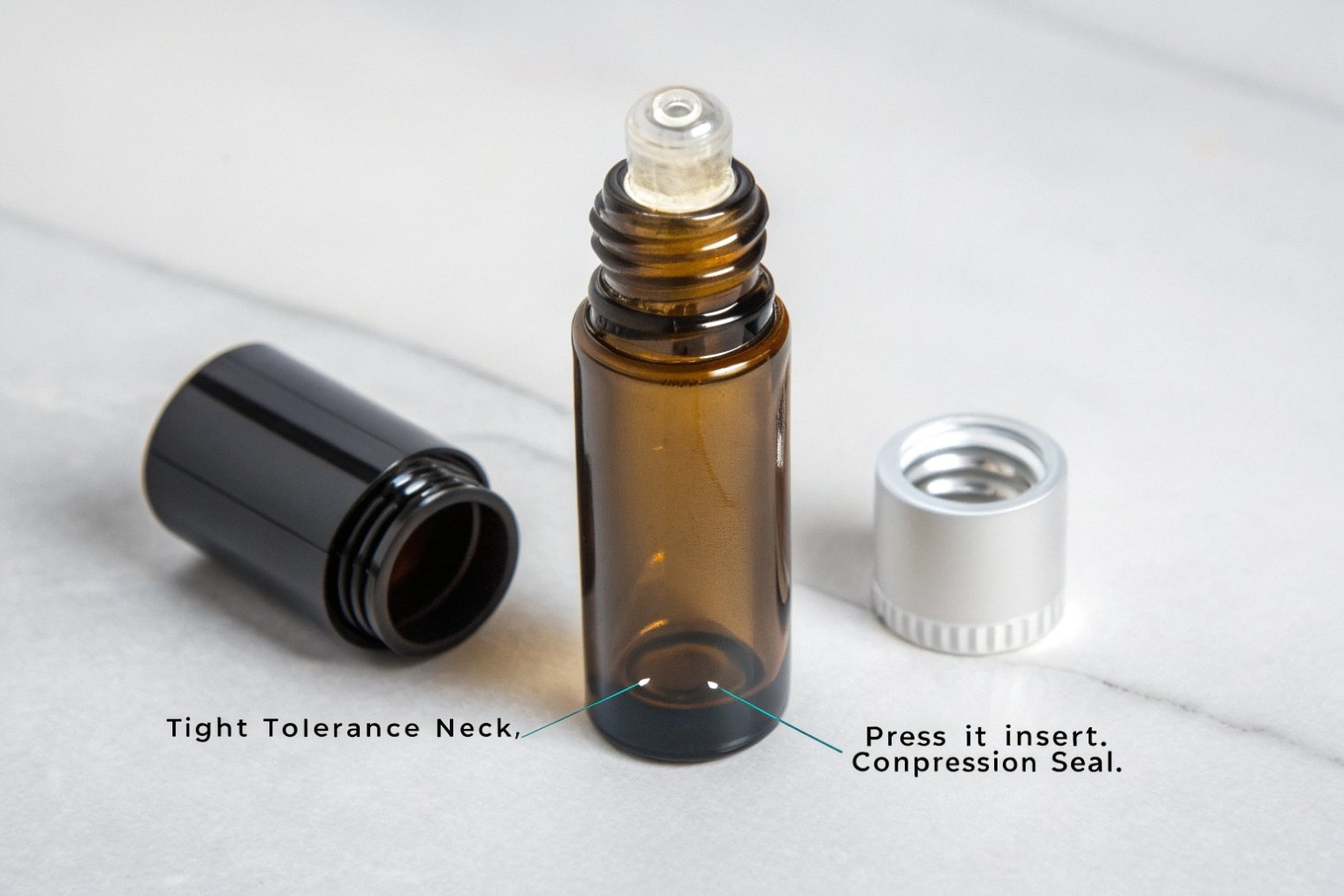
Anatomy of a leak-proof roller bottle
There are three parts to get right:
-
Bottle neck / roll-on finish
- Usually a small diameter finish designed for press-fit or snap-in roller inserts.
- The glass dimensions must be tight so the insert sits square and secure.
-
Roller insert (ball housing)
- Holds the steel or glass ball.
- Has a seat and orifice that set the flow rate.
- Often made from PE, PP, or similar, sometimes with a soft sealing lip.
-
Cap and seal
- Screw cap or overcap that locks down on the insert.
- May include a liner for extra sealing.
- Must reach the right torque to compress the insert without deforming it.
If any one of these three is loose or mismatched, leaks are more likely, especially during pressure or temperature changes.
A simple checklist:
| Component | Key point for leak control |
|---|---|
| Glass neck | Correct inner and outer diameter, smooth |
| Roller insert | Firm press-fit, even when warmed or cooled |
| Ball | Free rolling but snug, no side gaps |
| Cap | Correct thread, liner, and applied torque |
Testing for real-world conditions
For brands that ship globally, I always suggest at least:
- Inverted storage tests (24–72 hours at room and elevated temperature).
- Vibration tests to mimic transport (commonly mapped to parcel simulation like ISTA Procedure 3A 5).
- Hot–cold cycles between, for example, 5 °C and 40–45 °C.
Fill the rollers with the real formula or a similar test fluid at the same viscosity. Check threads, caps, and inserts both before and after the tests. A little time here saves many complaints later.
For extra security, some brands use:
- Shrink sleeves or tamper bands, which also help keep caps from loosening.
- Slightly smaller fill volume so there is more headspace for expansion in heat.
Roller bottles are small packages, but they still need the same discipline in neck finish tolerances, insert fit, and cap torque that we apply to larger glass containers.
How do roller bottles improve sampling and travel compliance for brands?
Many brands want customers to try more products without raising shipping cost, spill risk, or regulatory headaches.
Roller bottles are ideal for samples, discovery sets, and travel SKUs because they use tiny volumes, are easy to seal, meet hand-luggage rules, and feel like “real” packaging, not a disposable sachet.
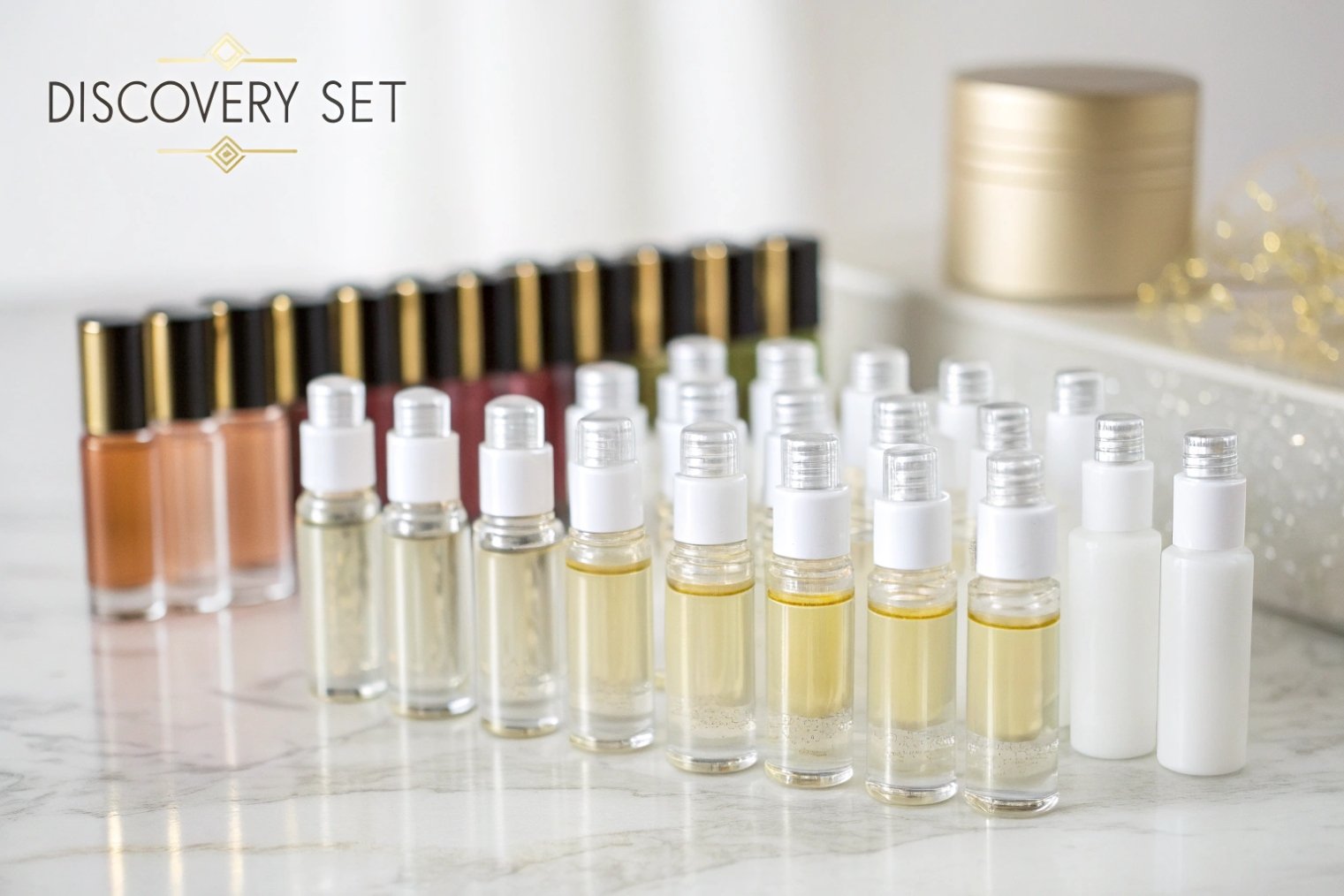
Sampling that feels like the full product
Compared with sachets or vials, a glass roller bottle:
- Feels closer to the full-size pack in hand.
- Shows the true product color and texture.
- Gives the consumer a proper application ritual, not just a quick wipe.
This is powerful for:
- Fragrances and body mists as discovery sets.
- Skincare serums and oils where users need several days to feel results.
- Aromatherapy and wellness blends often sold in small sizes already.
Because the dosing is controlled, even a 3–5 ml roller can last for many uses. This lowers sampling cost per trial while still giving enough “product experience” for the user to decide.
Travel and regulatory advantages
Roller bottles also make travel and compliance easier:
- Small sizes naturally fall under the TSA 3-1-1 liquids rule 6.
- They are non-pressurized and non-aerosol, so they avoid extra rules on many routes.
- Controlled flow and tight caps mean fewer accidents in handbags and suitcases.
From a brand view, this opens options like:
- Bundled “ritual kits” with three or four mini rollers in one carton.
- GWP (gift with purchase) sets that feel premium but are still cost-efficient.
- Refillable travel bottles that stay in the customer’s bag long after the first fill.
A quick view:
| Use case | Roller bottle benefit |
|---|---|
| In-store sampling | Hygienic, targeted application |
| Online discovery sets | Low weight, high perceived value |
| Travel retail | Easy compliance with liquid rules |
| Refill / reuse stories | Glass + steel/glass ball support reuse |
Because glass can be endlessly recycled 7, roller formats also fit nicely into sustainability stories. A brand can invite customers to keep the bottle and refill with the same or other blends, which helps loyalty and reduces packaging waste.
Conclusion
Glass roller bottles turn liquids into precise, sensorial tools, combining clean dosing, portable formats, and premium feel—when viscosity, ball type, sealing, and travel use are all planned together.
Footnotes
-
Defines viscosity and why “thickness” controls roller flow and flooding risk. ↩ ↩
-
Practical dilution ranges to reduce irritation risk when applying essential oils topically. ↩ ↩
-
Industry risk-management standards that guide safe use levels for fragrance ingredients. ↩ ↩
-
Explains 316 stainless steel’s corrosion resistance, supporting durable, skin-contact roller ball choices. ↩ ↩
-
Official overview of a parcel-delivery test approach used to simulate vibration and transit hazards. ↩ ↩
-
Official carry-on liquids limits that support travel-size compliance for roller bottle SKUs. ↩ ↩
-
Evidence for glass recyclability claims, including “endlessly recyclable” messaging retailers recognize. ↩ ↩






