
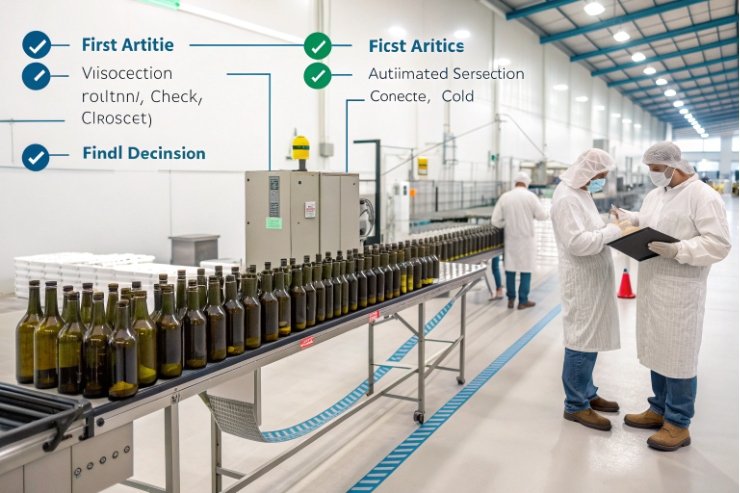
A wine bottle can look fine and still leak, chip, or break on a filling line. That single failure can trigger recalls, downtime, and angry distributors.
Standard QA for glass wine bottles follows a clear flow: first-article checks, in-process visual and dimensional control, strength testing, AQL-based lot decisions, and full traceability documents that prove each shipment matches spec.
A solid QA plan is not “more inspection.” It is the right checks at the right risk points. The goal is simple: closures seal, bottles survive handling, and defects are stopped before the customer sees them.
What is the standard QA flow from first-article to pre-shipment?
When a bottle defect shows up at a winery, it is already too late. The safest approach is to catch issues by cavity, by shift, and by lot before packing.
A standard QA flow starts with first-article approval per mold cavity, then routine sampling during production, then automated cold-end inspection, then AQL lot acceptance, and finally a pre-shipment pack audit.
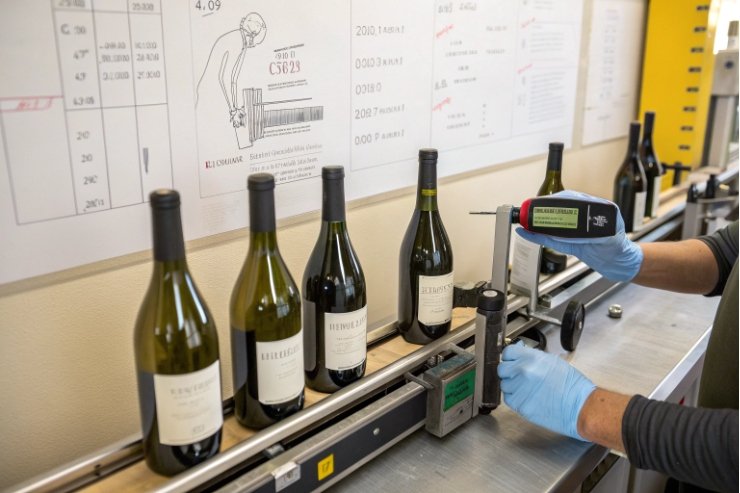
First-article approval (per mold, per cavity)
The first bottles from each cavity are the “truth sample.” If the seam is off, the finish is oval, or the emboss is wrong, the run should not continue. This stage confirms:
- correct mold number and heel code,
- basic geometry (height, body diameter, base, punt),
- finish integrity (top sealing surface, chips, short/long threads),
- and capacity at the agreed reference fill point.
I prefer first-article sign-off to be written and photo-recorded, not only verbal. If a dispute appears later, the record saves time and protects both sides.
In-process checks (routine sampling + trend control)
After first-article, sampling keeps the run stable. The goal is to spot drift early: rising scuff marks, increasing seeds, or a finish diameter creeping out of tolerance. Good in-process control tracks results by cavity so a single bad cavity does not pollute the entire lot.
Cold-end inspection (automated + manual verification)
Most high-volume plants rely on camera-based inspection to detect finish issues, cracks, and contamination. Systems like TIAMA inspection systems for glass containers 1 commonly combine modules for finish checks, sidewall checks, base checks, and mold-code reading so defects can be traced back to cavities and shifts.
Pre-shipment audit (pack quality is part of QA)
Even perfect bottles can be ruined by poor packing. A final audit checks:
- carton dividers fit and stiffness,
- correct bottle count and orientation,
- pallet stability and wrap tension,
- and visible rub marks after pack-out.
| Stage | What it prevents | What gets recorded | The “stop line” trigger |
|---|---|---|---|
| First-article (FAI) | Wrong finish, wrong mold, early drift | Photos + measurements by cavity | Any sealing-surface or thread defect |
| In-process sampling | Gradual drift and cavity-specific defects | SPC trend charts, cavity map | Trend breaks or repeated major defects |
| Cold-end inspection | Hidden cracks, chips, contamination | Reject reason codes, defect stats | Sudden reject spike or new defect type |
| Pre-shipment pack audit | Rub, breakage in transit | Packing checklist, pallet photos | Divider failure or unstable pallet |
Which dimensional checks ensure cork and Stelvin sealing?
Closures do not forgive bad glass. A cork finish that is slightly out-of-round can leak. A screw finish with a damaged thread can tear liners or lose torque control.
Sealing depends on finish geometry: bore and top land for cork, and thread/seal/locking-ring dimensions plus ovality and verticality for screw caps like BVS/Stelvin.
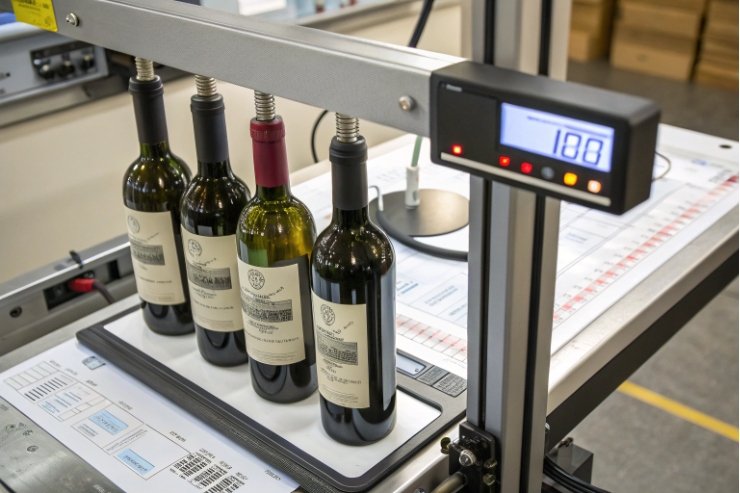
For screw caps (Stelvin / BVS-style finishes)
For screw caps, the key is the finish standard and its tolerances. Many wineries specify BVS-type finishes (commonly discussed as BVS 30×60 finish specifications 2) where thread diameter, seal diameter, locking ring diameter, finish height, and ovality limits are tightly defined.
In practice, the most common sealing failures come from:
- ovality (cap cannot form evenly),
- bent neck / lack of verticality (cap tracks crooked),
- damaged top sealing surface (liner cannot seal),
- thread damage (cap application becomes unstable).
For cork closures (natural cork or technical cork)
For cork finishes, the focus shifts to:
- bore (internal mouth diameter) and its roundness,
- top land flatness (no chips, no “knife edge”),
- neck concentricity (cork compresses evenly),
- and finish height and taper (cork insertion depth is consistent).
A common mistake is measuring only “one diameter.” A finish can pass a single caliper reading and still be oval. Go/no-go gauges and multi-point measurements reduce this risk.
Gauges and methods that work in real production
- Go/no-go ring gauges for outside diameter checks
- Plug gauges for bore checks
- Ovality checks at multiple angles (not only near the seam)
- Finish height and top-land flatness checks
- Thread profile verification for screw caps (especially after mold maintenance)
For projects that are specifically aligned to Amcor STELVIN screw-cap closures 3, referencing the chosen finish family and measurement method in the bottle spec helps prevent cap-application disputes later.
| Closure type | Critical dimensions | Best tools | Typical failure if missed |
|---|---|---|---|
| Cork | Bore, roundness, top land, concentricity | Plug gauge + roundness check + visual chip check | Seepage, cork creep, broken corks |
| Screw cap (BVS/Stelvin) | Thread, seal diameter, locking ring, ovality, verticality | Ring gauge + ovality method + thread inspection | Leaks, low torque, TE band damage |
What drop, burst, and thermal-shock tests are required?
A bottle can pass dimensional checks and still crack during filling or transport. Strength testing confirms that real-world stresses will not turn into claims.
Wine-bottle strength testing usually includes impact/drop resistance, internal pressure (especially for sparkling), vertical/top-load, and thermal-shock checks matched to the winery’s filling and distribution conditions.
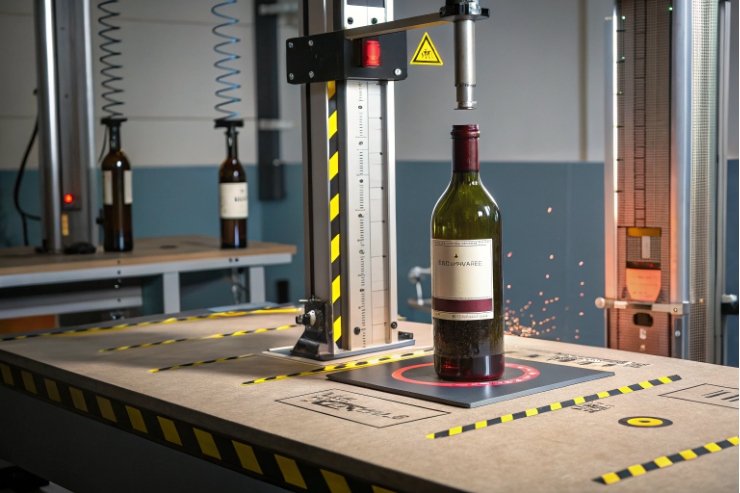
Drop and impact testing (handling realism)
The goal is not to “destroy bottles.” The goal is to confirm a safety margin. Most breakage in logistics starts with small knocks at the heel, shoulder, or finish. A practical test plan includes:
- controlled impact at known zones (finish, shoulder, sidewall),
- a defined drop sequence for filled or simulated-filled bottles,
- and post-test inspection for cracks and chips.
If the route risk is high, some teams validate packaging + filled bottle together using ISTA distribution testing procedures 4 so vibration and handling assumptions are not purely theoretical.
Internal pressure and burst testing (critical for sparkling)
Still wine has low internal pressure. Sparkling products are different. If a brand sells sparkling wine, frizzante, or carbonated blends, internal pressure testing becomes a core requirement. The bottle design, wall thickness distribution, and annealing quality must support the intended pressure range with a clear safety factor.
Thermal shock testing (hot/cold transitions)
Thermal shock risk rises when bottles see sudden temperature change: hot rinse, cold rinse, hot fill, cold storage, or temperature swings in transport. The test should reflect the customer’s process, not a generic number. The real pass/fail is not only visible cracking. It is also whether micro-cracks or stress patterns appear after cycling.
Stress and annealing checks (the quiet root cause)
Many strength failures come from residual stress. That is why polariscopic checks and base-stress inspection matter, including platforms like TIAMA MULTI 4 AI base-stress inspection 5.
| Test | What it proves | Best matched to | Common “surprise” failure |
|---|---|---|---|
| Impact/drop | Resistance to knocks and mishandling | Warehousing, export, e-commerce | Finish chips that later leak |
| Internal pressure/burst | Safety under pressure | Sparkling, carbonation | Base or shoulder rupture |
| Top-load | Stack and compression survival | Pallet stacking, container loads | Buckling or base ring cracks |
| Thermal shock | Temperature-change resistance | Hot/cold rinses, climate swings | Hairline cracks after filling |
How are AQL cosmetic vs critical defects defined?
Without clear AQL rules, every shipment becomes an argument. One buyer rejects for small scuffs. Another ignores them and complains later. AQL turns opinions into an agreed rule set.
AQL defines how many defects are allowed in a sample, and it usually separates defects into critical (not allowed), major (functional or brand-impacting), and minor (small cosmetic issues).
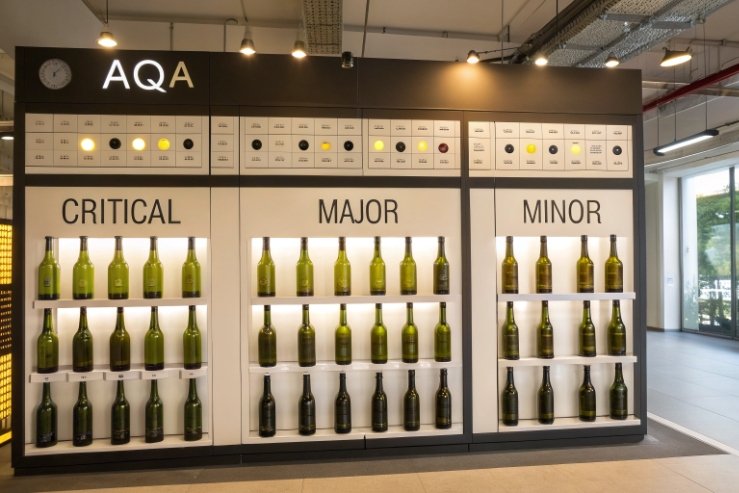
AQL is a sampling decision, not a quality target
AQL is used to decide acceptance based on a sample size. It is not permission to ship defects. Many QA teams tie attribute sampling to ISO 2859-1:1999 sampling procedures for inspection by attributes 6 and then set different AQL values for minor, major, and critical defects (with critical often treated as “zero tolerance”).
Practical defect definitions for wine bottles
Here is how I frame it when aligning with wineries:
-
Critical defects (AQL often 0): anything that can injure a user or cause leakage/failure.
Examples: cracks, sharp edges, severe finish chips, missing glass at the lip, wrong glass type, contamination inside the bottle. -
Major defects: likely to cause line trouble, sealing risk, or visible brand damage.
Examples: oval finish beyond tolerance, deformed threads, heavy stones near the surface, severe scuffs on label panel, unstable base wobble, wrong color tone outside agreement. -
Minor defects: cosmetic issues that do not affect function and are hard to see at normal distance.
Examples: light scuffs outside label area, small seeds away from stress zones, tiny mold marks within agreed limits.
The key: defect catalogs with photos and size limits
Words like “small” and “large” are useless without photos and size boundaries. The best buyers and suppliers agree on:
- defect photos (good/bad reference set),
- location rules (finish is always stricter than body),
- and measurement rules (what counts as one defect, what counts as cluster).
| Defect class | Wine bottle examples | Why it matters | Typical decision rule |
|---|---|---|---|
| Critical | Cracks, sharp lip, severe finish chip, internal contamination | Safety + leakage + legal risk | Reject lot (often AQL = 0) |
| Major | Out-of-round finish, damaged thread, unstable base, heavy scuff on label panel | Line downtime + brand impact | Tight AQL, cavity containment |
| Minor | Light scuff outside label, tiny bubble in non-stress zone | Cosmetic only | Higher AQL, monitor trend |
Which COA and traceability documents should suppliers provide?
A bottle is a food-contact package. Buyers need proof, not promises. If a defect shows up months later, traceability is the fastest way to contain the issue.
Suppliers should provide a COA with key dimensions and test results, plus full lot traceability (date, furnace/line, mold/cavity codes), and compliance documents for food contact and recycled content claims when used.
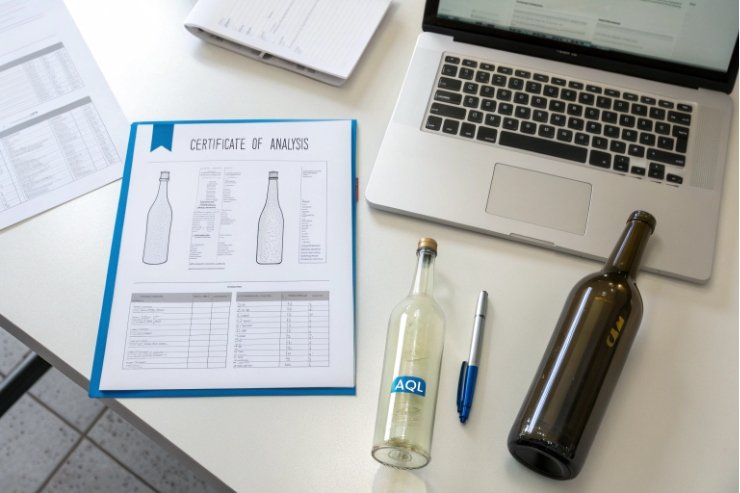
Core COA items that help wineries fill safely
A useful COA includes:
- bottle specification ID and revision
- glass color code and appearance standard
- key measured dimensions (finish, height, body diameter, weight, capacity)
- results of strength tests that were agreed (impact, pressure if relevant, thermal shock if required)
- inspection method summary (manual + automated)
- AQL sampling plan used and lot disposition
If your team needs a plain-language definition for trade/compliance files, the U.S. Department of Commerce “Certificate of Analysis” definition 7 is a simple reference point.
Traceability that actually works during a claim
Traceability is not only “lot number.” It should connect bottles to:
- production date/time window
- furnace and forming line
- mold number and cavity
- inspection station data (reject codes and rates)
- packing date and pallet ID
Compliance and sustainability documents that buyers ask for now
Depending on the market, buyers commonly request:
- food-contact compliance declarations (region-specific)
- heavy metals / leachable substances statements (when required)
- ISO certificates (quality and environment) if part of supplier qualification
- PCR (post-consumer recycled) content statement and methodology if advertised
- packaging specification for cartons/pallets (to protect surface finish)
| Document | Who uses it | What it should contain | Red flag if missing |
|---|---|---|---|
| COA | Winery QA + purchasing | Dimensions + tests + AQL plan + lot ID | “Pass” with no data |
| Traceability sheet | Winery + supplier | Line, date, mold/cavity, pallet ID | No cavity-level link |
| Finish compliance | Winery + cap supplier | Finish type + gauge method | Cap problems with no root cause |
| Inspection report | QA teams | Defect rates by type and cavity | No defect mapping |
| Sustainability/PCR statement | Brand + compliance | PCR %, method, scope | Marketing claim with no proof |
Conclusion
A good wine-bottle QA system protects sealing first, then strength, then cosmetics—backed by AQL rules and traceable COA documents that make every shipment easy to approve.
Footnotes
-
Overview of camera-based inspection modules for empty glass containers (finish, sidewall, base). ↩︎ ↩
-
Practical overview of STELVIN/BVS screw-cap finishes and how they relate to bottle-neck specifications. ↩︎ ↩
-
Reference page for STELVIN closure families often paired with BVS-style wine-bottle finishes. ↩︎ ↩
-
Distribution test methods used to simulate handling, drops, and vibration for packaged goods. ↩︎ ↩
-
Base-stress inspection concept and equipment reference for detecting residual stress in glass containers. ↩︎ ↩
-
ISO standard reference commonly used for attribute sampling plans and AQL-based lot acceptance decisions. ↩︎ ↩
-
Plain-language definition of a Certificate of Analysis document used in quality and trade documentation. ↩︎ ↩






